 Kids & Teens
How far can my child roam? Neighborhood boundaries that grow with them
Start with a boundary you can describe in one sentence and your child can repeat back, usually your own street or the block. Widen it in named stages (the block, the park, the shop, the wider neighbourhood) as they show you they check in, come back on time and handle small surprises. Geofenced place alerts are a quiet backstop, not a substitute for agreeing the rules out loud.
My neighbour asked me last summer how far I let my nine year old go on her own. I gave her a straight answer, she looked slightly appalled, and then two weeks later her son was cycling the same loop. That is roughly how this decision actually gets made in real life: by looking sideways at other families and hoping somebody knows something we do not.
Nobody does. There is no age that unlocks the next street, and any list that claims otherwise is guessing on your behalf. What there is instead is a way of doing this in stages, so that each expansion is small enough to be safe and clear enough that your child can succeed at it.
So here is the version I wish I had been handed. What readiness actually looks like, how to draw the first boundary, the check in that goes with each stage, and how to write the whole thing down in a way a child will genuinely follow.
Readiness is behaviour, not birthdays
Two children the same age can be wildly different out of the house. One notices a parked car pulling out, the other is deep in a conversation about a video game and walks into a bin. Age tells you almost nothing. What you are looking for is a handful of specific behaviours, most of which you can test without letting them out of your sight.
- They can say where they are going and stick to it. Not just agree to it, but come back and tell you the truth about what actually happened.
- They handle roads without prompting. Watch them from behind on a normal walk. Are you the one stopping at the kerb, or are they.
- They notice time. Back by five means something to them, with or without a watch.
- They can ask an adult for help. A shop assistant, a parent at the park. Shy is fine. Frozen is a sign to wait.
- They know the basics cold. Home address, one phone number learned by heart, what to do if a plan falls apart. If that is shaky, start with teaching kids their address and phone numbers.
Note that none of those are about danger. They are about competence. The most common mistake I see is parents waiting for the world to feel safe enough, which it never will, instead of watching for the child to be capable enough, which happens in front of you if you look.
You are not deciding whether the neighbourhood is safe. You are deciding whether this child, this week, can handle this specific stretch of it.
Drawing the first boundary
The first boundary should be small enough to feel almost silly. Our street, between the postbox and the blue door. The garden and the two houses either side. If you are thinking that is barely worth doing, that is exactly right, because the point of the first boundary is not distance. It is practising the system.
Make it describable in one sentence, and make your child say it back to you in their own words. If they cannot repeat it, it is too complicated. Kids do not hold maps in their heads at first, they hold landmarks: the postbox, the corner shop, the tree with the rope on it. Use their language, not street names.
Walk it before you allow it
Do the boundary walk together, once, deliberately. Point at the edges. This corner is the end. That is the house you knock on if something goes wrong. This is the crossing we use, not that one. Ten minutes of walking is worth an hour of instructions at the kitchen table, because they will remember the place rather than the sentence.
While you are out there, do the boring safety audit yourself. Where does traffic move fastest, which driveways are blind, which alley is a shortcut you would rather they did not take, where does the pavement stop. You are not trying to eliminate the risks, you are trying to know them well enough to name two or three specific rules instead of a general fog of be careful.
The stages, and what each one asks for
Think of roaming as four or five widening rings rather than a single yes. Each ring gets its own check in rule, and nobody moves up a ring until the current one is genuinely dull.
- 1Stage one: our street. Within sight or shouting distance. Check in rule: tell me when you go out and when you come in. No phone needed.
- 2Stage two: the block or the close. Out of sight, back within an agreed time. Check in rule: a set return time, and they knock on our door before going into anyone else's house.
- 3Stage three: the park or a named friend's house. A route you have both walked. Check in rule: a message or a call on arrival and before setting off home.
- 4Stage four: the local shops or the wider neighbourhood. Multiple roads, some traffic, other people. Check in rule: arrival and departure, plus a rough plan told in advance.
- 5Stage five: the neighbourhood at their own discretion. They tell you where they are going, not ask. This is the destination, and it usually arrives around the same time as secondary school.
Two rules of thumb for moving between stages. First, expand distance or independence, not both at once. A longer route with the same check in is one change. A new route and no check in is two, and if something goes wrong you will not know which one caused it. Second, hold each stage until it has been boring three or four times running. Boring is the evidence.
Rules that travel with every stage
- Tell me before, not after. Where, who with, back by when.
- Change the plan, send a message. Moving from the park to someone's house is a new plan.
- Stay with your person. Nobody comes home alone from a shared trip without telling an adult.
- If something feels wrong, come home or go to a shop. No need to explain first, no trouble for getting it wrong. That instinct is worth more than any rule, and teaching kids about tricky people explains how to build it without frightening them.
Be Closer shows your whole family on one private map, free to start.
Consent-first, never sold, and gentle on your battery. iOS and Android.
Where place alerts quietly help
There is a version of this that goes wrong, and it looks like a parent watching a moving dot on a screen all afternoon. That is not what a family map is for, and honestly it is worse for your nerves than not looking at all.
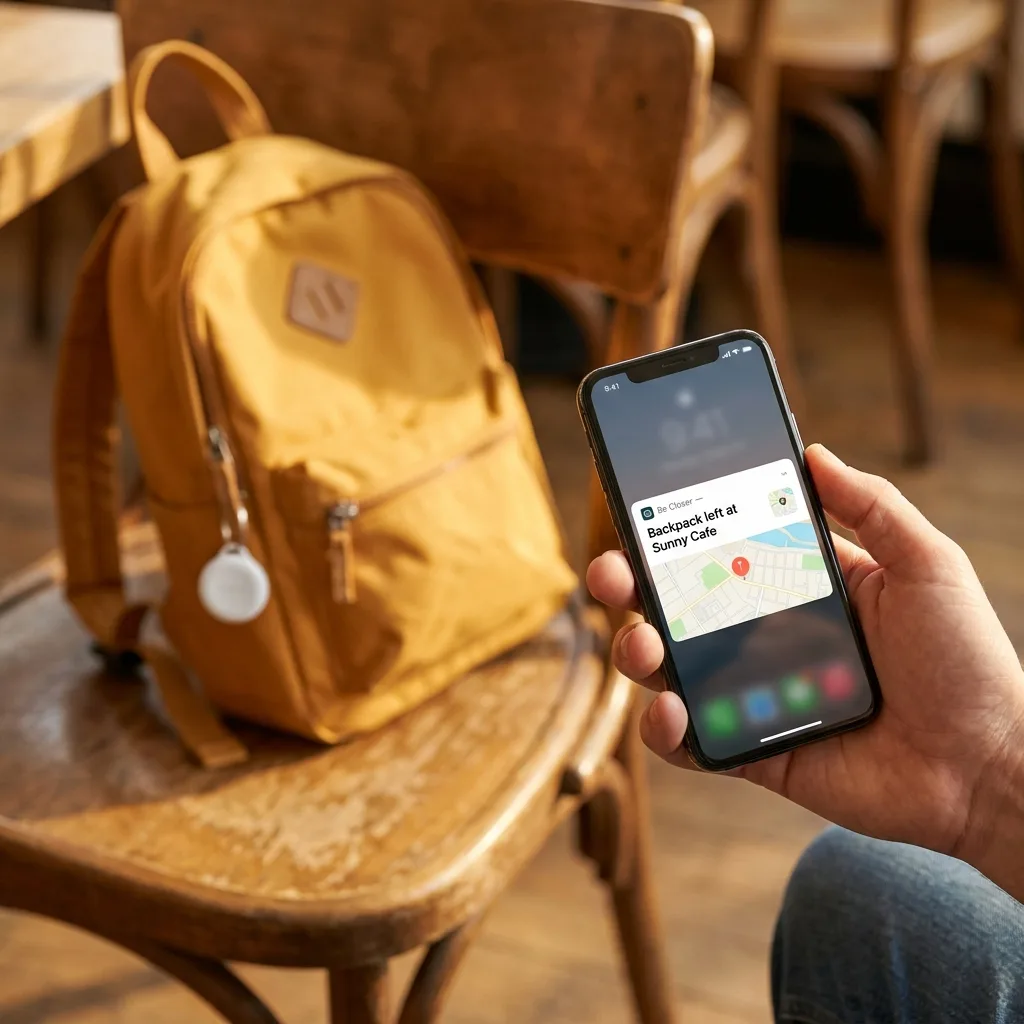
What actually helps is the opposite: alerts that let you stop looking. A notification when they arrive at the park, another when they get home, and nothing in between. You get on with your day, and the phone tells you the two facts you would otherwise have been wondering about. Be Closer is free to download and set up, and the arrival and departure alerts are the feature families use most once they stop staring at the map. If you want the mechanics of how geofences work before you set any up, geofencing explained for parents covers it plainly.
Set the places to match your stages, not to fence the child in. Home, school, the park, grandma's. Three or four is plenty. And tell your child exactly what you have set up and why, in about one sentence: I get a ping when you get to the park so I do not text you. Children accept that easily. What they object to, rightly, is finding out later.
Be realistic about accuracy too. Phone location is very good, up to 95% accuracy on a well set up map, but it is not a security camera. It tells you roughly where the phone is, which is a useful signal and a terrible substitute for a conversation. And a phone that is out of battery tells you nothing at all, which is why the check in habit has to survive without it.
The boundary agreement
Write it down. One side of paper, on the fridge, in your child's handwriting if they are old enough. It takes ten minutes and it settles about nine future arguments, because the fridge is neutral in a way that you are not.
- Where I can go on my own: the streets or landmarks, in their words.
- Where I need to ask first: crossing the main road, going to a new friend's house.
- I tell an adult: before I leave, when I arrive, if the plan changes, when I set off home.
- Back by: a time, and what to do if they are going to miss it.
- If something goes wrong: who to find, which shop, which neighbour, which phone number.
- We review this on: an actual date, roughly every school term.
Then let them fail at it a bit. A child who comes home twenty minutes late has given you useful information at almost no cost, and the correction should be proportionate: back one stage for a fortnight, then try again. Treating small errors as betrayals is the fastest way to teach a nine year old to stop telling you things.
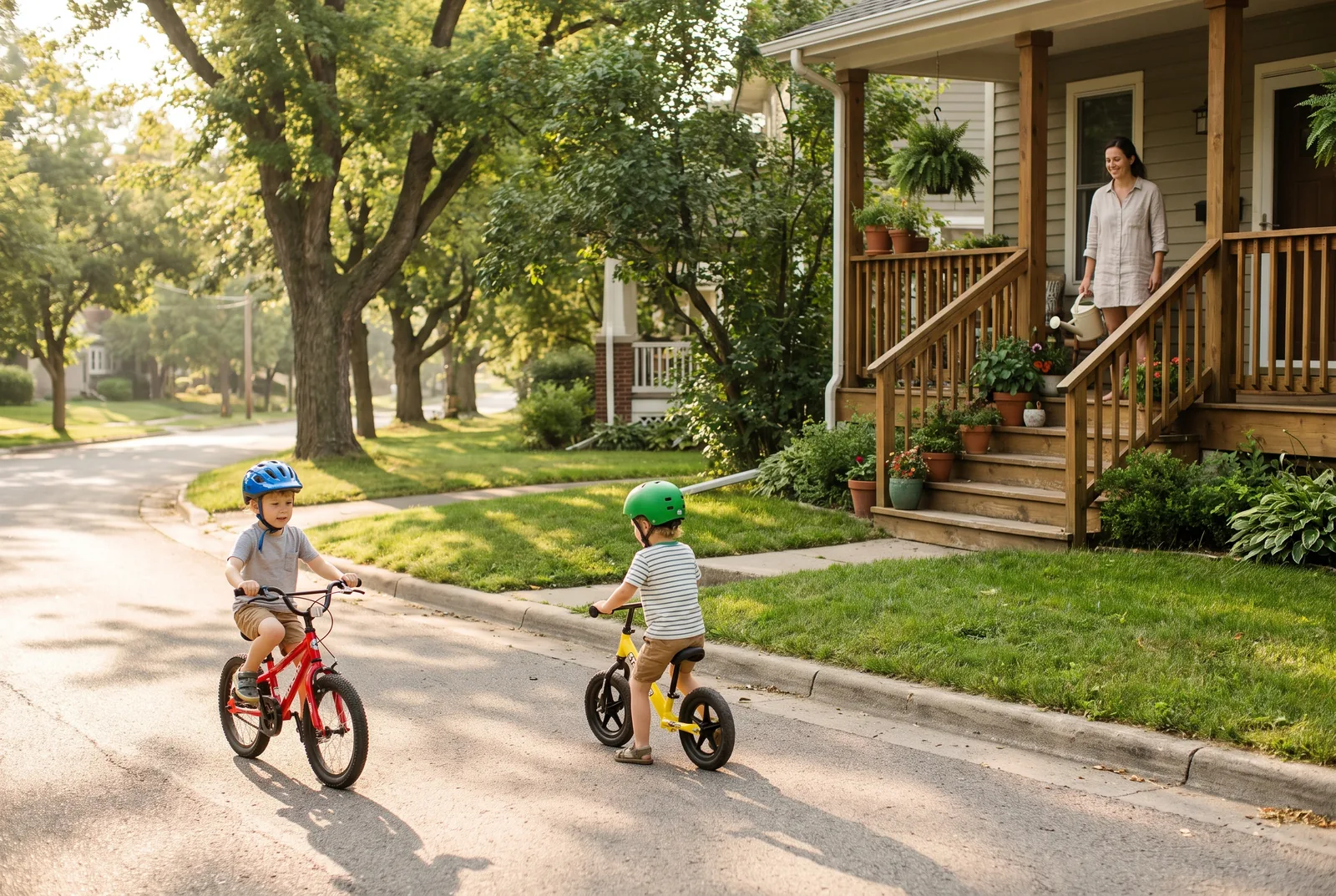
The specific milestones deserve their own thinking, and we have written most of them up separately. The school walk is usually the biggest one and is covered in when your child can walk to school alone. Independent play is in when your child can go to the playground alone. If bikes are about to widen the map dramatically, and they will, read is my child ready to bike to school first, because a bike turns a ten minute boundary into a thirty minute one overnight. A small solo errand is a good low stakes rehearsal for all of it, and your child's first solo errand is how we start most families off.
One final reassurance. Every stage feels enormous the first time and completely ordinary within a month. That gap between how it feels and how it goes is the whole experience of this, for you and for them, and the only way through it is one small ring at a time.
Frequently asked questions
Marta writes our Kids & Teens guides. Mother of two, professional over-preparer, firm believer that independence is a skill you practice, together first, then alone. She has road-tested every checklist in her own hallway at 7:40am.
Our guides are written by Be Closer's editorial voices and reviewed by the team behind the app. Questions? support@becloser.com
Published · Updated