 Kids & Teens
Beyond stranger danger: teaching kids about tricky people, not scary strangers
Stranger danger teaches children to fear the wrong people and stay silent around the right ones. Teach behaviour instead: a tricky person is any adult who asks a child for help, asks them to keep a secret from their parents, or tries to get them to go somewhere. Pair that with a clear list of safe adults to approach, a no secrets rule at home, and short calm scripts your child has actually practised.
I grew up on stranger danger. Do not talk to strangers, do not take sweets from strangers, a stranger is anyone you do not know. It was simple, it was memorable, and I repeated it to my own children for about two years before I noticed the problem with it.
The problem is that it is both frightening and useless. Frightening because it tells a child that unfamiliar adults are the threat, which puts a low hum of anxiety into every ordinary trip out. Useless because when a child is genuinely lost or scared, the fastest route to safety is almost always to approach an adult they do not know and say so. A rule that stops them doing that has made things worse, not better.
It also points in the wrong direction. It teaches children to sort people by whether they are familiar, when the thing that actually matters is what someone is asking them to do. So here is the alternative I use at home: tricky people, safe adults, and a handful of scripts we have practised enough times that they come out without thinking.
Why stranger danger backfires
Three specific failures, and they compound.
- It blocks help seeking. A lost child who has been taught never to talk to strangers will hide instead of asking, which is precisely the wrong move.
- It sorts by the wrong thing. Children picture the danger as an obvious character, unfriendly, oddly dressed, lurking. Someone who is warm and normal looking does not match the picture, so the rule does not fire.
- It makes the world feel hostile. Constant low level fear of ordinary people is not a small cost. It shapes how a child moves through a high street for years.
The replacement rule is not more complicated, it is just aimed better. Instead of asking "do I know this person," your child asks "what is this person asking me to do." That question works on people they know and people they do not, which is the whole point.
What a tricky person is, in your child's words
Teach three behaviours. Three is a number a child can hold. Say them the same way every time until they can finish the sentence for you.
- 1A tricky person is a grown up who asks a kid for help. Adults ask other adults. If a grown up asks you to help find a dog, carry something, or give directions, that is odd, and you can just leave.
- 2A tricky person asks you to keep a secret from your parents. Surprises are fine, secrets are not. Anyone who wants something kept from us has told you what they are.
- 3A tricky person tries to get you to go somewhere. Round a corner, into a car, into a back room, anywhere away from where you are. The answer is always no, and then you move toward other people.
Notice that none of that depends on whether your child knows the person. That is deliberate, and it is the main reason this framing is stronger. A rule that only applies to unfamiliar adults leaves out most of the situations that actually go wrong.
Three sentences worth memorising
- Grown ups ask grown ups for help.
- We do not keep secrets in this family. Surprises, yes. Secrets, no.
- Nobody takes you anywhere unless we have agreed it first.
Safe adults: who to approach and how
This half matters just as much and gets taught far less. Your child needs a specific, ordered list of who to approach when something has gone wrong, so they are not standing in a station trying to read faces.
| First choice | Why | What to say |
|---|---|---|
| Someone in a uniform or behind a counter | Staff are accountable, easy to find again, and used to helping lost children. | "I need help, I have lost my grown up." |
| A parent with children | Easy for a child to spot, very likely to help, and unlikely to be alone. | "Excuse me, can you help me find my mum?" |
| Anyone else, if those are not there | Better than waiting or wandering. Approaching openly, in public, is the safe version. | Same sentence, said loudly, standing where people can see. |
The key instruction is that your child chooses the adult, the adult does not choose them. Someone who comes over and offers to help a lost child is not automatically wrong, but the safer habit is to walk up to a shop counter yourself. That single distinction covers an enormous amount of ground, and it pairs directly with the plan in if we get separated.
Be Closer shows your whole family on one private map, free to start.
Consent-first, never sold, and gentle on your battery. iOS and Android.
Body autonomy and the no secrets rule
These two run underneath everything else, and they belong in ordinary conversation rather than in a Big Talk. Small, repeated, unremarkable is what works.
- Their body is theirs. They never have to hug or kiss anyone, including relatives, and a wave or a high five is a complete substitute. Back them up out loud when a relative pushes.
- No secrets, only surprises. A surprise has an end date and everyone finds out. A secret is meant to stay hidden. If any adult asks for a secret from us, your child tells you, and they are never in trouble for it.
- Nobody is ever in trouble for telling. Say this often enough that it is boring. The most common thing that keeps children silent is fear of being blamed.
- Uh oh feelings count as evidence. If something feels wrong, that is reason enough to leave. They do not need to justify it afterwards.
The line that has done the most work in our house is the plainest one. You will never be in trouble for telling me something. I have said it hundreds of times, and twice it has actually mattered.
Calm scripts and low stakes practice
Knowing a rule and being able to act on it under pressure are different things. Children need the words in their mouth, not just in their head, and that means rehearsal. Keep it light. Ten seconds in the car, not a workshop.
- Leaving a conversation: "No thanks, I'm going to find my grown up." Then walk toward people, not away.
- Refusing a request for help: "You should ask a grown up." That is the whole answer. No explanation needed.
- Asking for help: "Excuse me, I need help." Practise it loudly, because volume is the thing that fails first.
- Refusing to go anywhere: "No. My mum is meeting me here." Said standing still, in the open.
How to practise without frightening anyone
- 1Use what if questions on ordinary walks. "What if someone asked you to help find their cat?" Keep your tone as light as if you were asking about dinner.
- 2Let them answer wrong without correcting immediately. Ask what would happen next, and let them find the problem themselves.
- 3Swap roles. Let your child be the tricky person and you be the child. They find this hilarious, and it teaches the pattern faster than any lecture.
- 4Practise the loud voice properly, in a park or at home, so it exists. A whispered "excuse me" helps nobody.
- 5Revisit every few months in one minute chunks rather than annually in one long conversation.
Watch your own face while you do this. Children read tone far more than content, and if the topic arrives with visible parental fear, what they learn is that the world is frightening. Deliver it the way you would deliver road safety: matter of fact, useful, and slightly boring.
Connecting this to pickups, code words and everyday logistics
The place these rules get tested most often is not a dark alley. It is a car park at 3:20pm, when plans have changed and somebody your child half recognises says they have come to collect them.
That is what a family code word is for. One word, known to your child and to the small number of adults who might legitimately collect them, and no code word means no going anywhere, even with someone familiar. It removes the judgment call from a child who is standing in the cold and does not want to be rude. The full setup is in family code words for safer pickups.
- Agree the word together, keep it odd enough to be memorable, and change it if it gets shared around.
- Tell your child that a genuine change of plan will always come with the word, so they never have to guess.
- Make it a rule that applies to everyone, including relatives, so nobody is an exception they have to reason about.
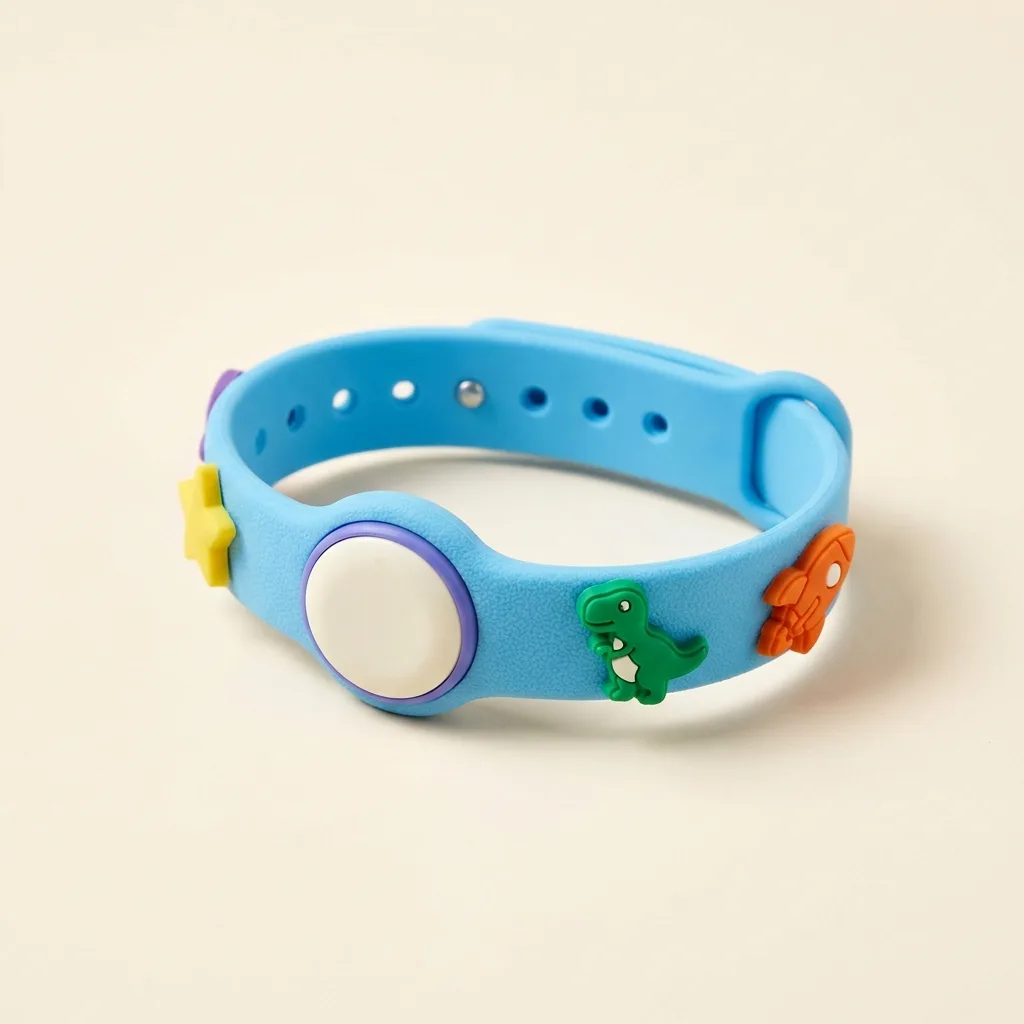
Logistics help too, quietly. If a pickup shifts, your child knowing where you actually are removes a lot of the pressure to just get in the car and sort it out later. A worn device like the Be Closer Band means an arrival alert lands when they reach the gate and you can see each other on the same map, which is a two way arrangement rather than monitoring. Be Closer is free to download, works in 13 languages, and holds 4.4 stars across more than 150,000 ratings on the App Store and Google Play.
None of the technology replaces the rules. It just means fewer moments where a child has to make a hard decision alone with no information. Teach the behaviours, name the safe adults, practise the scripts, and keep the line about never being in trouble for telling on permanent repeat. The same principles carry into other situations where you are not in the room, including the ones covered in sleepover safety for modern parents.
Frequently asked questions
Marta writes our Kids & Teens guides. Mother of two, professional over-preparer, firm believer that independence is a skill you practice, together first, then alone. She has road-tested every checklist in her own hallway at 7:40am.
Our guides are written by Be Closer's editorial voices and reviewed by the team behind the app. Questions? support@becloser.com
Published · Updated