 Kids & Teens
Teaching your child your address and phone number (so it sticks)
Memorisation sticks better with rhythm than repetition, set the number to a tune or chunk it in threes. Practise through play, not tests, and be specific about who the information is for: a uniformed worker or a parent with children, not just any adult who asks. For non-readers and younger kids, a wristband, sewn-in label, or ID card is a reliable backup while memory catches up.
Every parent has had the moment of asking "what's our phone number?" and getting back a confident, completely wrong string of digits. It's not a failure of the child, it's a failure of the method. Ten random digits, recited once and expected to stick, is a genuinely hard memory task for a five-year-old, or honestly for most adults.
The fix isn't more repetition. It's a better method, rhythm, chunking, play, and a bit of drawing, plus being specific about who this information is actually for. "Don't tell strangers your address" and "tell the right stranger your address" sound contradictory but are both true, and a child needs to learn the difference, not just one half of it.
This covers the memory tricks that actually work, how to practise without it feeling like a test, exactly who should hear this information, and backup options for the years before memorisation is reliable.
Why doesn't plain repetition work?
Ten unrelated digits are hard to hold in memory because there's no structure to hang them on, it's the same reason adults struggle to remember a new phone number read out once, but can recall a song lyric from twenty years ago without trying. Give the number structure, and the memory problem gets much easier.
- Set it to a tune. Any familiar melody works, the digits fit almost any nursery rhyme rhythm with a bit of adjustment, and melody is one of the stickiest memory aids there is.
- Chunk it in threes. Say it as three small groups rather than ten single digits, it's how phone numbers are written for a reason, and it works even better spoken aloud.
- Repeat it at odd moments, not just as a drill, in the car, brushing teeth, waiting for the kettle. Scattered repetition beats one long practice session.
What's the fridge-drawing method?
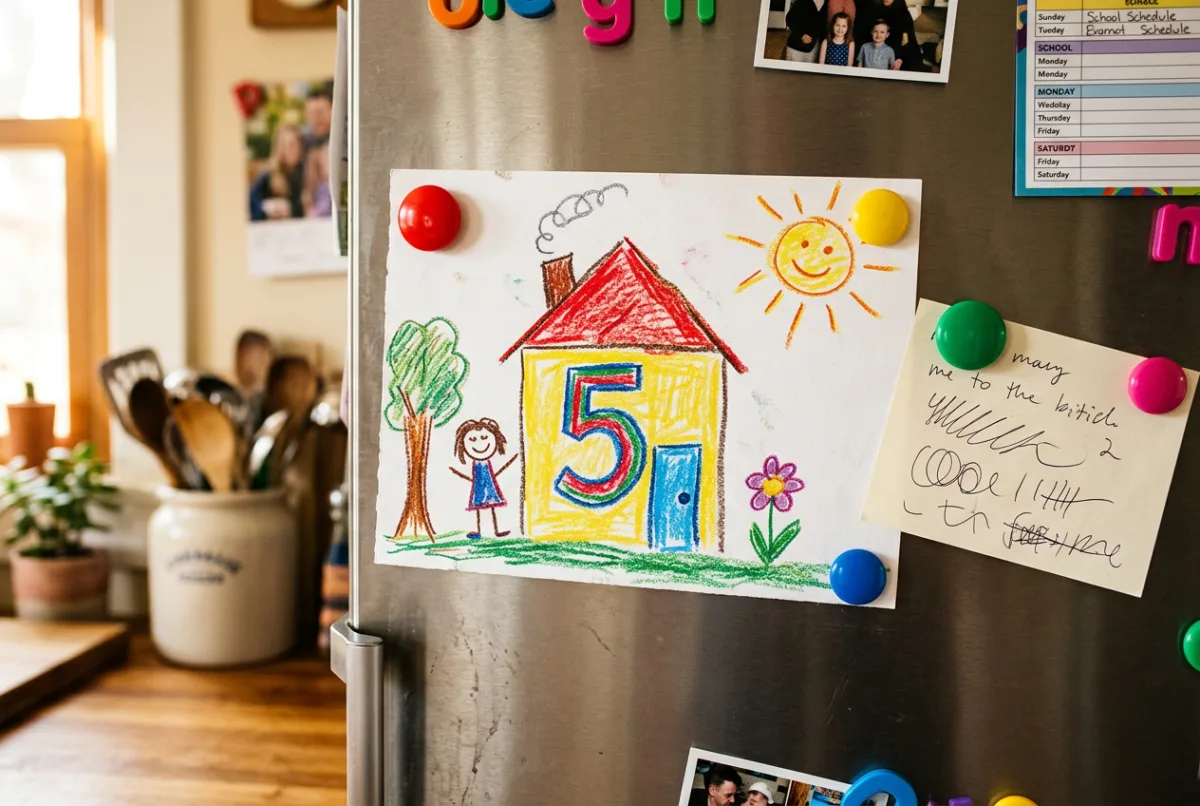
Get your child to draw your house, with the address written underneath in their own handwriting, and stick it on the fridge. The act of drawing and writing it themselves does more for memory than being told it ever will, and it gives you a natural, low-pressure reason to reference it, "can you read me what it says under your drawing?", every few days without it feeling like a quiz.
Add the phone number to the same drawing once the address is solid, maybe as a phone doodle next to the house. Layering new information onto something already familiar and already stuck in memory tends to work better than starting a second exercise from scratch.
How do you practise this through play, not tests?
A direct question, "what's our address?", puts a child on the spot, and being put on the spot is exactly the condition under which people forget things they actually know. Games get the same information out with none of the pressure.
- 1Shop role-play. Play shopkeeper and customer, and have the 'delivery' need an address, a completely natural way to say it out loud repeatedly.
- 2Phone a friend. Pretend to dial a number together and have your child 'answer' with their name and number, as if picking up a call.
- 3The forgetful puppet. A stuffed animal 'forgets' where it lives and needs your child to remind it, kids are often far more patient teaching a toy than answering a parent directly.
These work well as a five-minute activity woven into an existing routine, similar in spirit to the rehearsal approach in the if-we-get-separated plan, low stakes, repeated often, until it's simply known rather than performed.
Who should actually hear this information?
This is the part that gets skipped, and it's arguably more important than the memorisation itself. Knowing the address is only useful if a child also knows who it's for, otherwise you've taught them a fact without teaching them the judgement that goes with it.
Who to tell, and why it's not 'anyone who asks'
- A uniformed worker, police, security, a shop or transit staff member with a name badge, has a clear, identifiable reason to be trusted with this information.
- A parent who's clearly with their own children is a reliable, low-risk option in a public place.
- A random adult who simply approaches and asks isn't automatically safe just because they seem friendly, the question to ask is 'why do they need to know this right now?'
- This isn't about being fearful of adults in general, it's the same specific, ordered logic covered in family code words for safer pickups: a clear rule beats a vague feeling.
Be Closer shows your whole family on one private map, free to start.
Consent-first, never sold, and gentle on your battery. iOS and Android.
Isn't 'don't tell strangers your address' the safer rule?
It sounds safer, but it can backfire in exactly the situation this is meant to help with, a lost child who's found by a shop assistant or police officer and freezes because they've been told never to say the address to anyone they don't know. Both halves need teaching: don't volunteer it to just anyone, and do give it clearly to the right kind of adult when it's genuinely needed.
Framing it as a two-part rule rather than a single blanket 'no' avoids that confusion. "We don't tell just anyone our address, but if you're ever lost, a police officer or someone in a uniform needs to know it, and that's completely okay."
What about kids too young to memorise any of this?
For non-readers and younger children, memorisation isn't a realistic short-term goal, and backup information carried on the child does the job instead. This isn't a lesser option, it's simply the right tool for the age.
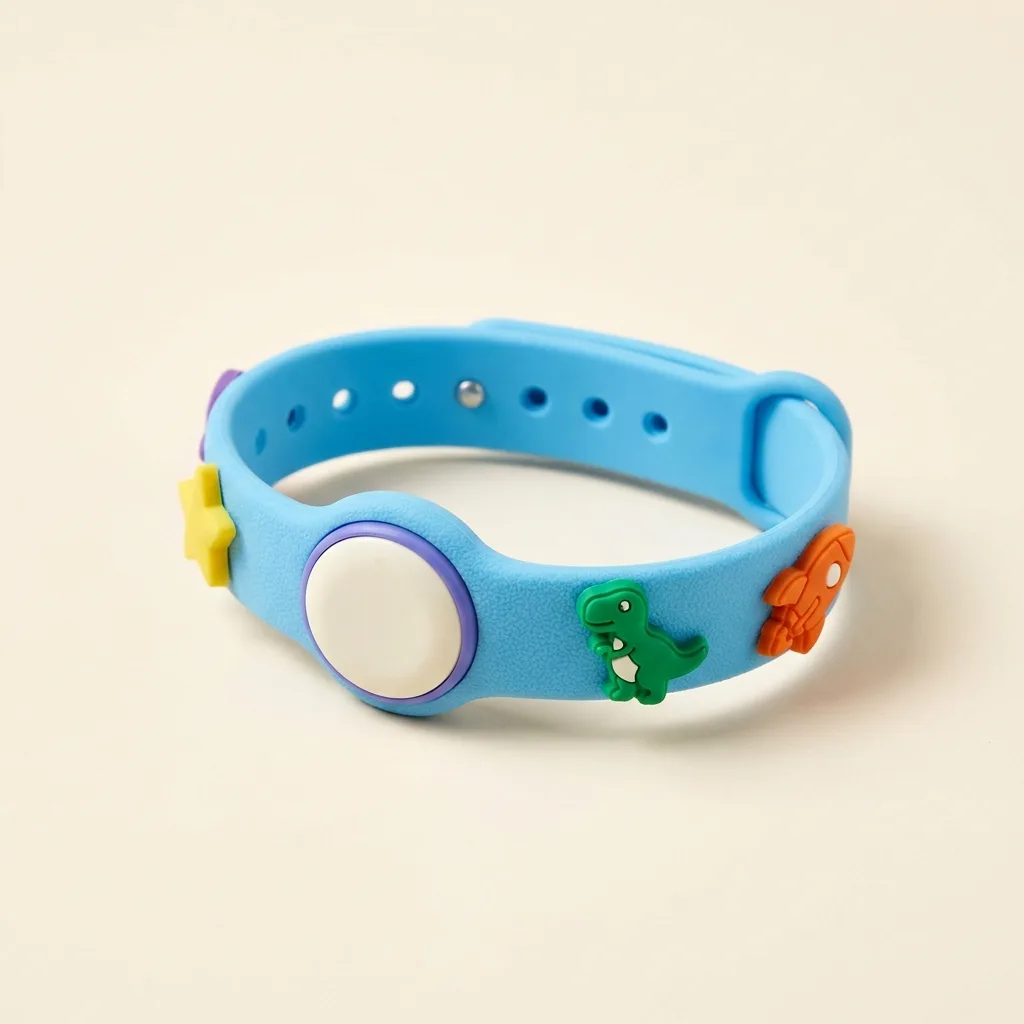
- A wristband with a parent's name and number, worn during outings, day trips, or anywhere crowded.
- A sewn-in label inside a jacket or backpack with the same information, useful for kids who resist wearing anything extra.
- A laminated ID card tucked into a coat pocket or bag, especially handy for travel or theme parks.
- A wearable location device, like the Be Closer Band, which adds a live location on top of the static information a wristband or card provides.
None of these replace teaching the address eventually, they buy time while a child's memory catches up, the same way training wheels buy time before a bike ride goes fully solo.
How does this progress by age?
| Age range | What to focus on | Backup |
|---|---|---|
| 2–4 | Name and a parent's first name; memorisation not expected yet | Wristband or sewn-in label for outings |
| 4–6 | Start the tune or chunking method for the phone number | ID card in the bag as backup |
| 6–8 | Full address and number recited reliably; who-to-tell rule introduced | Card kept, wristband optional for crowded events |
| 8+ | Confident recall under mild pressure (a game, a role-play test) | Backup mostly retired, kept for travel or festivals |
The goal isn't a child who can recite an address on command. It's a child who knows it without thinking, and knows exactly who it's for.
Frequently asked questions
Marta writes our Kids & Teens guides. Mother of two, professional over-preparer, firm believer that independence is a skill you practice, together first, then alone. She has road-tested every checklist in her own hallway at 7:40am.
Our guides are written by Be Closer's editorial voices and reviewed by the team behind the app. Questions? support@becloser.com
Published · Updated