 Kids & Teens
GPS bracelet vs. smartwatch vs. AirTag: what actually works for young kids
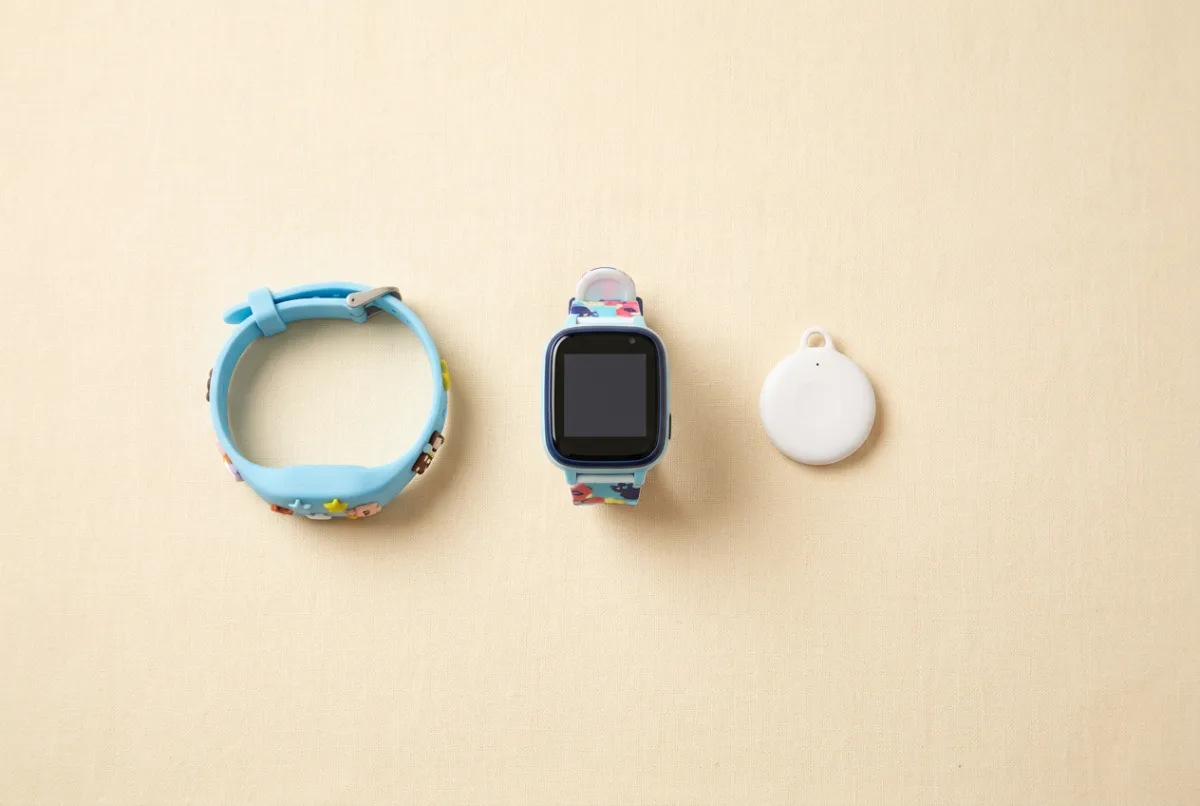
Three products, three completely different jobs. A GPS wearable knows where it is and reports it live; a Bluetooth tag only knows where it was last seen by someone else's passing phone; a kids' smartwatch does both plus calls, plus a screen. For under-tens, a screen-free GPS band is usually the best fit, with a Bluetooth tag as a cheap backup for bags rather than a primary child tracker.
Do this before you buy anything: work out which of three technologies you're actually looking at. Search for a child tracker and you'll be shown three product categories side by side at wildly different prices, all promising the same outcome. They are not the same thing, and the difference isn't a feature, it's the underlying technology, which determines whether the thing works at the moment you actually need it.
This is the comparison we wish existed when we started building hardware. It's deliberately unflattering to some of our own assumptions.
The one distinction that matters: live GPS vs Bluetooth relay
Everything else is detail. Get this right and the rest of the decision is easy.
A live GPS device contains a satellite receiver and a cellular radio. It works out where it is, then sends that position over a mobile network. It reports its own location, on its own, anywhere with signal, a field, an empty street, a coach on a motorway. It needs charging every few days and usually a small data subscription.
A Bluetooth tag, AirTag, and everything shaped like it, contains no GPS and no cellular radio. It shouts a short-range encrypted identifier and waits for someone else's smartphone to overhear it and anonymously report the position. It has no idea where it is. On a busy high street that network is dense and the result feels magical. On a quiet lane at 7am it can be silent for hours. Battery life is superb, often around a year, precisely because it's doing so little.
This is why a Bluetooth tag is excellent for a bag left in a café and unreliable for a child on an unfamiliar route. The scenario where you most want an answer is often the scenario with the fewest passing phones.
The comparison table
| GPS band / wearable | Kids' smartwatch | Bluetooth tag | |
|---|---|---|---|
| How it locates | Own GPS + cellular | Own GPS + cellular | Other people's phones relay it |
| Works in empty areas | Yes | Yes | Often not |
| Typical update | Live, every few minutes | Live, every few minutes | Only when a phone passes |
| Battery | Days between charges | About a day | Around a year |
| Screen / apps | None | Yes, games, messaging | None |
| Two-way calling | No | Yes | No |
| School-friendly | Usually | Often restricted | Usually |
| Durability | High, silicone, sealed | Moderate, glass screen | High, but easily detached |
| Cost | Device + small subscription | Device + SIM plan | Device only |
| Best for | Ages ~4 to 10 | Ages ~9 to 13 | Bags, coats, keys |
Why screen-free usually wins under ten
The instinct is to buy the device that does the most. With young children, the device that does the least tends to work better, for four boring reasons.
- 1Schools. Policies on screens vary enormously, but a great many primary schools ask for smartwatches to be removed or handed in, often because of cameras and messaging rather than location. A device handed into a drawer at 8:45 is not tracking anyone. A plain band usually stays on the wrist all day.
- 2Attention. Anything with games or messages competes for a child's attention at exactly the moments, kerbs, car parks, crowds, where you least want it competing.
- 3Battery honesty. A watch with a bright screen and chat apps tends to be flat by mid-afternoon in real use. A screen-free band spends its budget on radios, which is what you're actually paying for.
- 4Wearability. The best tracker is the one that's on the child. Silicone bands survive sand, swings and soup; a glass screen picks up a crack in the first fortnight, and a cracked watch gets left at home.
There's a fifth reason that's harder to measure: a device with no screen doesn't feel like surveillance to a child in the way a device that pings and buzzes does. It fades into the background, which, as we argue in Should I track my child's location?, is the whole objective.
Be Closer shows your whole family on one private map, free to start.
Consent-first, never sold, and gentle on your battery. iOS and Android.
When each option is actually right
Choose a GPS band when
- Your child is roughly four to ten and doesn't have a phone.
- The main scenarios are the school run, the park, holidays and crowded places.
- You want arrival alerts to work reliably rather than sometimes.
- You'd rather not introduce a screen yet.
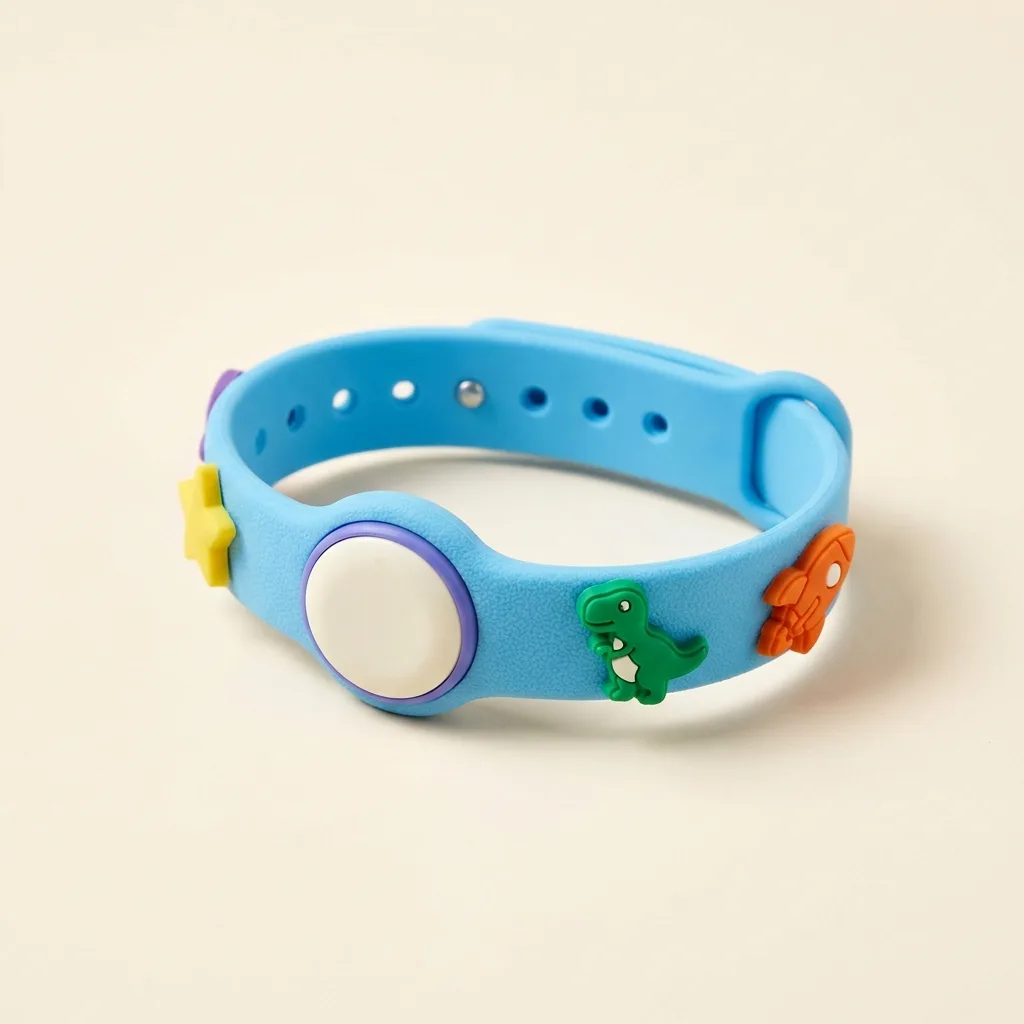
Our Band sits in this category deliberately: soft silicone in Sky Blue and Bubblegum Pink, snap-in charms included, and holes that fit the popular shoe-charm format, so kids can use the charms they already collect. Customisation matters more than it sounds. A band a child has decorated is a band they don't take off.
Choose a kids' smartwatch when
- Your child is around nine to thirteen and genuinely needs to call you.
- Their school permits it, and you've checked rather than assumed.
- You're happy to manage charging every single night.
- You want a stepping stone before a full smartphone.
Choose a Bluetooth tag when
- You're locating a thing, not a person: a school bag, a coat, a scooter, a wallet.
- The environment is busy, cities, campuses, transport hubs.
- You want a cheap second layer alongside a phone or a band.
This is exactly why we sell both a Band and a Tag rather than pretending one product covers everything. A tag in the bottom of a school bag costs little, lasts a school year, and answers the most common real question of all, where did the bag get left? For an adult's wallet the same logic applies in a thinner form factor, which is what the Card is for.
Things the marketing doesn't tell you
- Accuracy claims are outdoor claims. Any figure you see assumes clear sky. Indoors, in a shopping centre, or between tall buildings, expect materially worse, and expect the dot to jump. We explain why in How accurate is phone GPS, really?; the same physics applies to every wearable.
- "No subscription" usually means no cellular. If a device costs nothing to run each month, ask how it gets its position off the device. The answer is nearly always Bluetooth relay.
- Battery figures are lab figures. Real-world use with frequent updates and poor signal, signal hunting is expensive, will be shorter, sometimes by half.
- Waterproof ratings are point-in-time. Seals age, especially on something a seven-year-old owns. Treat splash resistance as the durable promise and swimming as a bonus.
- Ecosystem lock-in is real. Some tags only report to one manufacturer's phone network, which matters a lot in a mixed-device family.
The pragmatic answer for most families
If we had to give one recommendation per age band, it would be this. Under ten: a screen-free GPS band on the wrist, plus a cheap Bluetooth tag in the school bag as a backup. Ten to thirteen: either a kids' smartwatch or a first phone, depending on how much you trust the school policy, with the bag tag still in place. Thirteen and up: a phone with shared location, agreed openly, and tags on the things they lose rather than on them.
The layered approach costs less than the single-device approach people usually try first, and it fails more gracefully, which is the only property that matters on the day something goes wrong.
Frequently asked questions

Marta writes our Kids & Teens guides. Mother of two, professional over-preparer, firm believer that independence is a skill you practice, together first, then alone. She has road-tested every checklist in her own hallway at 7:40am.
Our guides are written by Be Closer's editorial voices and reviewed by the team behind the app. Questions? support@becloser.com
Published · Updated