 Kids & Teens
Walking to school in the dark: a parent's plan for darker mornings
The route did not change, the light did, so treat the dark mornings as a new walk rather than the same one. Sort visibility (reflectives that move, a bag light, lighter outer layers), re walk the route in actual dark to check crossings and driveways, and shift the leaving time so they are not rushing. An arrival alert then removes the need to text at five past eight.
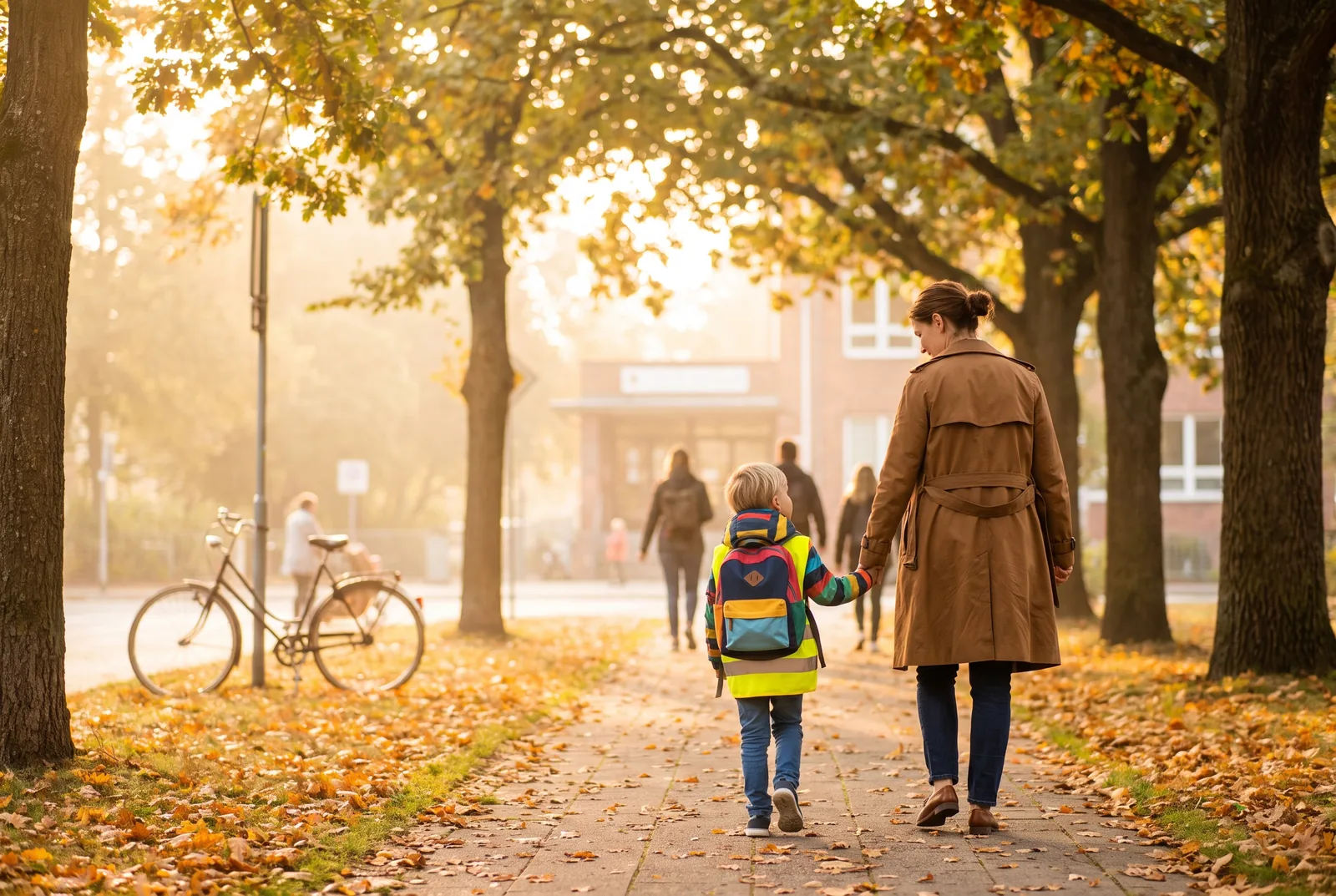
The first properly dark Monday always catches me out. All summer my daughter walked to school without a second thought, and then one morning in late October I stood at the door watching her disappear about four houses down and thought, well, that is completely different.
It is different, and not because the neighbourhood changed. Drivers cannot see as much, kids are sleepier, everyone is in a hurry, and the route your child knows perfectly in daylight has corners in it that they have never actually seen in the dark. None of that is a reason to stop the walk. It is a reason to spend twenty minutes resetting it for the season.
This is the checklist we run every autumn. Kit, route, timing, arrival, and one short re walk with the child. It takes one evening and one morning, and then you can stop thinking about it until the clocks go the other way.
Start with visibility, because that is the actual change
The single biggest difference in a dark morning is not danger in the abstract, it is that a driver pulling out of a side road has a much shorter window to notice a small person in a navy coat. Everything else on this list matters less than being seen.
Reflective material works because it throws headlight beams straight back at the driver, so put it where the light will hit it and where it moves. Movement is what catches the eye. Ankles, wrists and the back of a bag are worth far more than a small logo on a chest.
- Reflective bands on ankles or shoes. Legs move, which makes them the most noticeable thing on a walking child.
- Something reflective on the back of the school bag. This is the side drivers see at crossings and when they pull up behind.
- A small clip on light, ideally red at the back and white at the front. Cheap, rechargeable versions live on a bag strap all winter.
- A lighter or brighter outer layer if you are buying one anyway. Not essential, but a pale coat is visible before a reflective strip catches the beam.
- No hood pulled fully up in the rain. It removes most of their peripheral vision at exactly the wrong time of year. A cap under a hood is a decent compromise.
The Sunday night kit check
- Are the lights charged or is the battery still good. Set one recurring reminder and stop thinking about it.
- Is the reflective bit still on the bag. They fall off, get swapped, get borrowed.
- Is the coat the dark one again. Kids reliably revert to the black one.
- Is the phone or watch charged. A flat battery at 7:40 undoes the rest of the plan, and what to do when your child's phone dies is worth reading before it happens.
Assume every driver is tired, running late and looking at the junction rather than the pavement. Dress your child for that driver.
Re audit the route in real darkness
Here is the bit almost nobody does, and it is the one that changes decisions. Walk the route with your child at the actual time they will walk it, in the actual dark, once. Not the evening version, which has different traffic and different lighting. The morning one.
You are looking for specific things, and you will find at least two you had never noticed in daylight.
- 1Gaps in the street lighting. A fifty metre stretch between lamps with no pavement lighting is a genuine reason to change the route or the side of the road.
- 2Crossings that are worse in the dark. A crossing that relies on a driver seeing you waiting is very different at seven forty five in November. A signalled crossing two minutes further on is nearly always the better trade.
- 3Driveways and side roads. Cars reversing out in the dark are the classic near miss on a school walk. Count them, and agree that your child stops and looks at every single one rather than walking straight across.
- 4Parked car canyons. Where a child stepping out is invisible until the last second. Name the safe gap to cross at instead.
- 5Puddles, leaves and ice. Not glamorous, but a slippery downhill corner in the dark causes more actual injuries than anything else on this list.
It is fine, and often sensible, to have a winter route that is different from the summer one. Longer but better lit beats shorter and darker every time, and children accept the change easily if you explain the reason and walk it once. If part of the journey involves a stop rather than a straight walk, walking home from the bus stop has the same audit applied to that stretch.
Timing and company
Rushing is the risk multiplier. A child who is four minutes late crosses roads differently, and every parent knows exactly what that looks like. In the dark, move the whole morning ten minutes earlier and most of the problem disappears.
Shift the morning, not just the walk
Darker mornings make it genuinely harder to get out of bed, so the leaving time slips at exactly the point you want it to be earlier. Pull the alarm back, get bags and coats laid out the night before, and make breakfast the thing that gets shortened rather than the walk. If your mornings are chaotic in general, school run morning systems is the fuller version of this.
Pair them up for the season
Two children walking together are more visible, more alert and much less likely to take a shortcut through the dark alley. If your child normally walks alone, the winter is a good excuse to organise a standing arrangement with a neighbour, even just for the darkest eight weeks.
- Agree a fixed meeting point and a cut off time. Wait until 7:50 at the postbox, then go on alone rather than standing there in the cold.
- Make sure both parents have both numbers. Obvious, routinely forgotten.
- Agree what happens if one is off sick. A message the night before saves a child waiting at a corner in the rain.
- Keep the rule that a plan change gets reported. Walking on with a different friend to a different place is a new plan.
Be Closer shows your whole family on one private map, free to start.
Consent-first, never sold, and gentle on your battery. iOS and Android.
Arrival alerts, so nobody texts at 8:05
The dark morning anxiety has a very particular shape. You are at home or at your desk, you know roughly how long the walk takes, and at about five past eight you start doing arithmetic. Then you send a message that your child either cannot answer because their phone is in their bag or answers with a single letter that tells you nothing.
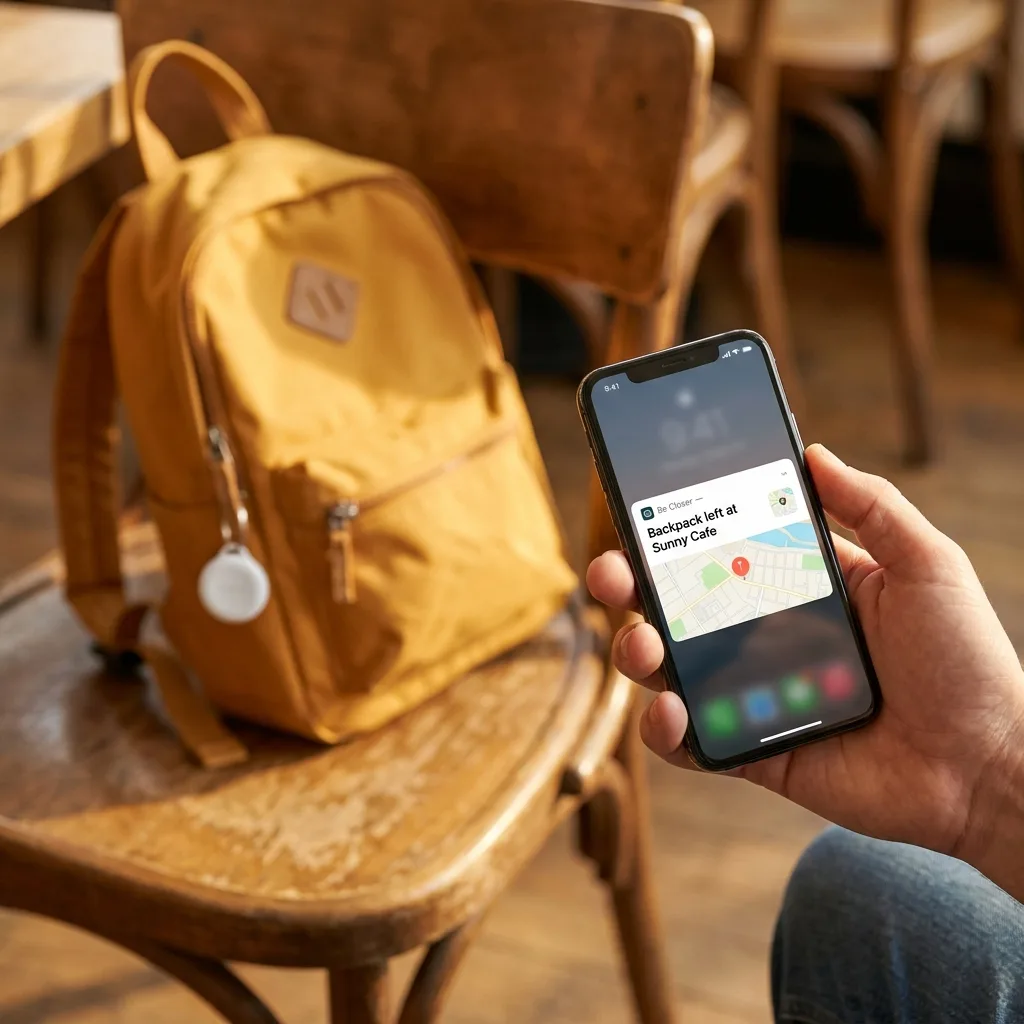
An arrival alert solves exactly that. Set the school as a place, get a quiet notification when they arrive, and delete the whole ritual. Be Closer is free to download, works on iPhone and Android, and gives you up to 95% accuracy, which is well within what you need to know that a child is at school rather than still on the main road. The mechanics are in geofencing explained for parents if you want to understand what triggers the ping.
Set expectations with your child at the same time, in one sentence. I get a message when you arrive so I do not text you. Older kids in particular will take that deal happily, because what they dislike is the messaging, not the knowing. It is the same principle we cover in talking to teens about location sharing.
Have a backup for the mornings when the technology does not cooperate, because it will not always. A flat battery, a phone left on the side, a school that swallows signal. Agree what you will do before you do it: wait ten minutes, ring the friend they walk with, then ring the school office. Deciding that in advance is what stops a missing ping turning into a panicked half hour.
The seasonal re walk with your child
Finish by doing the walk together once, in the dark, at their pace, letting them lead. Not as a test, and not narrating the whole way. You are watching how they handle it now that the conditions have changed.
- Do they stop at driveways, or walk straight past.
- Do they cross where you agreed, or where the gap appears.
- Do they look up from a phone or a conversation at junctions.
- Do they know which shop or house they would go to if something felt wrong.
- Do they know what to do if a car slows down next to them. Cross the road, walk the other way, go into a shop. Practical, not frightening.
Then say two or three specific things, not a lecture. Stop fully at that white van driveway. Use the lit crossing even though it is further. Keep the hood down when it rains. Children remember two things. They do not remember eleven.
And do a shorter version of this again in February, when the mornings start getting lighter and the winter habits quietly loosen. If the whole walk still feels like a step too far this year, that is a completely legitimate answer, and when your child can walk to school alone will help you decide when to try again. There is no prize for doing this in the darkest ten weeks of the year.
Frequently asked questions
Marta writes our Kids & Teens guides. Mother of two, professional over-preparer, firm believer that independence is a skill you practice, together first, then alone. She has road-tested every checklist in her own hallway at 7:40am.
Our guides are written by Be Closer's editorial voices and reviewed by the team behind the app. Questions? support@becloser.com
Published · Updated