 Kids & Teens
The 7:40 A.M. School Run: Systems That Save Your Sanity
Most morning chaos comes from decisions being made at 7:20 a.m. instead of the night before, so move them: pack bags, pick outfits and check the weather the evening before, stagger wake-up times by how long each kid actually takes, and set up a launch pad by the door for anything that has to leave the house. Coordinate carpools clearly on who-walks-when, and swap the anxious 'did you make it?' text for one automatic arrival alert.
There's a version of the school run that exists in every house at least once a week: someone can't find a shoe, someone else remembers a permission slip at the door, and you're doing mental math about whether running one red light is morally acceptable given the circumstances. None of this is really about the shoe. It's about the fact that a dozen small decisions are all getting made at the same time, under time pressure, by people who are barely awake.
The fix isn't more willpower at 7:20 a.m., nobody has willpower to spare at 7:20 a.m. The fix is moving as many of those decisions as possible to a calmer point in the day, usually the night before, so that morning becomes execution rather than decision-making.
Here's a set of systems that do exactly that: staging the night before, a single launch pad by the door, staggered wake-ups that match how each kid actually operates, clear carpool logistics, and a swap from anxious text-checking to a single automatic arrival alert.
What actually belongs in a night-before routine?
The goal of a night-before routine isn't to do everything possible in advance, it's to remove the decisions that cause the most friction and the most delay, specifically.
- Outfits picked and laid out, including the specific socks, because the sock negotiation is somehow always the longest one.
- Backpacks fully packed, checked against the day's actual schedule, gym kit, permission slips, the library book that's due back.
- Lunches made or at least assembled to the point where morning-you just has to zip the bag shut.
- Weather checked so there's no 8:05 a.m. scramble for a jacket nobody can find.
- One shared spot for anything that needs a signature, permission slips, forms, checked as part of the routine, not discovered at the door.
Ten minutes the night before reliably saves twenty-five minutes of chaos in the morning. That ratio holds up more consistently than almost anything else in a parenting routine.
What's a launch pad, and why does it work so well?
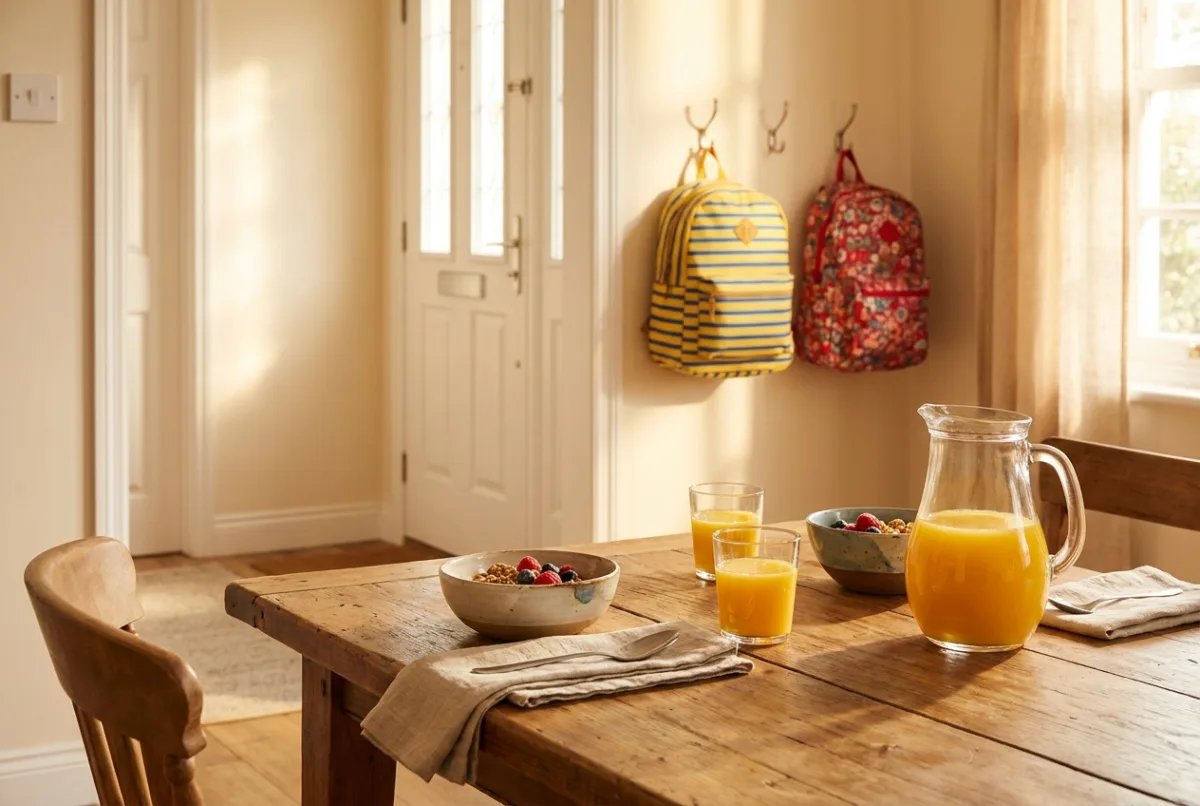
A launch pad is one designated spot, a bench, a row of hooks, a basket by the door, where everything that needs to leave the house lives the night before. Backpacks, shoes, sports kit, the violin, the field trip form. If it needs to go out the door, it goes on the launch pad and nowhere else.
The reason this works isn't magic, it's just that it eliminates the single most time-consuming morning activity in most households: searching. Nothing gets 'searched for' at 7:35 if it only ever lives in one place. It also gives kids a visual, low-effort way to check they have everything, which slowly shifts the responsibility off you and onto them, which is really the long-term goal anyway.
How should wake-up times actually be staggered?
Waking every kid at the same time and hoping for the best usually means the slowest kid sets the pace for the whole house, and everyone else absorbs that delay. Stagger wake-ups based on how long each child actually takes, not how long you wish they took.
- 1Time each kid's actual morning routine for a few days, shower to shoes-on, without commenting on it, just observing.
- 2Wake the slowest kid first, giving them the longest runway, and the fastest kid last, since they need the least.
- 3Build in a small buffer, five to ten minutes, for the inevitable one thing that goes sideways.
- 4Keep bathroom overlap in mind, stagger showers as much as wake times if more than one kid needs the same bathroom.
This sounds like overengineering a school morning, and it kind of is, but a five-minute head start for your slowest mover removes more daily stress than almost any other single change.
Be Closer shows your whole family on one private map, free to start.
Consent-first, never sold, and gentle on your battery. iOS and Android.
How do you coordinate a carpool without a group chat spiraling?
Carpools fail most often not because of bad intentions but because 'who's driving today' gets decided fresh every single morning, usually via a flurry of texts at 7:15 when nobody has time to answer them.
A carpool system that holds up
- Set a fixed weekly rotation, same driver, same days, every week, rather than deciding morning by morning.
- Share it as a simple written schedule everyone can check without asking, not just a memory everyone's relying on.
- Agree a clear pickup window, e.g. 'car leaves the driveway at 7:42, not 7:42-ish', since 'ish' is where most delays live.
- Have one backup plan for when the scheduled driver is out sick, decided in advance rather than negotiated in a panic that morning.
This same logic, deciding who's doing what before the pressure hits, also applies to who's walking younger kids to school on which days, especially once siblings start splitting off in different directions, a topic covered in more depth in when can my child walk to school alone.
Why swap 'did you make it?' texts for one arrival alert?
A lot of parents send a version of 'text me when you get to school' every single morning, and a lot of kids either forget entirely or answer forty-five minutes late from the middle of first period, which somehow manages to worry you more than if they'd never planned to text at all.
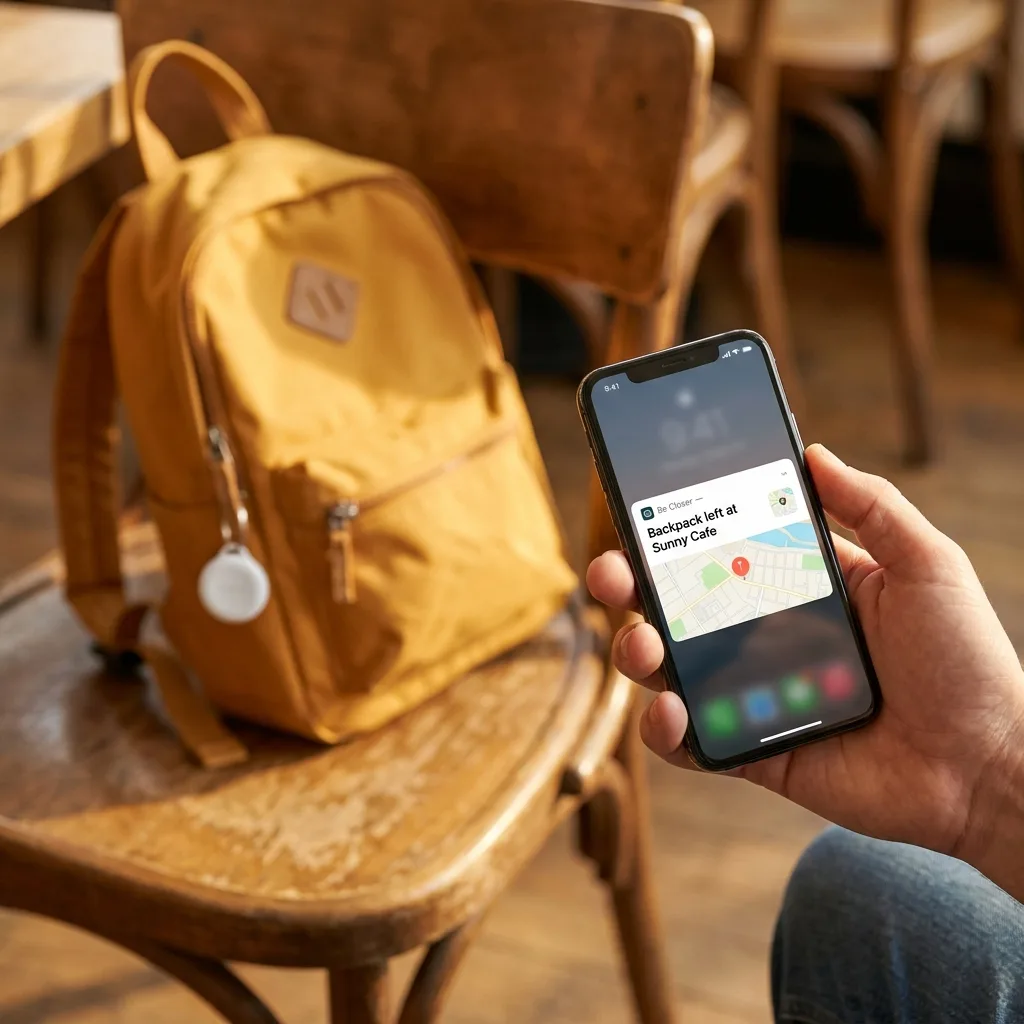
A single automatic arrival alert, whether they're walking, biking, or getting dropped off by a carpool, solves this more reliably than any number of reminder texts, because it doesn't depend on your child remembering anything mid-morning. It's a small system change, but it removes one more thing from the morning mental checklist, on both ends.
What does a full 7:00–7:45 sequence actually look like?
| Time | What's happening |
|---|---|
| 6:50 | Slowest kid wakes; fastest kid still asleep |
| 7:05 | Breakfast starts; launch pad items get a final visual check |
| 7:20 | Fastest kid wakes; overlap window for shared bathroom ends |
| 7:35 | Everyone dressed, bags on backs, launch pad clear |
| 7:42 | Carpool departs on schedule, no negotiation required |
| 7:50 | Arrival alert lands; morning is, genuinely, over |
None of this needs to be rigid to the minute every single day, the point of a system is that it absorbs the occasional bad morning without collapsing entirely, not that it runs like a train timetable.
Frequently asked questions

Marta writes our Kids & Teens guides. Mother of two, professional over-preparer, firm believer that independence is a skill you practice, together first, then alone. She has road-tested every checklist in her own hallway at 7:40am.
Our guides are written by Be Closer's editorial voices and reviewed by the team behind the app. Questions? support@becloser.com
Published · Updated