 Privacy & Trust
How to talk to your teen about location sharing (without the fight)
The rule that settles most of these arguments: sharing has to go both ways, or it isn't sharing. Lead with what you'll trade, later curfews, the car, fewer check-in texts, rather than what you'll see. Make sharing mutual, agree in writing what you will and won't do with it, and put an expiry date on the arrangement. Never track a teenager secretly; the discovery costs more than the information was ever worth.
Ask a group of teenagers about family location sharing and the answer is calmer than most parents expect. Very few of them hate the idea. Most of them share location with their friends constantly, voluntarily, and in far more detail than their parents ever see.
What they object to is asymmetry, being visible to someone who isn't visible back, under rules they didn't agree to, for reasons that were never stated. Almost every fight about location sharing is really a fight about one of those three things, which is good news, because all three are fixable in a single conversation.
Why the usual approach fails
The standard rollout goes: parent worries, parent installs app, parent announces app at dinner, teenager reacts badly, parent frames the reaction as proof that something is being hidden. Everyone ends the evening more entrenched.
It fails because it presents a finished decision. Adolescence is, developmentally, an extended negotiation for autonomy, that's the job of the age. A rule handed down without input gets tested on principle, regardless of whether it's a good rule. The same rule, arrived at jointly, usually sticks.
It also fails because it's one-directional. If you can see your teenager and they can't see you, you've built surveillance and called it safety. Symmetry costs you nothing and changes the entire meaning of the arrangement.
Scripts that actually work
Wording matters more than you'd expect. These are the openings we hear from families where this went well.
The trade
"I'd rather not text you all evening asking where you are. If we all share location, I'll stop asking, and I'm happy to push your curfew back an hour. Deal?"
This works because it's an exchange with something real on the other side. Sharing that buys nothing feels like a loss; sharing that buys freedom feels like a trade. And it makes the actual benefit to them explicit: fewer interruptions.
The mutual frame
"This isn't me watching you. It's all four of us on one map, you'll see me stuck at work before I've had a chance to complain about it."
Say it and then prove it. Let them see your dot at the supermarket. The first time a teenager checks whether a parent is on the way to collect them, the framing has done its work.
The honest worry
"I'm not worried about what you're doing. I'm worried about the twenty minutes between the last bus and the front door. That's the bit I'd like to stop thinking about."
Specific worries are answerable. Vague worry sounds like distrust and invites an argument about character. Narrow it to a journey, a time or a place, and you'll often find your teenager agrees the worry is reasonable.
The ask, not the announcement
"What would make this feel fair to you?"
The single most effective sentence in the whole conversation. Teenagers usually ask for something modest, the ability to pause, no comments about specific places, no discussing it with relatives, and having asked for it themselves, they defend the arrangement rather than attacking it.
Trading autonomy for transparency
The strongest deals attach sharing to an expansion of freedom, not a condition of existing freedom. Things families successfully trade:
- A later curfew on weekends.
- Permission for trips into the city, or to a festival, without a parent.
- The end of check-in texts, genuinely the end, not a reduction.
- Staying over at a friend's without a phone call home.
- Access to the car, once driving.
Be careful about the mirror image: threatening to remove existing freedoms if they refuse. That converts the conversation into a power contest, and even if you win it, you've taught them that sharing is coercion. If they say no, ask what smaller version they'd accept, arrival alerts for two places, or sharing only after dark, is a perfectly good starting point.
The driving conversation is different
Once a teenager is driving, the stakes change and, usefully, so does their receptiveness. New drivers are more aware of risk than they let on, and a conversation framed around the car rather than around them tends to go better.
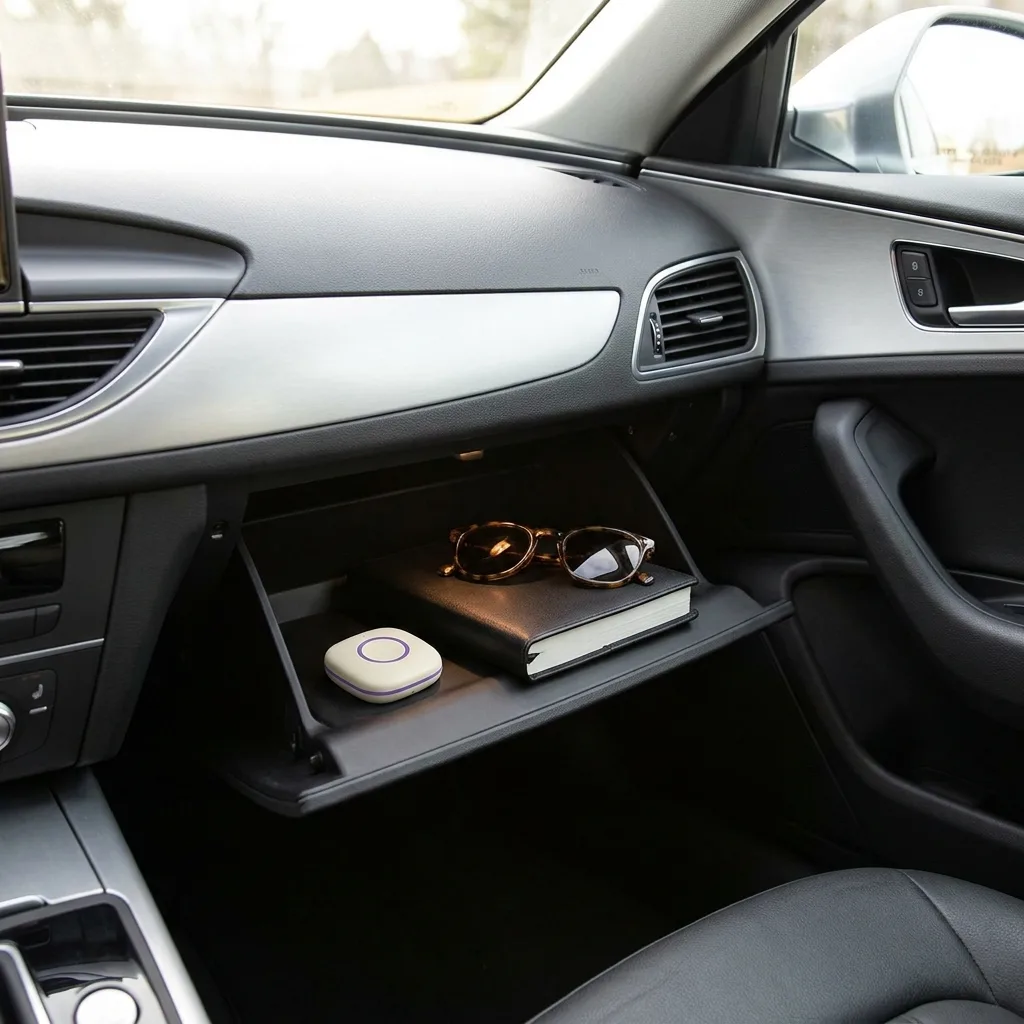
- Make it about the car, not the driver. Knowing the vehicle arrived, or that it moved when it shouldn't have, is a different proposition from tracking a person. Our Drive tracker lives in the glove box precisely so it reads as a car utility.
- Agree the breakdown plan first. "If you're stuck, I can see where the car is and come and get you" is the most persuasive argument available, and it's true.
- Don't relitigate every journey. If you comment on routes and speeds nightly, they'll turn it off or leave the phone at home. Pick the two things that matter and ignore the rest.
- Long drives are the exception. Most families find continuous sharing intrusive but agree easily on sharing during motorway trips or late-night drives. Situational sharing is a perfectly legitimate compromise.
Be Closer shows your whole family on one private map, free to start.
Consent-first, never sold, and gentle on your battery. iOS and Android.
Sunset clauses: the trick nobody uses
Any arrangement that appears permanent will be fought. Any arrangement with a visible end date is much easier to accept, because it stops being an identity and becomes a phase.
A workable teen sharing agreement
- Everyone shares with everyone, parents included, no exceptions.
- We review this at the end of every school year, and it gets looser each time.
- Nobody checks the map without a reason, and if we do check, we say so.
- Location is never brought up in an argument.
- You can pause. If you pause, send a message. Pausing is not evidence of anything.
- At eighteen, this becomes entirely your choice.
That last line is what makes the rest acceptable. It converts an imposition into a ladder with a visible top. Families who set one report far fewer disputes than families who leave the arrangement open-ended, and the irony is that most eighteen-year-olds, given a genuine free choice, keep sharing anyway because it's useful.
What never to do
- 1Never track secretly. It will be found, phones list permissions, batteries list apps, friends notice. And the damage isn't proportional to what you discovered; it's proportional to the discovery itself.
- 2Never use location as evidence. "I saw you were at…" ends the arrangement, whatever they were doing. If you need to raise something, raise the thing, not the surveillance.
- 3Never punish a pause. If pausing triggers a confrontation, they'll stop pausing and start leaving the phone at a friend's, and now you know less than before.
- 4Never act on a single reading. Location estimates drift, especially indoors and in dense streets. Before you conclude anything from a surprising dot, read How accurate is phone GPS, really?.
- 5Never make it the whole relationship. A map tells you where. It tells you nothing about how they are. That still requires asking.
If they still say no
Take it seriously rather than escalating. A flat refusal from an otherwise reasonable teenager usually has a specific cause: a friendship group where it's mocked, an experience of a parent overreacting, or a general sense that they've been given less independence than their peers.
Address the cause and revisit in a month. In the meantime, agree the minimum: a text on arrival, a shared plan for the evening, and an agreement that they'll answer their phone. That's most of the safety value anyway. The map was only ever a convenience layer on top of a relationship that was already working, and if the relationship needs attention, no app will substitute for it. Our broader thinking on this is in Should I track my child's location?.
Frequently asked questions

Daniel covers privacy, consent and the technology under the hood. A dad who reads the settings screens so you don't have to, he believes the best family tech is the kind you can explain to your kid in one sentence, and that nothing should ever be tracked in secret.
Our guides are written by Be Closer's editorial voices and reviewed by the team behind the app. Questions? support@becloser.com
Published · Updated