 Kids & Teens
School Bag Safety Essentials: What Actually Belongs in the Backpack
Six things earn their place in a school bag: a written contact card, a few coins or a small emergency note, water, a reflective strip on the outside, a small power bank on long days, and a Bluetooth tracker so you can find the bag itself. Skip the whistle, the multi tool and the giant first aid kit, which sound sensible and never get used. Reset the bag for five minutes every Sunday evening and it stays useful all term.
I once emptied my daughter's school bag in March and found, among other things, two half eaten cereal bars, a permission slip from November, a single wet sock, forty pence, and the emergency contact card I had carefully laminated in September, which had been at the bottom under a book the entire year and which she had forgotten existed.
That is the actual challenge with school bag safety. It is not deciding what would be useful in an emergency, because a good half of the internet will happily tell you that. It is deciding what is short enough that it stays findable, and building a small habit that stops it silting up by half term.
So this is a deliberately short list. Six things that earn their place, a clear verdict on the items people argue about, an honest list of what not to pack, and the five minute Sunday reset that has kept our bags functional for two years now. Everything here assumes a child walking, cycling or taking a bus to a normal school day, not an expedition.
The six things that earn their place
A written contact card, in a fixed pocket. This is the single most valuable item in the bag and it costs nothing. Full name, two adult names with mobile numbers, home address, one out of area contact, and any medical line an adult needs in the first five minutes. Laminate it or cover it in clear tape. Crucially, it lives in one named pocket and always the same one, because a card your child cannot locate under stress is a card that does not exist. The memorized version of the same facts matters even more, and what your child should memorize covers how to get it into their head.
A few coins or a small emergency note. Payphones are vanishing, so this is less about calling home and more about a bus fare, a bottle of water, or the specific dignity of being able to solve a small problem alone. Tape a couple of coins to the back of the contact card so they cannot migrate into the lining. Agree what it is for, once, and then do not audit it.
Water, in a bottle that actually seals. Mundane, and it is genuinely the item that prevents the most bad afternoons. A tired, dehydrated eleven year old at four in the afternoon makes worse decisions about roads and routes than the same child at nine in the morning. Buy the boring bottle that seals rather than the popular one that leaks onto a laminated card.
A reflective strip or slap band, on the outside. From October onwards this does more for a child's physical safety than everything else in this article combined. Put it on the bag rather than the coat, because the bag is the thing that goes to school every day and the coat is a matter of opinion. If your child walks in the dark at either end of the day, walking to school in the dark goes into route choice and visibility properly.
A small power bank and a short cable, for long days. Not every day, because it is weight, and a phone at zero percent is the root of most of the afternoons that end with a worried parent. Our rule is that the power bank goes in on club days, trip days and anything that runs past five. Keep the cable taped to the power bank or it will be missing within a fortnight. If flat batteries are a running theme in your house, what to do when your child's phone dies is the habit fix rather than the hardware one.
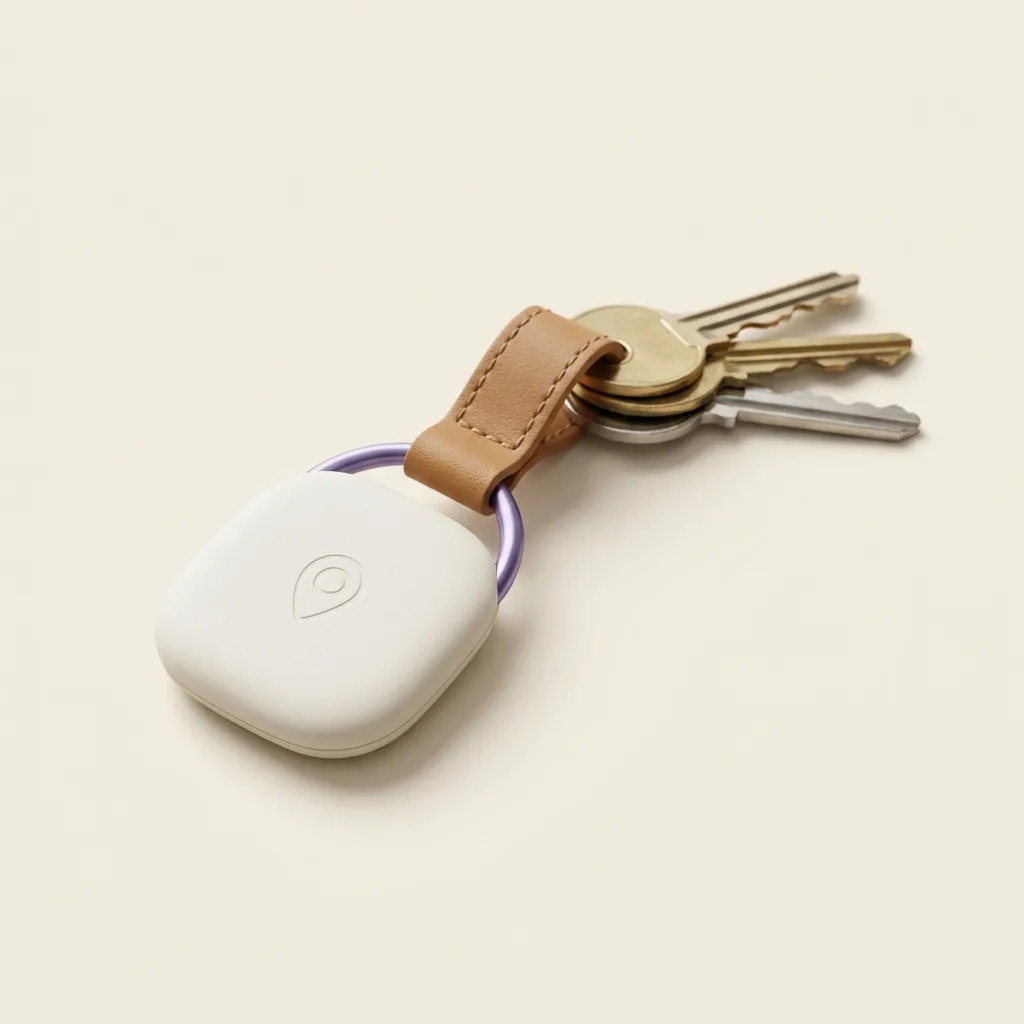
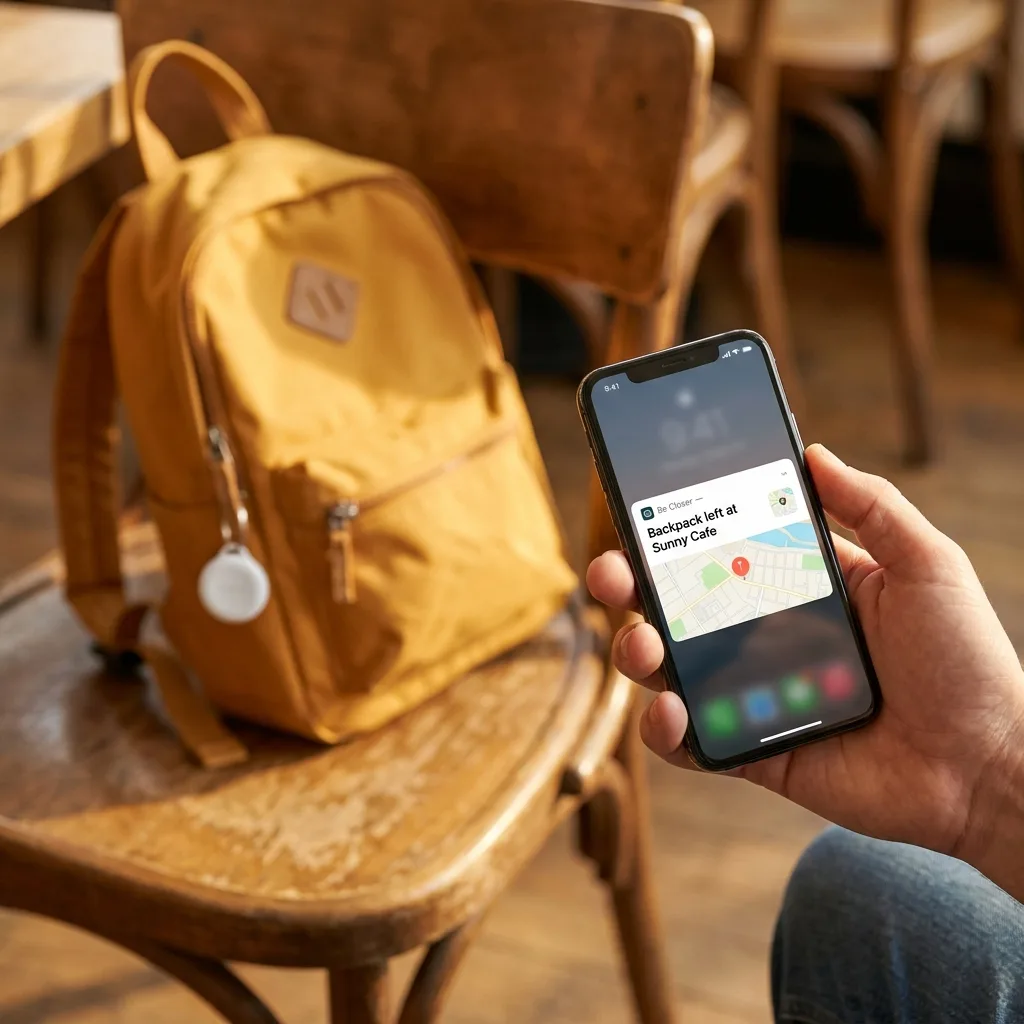
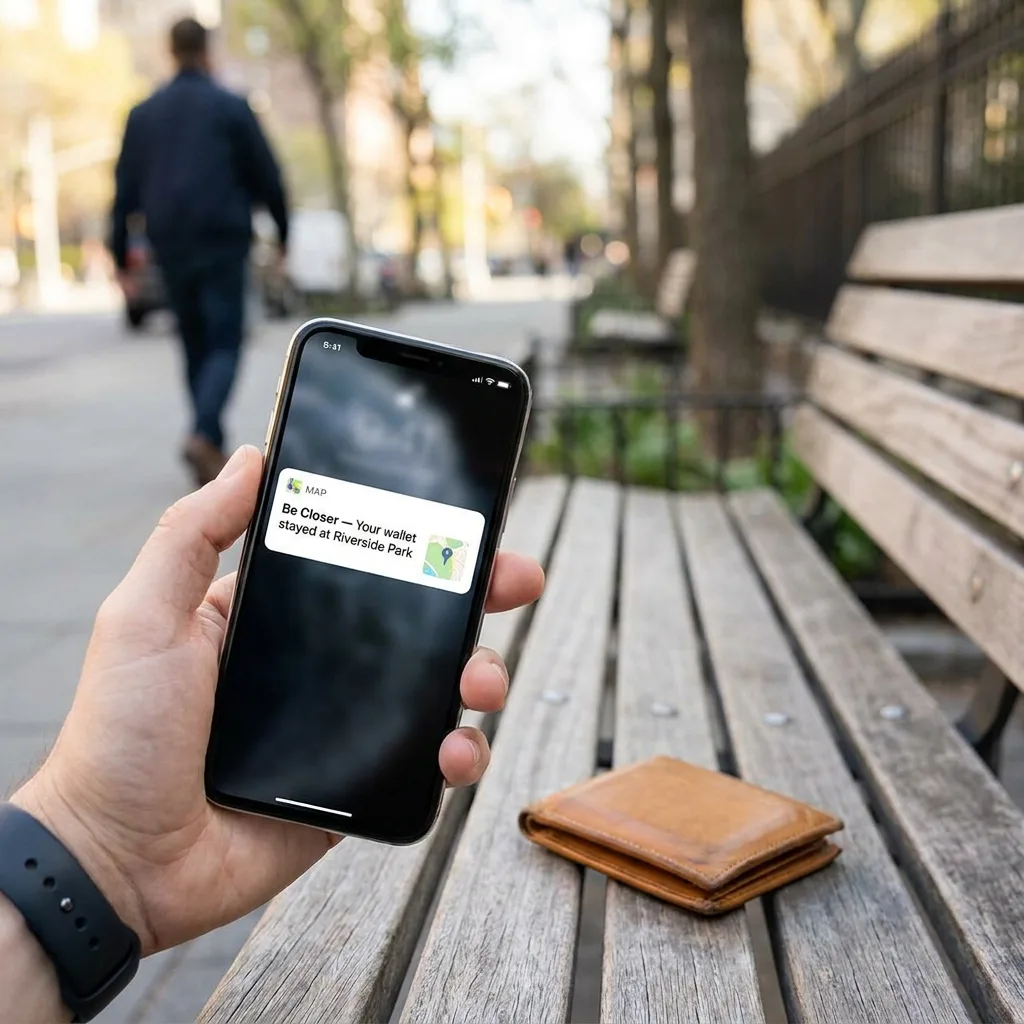
A Bluetooth tracker in the bag, for the bag. Be honest with yourself about what this does: it finds the backpack. Our Tag slips into an inside pocket and means that a bag left in a sports hall, on a bus seat or at a friend's house is a ten minute problem rather than a lost coat, lost homework, lost water bottle afternoon. It is not a child tracker and should never be sold to your child as one. If you want the difference spelled out, Bluetooth trackers versus GPS trackers is the comparison.
The whistle question, honestly answered
- Mostly no. A whistle is standard advice and in the ordinary school day it is close to useless, because the situations it is meant for are rare and children do not reach for it.
- The exception: rural routes, long stretches with no houses, or a child who walks a path where a shout would not carry. There, a whistle on the strap is reasonable.
- If you do add one, clip it to the outside of the strap where a hand can find it without looking. A whistle inside a bag is decoration.
- What replaces it in town: a rehearsed line for approaching an adult, which works in the situations a whistle is imagined for and in about forty others.
What not to pack, and why
Every item on this next list has been recommended to me in good faith by another parent, and every one of them has ended up as dead weight in someone's bag. Weight matters, because a heavy bag is a bag that gets dumped in a corner, and a bag in a corner is not with your child.
- A full first aid kit. Schools have one, and a child who needs more than a plaster needs an adult rather than a bag. Two plasters in a side pocket is the correct size of this idea.
- A multi tool or anything with a blade. Beyond useless, it is the sort of thing that turns into a serious school incident, and no primary or secondary school will accept a safety justification.
- Cash beyond a small amount. It goes missing, it invites the wrong kind of attention, and it makes a lost bag feel much worse than it needs to.
- A spare phone. Two devices is two batteries to manage and one more thing to lose. A charged single phone plus a power bank beats it every time.
- Anything valuable that is not required. Headphones your child would be heartbroken to lose, a games console, jewellery. School bags are left unattended in cloakrooms constantly.
- A name label on the outside. Inside the bag, yes, in a hidden pocket. Large letters on the outside means a stranger can greet your child by name, which is a small risk but a completely avoidable one.
The test for every item is simple. Would my child know it was there, and could they get to it in thirty seconds while upset. If not, it is ballast.
Be Closer shows your whole family on one private map, free to start.
Consent-first, never sold, and gentle on your battery. iOS and Android.
The Sunday evening five minute reset
A bag set up perfectly in September is a bag full of cereal bar wrappers by November. The only thing that has ever worked in our house is a fixed, very short routine attached to something that already happens, in our case just after Sunday dinner while the kettle is on.
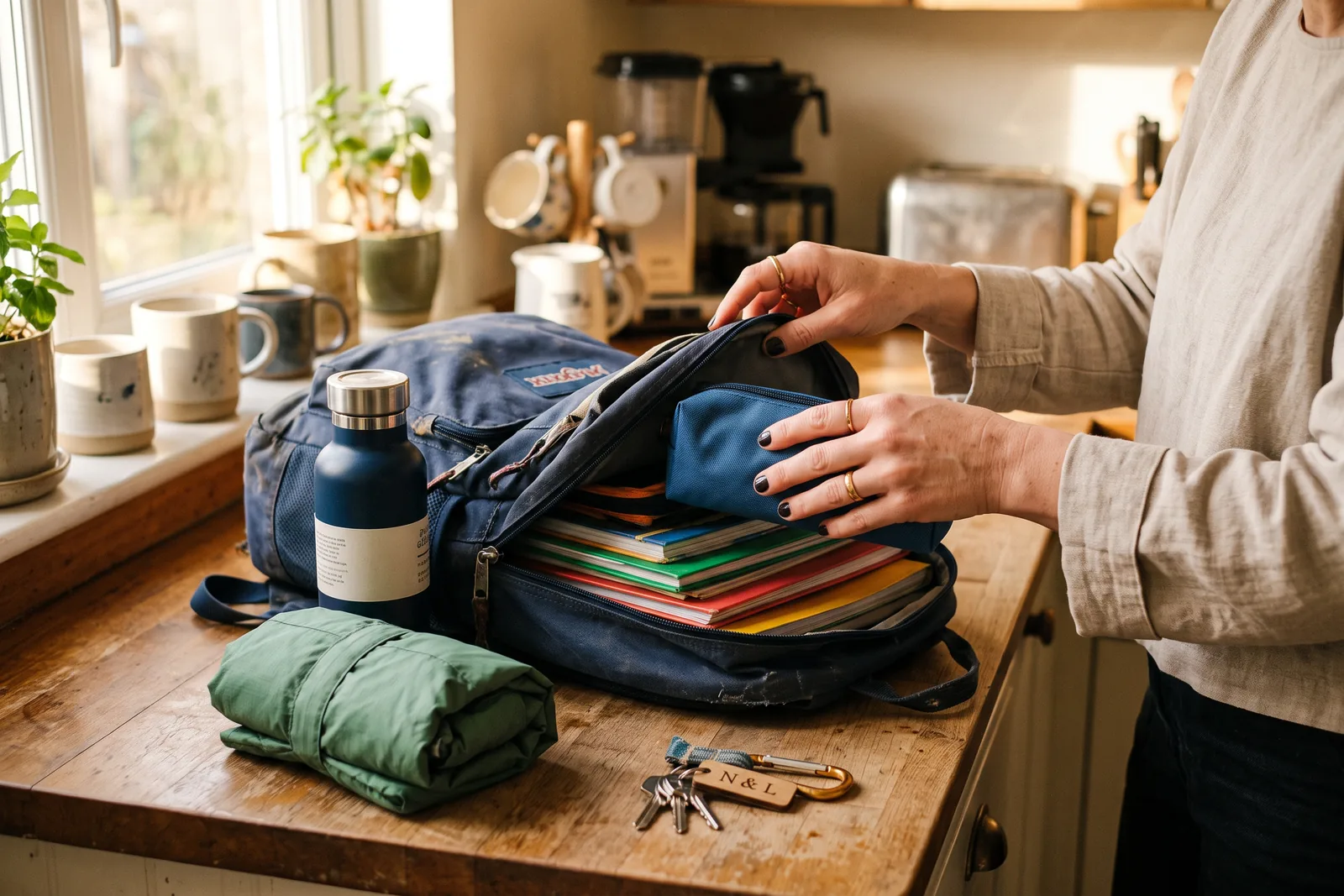
- 1Tip it out. Everything on the counter. This takes about forty seconds and is the step that does most of the work.
- 2Bin, wash, return. Rubbish in the bin, bottle and lunch box to the sink, school letters onto the fridge.
- 3Check the fixed four. Contact card present and readable, coins still taped on, reflective strip still attached, bottle sealing properly.
- 4Look at the week. Club days, trip days, anything running late. Power bank goes in for those days now rather than at seven forty on the morning.
- 5Charge the tracker if it needs it, and glance at the phone's battery health while you are there.
- 6Have your child do steps one to three. By about age nine they can run the whole reset with you supervising from a chair, and by eleven they should be doing it while you do something else entirely.
Make the last step non negotiable, because the point is not a tidy bag. The point is a child who knows exactly what is in their bag and where, which is the whole reason any of this works in an emergency. A parent who packs the bag perfectly every Sunday produces a twelve year old who has no idea where the contact card is. This fits neatly into a wider weekly rhythm, and the back to school family routine reset has the rest of it.
One seasonal note. Twice a year, at the start of autumn and again after the spring holiday, do a longer version: replace the contact card if any number has changed, swap the reflective strip if it has gone dull, and check whether the bag itself is still the right size. Children grow out of bags without mentioning it.
Where the phone and the tracker actually fit
Almost every parent reading this has a phone in the picture somewhere, and it is worth being clear about which job each thing does, because it stops you buying things that duplicate each other.
- The phone is the communication layer. It handles calling, being called, and sharing location while it has battery and signal.
- The power bank exists because that first layer fails on battery more than on anything else.
- The tracker in the bag covers the bag itself, which is the thing that most often goes missing and the thing nobody plans for.
- The contact card and the memorized facts are the layer that works with no battery, no signal and no device at all, which is why they are first on the list rather than last.
On location sharing, our position has not changed: it should be mutual, explained, and something your child can see and discuss rather than something running quietly in the background. Set it up together, let them see you too, and show them where the setting lives. Be Closer is free to download, works in 13 languages, sits at 4.4 stars across more than 150,000 ratings on the App Store and Google Play, and is honest that accuracy reaches up to 95 percent in good conditions rather than always.
My daughter is twelve now and packs her own bag on a Sunday, badly, in about ninety seconds. The card is still in the front zip pocket where it has been since Year Four. She has never needed it. That is the correct outcome for almost everything in this article, and it is still worth the five minutes a week.
Frequently asked questions

Marta writes our Kids & Teens guides. Mother of two, professional over-preparer, firm believer that independence is a skill you practice, together first, then alone. She has road-tested every checklist in her own hallway at 7:40am.
Our guides are written by Be Closer's editorial voices and reviewed by the team behind the app. Questions? support@becloser.com
Published · Updated