 Privacy & Trust
Bluetooth trackers vs GPS trackers: how each one actually finds things
A Bluetooth tag does not know where it is. It shouts a short radio signal and relies on other people's passing phones to report the sighting, so it is excellent in busy places and silent in empty ones. A GPS tracker works out its own position and sends it over a cellular connection, so it updates almost anywhere with signal but needs charging and usually a subscription.
Two small plastic objects, similar prices in the listing, both promising to help you find something. One of them will find your keys reliably for three years without a thought. The other one will follow your dog across a field. They are not interchangeable, and swapping them is the source of nearly every disappointed review either category receives.
The difference is not a feature list. It is a mechanism, and once you can describe the mechanism in a sentence you will never buy the wrong one again.
So: a Bluetooth tag borrows other people's phones. A GPS tracker carries its own. Everything else follows from that.
How a Bluetooth tag actually finds something
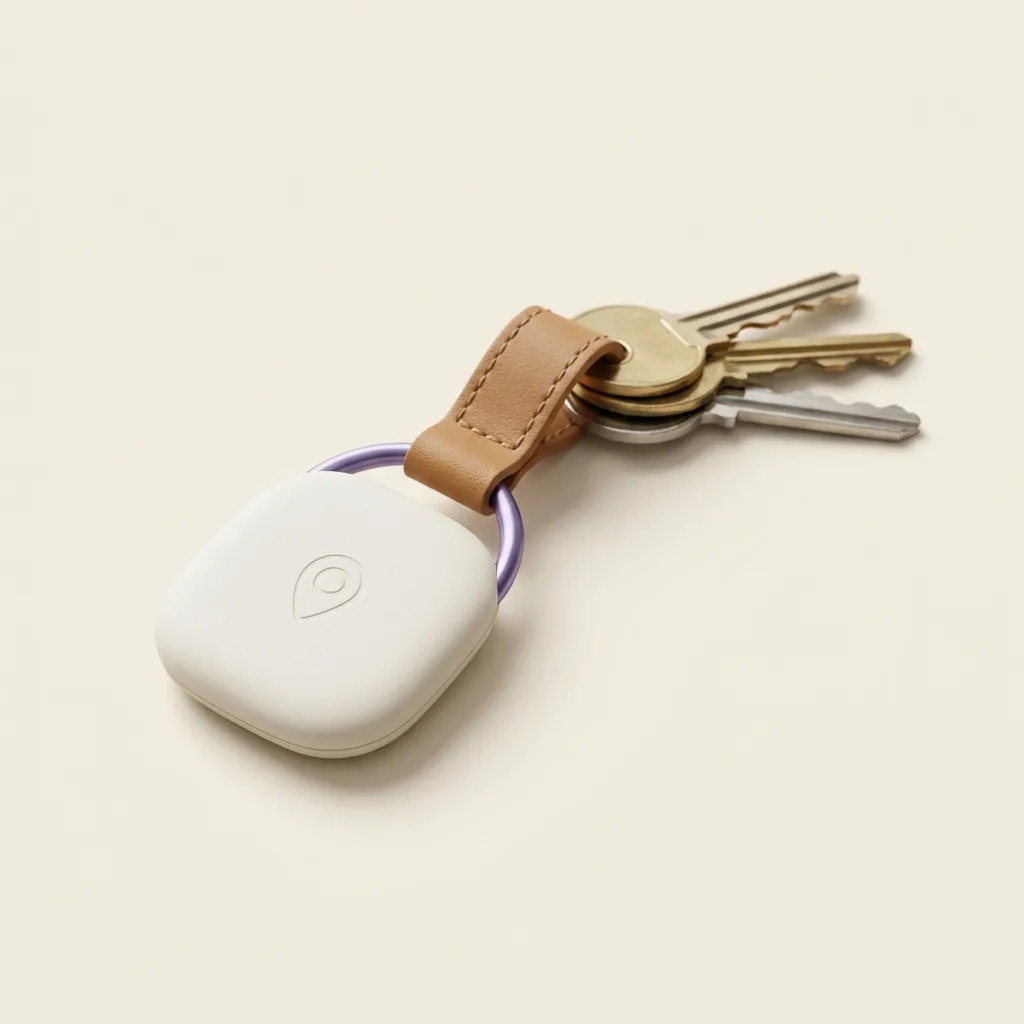
A Bluetooth tag is a coin cell, a tiny radio and a speaker. It broadcasts a short encrypted identifier every few seconds. That is genuinely the whole device. It has no idea where it is, no map, no satellite receiver and no connection to the internet.
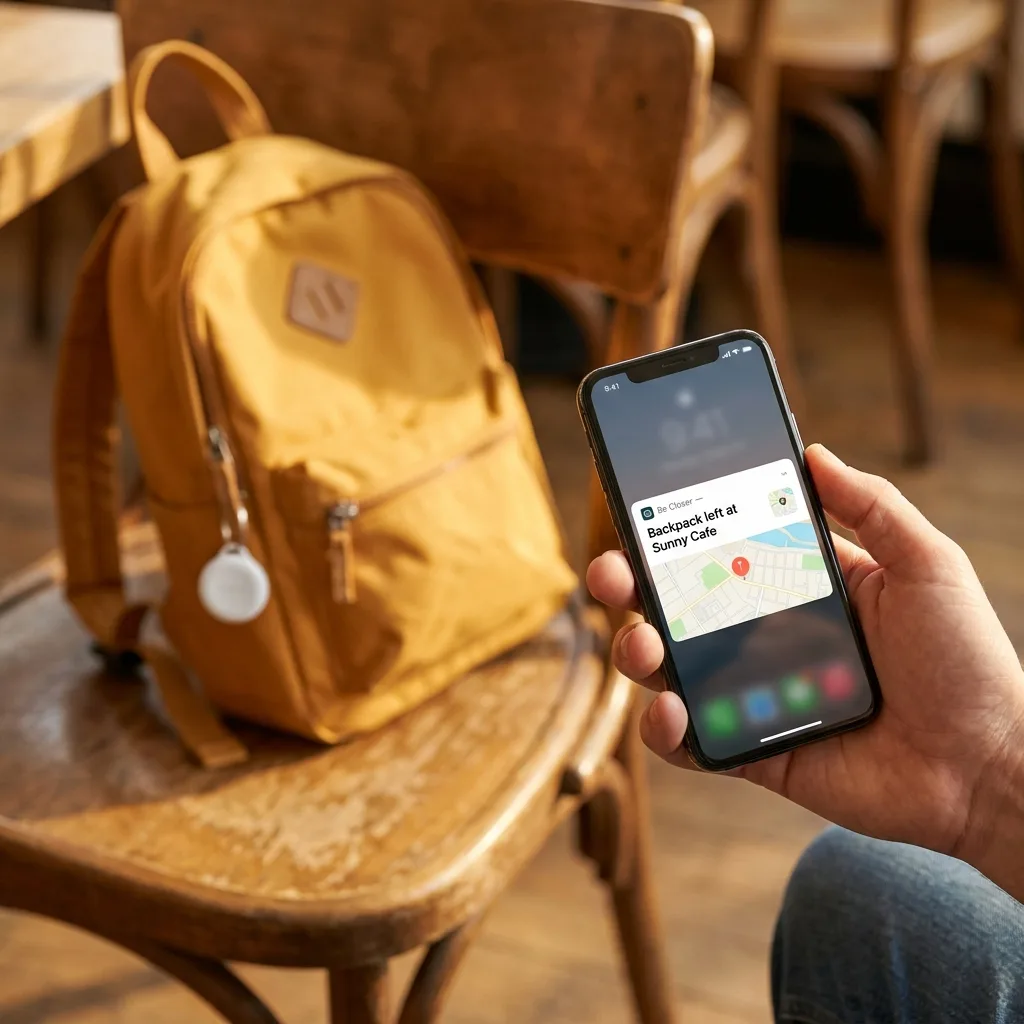
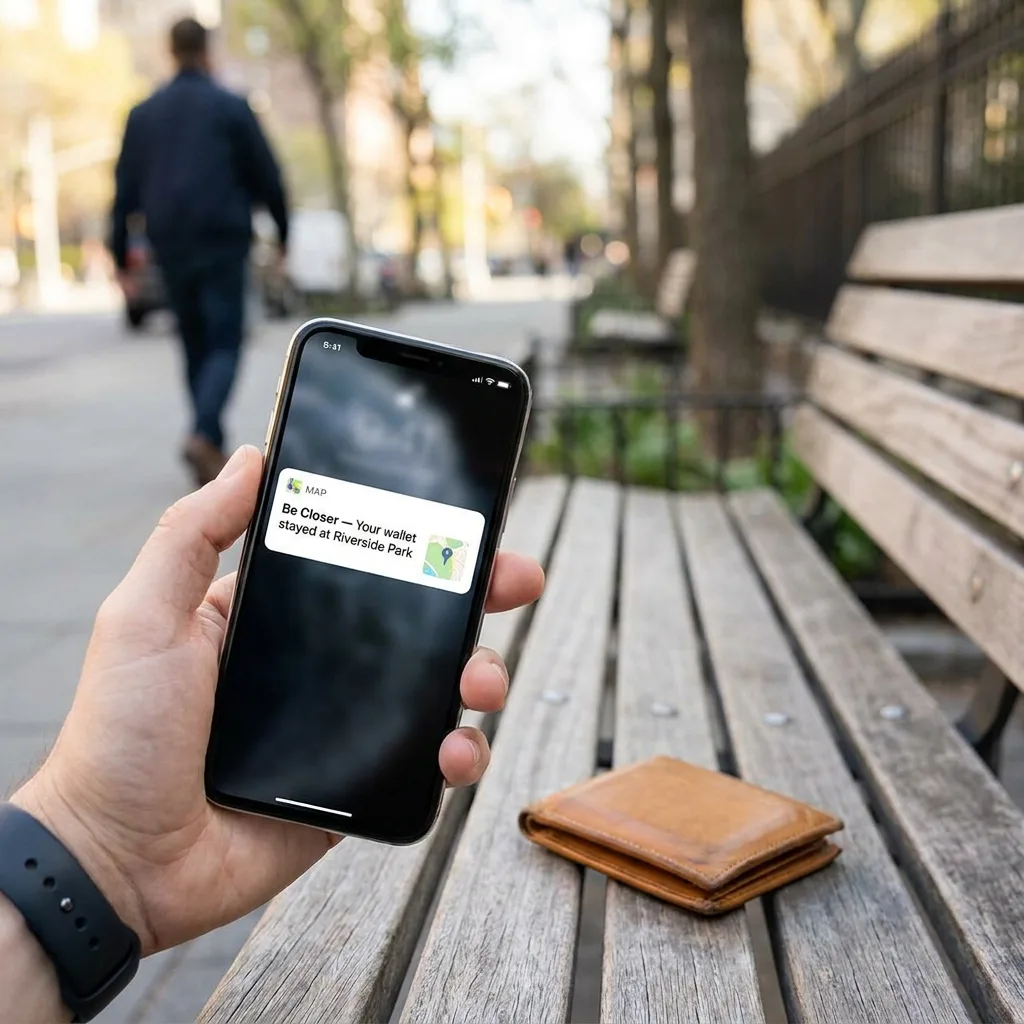
What makes it useful is the network around it. Phones running the matching platform listen for those broadcasts in the background. When a phone hears your tag, it quietly reports the tag's identifier together with the phone's own location. Your app then shows you a place, which is really the last place somebody else's phone happened to walk past your bag.
- Range is short. Roughly the length of a house on a good day, less through walls. Beyond that you are entirely dependent on the crowdsourced network.
- Updates are opportunistic. There is no schedule. A location appears when a phone passes by, and not otherwise.
- The battery lasts about a year. Sometimes longer. It is a coin cell you swap, not a nightly charge.
- The speaker matters more than people expect. For the sofa cushion scenario, which is most scenarios, the beep does the actual work.
This design has a privacy consequence worth understanding, which is that the same network that finds your bag can be misused to follow a person. Both major platforms now warn you when an unknown tag appears to be travelling with you. If that is a live concern for your family, unwanted tracking and what parents should know covers the detection and the conversation.
How a GPS tracker actually finds something
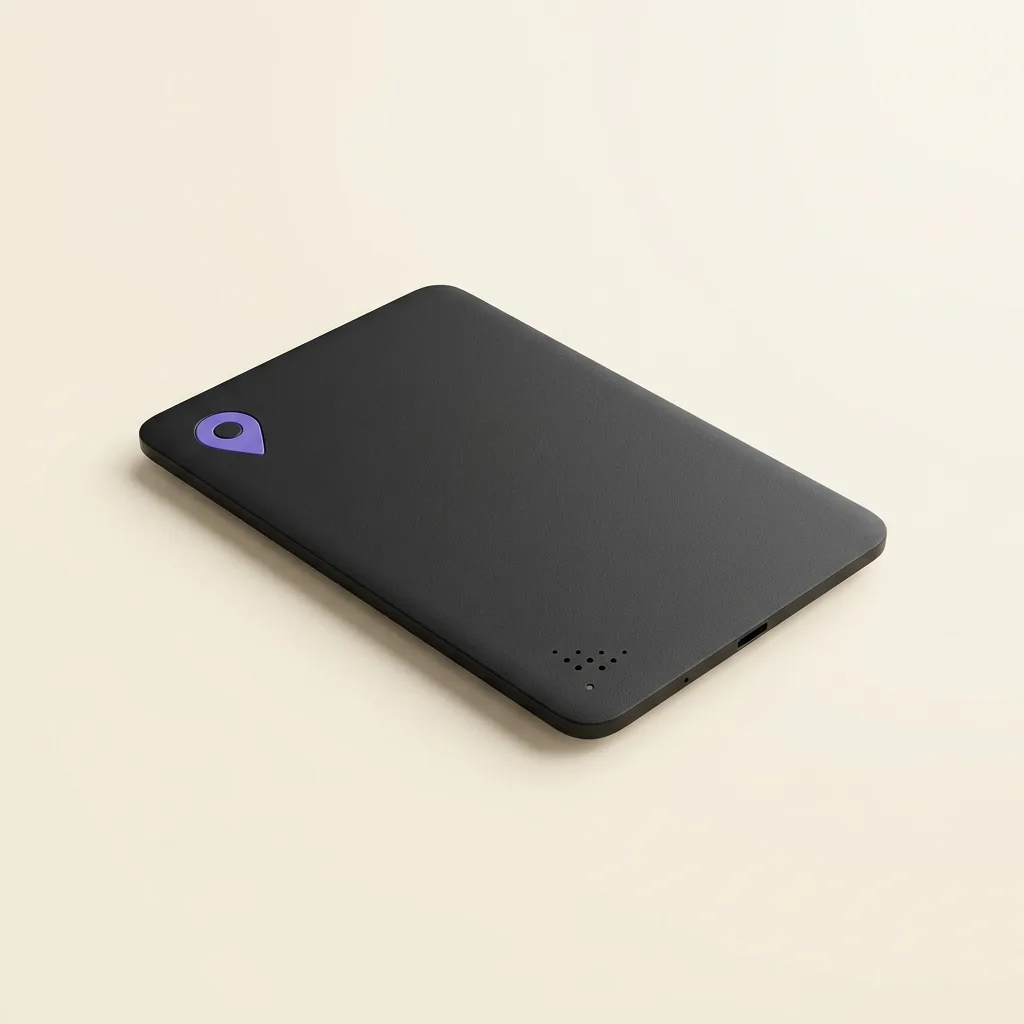
A GPS tracker is closer to a stripped down phone. It has a satellite receiver, so it works out its own position the same way your phone does, and it has a cellular radio, so it can send that position to a server without anyone else's help. There is no borrowing and no waiting for a passer by.
That independence is the entire selling point. A GPS tracker in an empty field at 3am reports its position exactly as happily as one in a city centre, provided there is a cell signal to send it over. The trade is power. Listening to satellites and running a cellular modem uses meaningfully more energy than shouting a Bluetooth identifier, so these devices are charged in days or weeks rather than swapped in years, and they usually carry a data subscription.
There is a second difference that rarely makes the product page. A GPS tracker reports on a rhythm you can influence, which means it can do things a tag structurally cannot: tell you when something arrived somewhere, tell you when it left, and give you a trail rather than a scattering of sightings. Those features exist because the device is in charge of its own reporting. A Bluetooth tag has no rhythm to configure, because it is not the one deciding when a location gets recorded.
This is also why the two categories fail so differently. A GPS tracker that stops reporting has usually run out of battery or driven into a coverage gap, and both of those are things you can plan around by charging it on a schedule and knowing your local dead spots. A Bluetooth tag that stops reporting has simply been somewhere quiet, and there is nothing to fix, adjust or blame.
What a GPS tracker needs that a tag does not
- A cell signal. No coverage means the position is stored or lost, not delivered. The what needs a signal distinction applies here in full.
- Regular charging. Update frequency and battery life pull in opposite directions on every device in this category.
- Usually a plan. The cellular connection is an ongoing cost, which is normally why the hardware looks cheap.
- A view of the sky, mostly. Accuracy indoors and in dense urban canyons degrades the same way it does on a phone, as explained in how your phone knows where it is.
What the difference feels like in practice
The mechanism becomes obvious the moment you picture the same tag in two different places.
A Bluetooth tag on a bag left on a busy train updates constantly. Hundreds of phones pass it every hour, and the trail on your map looks almost live. People are frequently astonished at how good this is, and conclude the device is a tracker.
The same tag on a bag left in a quiet country park may show one location from 4pm and nothing else until morning. Nobody walked past. The device is working perfectly and telling you nothing. People are equally astonished at how bad this is, and conclude the device is broken.
A Bluetooth tag is as good as the crowd around it. A GPS tracker is as good as its battery.
The GPS version of that story is duller and more predictable. It updates on its schedule wherever there is coverage, in the park and on the train alike, and then one day it goes flat because nobody charged it. Both failure modes are manageable. They just require different habits.
Be Closer shows your whole family on one private map, free to start.
Consent-first, never sold, and gentle on your battery. iOS and Android.
Which job suits which device
Here is the rule in one sentence. Use a Bluetooth tag for things that get misplaced, and a GPS tracker for things that move on their own.
| What you want to find | Better choice | Why |
|---|---|---|
| Keys, wallet, remote | Bluetooth tag | The problem is nearly always in your house. The beep solves it. |
| Bag, suitcase, laptop sleeve | Bluetooth tag | Travel routes are crowded, so the network reports sightings often. |
| Bike or scooter | Either, leaning GPS | A tag helps if it is parked in town. A GPS tracker helps if it is taken out of town. |
| Dog or cat that roams | GPS tracker | Animals go where people are not, which is exactly where a tag falls silent. |
| A car | GPS tracker | Distance, motorways and remote car parks all defeat crowdsourcing. |
| A child | Phone or dedicated device | You want continuous, consented, two way contact rather than a found object report. |
That last row deserves emphasis, because it is where the most well meaning mistakes happen. A Bluetooth tag slipped into a school bag is not child safety. It is an object finder that will tell you where a bag was when a stranger's phone last passed it, which could be twenty minutes ago or yesterday. For pets, the equivalent comparison with implanted chips is covered in microchips versus GPS trackers for pets, and the short version is that a chip identifies and a tracker locates.
The other honest caveat is that neither device tells you anything about a person's intent or wellbeing. A tracker on a car tells you the car moved. A tag in a bag tells you the bag was seen. Families sometimes buy hardware hoping it will answer a question that is really about trust or a conversation nobody has had yet, and the hardware cannot do that. Decide what question you are actually asking before you decide which device answers it.
Battery, cost and the honest trade-offs
Every specification difference between these two categories traces back to the power budget, so it is worth laying out plainly.
- Bluetooth tag. About a year on a coin cell, no subscription, cheap to own, near zero maintenance. Reports only when someone walks past.
- GPS tracker. Days to weeks per charge depending on how often it reports, usually a monthly plan, more to own. Reports on schedule wherever there is coverage.
- Update frequency is the dial. On a GPS device, every setting that makes the map feel more live shortens the battery. There is no configuration that avoids this.
- Neither is accurate to the doorstep. Consumer positioning is good, not surgical. Be Closer quotes up to 95% accuracy, and "up to" is doing honest work in that sentence.
The practical answer for most households is both, used for different jobs. Tags on the objects that vanish indoors, a GPS device on whatever leaves the house without you. And the more mundane recommendation that outperforms both: a tray by the door where the keys actually go.
Frequently asked questions

Daniel covers privacy, consent and the technology under the hood. A dad who reads the settings screens so you don't have to, he believes the best family tech is the kind you can explain to your kid in one sentence, and that nothing should ever be tracked in secret.
Our guides are written by Be Closer's editorial voices and reviewed by the team behind the app. Questions? support@becloser.com
Published · Updated