 Pets
PetsMicrochip or GPS tracker? What each one actually does for your pet
A microchip is a permanent identity tag that only works once a person with a scanner, usually a vet or shelter, has already found your pet. A GPS tracker on the collar is what helps you find them yourself, but it needs charging and a signal. They solve different halves of the same problem, which is why most families end up using both.
The question always arrives in the same slightly hopeful shape. "He is chipped, so we would get him back, wouldn't we?" And the answer is yes, probably, eventually, if somebody catches him and takes him somewhere with a scanner.
That sentence has a lot of conditions in it. None of them are reasons to skip the chip, which is one of the best things you can do for an animal. But they are reasons to be clear about what a chip is for, because the gap between what people think it does and what it actually does gets exposed on the worst night of the year, usually in the rain.
So here is the plain version of both technologies, what each genuinely delivers, where each fails, and how to think about the combination.
What a microchip actually is
A microchip is a tiny passive transponder, roughly the size of a grain of rice, placed under the skin between the shoulder blades by a vet. It has no battery, no GPS and no ability to transmit on its own. It sits inert for the animal's entire life.
When a handheld scanner is held over it, the scanner's radio field powers the chip just long enough for it to reply with one thing: a number. That number is then looked up in a registration database, which holds your contact details. The chip does not store your name, your address or your pet's medical history. It stores a number that points at a record.
What a microchip gives you
- Permanent identification that cannot fall off, fade or be removed like a collar tag
- Proof of ownership, which matters far more often than people expect
- A route home from any vet practice, rescue centre or shelter that scans
- No battery, no charging, no maintenance, no monthly cost after registration
- Legal compliance in the many places where chipping is now a requirement, though rules vary by country and region
The single most important thing about a microchip is also the thing most often neglected: the database record has to be current. A chip registered to a phone number you stopped using four years ago and a flat you moved out of is a chip that does nothing. If you cannot remember the last time you checked yours, that is today's small job.
Where microchips fall short
None of this is a criticism of the technology. It is doing exactly what it was designed to do. The problem is the assumption that it does something else.
- It is passive. It cannot tell you where your pet is, has been, or is heading. It only speaks when scanned.
- Somebody else has to act first. A chip is only read after a human has caught your pet and taken them to a vet or shelter. A cat living in a hedge two streets away is unfindable by chip.
- Range is centimetres. You cannot walk around a park waving a scanner. It has to be held right against the animal.
- Details go stale. Moves, new phone numbers and rehoming all break the link, and nobody sends you a reminder.
- Registration can be split. Some pets are chipped at one point and registered somewhere the new owner never learns about.
In practice this means the chip is your safety net for the good outcome that you were not present for. It is the reason a friendly stranger's decision to take your dog to a vet turns into a phone call rather than a rehoming.
What a GPS tracker actually is
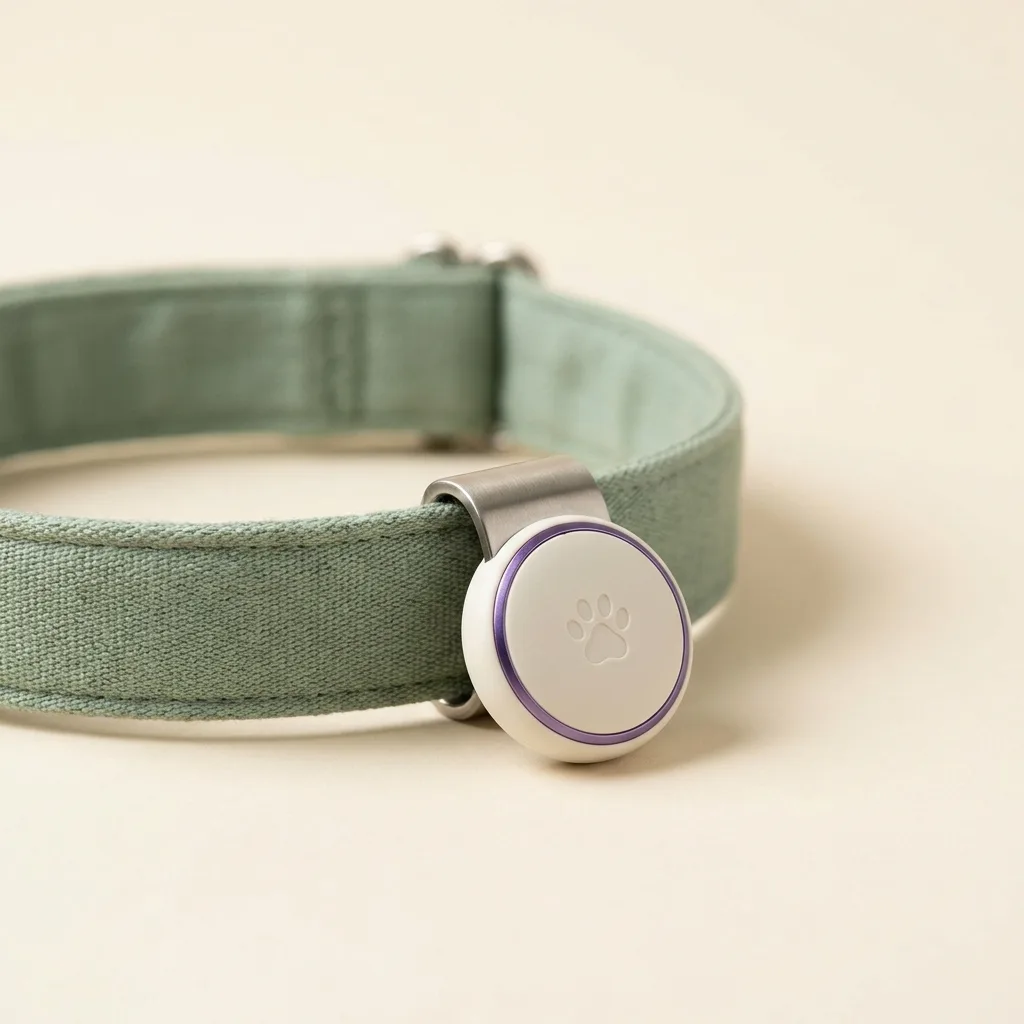
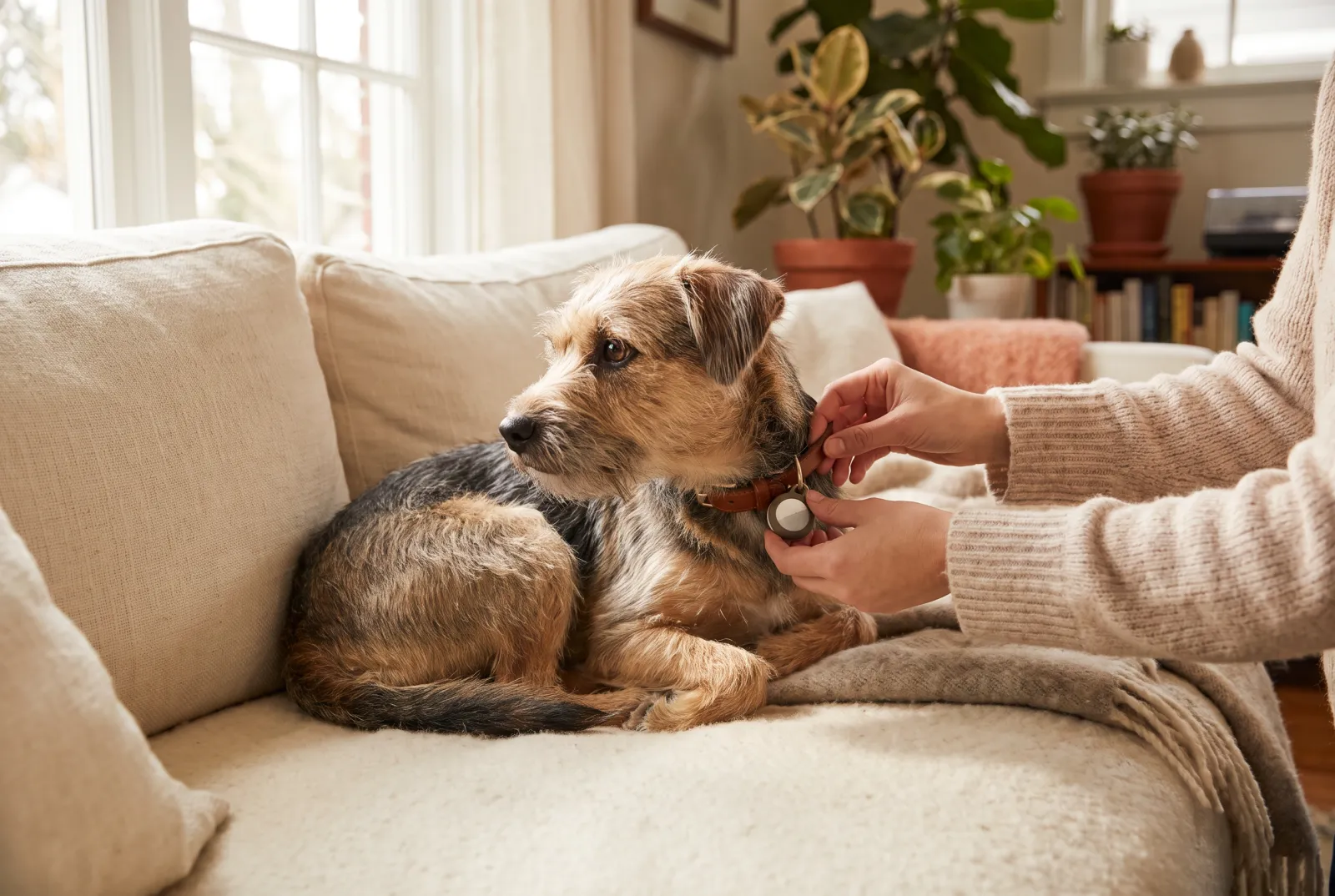
A GPS pet tracker is a small powered device on the collar. It works out its own position from satellites, then sends that position to your phone over a mobile network. That second half is the important bit: a tracker is a little radio transmitter with a battery, not a passive tag.
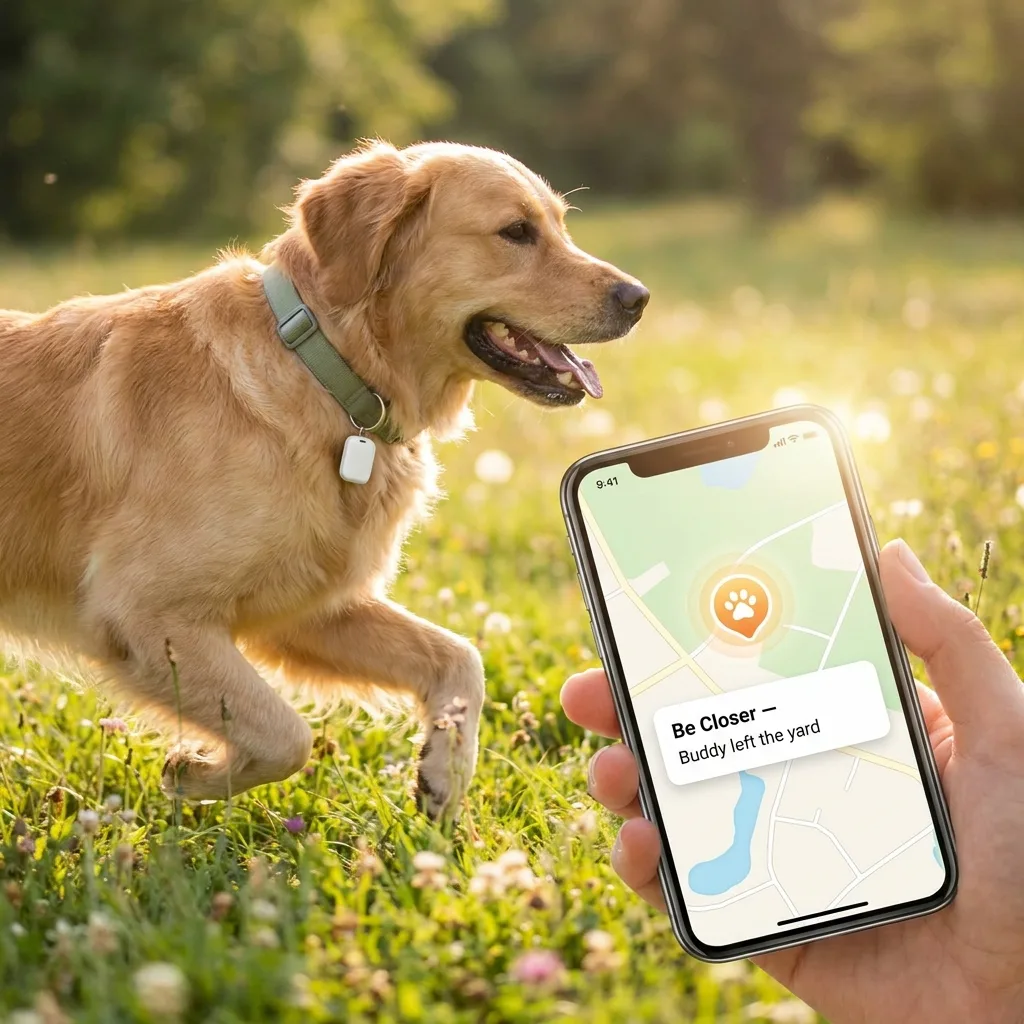
That is why trackers can do the things chips cannot. Live location. A trail of where the animal has been. Alerts when they leave the garden. A direction to walk in at eleven at night rather than a hope that someone rings.
What a GPS tracker gives you
- A position you can act on immediately, without waiting for anyone else
- Movement history, which shows whether your pet is roaming a set route or genuinely lost
- Boundary alerts for the garden or the yard, useful for a known escape artist
- Reassurance for a cat with a wide territory, or a dog who bolts at fireworks
- Something to hand a neighbour so two people can search two directions
The Be Closer Pet tracker sits on the same family map as everyone else, so the dog is not a separate app to remember. Be Closer holds 4.4 stars from 150,000 plus ratings across the App Store and Google Play, and is free to download, which makes it easy to set the family side up before the hardware is even in your hands.
Be Closer shows your whole family on one private map, free to start.
Consent-first, never sold, and gentle on your battery. iOS and Android.
Where GPS trackers fall short
A tracker is a machine with requirements, and machines with requirements let you down at exactly the wrong moment if you pretend otherwise.
- 1Battery. Every tracker needs charging, from a few days to a couple of weeks depending on the device and how often it reports. A flat tracker is a plastic ornament.
- 2Signal. The device needs mobile coverage to send its position. Deep countryside, thick woodland and steep valleys are where coverage thins and where dogs love to go.
- 3It is on the collar, not in the pet. Collars come off. That is often by design, since breakaway collars exist for very good safety reasons with cats.
- 4Accuracy has limits. Even in good conditions you get a strong indication rather than a pin on a specific bush. Be Closer reports positions with up to 95 percent accuracy, and that upper end assumes open sky.
- 5It usually costs something ongoing. A tracker that uses a mobile network generally needs a subscription of some kind.
A microchip cannot fail because it does nothing. A tracker can fail because it does a great deal.
So which one do you need?
Both, and in that order of priority. Chip first, always. It is a one time procedure, it is inexpensive, it is often legally expected, and it is the layer that survives everything: a lost collar, a flat battery, a dead phone, a decade.
Then add a tracker if your pet's life or personality makes the first hour matter. Some honest guidance on who benefits most:
- A dog who bolts. Fireworks, deer, motorbikes, an open gate. If you have already had one heart stopping evening, a tracker changes the next one. Our guide on why dogs escape and what actually works is the companion read here.
- An outdoor cat with a big range. Cats disappear on their own business constantly, and knowing they are in the usual hedge is worth a lot of unslept nights. See cats who roam.
- Rural or wooded homes. Bigger distances, harder searching, fewer strangers to find them.
- A new pet still learning the area. Especially in the first few weeks after a rehoming or a house move.
- Anyone who has already lost a pet once. You will know if that is you.
A collar tag with your phone number written on it, by the way, is still the fastest route home of all three, because it needs no scanner and no app. It is worth having even when you have the other two.
The half hour that makes both of them work
Neither technology helps if it is set up wrong, and both fail quietly, which is the worst way to fail. This is a short job worth doing on a calm evening rather than an urgent one.
- 1Find your microchip number, usually on the paperwork from the vet or rescue, and confirm which database holds the record.
- 2Log in and check the phone number, email and address. Add a second contact if you can, ideally someone who is usually at home.
- 3Ask the vet to scan the chip at your next routine visit. Chips very occasionally migrate or fail, and a five second check confirms it reads.
- 4Charge the tracker and set a recurring reminder on the day of the week that suits you. Sunday evening works for most households.
- 5Test the tracker deliberately. Leave it at a neighbour's for an hour and watch what your phone actually shows you, so the interface is familiar before you need it.
- 6Take a clear, recent, full body photo of your pet in good light. It is the single most useful thing in a real search.
And keep a plan for the first day, because that is when most pets are recovered. What to do in the first 24 hours after a pet goes missing walks through the order of operations, which is much easier to follow when you wrote it down before you needed it.
The chip is the promise that if somebody finds her, she comes home. The tracker is the chance that the somebody is you.
Frequently asked questions

Priya writes about the family members we care for at every age, parents living alone, dogs that bolt at squirrels, and the quiet worry in between. She writes the way she checks in: gently, and always dignity first.
Our guides are written by Be Closer's editorial voices and reviewed by the team behind the app. Questions? support@becloser.com
Published · Updated