 Pets
PetsLost pet? An hour by hour plan for the first 24 hours
Search the house and the nearest hiding places first, because most pets are found very close to home, and cats especially rarely go far. Put scent anchors outside, tell the neighbours and the local groups tonight, and do your best searching at dawn when everything is quiet. Do not chase a pet you have spotted. Sit down, get low, and let them come to you.
Our neighbour's cat went missing on a Tuesday. She spent that first evening driving slowly around the estate with the window down, calling his name into the dark, and she found him at ten past six the next morning under the hedge at the end of her own garden, about nine metres from the back door, flat to the ground and frightened of everything including her.
That is the shape of most of these stories. The pet is far closer than the search, and the search goes wide because standing still feels like doing nothing. If you are reading this tonight with your coat still on, I am sorry. Take a breath, and then work through this in order.
The first day matters because a frightened animal has not yet moved far, has not yet been picked up by a stranger, and has not yet been pushed further out by well meaning noise. Spend it deliberately.
Hour one: search the house properly
Before you print anything or post anywhere, search indoors as if you did not live there. An extraordinary number of missing cats are found in the building they went missing from, and a fair few dogs too, asleep somewhere they have never slept before.
- Inside and behind wardrobes, under beds, inside the divan base if there is a tear in the lining.
- Behind and underneath the sofa, including inside the frame from below.
- The airing cupboard, the boiler cupboard, any warm dark space with a door that swings.
- Inside the washing machine, the tumble dryer, and any drawer big enough to hold them.
- Loft hatch, cellar, under the stairs, behind the bath panel if it is loose.
- The shed, the garage, the greenhouse, the car with a window left down, and any neighbour's shed that was open today.
Search in near silence, and search twice. A frightened cat will not answer you, will not move, and can sit an arm's length away while you call their name. Take a torch even in daylight, and look for eye shine rather than a shape.
Do these before you leave the house
- Prop open a door or window they can get back in through, if it is safe to do so.
- Check that your microchip details have your current phone number, because an out of date number is the single most common reason a found pet is not returned quickly.
- Photograph your pet from your phone gallery now and put three clear pictures in one place, ready to send.
- Leave someone at home if you can, so there is a familiar voice there when they come back.
Hours one to three: the close radius and scent anchors
Now go outside, and go slowly. The instinct is to cover ground. The better move is to cover very little ground extremely carefully, because a hiding animal is found by looking under things rather than by walking past them.
- 1Walk your own boundary first. Under every hedge, behind every bin, into every gap between fence and shed. Get low. Torch on.
- 2Then the four gardens nearest yours. Knock, ask, and ask specifically to look under things rather than for them to have a glance later.
- 3Then the street, on foot, quietly. Drains, parked cars, the space beneath them, garages with a gap at the bottom.
- 4Set your scent anchors. Put their litter tray outside if it has been used, along with their bed or a blanket they sleep on, and something of yours that smells strongly of you. Place them by the door they usually use.
- 5Put food out, but modestly. A small amount of something strong smelling. Do not create a buffet that pulls in every other animal in the street.
Scent anchors are the most underrated tool in this whole list. A cat that has bolted in fear often cannot navigate home by memory while they are still frightened, but they can follow a familiar smell once they calm down. Leave the anchors out for several nights, not just tonight.
Hours three to six: tell everyone who might see them
People find pets. Not searches, not usually. Your job in this window is to convert every person within a few streets into someone who is casually looking, and every official channel into a record that exists.
- Knock on doors, do not just post. Ask them to check sheds, garages and cars tonight before locking up, and again in the morning.
- The postal worker, the delivery drivers, the dog walkers. They cover more ground looking down than anyone else in the neighbourhood.
- Local social groups and neighbourhood apps. One clear post with a recent photo, the street name, the time last seen, and a phone number.
- Your microchip database. Register your pet as missing, so a scan anywhere flags immediately.
- Vets within a few miles, plus the local rescues and the council. People take found animals to vets first, and councils handle animals found on roads.
- Ask people not to chase. Put this in the post, in bold. It is the single most useful sentence you will write.
You are not asking your neighbours to find your pet. You are asking them to look under their own shed with a torch, tonight, before they go to bed.
Hours six to twelve: flyers that actually get read
Most lost pet posters fail for the same reasons. They are too wordy, the photo is charming rather than useful, and they are placed where people are moving too fast to read them.
- 1One enormous photo. Taken in daylight, showing the whole animal from the side, and showing whatever makes them recognisable.
- 2Three words at the top. LOST CAT, or LOST DOG, big enough to read from across a road.
- 3One line of detail. Breed or colour, the street, and the date last seen.
- 4Your phone number, large, more than once. Nothing else. No long story, no reward negotiation, no paragraph.
- 5Waterproof them. A clear plastic sleeve, or tape over the whole sheet.
- 6Place them where people stand still. Bus stops, junctions with crossings, the school gate, the shop counter, the vet, the park entrances.
Post the same image online, and make the online version shareable rather than a screenshot, so people two streets over can pass it on cleanly.
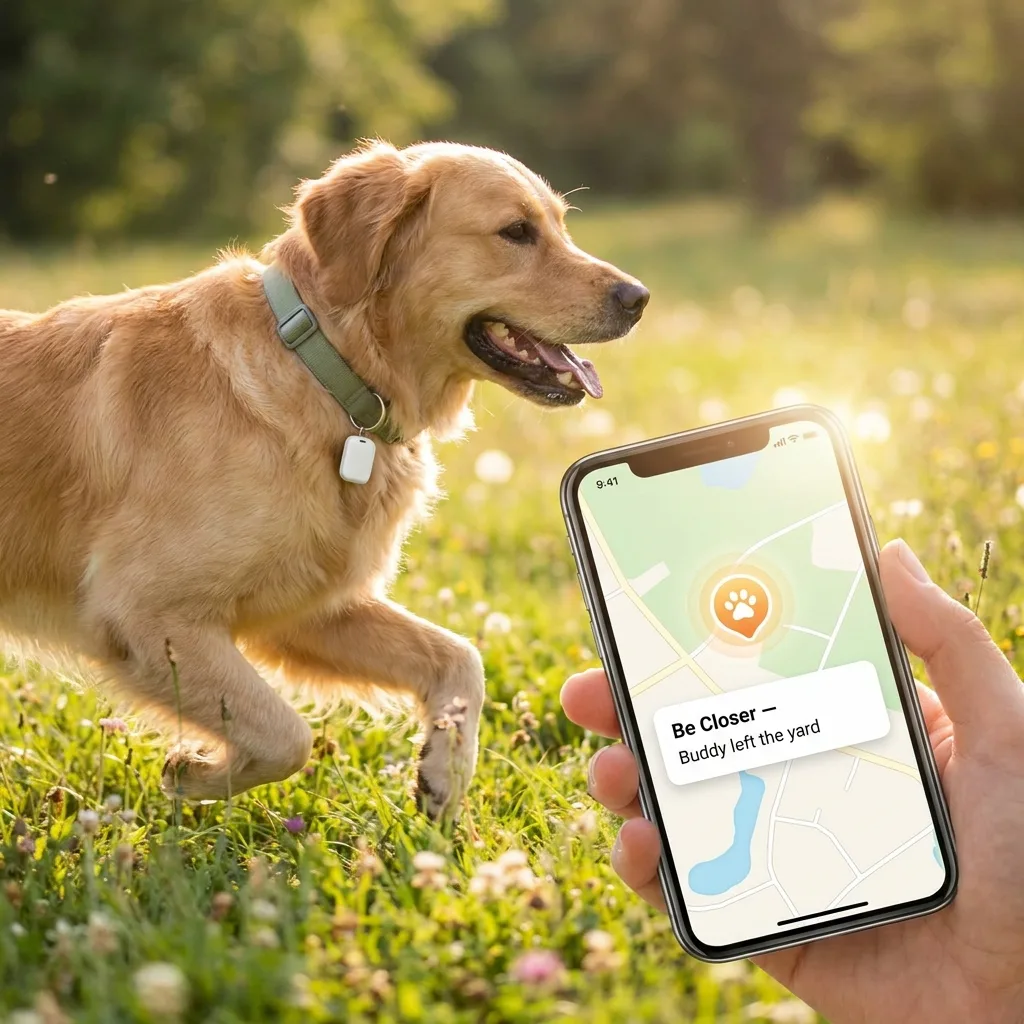
Be Closer shows your whole family on one private map, free to start.
Consent-first, never sold, and gentle on your battery. iOS and Android.
Hours twelve to twenty four: the quiet hours search
If your pet is not home by nightfall, the most valuable hours of the whole day are still ahead of you. Set an alarm for before dawn.
Between roughly four and seven in the morning the streets are empty, traffic is almost silent, and a frightened animal will move for the first time since it hid. This is when cats break cover, when a dog under a hedge finally comes out, and when your voice carries far enough to be recognised.
- Go out alone or with one other person. A search party is a threat.
- Walk a short distance, then stop and stay still for two or three minutes. Repeat. The stopping is what works.
- Call in your ordinary voice, the tone you use at feeding time, not a raised or panicked one.
- Shake the treat box, or open a tin. Familiar sounds carry meaning that names sometimes do not.
- Listen more than you call. A cat that answers will answer very quietly, once.
- Take the torch and sweep low, at ground level, for eye shine.
Do this at dawn and again late at night, and keep doing both for several days. Families who find their pet on day four almost always found them during quiet hours.
When you spot them: why chasing fails
This is the part people get wrong at the worst possible moment. You see them, relief floods through you, you rush forward calling their name, and they run. Then they run further than they have gone all day, and often out of the area entirely.
An animal that has been hiding for hours is not the pet you know. It is in survival mode, and in that state a fast approaching figure is a predator, even a beloved one. Some pets in this state will run from their own family.
- 1Stop moving the instant you see them. Do not take another step forward.
- 2Get low. Sit or crouch, turn slightly side on, and do not stare directly at them.
- 3Talk softly and continuously. Any calm nonsense. The tone is the message.
- 4Put food down in front of you, not near them, then look away and wait.
- 5Let time pass. Fifteen minutes of stillness beats fifteen minutes of pursuit every time.
- 6If they run, mark the spot rather than following. That location is now the centre of your search, and food and a scent anchor go there tonight.
Tell every helper these three rules
- Do not chase, and do not corner. A cornered frightened animal will bolt through a road.
- Do not call out loudly in a group. Voices in numbers push a hiding animal deeper.
- If you see them, phone the owner from where you are standing and stay put quietly.
Afterwards: making the next time much shorter
When they are home, let yourself feel it, then spend one calm afternoon on the things that make a second time far less frightening. Not because you were careless, but because escapes usually have a cause you can now see clearly.
- Find the actual exit. Walk the boundary and look for the gap, the loose board, the gate that does not latch when it is windy. Our guide on why dogs escape and what actually works covers the common ones.
- Update the microchip today, while it is fresh in your mind.
- Put a physical tag on the collar with a phone number. A stranger can read a tag in two seconds without a scanner.
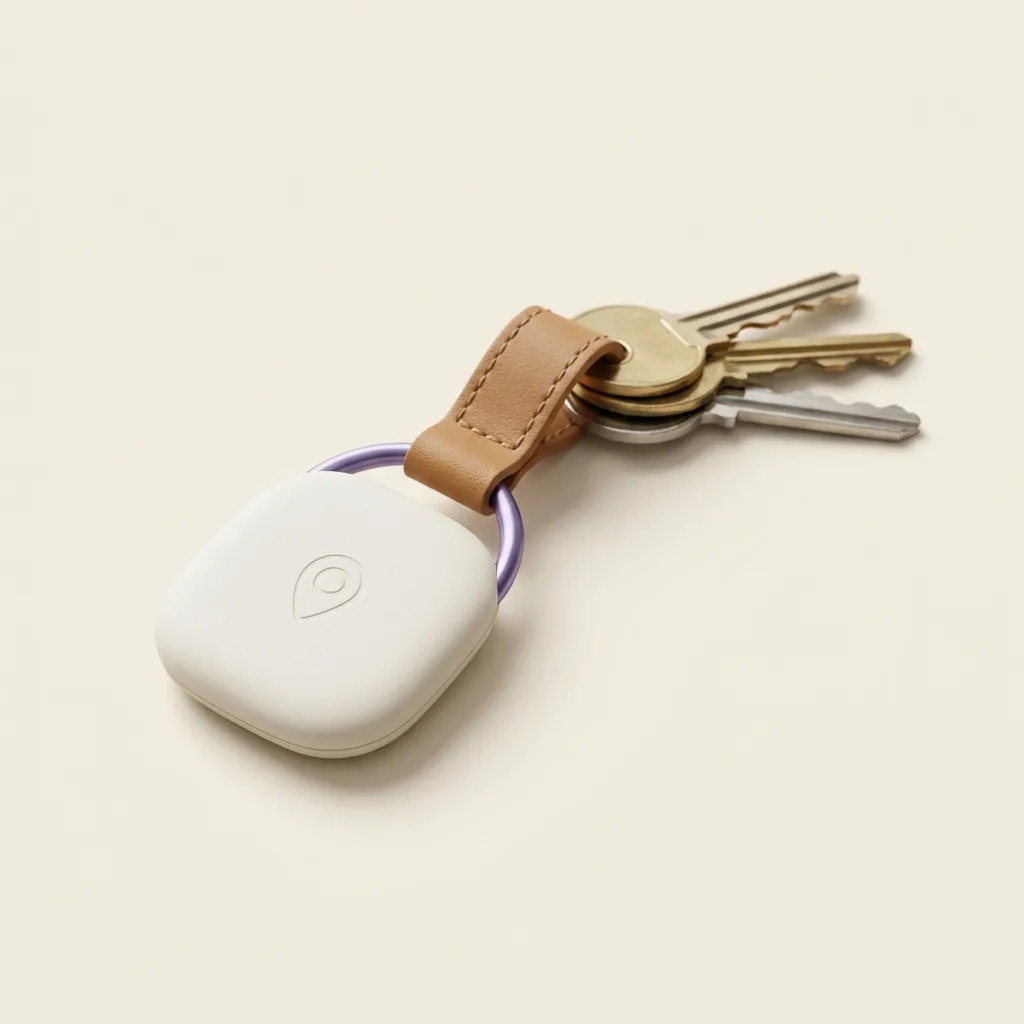
- Consider a GPS tracker for the collar. It turns a night of searching into a direction to walk in, which is a completely different night.
- Fix the trigger, not just the gap. Fireworks, a new neighbour's dog, a change in routine. Cats who have started roaming further often have a reason, and our guide to cats who roam goes through them.
A tracker is worth being honest about. It tells you roughly where the collar is, which is enormously more than nothing, and it needs charging and it can come off. Treat it as a shortcut to the right hedge rather than a guarantee, and keep the tag and the chip regardless.
The part nobody writes down
You will run the moment back. The door you left open, the lead you unclipped early, the two minutes you were not watching. Nearly every person searching a street at four in the morning is also quietly prosecuting themselves, and it does not help the search.
Guilt is what love does when it has nowhere useful to go. Put it down for tonight and pick up the torch.
Eat something. Take turns searching so someone is always at home. Let the people who offer to help actually help, because a neighbour with a torch in their own garden is doing something genuinely useful.
And hold on to the ordinary shape of these stories. Pets are found under hedges, in sheds, in the garage two doors down, days later, thin and cross and entirely fine. Our neighbour's cat came in at ten past six, ate an enormous breakfast, and slept on the back of the sofa as if none of it had happened.
Frequently asked questions

Priya writes about the family members we care for at every age, parents living alone, dogs that bolt at squirrels, and the quiet worry in between. She writes the way she checks in: gently, and always dignity first.
Our guides are written by Be Closer's editorial voices and reviewed by the team behind the app. Questions? support@becloser.com
Published · Updated