 Pets
PetsCats who roam: loving an animal that keeps its own schedule
Most cats roam a territory far smaller than owners imagine, mostly at dawn and dusk, and a sudden change in that pattern is more informative than the roaming itself. A well-fitted breakaway collar and a lightweight tracker can tell you where the animal generally is, but a map dot is a neighbourhood, not a diary, it won't tell you why, and it shouldn't replace paying attention.
For the first two years I had my cat, I assumed his evenings were mysterious and possibly extensive. He left around six, came back smelling of other people's gardens, and gave nothing away. I pictured him crossing motorways, befriending foxes, living some entire second life I wasn't invited to.
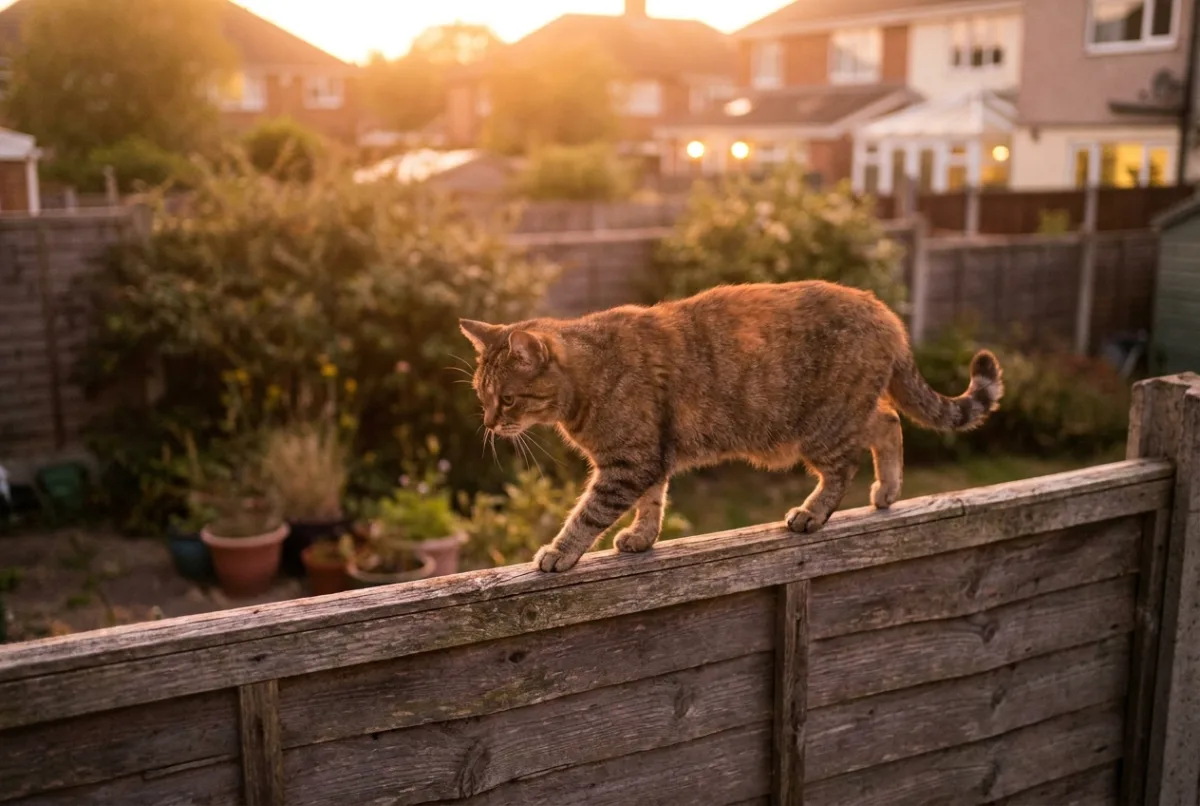
Then I put a tracker on his collar out of curiosity more than concern, and watched a week of his movements resolve into something almost disappointingly modest: three gardens, a low wall, and a shed roof he seemed to regard as an office. The mystery wasn't distance. It was that nobody had ever shown me the shape of it.
This is mostly a piece about scale, how far cats actually go, and what changes in that pattern are worth noticing, but it's also about the harder question underneath: how much of an animal's independence you're allowed to want to see, and what a small device clipped to a collar actually gives you when you do.
How far does a cat actually roam?
Territory size varies enormously, but the headline is that most owned cats stay far closer to home than people assume. A neutered cat in a reasonably dense urban or suburban area often keeps to a range of only a few hundred metres from the house, a handful of gardens, a lane, maybe a park edge. Unneutered males, and cats in rural areas with fewer other cats to negotiate boundaries with, can range many times further, sometimes into tens of hectares.
| Factor | Effect on territory size |
|---|---|
| Neutering | Neutered cats typically roam a fraction of the distance of intact ones |
| Cat density | More neighbouring cats generally means smaller, more contested territories |
| Food availability | Reliable meals at home shrink the need to range far for food |
| Habitat | Rural and semi-rural cats often roam much further than urban ones |
| Age and confidence | Younger, bolder cats tend to push boundaries further than older ones |
The practical upshot is that most of what looks like a mysterious nightly adventure is, in fact, a very local patrol, a fence here, a compost heap there, a spot behind next door's shed that's warmer than it should be. Knowing the likely scale in advance means a tracker's first week of data tends to reassure rather than alarm.
Why dusk and dawn, and what does that mean for you?
Cats are crepuscular by inclination, meaning their instinctive activity peaks around dawn and dusk rather than through the deep night or the middle of the day. This is when prey is moving, temperatures are milder, and there's enough light to navigate but enough dimness to hunt effectively. An indoor-outdoor cat's day often has two roaming windows rather than one continuous ramble.
Practically, this means the anxious hour before a cat comes home for the evening is usually just biology on schedule, not a cat in distress. It also means a cat flap left open overnight, when there's genuinely little upside to roaming and rather more risk from traffic and other nocturnal animals, is doing more for safety than a cat flap left open all day.
- Consider a curfew-style cat flap that locks overnight, if traffic near your home is a real concern.
- Expect the two roaming windows and don't read urgency into an animal simply keeping to its usual dusk pattern.
- If a cat starts roaming heavily in the middle of the night, genuinely unusual timing, that's more worth a second look than an evening outing.
When does a change in roaming actually mean something?
The roaming pattern itself isn't the interesting data point, the change is. Cats are creatures of routine, and a meaningful shift usually has a cause worth understanding rather than ignoring.
- 1Age. Older cats often roam progressively less, staying closer to the house and sleeping more; a sudden drop rather than a gradual one is worth a vet visit, since pain or illness commonly shows up first as reduced activity.
- 2Illness. A cat that suddenly roams far less, hides more, or stops eating on its usual schedule is telling you something, even if it can't tell you what. Reduced roaming is a more reliable early signal than most owners expect.
- 3A new cat in the neighbourhood. Territory is negotiated, not fixed, and a confident newcomer a few doors down can shrink or shift an established cat's range within days, sometimes triggering unusual spraying or reluctance to go out at all.
- 4Building work or a changed environment. A fence taken down, a new dog next door, a skip blocking a usual route, cats reroute around disruption in ways that can look, on a tracker, like the whole pattern has changed overnight.
None of this requires daily map-watching to notice. A rough sense of the shape of an ordinary week is usually enough to catch a real change when it happens.
Be Closer shows your whole family on one private map, free to start.
Consent-first, never sold, and gentle on your battery. iOS and Android.
What actually makes a collar and tracker safe to wear?
A collar that isn't designed with cats in mind is a genuine hazard, not a minor inconvenience, cats get collars snagged on branches, fences, and each other with some regularity, and a collar that can't release under pressure can be dangerous.
Collar and tracker basics
- Use a breakaway (quick-release) collar that pops open under a firm, sudden pull, non-negotiable for any outdoor cat.
- Keep total added weight, including any tracker, to roughly under 10% of body weight, and less for smaller or slighter cats.
- Check fit with two fingers under the collar; too loose risks a leg getting caught through it, too tight is its own discomfort.
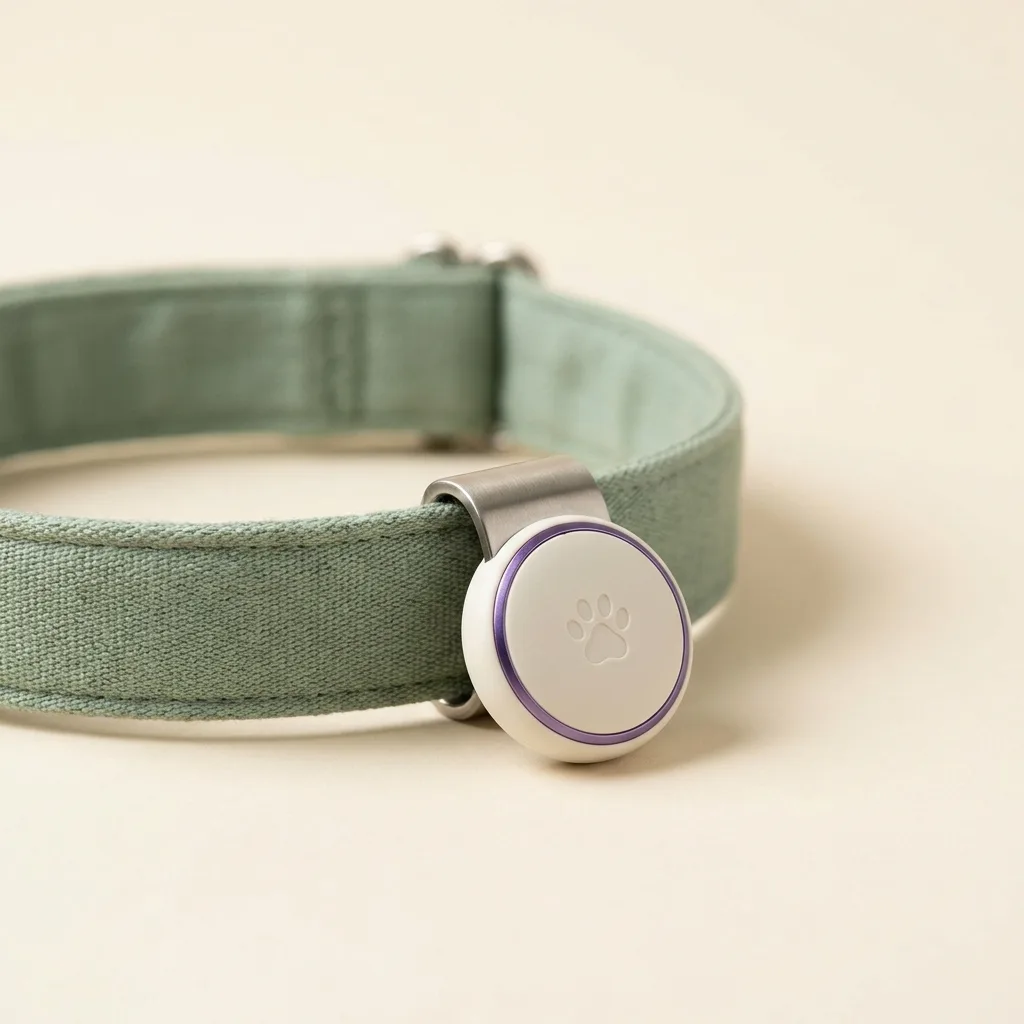
- A slim, purpose-built Pet tracker sits low and light on a breakaway collar, rather than adding a bulky attachment that changes how the collar sits.
- Re-check fit every few months, especially with kittens or cats whose weight fluctuates.
The instinct to want a heavier, more capable tracker with a longer battery life is understandable, but for a cat, weight and bulk are the real trade-off, not battery life. A device a cat barely notices is worn consistently; one that feels wrong gets scratched at, worked loose, or left snagged somewhere by week two.
What does a map dot actually tell you, and what doesn't it?
A tracker dot showing "garden, three doors down" is genuinely useful information. It tells you the animal is within its normal range, not stuck somewhere unfamiliar, not near a road it doesn't usually cross. That's real reassurance, and on the night a cat doesn't come home on schedule, it can be the difference between a calm walk to a specific spot and hours of blind searching. It's the same honest, limited promise covered in How accurate is phone GPS, really?, useful for narrowing a search, not for pinpoint precision.
What it doesn't tell you is why. A dot sitting still in a neighbour's garden could mean a nap in the sun, a standoff with another cat, or, rarely, but not never, an animal stuck or hurt somewhere it can't easily leave. The dot has no opinion on which. Nor does it tell you whether the cat is happy, whether the roaming has an emotional cause, or anything at all about a cat's inner life, which remains, appropriately, entirely its own.
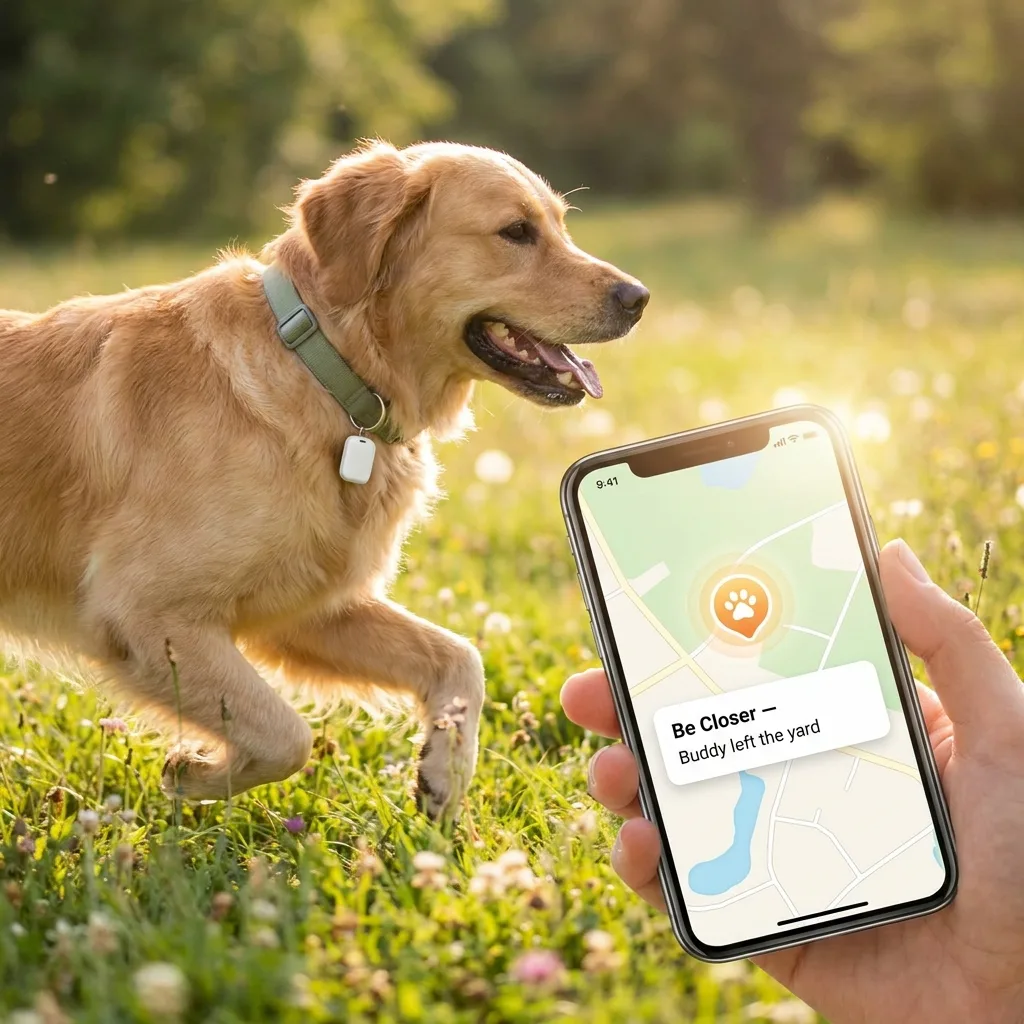
The geofencing idea, an alert if the cat leaves its usual range, translates reasonably well from families to pets. A boundary alert for "further than usual" catches the genuinely unusual night without requiring you to watch a map out of habit.
Is it fair to keep a cat that wants to roam?
This is the question under all the practical ones, and it doesn't have a single right answer. Some cats are content, even thriving, kept entirely indoors with enough stimulation. Others seem to need the outside world in a way that indoor life, however enriched, doesn't replace, the patrolling, the vantage points, the small daily negotiations with the neighbourhood that appear to matter to them in ways we can only infer from behaviour.
I used to think letting him out was a risk I was taking on his behalf. Watching a week of his own chosen route made it feel more like a life I was simply agreeing to share.
The honest position is that outdoor access carries real risks, traffic, other animals, disease exposure, the small chance of not coming back, and indoor life removes nearly all of them at the cost of a smaller world. A tracker doesn't resolve that trade-off. It just means whichever choice you make, you're making it with more information than a shrug and a closed door.
Frequently asked questions

Priya writes about the family members we care for at every age, parents living alone, dogs that bolt at squirrels, and the quiet worry in between. She writes the way she checks in: gently, and always dignity first.
Our guides are written by Be Closer's editorial voices and reviewed by the team behind the app. Questions? support@becloser.com
Published · Updated