 Pets
PetsWhy dogs escape (and what actually works)
Nearly every escape traces back to boredom, prey drive, or fear, and nearly every escape happens during a handful of predictable moments, deliveries, guests arriving, bin day. Audit your fence and your routines before anything else, because a microchip and even a tracker only help once the dog is already gone; they're the second line of defence, not the first.
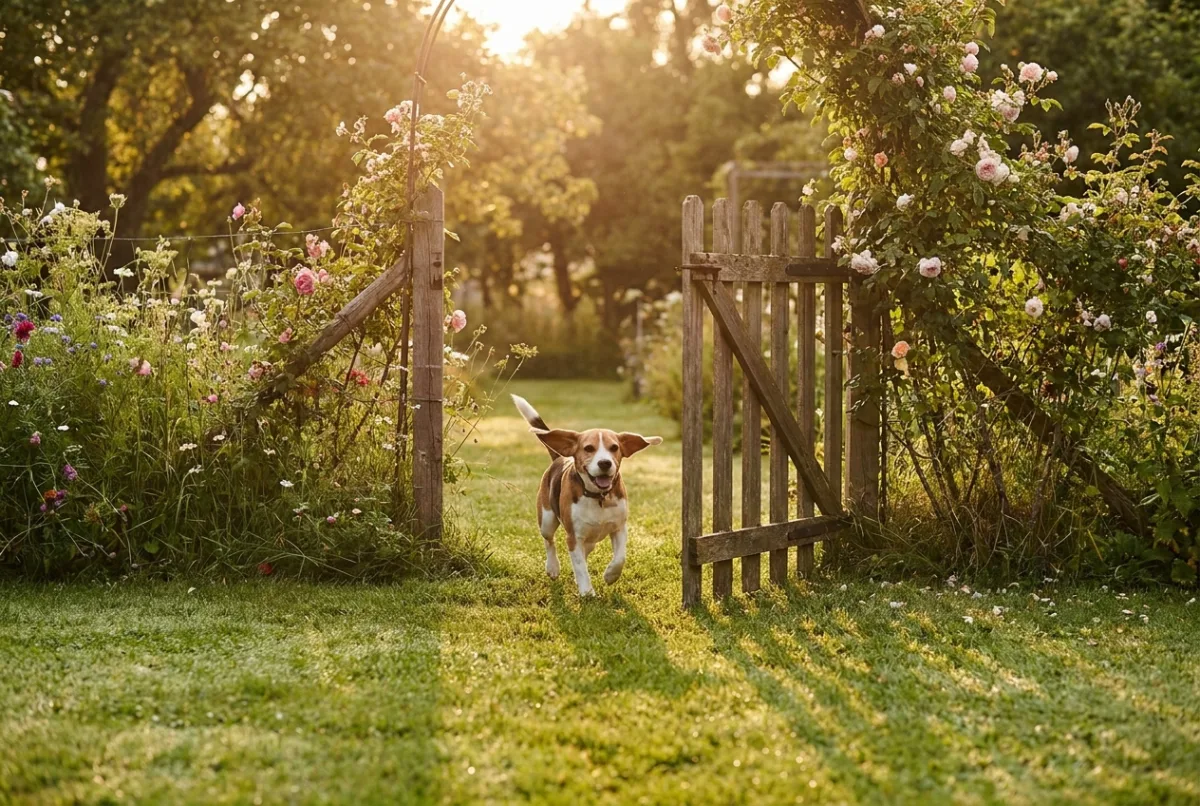
There's a particular kind of silence that happens when a dog gets out. Someone calls a name into a garden that should have a dog in it and doesn't, and the next ninety seconds stretch out like an hour. I've had that silence twice, both times because of a gate I was completely sure I'd latched.
The good news, if there is any in this topic, is that dogs don't escape at random. Almost every bolt has one of three engines behind it, and almost every escape happens in one of a small number of recognisable moments. Once you can name both, you can fix most of the problem before it starts, and know exactly what to do for the part you can't.
This isn't about blame. Dogs are opportunists with excellent noses and no concept of traffic, and gardens are full of small failures waiting for a windy Tuesday. The fix is mostly boring, practical, and done once.
What actually makes a dog want to leave?
Almost every escape is driven by one of three things, and it's worth knowing which one you're dealing with because the fix is different for each.
- 1Boredom. An under-stimulated dog treats the garden boundary as a puzzle to be solved, and clever, energetic breeds solve it embarrassingly fast. This looks like digging under fences, working at gate latches, or simply pacing until a gap appears.
- 2Prey drive. A cat, a squirrel, a jogger, even a plastic bag caught in the wind can trigger a chase response strong enough to override every ounce of training. This is the dog who was standing calmly beside you a second ago and is now three gardens away.
- 3Fear. Fireworks, thunder, a slammed door, an unfamiliar visitor, a frightened dog isn't trying to explore, it's trying to get away from whatever just happened, and it will go through, over, or under almost anything to do it.
Knowing which of the three you're dealing with changes what you do next. A bored dog needs more to do. A prey-driven dog needs a secure boundary that doesn't depend on impulse control. A frightened dog needs a safe space indoors and a plan for the specific triggers, thunder, fireworks, a particular visitor, that set it off.
What should a proper fence and garden audit cover?
Most escaped dogs didn't find a dramatic hole. They found the boring, obvious weak point that everyone in the house had quietly noticed and never fixed. Walk the perimeter once, slowly, thinking like the dog rather than like the person who built the fence.
- Check the base, not just the height. Diggers go under. A few inches of buried mesh or a row of pavers along the fence line stops most digging escapes cold.
- Test every gate latch by hand, at dog height. If it can be nudged open by a nose or a paw, it will be, eventually.
- Look for jump platforms. A bin, a garden bench, a stack of pots near the fence turns a fence that's tall enough into a fence that isn't.
- Check for gaps that have appeared over time, especially after fence panels shift in wind or ground settles near gate posts.
- Consider what's visible through the fence. A solid boundary a dog can't see through is often calmer than one it can see squirrels through all day.
None of this is glamorous. It's an afternoon with a spade and a screwdriver, and it prevents more escapes than any amount of training will on its own.
Why do so many escapes happen on ordinary days, not walks?
Ask around and you'll notice a pattern: most escapes don't happen on a walk gone wrong, they happen at home, during a moment the household considered completely routine.
The open-gate moments
- A delivery arriving, with a driver who doesn't know there's a dog and pushes the gate wide to reach the door.
- Guests coming and going, especially children who don't yet have the habit of checking behind them before opening a door.
- Bin day, when the gate is propped open for a wheelie bin far longer than it's ever propped open normally.
- Tradespeople working with vans and open side gates for hours at a stretch.
- Moving house, or any day with unusually heavy foot traffic through doors that are usually closed.
The fix here isn't a better dog, it's a better habit: a visible sign on the gate for anyone unfamiliar with the house, a second latch that visitors are told about explicitly, or simply keeping the dog in a separate room during deliveries and bin collections. Ten seconds of forethought on a Tuesday morning beats an hour of searching on a Tuesday afternoon.
Be Closer shows your whole family on one private map, free to start.
Consent-first, never sold, and gentle on your battery. iOS and Android.
Why isn't a microchip enough on its own?
A microchip is genuinely valuable, and every dog should have one, kept up to date with a current phone number. But it's worth being clear-eyed about what it actually does: it identifies a dog after someone has already found it, scanned it, and taken the trouble to look up the registry. It does nothing during the gap between a dog going missing and a dog being found, which for a frightened animal running on adrenaline can be the most dangerous stretch of the whole event.
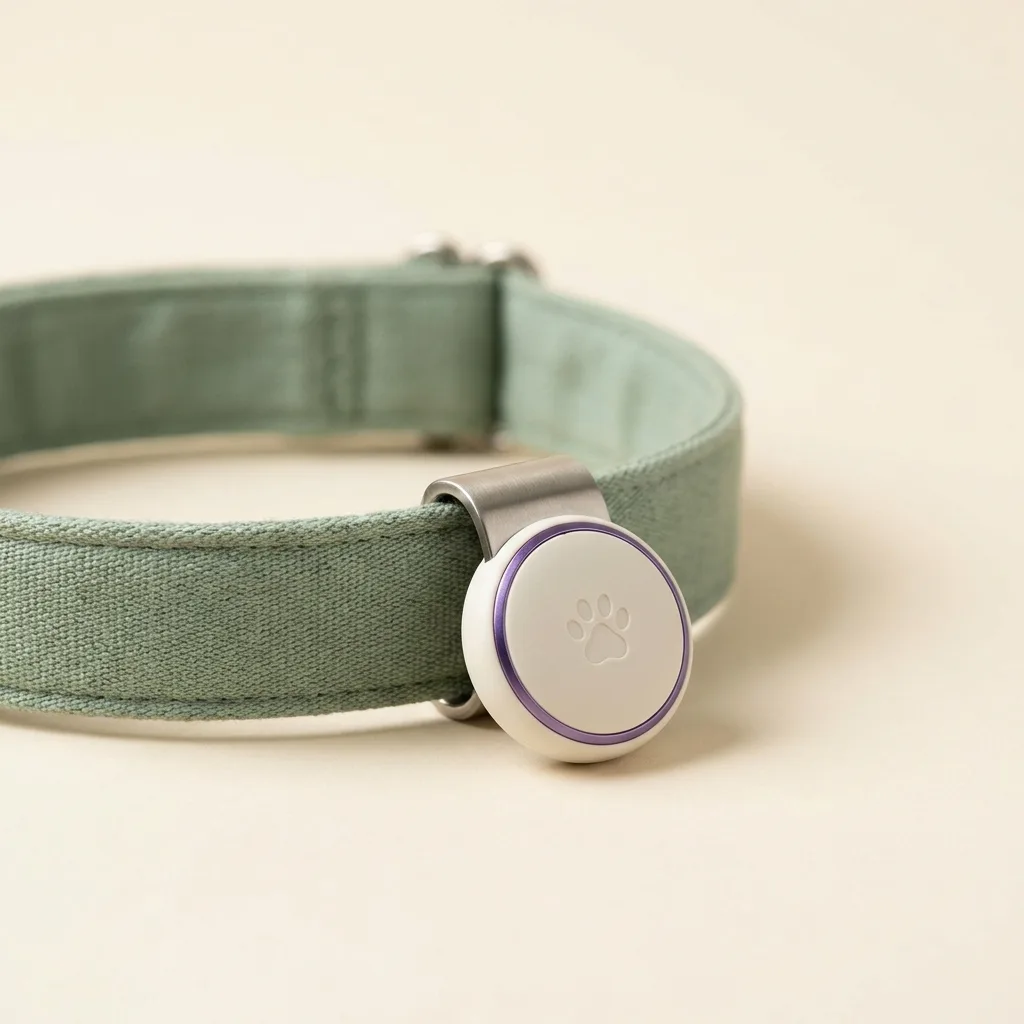
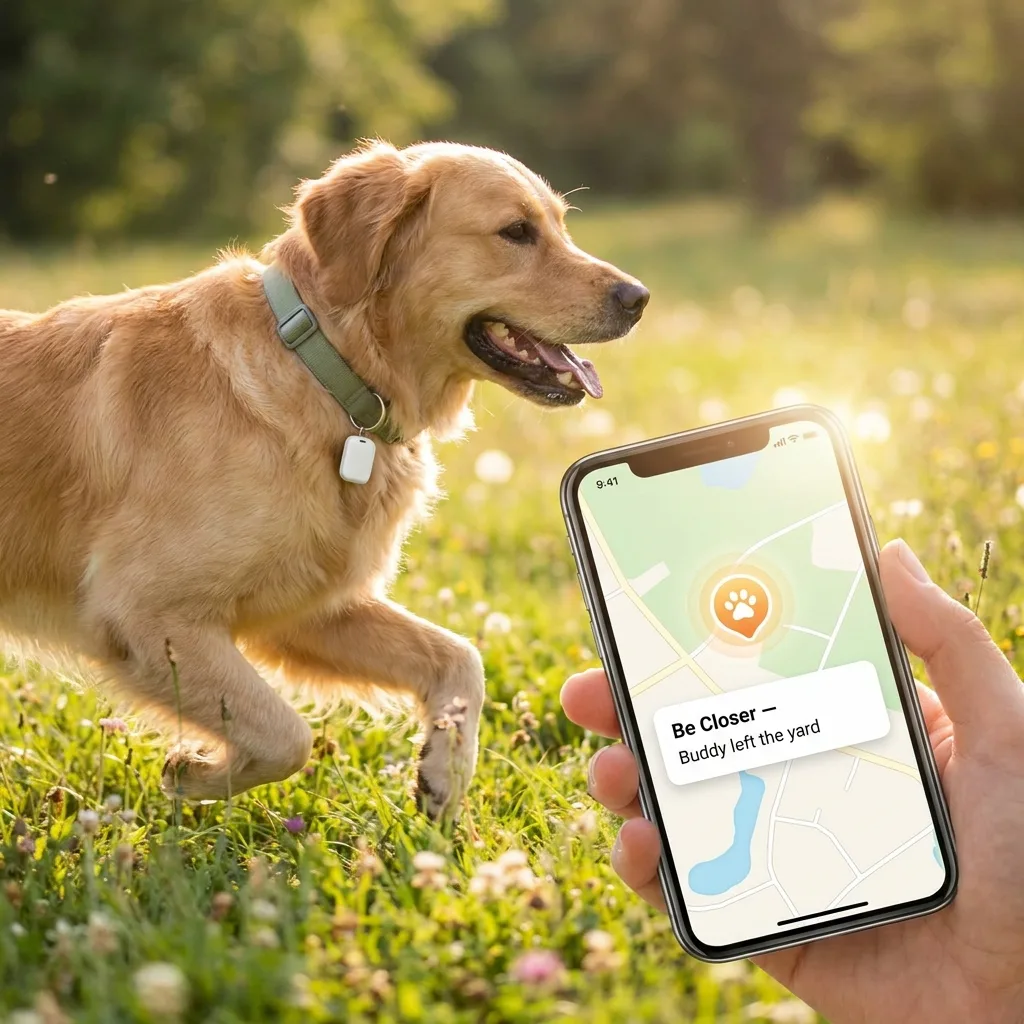
That gap is exactly where live tracking earns its place. A collar-mounted tracker like Be Closer Pet shows you a live position on a map from the moment you notice the dog is gone, which turns a frantic street-by-street search into a drive or a sprint toward a known location. It's not a replacement for the microchip or the fence, it's the layer that covers the first ten minutes, which are usually the ones that matter most.
What should you actually do in the moment a dog bolts?
Panic wastes the exact minutes that matter most. Having an order of operations decided in advance, before it happens, makes those minutes count instead.
- 1Check the tracker first, if the dog has one, before doing anything else. A live position tells you which direction to go rather than which direction to guess.
- 2Don't chase at a run if you can help it. A running human often reads as a game to a dog and can extend the chase rather than end it. Calling calmly and crouching down, if the dog is close, works better than sprinting.
- 3Use food or a favourite toy rattle, not just a name being shouted, since a dog running on adrenaline may simply not process its own name for a minute or two.
- 4Alert neighbours immediately, especially near roads, since an extra pair of eyes covering a junction is worth more than an extra ten minutes of solo searching.
- 5Check the tracker again every minute or two rather than only once, since a moving dog's position changes fast and a stale reading sends you the wrong way.
- 6Once found, don't scold. A dog that's just had a terrifying adventure and gets shouted at on reunion learns that coming back is the bad part, which makes the next escape worse, not better.
Does recall training actually help with escapes?
Yes, but it's worth being honest about its limits. Recall training makes an enormous difference for the boredom and mild-distraction cases, where a dog hears its name, weighs up the squirrel against the treat, and chooses the treat. It's far less reliable against a genuine fear response or a full prey-drive chase, where a dog's arousal is high enough that recall training, however good, may simply not reach it in that moment.
Practice recall somewhere low-distraction first, build up to busier environments gradually, and reward generously and immediately when it works. But treat it as one layer among several, not the whole plan. A dog with excellent recall and a gate with a broken latch will still get out on bin day.
Frequently asked questions

Priya writes about the family members we care for at every age, parents living alone, dogs that bolt at squirrels, and the quiet worry in between. She writes the way she checks in: gently, and always dignity first.
Our guides are written by Be Closer's editorial voices and reviewed by the team behind the app. Questions? support@becloser.com
Published · Updated