 Kids & Teens
Tournament day: a sane family plan for youth sports weekends
Tournament day goes well when the kit is packed the night before, everyone agrees one meeting point on arrival, and the kids know the rule for moving between fields. Add a charged power bank, a shared family map with an alert for the complex, and one team parent group thread, and you spend the day watching sport instead of counting heads.
The first tournament we did properly wrong involved eleven hours, six fields, two children on different teams and a bag of oranges that never made it out of the car. By the third game I had lost track of which pitch my son was on, my daughter had befriended a family from another county, and I was queueing for chips with a phone at four percent.
Nothing bad happened. That is worth saying, because tournament days are overwhelmingly ordinary. But I came home wrung out for no good reason, and the reason was simple: I had planned for one match and turned up to a festival.
A tournament is a different animal from a Saturday fixture. It is long, spread out, loud, and full of children in identical kit. The plan below is the one our team parents settled on after a couple of seasons, and it has turned these weekends into something the whole family looks forward to.
The night before
Everything that goes wrong on tournament morning was decided the night before. Packing at 6am guarantees you forget the one thing you will need at 2pm, and the one thing is almost always sunscreen, a charger, or the second pair of socks.
The kit bag, packed the night before
- Full playing kit plus a complete second set, including socks
- Trainers as well as boots, because children live in a field for eight hours
- Warm layer and waterproof, whatever the forecast says
- Water bottle per child, filled and frozen halfway if it is hot
- Real food, not just snacks: sandwiches, fruit, something salty
- Sunscreen, plasters, hair ties, spare bag for wet clothes
- Folding chairs and a blanket for the adults
- A power bank, charged, plus the right cables for every phone in the family
Print or screenshot the fixture list and the site map, then send both to your own phone and to any child old enough to carry one. Signal at large sports complexes is frequently poor, and an app that will not load is the moment you realise you needed the picture saved.
Last thing at night, plug every phone in, including the children's. Battery is the single point of failure for the whole day. Everything else on this list has a workaround.
Arrival, parking, and the first five minutes
Arrive earlier than feels necessary. Not because your child needs the warm up time, though they do, but because parking at a multi pitch complex on a tournament morning is a slow moving puzzle, and arriving calm changes the entire tone of your day.
Before anyone gets out of the car, do the same three things every time. It takes ninety seconds and it replaces about twenty text messages later.
- 1Note where you parked. Row letter, a photo of the nearest sign, or a pin dropped on your map. You will not remember at 6pm.
- 2Choose the family base and point at it. A specific, immovable landmark: the corner of the clubhouse, the flagpole, the far side of pitch three. Not "by the cars" and not the concession stand, which moves in a child's memory.
- 3Say the day's rule out loud, to every child, in one sentence. Ours is: "You tell an adult before you leave a pitch, and you come back to the flagpole every time a game ends."
One landmark, said out loud, by everyone. A meeting point that has not been pointed at is not a meeting point.
If you have younger children who are not playing, write your mobile number on their arm or tuck a card in their pocket. It feels old fashioned and it works better than anything else, because a stranger who finds a lost five year old can act on it in seconds.
The rules for moving between fields
The realistic picture of tournament day is that children roam. Older siblings drift to the food van, teammates wander off to watch a friend's match, and a ten year old with two hours between games is going to explore. Trying to prevent all of that turns you into a security guard and them into an escapee.
So set movement rules instead of a perimeter. Ours are short enough that children repeat them back without eye rolling.
- Never move alone. Two children minimum, always.
- Tell an adult where you are going and roughly when you will be back.
- Between games, come back to base first, even if you are going straight out again.
- If you cannot find us, go to the flagpole and wait. Do not search.
- If you are properly stuck, find a person in a marshal's vest or another parent with children, and stay in the open.
That fourth rule is the important one. Children get separated because both parties start moving, and two moving people in a crowd of four hundred can circle each other for a very long time. A child who stops and waits is found in minutes. Practising this is the whole basis of the if we get separated plan, and it transfers straight from shopping centres to sports fields.
Have a code word too, for the awkward middle cases: an unexpected lift home, a change of plan, an adult they do not know saying you sent them. It should be something a child can say in front of other people without embarrassment.
Shared location, and where it actually helps
A sports complex is one of the few places where a family map genuinely earns its keep, because the ordinary alternative is standing on a bank shading your eyes and scanning for a specific shade of red shirt.
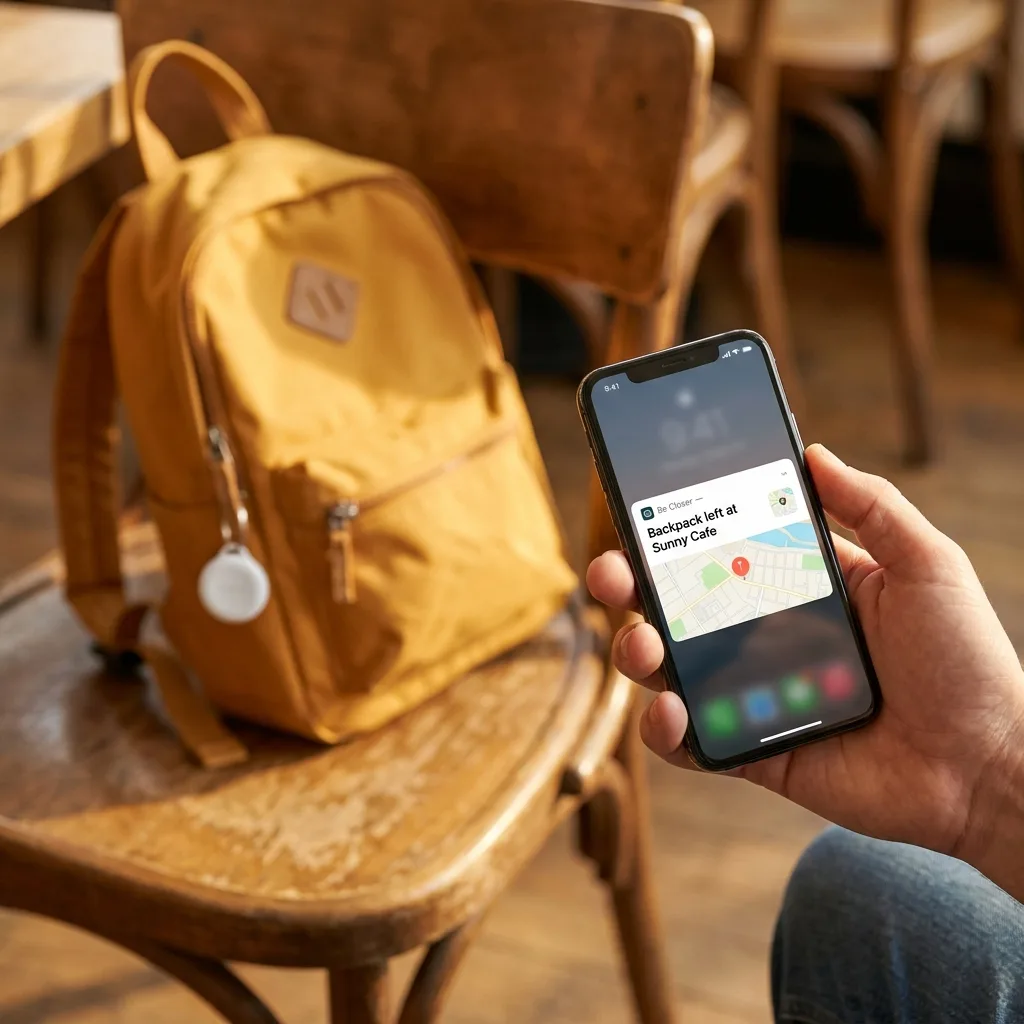
Set up a circle before the season, not in the car park. Add the children who carry phones, and set an alert for the venue so you know when everyone has arrived and when someone leaves the site. Be Closer supports up to 95 percent accuracy in good conditions, which at a venue this size is enough to tell you which corner of the complex someone is in. It will not tell you which side of a pitch they are standing on, and it should not be sold to you as if it could.
What a map is good for on tournament day
- Confirming a teenager has arrived with the team bus, without texting the coach
- Knowing whether someone has left the complex, which is the thing that actually matters
- Finding the general area of a child who has wandered, so you walk in the right direction
- Letting two parents split across pitches without a running commentary
Be honest with the kids about all of it. "I can see roughly where you are on the site, and I get a ping if you leave. I am not watching you buy chips." Older children in particular are far more comfortable with a system whose limits are stated. If you want the longer conversation, talking to your teen about location sharing covers how to keep it mutual rather than one directional.
Be Closer shows your whole family on one private map, free to start.
Consent-first, never sold, and gentle on your battery. iOS and Android.
Working with the other team parents
The single most underused resource at a tournament is the eight other adults standing on the same touchline. Most families arrive determined to manage their own child independently, which is exhausting and unnecessary.
- 1Agree a team base before the day, ideally in the team chat, and put chairs there so it is visible from a distance.
- 2Pair up for pitch coverage when games clash. One parent watches both children's warm ups, another does the food run.
- 3Share the fixture updates in one thread. Tournament schedules slip constantly and the coach cannot text everyone individually.
- 4Nominate one parent per game to be the one who knows where all the kit bags are. Rotate it.
- 5Swap numbers at the start of the season, not at 3pm on a Saturday when you need one.
This is also the mechanism that makes the day pleasant. Tournaments are long, and a group of parents who have divided the logistics get to sit down together and watch the sport, which is the reason everyone got up at six.
Battery, food, and the middle slump
Around two in the afternoon, the whole thing sags. Children who were thrilled at nine are flat, hungry and slightly sunburnt, and the parents are on the last of their phone battery having filmed three matches.
Plan for the slump rather than being surprised by it. A power bank in the kit bag, passed around the family, keeps the map and the phones alive for the drive home. A proper lunch, not a fourth packet of crisps, changes a child's afternoon completely. Ten minutes lying on a blanket with no conversation is a legitimate strategy for everyone.
- Turn on low power mode in the morning, before you need it, not at fifteen percent
- Film less than you think you will want to. Two clips per game is plenty.
- Refill water bottles every time you pass a tap, not when they are empty
- Keep one dry layer in the car, untouched, for the journey home
The drive home
Do a head count and a kit count before you leave the car park, out loud, touching each bag. Boots, water bottles, chairs, the child. Tournament car parks are where the good stuff gets left behind, because everyone is tired and the boot closes fast.
Then, in the car, resist the urge to review the football. A child who has played four matches does not want analysis, and the thing they will remember about tournament weekends is not the results. Ask what the funniest moment was. Let them sleep. If you have a long drive, our family road trip tech checklist has the small preparations that make the last hour bearable.
You will not remember the scores. You will remember whether the day felt calm.
Frequently asked questions

Marta writes our Kids & Teens guides. Mother of two, professional over-preparer, firm believer that independence is a skill you practice, together first, then alone. She has road-tested every checklist in her own hallway at 7:40am.
Our guides are written by Be Closer's editorial voices and reviewed by the team behind the app. Questions? support@becloser.com
Published · Updated