 Pets
PetsWhen Your Dog Bolts on a Walk: A Calm Plan for the First Hour
Do not chase. A running dog reads a running human as a game or a threat, and both make the distance worse. Search the near radius first because most dogs are found close to where they bolted, leave scent anchors and a person at the point of escape, and start calling shelters and vets within the hour. A GPS tracker turns an unknown direction into a known one, which is enormous, but it does not catch the dog for you.
My neighbour's collie bolted on the common at dusk on a Tuesday, from a harness that had fitted perfectly for four years, because a motorbike backfired on the road behind us. One second there was a dog. Then there was a lead with nothing on the end of it, and a woman making a sound I have not forgotten.
We got him back an hour and ten minutes later, sitting under a hedge two streets from his own front door, shaking, entirely unhurt, and completely unwilling to come to anyone standing up. What worked was not clever. It was slow, quiet and deeply boring, which is true of almost everything that works with a frightened dog.
This guide is for the hour you are in right now, or the hour you are quietly afraid of. It is written for the bolt specifically: the sudden run from a walk, the slipped harness, the gate that swung. It is not about shame, and if your dog got away today, please understand that harnesses fail, leads snap, and startle is not a training failure. Put that down for now. You have a dog to find.
The first five minutes: stop, and do not chase
Every instinct you have is wrong in the first five minutes. You want to run after your dog shouting their name in a voice they have never heard you use. To a frightened dog, that is a large predator giving chase while making an alarming noise.
- 1Stop moving and note the exact direction they went, and the time.
- 2Crouch or sit down. Turn side on. Do not stare at them if they are still in sight.
- 3Call once, in your ordinary happy voice, then be quiet. Repeated shouting pushes them further.
- 4If they look back, move away from them slowly, not towards them. Many dogs follow a person who is leaving.
- 5Do not send several people running in different directions. It floods the area with fast movement.
A bolting dog is not disobeying. They are in flight, and flight switches off recall. The dog who sits perfectly at home cannot hear you at all in this state, and that is physiology rather than character.
Everything that feels urgent makes it worse. Everything that works looks like doing very little.
The near radius comes first
Families lose the first hour driving. They picture the dog miles away, get in the car, and search a wide arc while the dog sits in a garden eighty metres from where it started. Most dogs that bolt on a familiar walk do not travel far, and many circle back towards home or towards the car.
- Search the ground within a few hundred metres first, slowly and on foot, looking low: under hedges, behind bins, beneath parked cars, inside open garages and sheds.
- Check the route home and the route back to the car, since both are strongly scented paths for your dog.
- Look for spaces that feel enclosed, because a frightened dog wants a roof and a wall, not open ground.
- Go quietly. Sit still every so often and listen. A collar tag makes a small sound that carries.
- Ask people you pass, and ask them to look in their own gardens rather than to join the search.
If your dog has a habit of wandering rather than bolting, the patterns are different and worth understanding separately in when an older dog starts to wander.
One person stays, and scent does the rest
This is the piece most people leave out, and it is the piece that brought the collie home. Somebody must stay still at the point of escape, and somebody should be at the house.
Anchors that pull a dog back
- Your worn shirt or jumper left on the ground at the spot they bolted from, and another at your front door.
- Their bed or blanket outside the door, unwashed, smelling entirely of them.
- Their water bowl, and if you use one, the food bowl.
- A person sitting quietly at the spot, low down, not calling. Presence beats searching for a dog who is circling back.
- The front door or the car boot left open if it is safe, because both are places your dog knows how to get into.
Do not wash anything and do not tidy anything. Scent is the only tool you have that works while you are asleep. If the search runs into the night, leave the anchors out and check them at first light, which is when frightened dogs move.
The calls to make in the first hour
While one person stays put, another makes calls. Say the same short sentence each time: breed, colour, collar, where and when they were last seen, your phone number.
- 1Local vet practices, all of them, since a found dog is very often taken straight to a vet to be scanned.
- 2The nearest rescue and rehoming centres, and any council dog warden service where you live.
- 3The microchip database, to log your dog as missing and confirm your own phone number is current.
- 4Neighbourhood and local social groups, with one clear photo and the last seen point.
- 5If there is a road nearby, report it, because drivers will slow down and someone may have seen the direction.
Ask everyone who shares your post not to chase or call the dog if they see them, but to stand still, note the location and phone you. A well meant crowd is how a dog that was two streets away ends up five.
If the search moves past the first day, the longer plan is set out hour by hour in lost pet: the first 24 hours.
Be Closer shows your whole family on one private map, free to start.
Consent-first, never sold, and gentle on your battery. iOS and Android.
When you spot them: the hardest thirty seconds
You will want to shout with relief and run. Do neither. A dog in flight mode who is approached quickly will run again, and the second run is usually further, because now they are further from home.
- Sit or crouch, side on, and look away. Yawn. Move slowly.
- Scatter food on the ground rather than holding it out towards them.
- Let them come the whole distance. Do not reach for the collar the moment they are near. Wait until they are settled against you.
- Do not tell them off, ever, no matter how frightened you have been. A dog who is scolded on return learns that returning is punished.
- Slip the lead through the collar calmly, or better, use a slip lead over the head.
However long you have been looking, the last thirty seconds must be the slowest part.
What a GPS tracker changes, honestly
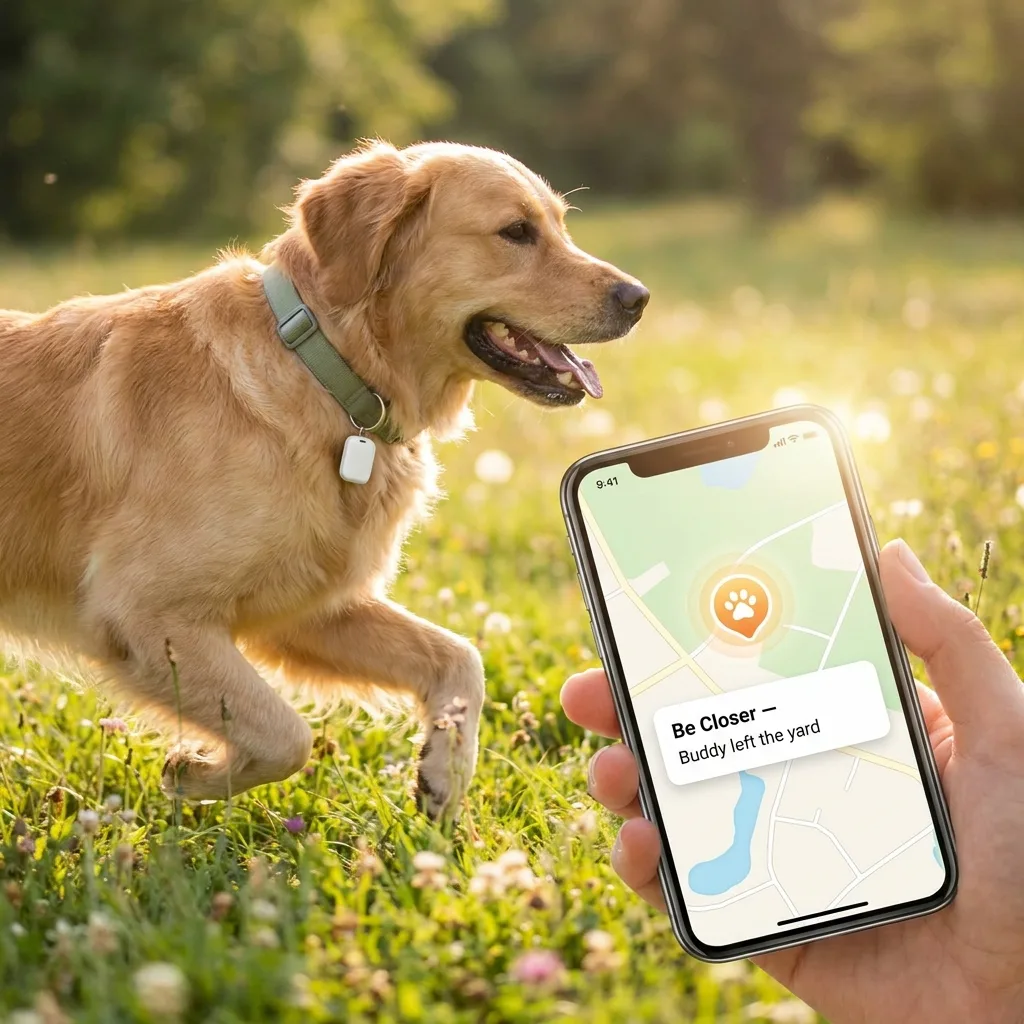
A tracker on the collar changes one thing, and it is the thing that hurts most in the first hour: not knowing which way. Direction turns an area search into a walk towards a point. That is a genuinely different afternoon.
It is also worth being straight about the limits, because a tracker sold as a guarantee is sold dishonestly.
- It needs charge. A flat tracker is a plastic ornament, so charging it is part of the routine, not an occasional job.
- It needs signal. Woodland, deep valleys and thick buildings degrade a fix, and location is up to 95% accurate in good conditions rather than always.
- It shows a point, not a dog. Under a hedge and inside a shed can look the same on a map.
- It does not catch anything. Everything in the section above still applies once you arrive.
- It can come off. A collar that pulls free takes the tracker with it, which is precisely why microchipping matters too.
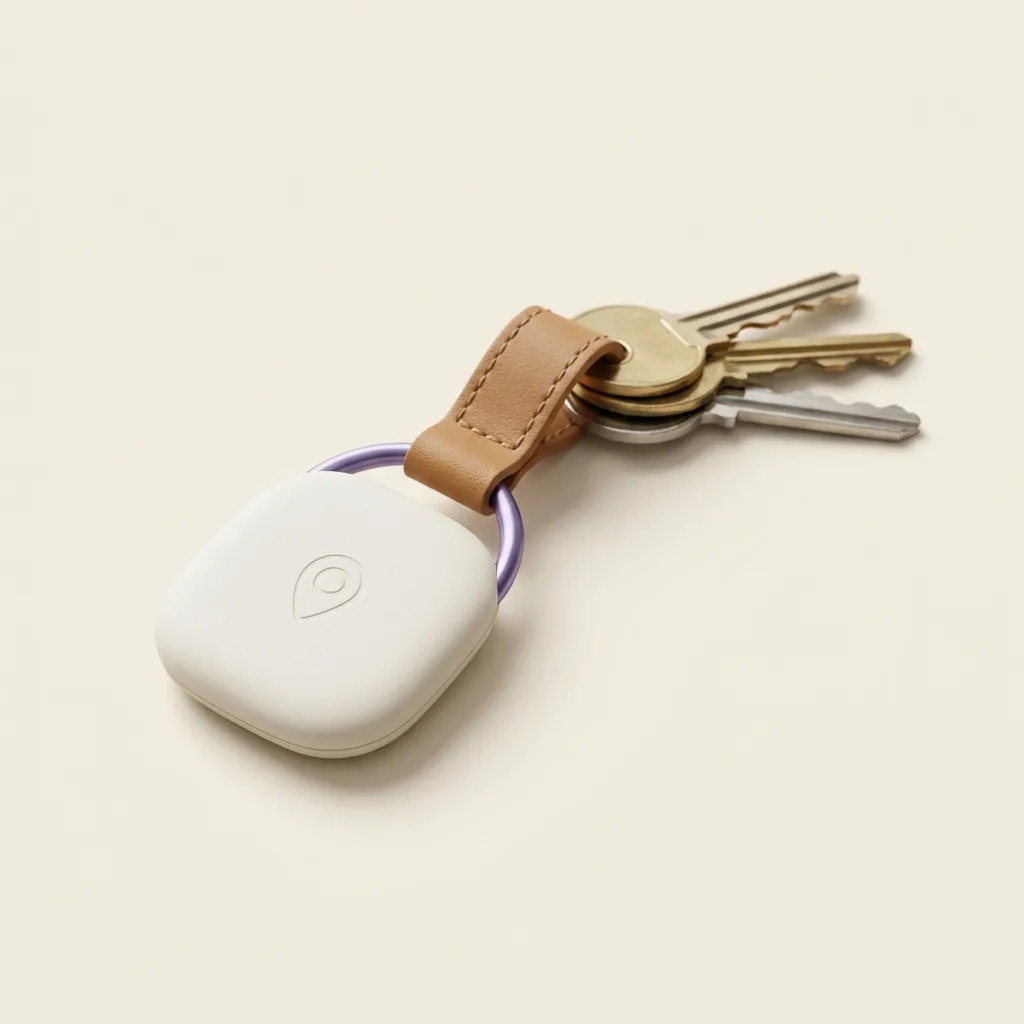
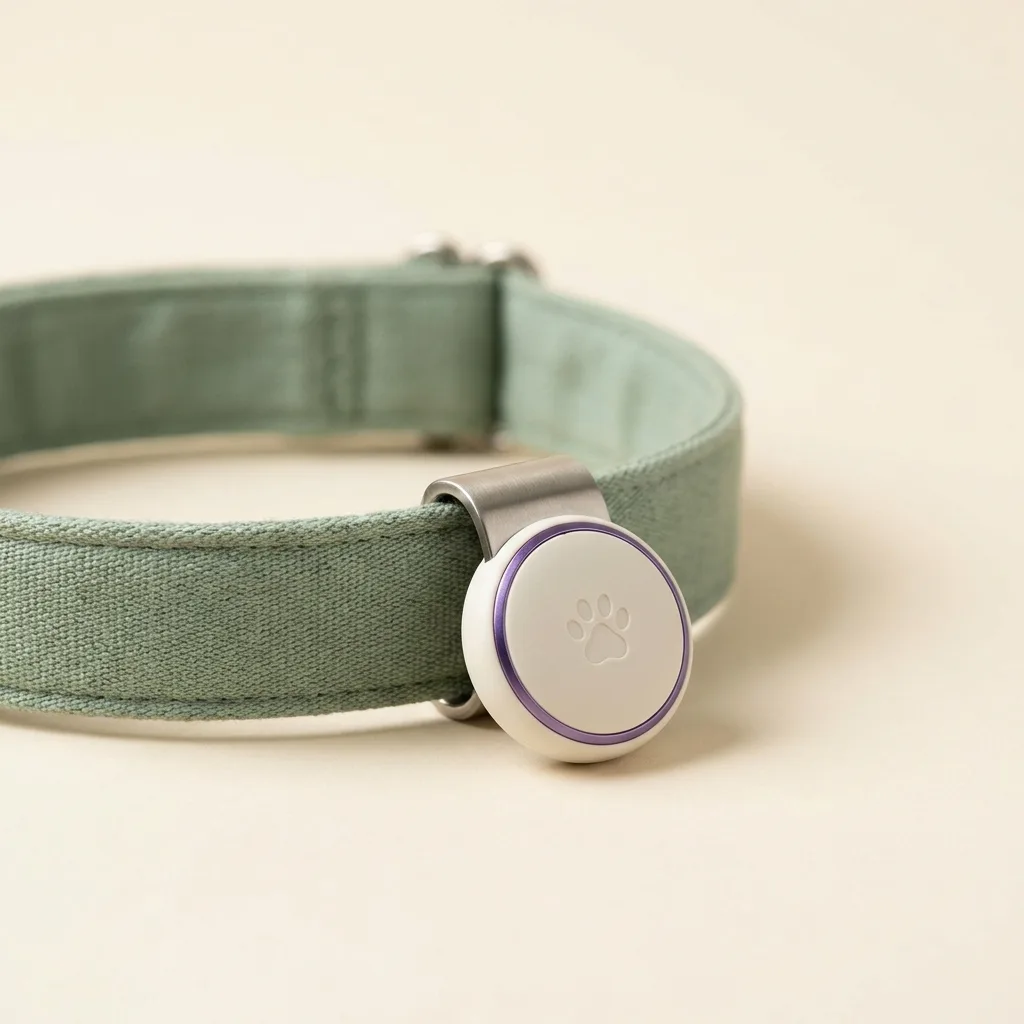
Be Closer Pet sits on the collar and puts your dog on the same family map as everyone else, and the app is free to download with 4.4 stars from more than 150,000 ratings across the App Store and Google Play. It is a head start, not a safety net. The difference between a chip and a tracker is explained properly in pet microchip vs GPS tracker.
Afterwards, without the shame
Once your dog is asleep on the floor and you have stopped shaking, there is a quiet conversation to have with yourself, and it is not a trial. Nearly every bolt has a cause you can adjust slightly.
The five minute review, done kindly
- Check the fit, two fingers under the harness, and check for a worn clip or a frayed lead.
- Consider a second point of attachment, so one failure is not total.
- Update the tag with a current phone number, and update the microchip details in the same sitting.
- Note the trigger, whether that was a bang, a bike, a bird or a gate, and plan for it rather than hoping.
- Rebuild recall on a long line in low distraction places, paying generously every single time.
And be gentle with the person who was holding the lead, especially if that person was a child. They will replay it for weeks. For the wider question of why dogs get out in the first place and what actually reduces it, why dogs escape and what works is the place to go next.
The collie is nine now. He wears a harness with two clips and a tag with a phone number that is actually correct, and he still hates motorbikes. Nobody in that family calls it a failure any more. They call it the Tuesday, and then they change the subject, which is roughly what recovery looks like.
Frequently asked questions

Priya writes about the family members we care for at every age, parents living alone, dogs that bolt at squirrels, and the quiet worry in between. She writes the way she checks in: gently, and always dignity first.
Our guides are written by Be Closer's editorial voices and reviewed by the team behind the app. Questions? support@becloser.com
Published · Updated