 Pets
PetsWhen an older dog starts to wander: loving a senior pet through the foggy years
Older dogs usually wander because hearing, sight or spatial memory have faded, not because they are trying to escape, so the answer is orientation and containment rather than training. Re-audit the garden at your dog's current eye level, shorten and simplify walks, keep routines steady, and talk to your vet about any new confusion. A GPS collar tracker is worth adding when your dog can still get out faster than you can get to them.
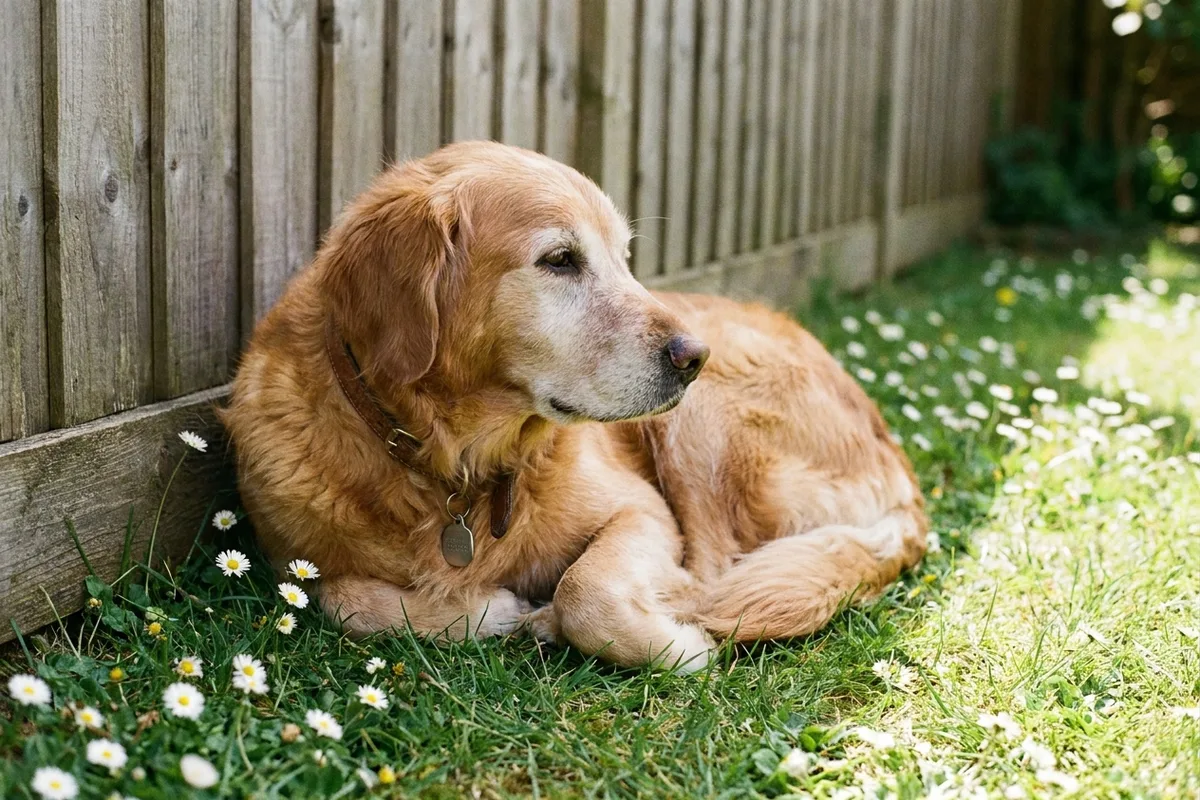
The first time it happened, my neighbour found Bruno standing at the end of the garden with his nose against the fence, entirely still, facing the wrong way. Not digging, not barking, not doing anything a fourteen year old collie cross should be doing on a Sunday morning. Just standing, as though he had walked to that spot for a reason he could no longer remember.
That is what wandering looks like in an old dog, and it is why it frightens people. There is no chase, no drama, no gap under the fence with fur caught on the wire. There is a dog who used to know exactly where he was, and a moment where he did not.
None of this is a diagnosis and none of it replaces your vet. It is what the years look like from the kitchen window, and what practically helps: why senior wandering is different, how to make a familiar place feel legible again, how to change walks without shrinking a life, and when a tracker on the collar earns its keep.
Why senior dogs wander
Wandering in an older dog is rarely about wanting to be somewhere else. It is usually about the world becoming harder to read.
- Hearing fades, so the call that always brought them back no longer arrives. A dog who ignores you may simply not have heard you.
- Sight dims, particularly in low light and at edges, so a familiar garden loses its landmarks after dusk.
- Smell changes too, and a dog who navigated by scent can lose the map they used most.
- Spatial memory gets patchy, so a route walked ten thousand times can suddenly stop making sense halfway along.
- Sleep flips, and a dog awake at three in the morning is a dog moving around an empty house with no cues.
- Routine changes hit harder than they used to: new furniture, a house move, a bereavement in the family, a new baby, a rearranged kitchen.
You will often see the pattern before you see the wandering: pacing at the same time each evening, standing in doorways, getting stuck behind an open door, staring at a wall corner, waiting on the wrong side of a door they have used all their life.
A young dog leaves because somewhere else is interesting. An old dog drifts because here has stopped making sense.
How wandering differs from escaping
This distinction matters, because the whole response depends on it. Everything we normally recommend for escape artists, more exercise, better recall, denying the reward of the chase, is aimed at a motivated dog. A drifting senior is not motivated. They are lost in their own garden.
| Behaviour | Young escape artist | Wandering senior |
|---|---|---|
| The exit | Sought out, worked at, repeated | Stumbled into, often an open gate |
| Speed | Fast and purposeful | Slow and undirected |
| Recall | Hears you and chooses not to come | Often genuinely does not hear you |
| Where they end up | Somewhere interesting, following a scent | Nearby, stopped, sometimes facing a wall |
| What helps | Training, exercise, containment | Orientation, routine, containment |
If your dog is still very much in the first column, why dogs escape and what works is the guide you want. If they are in the second, keep reading, and be careful not to hear a training problem where there is a navigation problem. Repeating a recall command more loudly at a deaf dog helps nobody and makes everyone sadder.
Re-auditing the garden for an older dog
Your garden was secure for the dog you had five years ago. Do the walk again for the dog you have now, and do it at dusk, because dusk is when their eyes struggle most and when most drifting happens.
The senior garden check
- Gates first. Most senior wandering happens through a gate someone left open, not a fence they beat. Fit a spring closer or a bolt that latches by itself, and tell every visitor and delivery driver.
- Water. Ponds and uncovered pools are a serious risk for a dog with poor sight and poor balance. Cover, fence, or drain.
- Steps and drops. Add a contrasting strip of tape or paint on the edge of steps, because failing eyes read contrast long after they stop reading detail.
- Dead ends. Narrow gaps behind sheds and between pots are where dogs get stuck and stand for an hour. Block them.
- Light. A couple of low garden lights along the route to their favourite spot make a big difference at night.
- Surfaces. Slippery decking and smooth patios are hard on old legs. A runner or a rubber mat on the main path is kinder than it looks.
- A landmark. Dogs orient to strong scent markers. Keeping the same mat by the back door and not washing it too often genuinely helps a dog find their way in.
Inside, the same principles apply. Keep the furniture where it is, keep the water bowl in one place forever, leave a night light near their bed, and use a baby gate at the top of stairs if the stairs have become uncertain. Rearranging a room is a small event for you and a lost map for them.
Adapting the walk without shrinking the life
The instinct when a dog gets old and foggy is to walk them less. Usually the better answer is to walk them differently, because the walk is not just exercise, it is the part of the day where they are still fully themselves.
- 1Go shorter and more often. Three ten minute walks are usually kinder than one long one for stiff joints and short stamina.
- 2Keep the route the same. Familiarity is the whole point now. Novelty was for the young dog.
- 3Let them sniff for as long as they want. Sniffing is the tiring, satisfying part. A slow lamppost survey is a real walk.
- 4Walk in daylight where you can, and use a light up or reflective collar when you cannot. If dark walks are a fixture, dog walks after dark covers the kit properly.
- 5Use a longer line rather than off lead in open spaces once recall becomes unreliable. It preserves freedom without depending on hearing.
- 6Watch the weather. Old dogs cope badly with heat and with cold, and a shorter walk on a hot afternoon is not a failure.
- 7Stop when they stop. A senior dog planting themselves is information, not stubbornness.
Add a harness with a handle if there is any wobble, because the moment you need to steady them, a collar is the wrong thing to hold. And carry water on anything longer than a stroll.
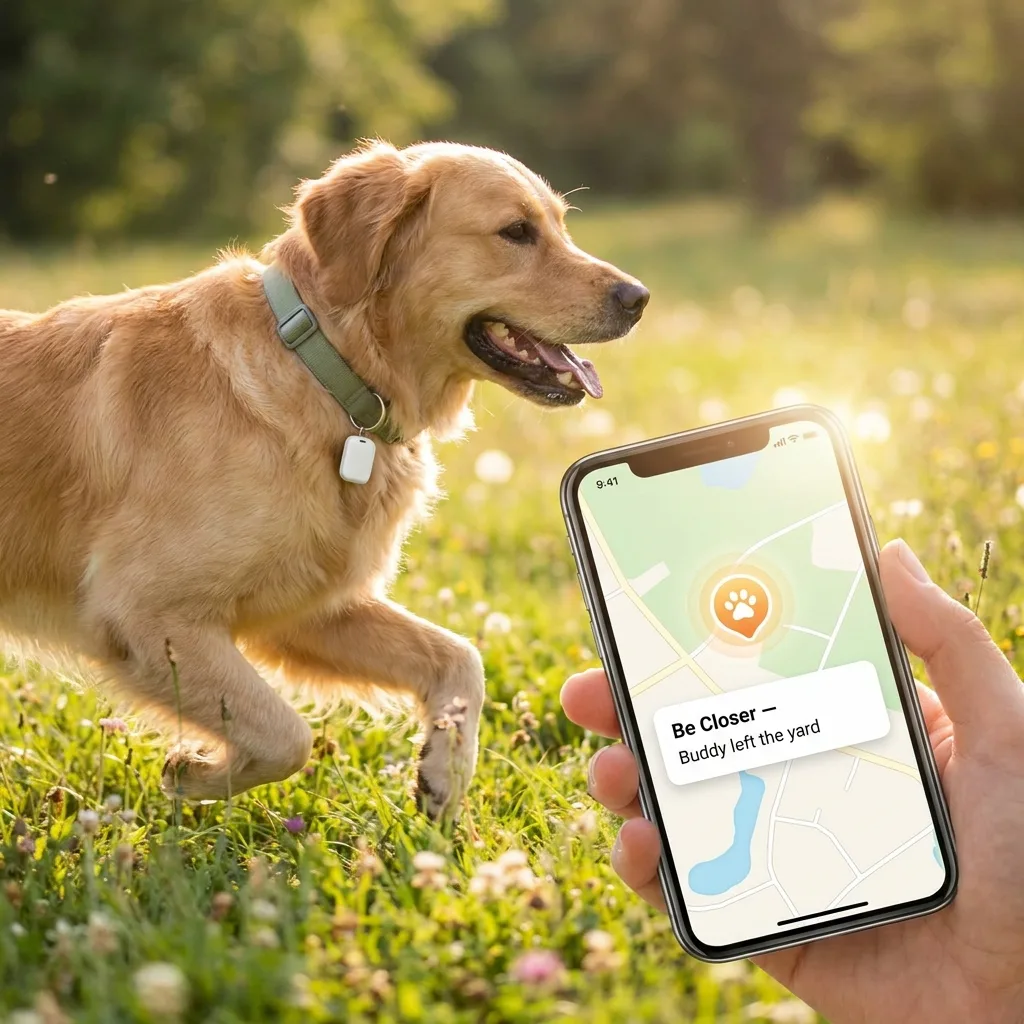
Be Closer shows your whole family on one private map, free to start.
Consent-first, never sold, and gentle on your battery. iOS and Android.
When a GPS collar tracker earns its place
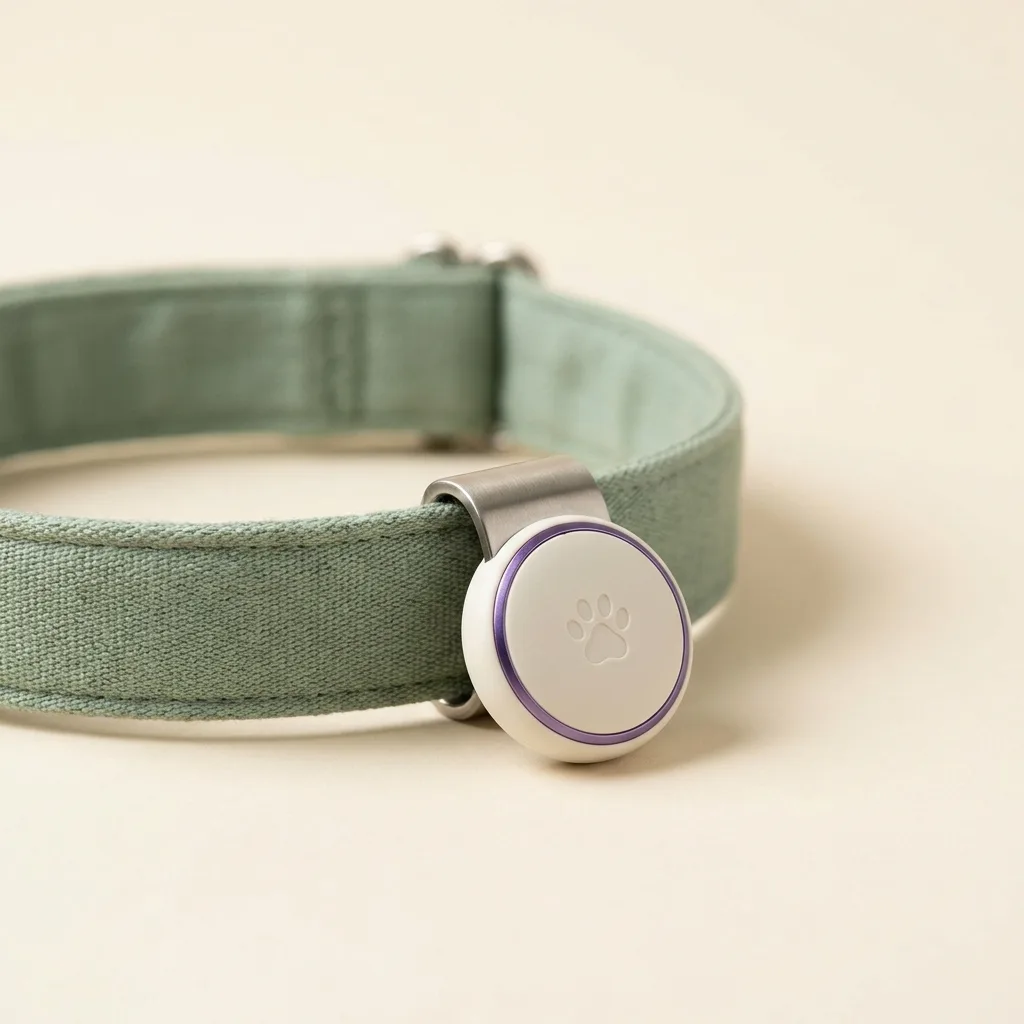
A tracker cannot stop a dog wandering and it does not replace a closing gate. What it does is shorten the worst possible half hour of your year, and for a slow moving old dog who cannot hear you calling, that is a real thing to buy.
It is usually worth adding when at least one of these is true.
- Your dog can leave faster than you can notice, because of a busy household, a shared driveway, or frequent deliveries.
- Recall is no longer reliable, whether from deafness or confusion.
- You have had one incident already. One is the number that changes people's minds, and it should.
- Your dog is small, dark coloured, or silent, which makes visual searching in hedges and long grass nearly hopeless.
- You live near water, a main road, or open farmland, where minutes matter more than usual.
Practical notes. Fit it to a properly adjusted collar or harness so it cannot slide, check the battery on the same day each week so it becomes a habit rather than a memory test, and make sure at least two people in the household have the app and know how to open it while panicking. Location is an estimate, up to 95 percent accurate in good conditions and worse under dense trees or near tall buildings, so treat it as a search area rather than a pin on your dog.
A tracker is a backup to the boring things, not a replacement for them: an up to date microchip registration, a tag with your mobile number on it, and a gate that closes itself. If the worst does happen, lost pet first 24 hours is the guide to have already read, because nobody reads calmly on the day.
The vet conversation
Any new confusion in an older dog is worth a vet appointment. Not because it is necessarily serious, but because several very ordinary things can look like fog and some of them are treatable, and only a vet can tell you which is which. I am not a vet and this guide will not guess.
What you can do is arrive with good notes, because your vet only sees ten minutes of a dog who is nervous in a waiting room.
Take this to the appointment
- When it started and whether it came on gradually or suddenly.
- What time of day it happens, especially evenings and nights.
- Short videos of the pacing, staring or getting stuck. These are worth more than any description.
- Changes in sleep, appetite, drinking, toileting and greeting behaviour.
- Anything that changed in the house in the same period.
- Hearing and sight observations: do they respond to a clap behind them, do they bump edges in low light.
Ask directly whether a hearing or sight check is worth doing, and whether the confusion could be related to anything else going on. Then take the vet's advice over anything on the internet, including this page.
Keeping dignity in the story
There is a way of talking about an old dog that turns them into a problem to be managed, and dogs, who read tone better than words, seem to catch it. Bruno was not a burden with an escape habit. He was a dog who had walked the same lane for fourteen years and had begun, occasionally, to lose the thread.
So the practical stuff matters, and so does the framing. Keep the greetings enthusiastic even when they cannot hear the words, because they can still read a face and a body. Keep the routines they love, even the inconvenient ones. Let them have the sunny spot on the rug that is technically in everybody's way. Tell the children that he is not being naughty and not being stupid, he is getting old, and that we help.
And be kind to yourself about the vigilance, because it is tiring in a way that people who have not done it do not understand. Get one other person in the household properly involved, so you are not the only one who can find the dog, the lead, the app and the vet's number.
The gate, the collar and the tracker are logistics. The rest of it is just keeping faith with a dog who kept faith with you.
Frequently asked questions

Priya writes about the family members we care for at every age, parents living alone, dogs that bolt at squirrels, and the quiet worry in between. She writes the way she checks in: gently, and always dignity first.
Our guides are written by Be Closer's editorial voices and reviewed by the team behind the app. Questions? support@becloser.com
Published · Updated