 Pets
PetsDog walks after dark: small habits that make them feel safe again
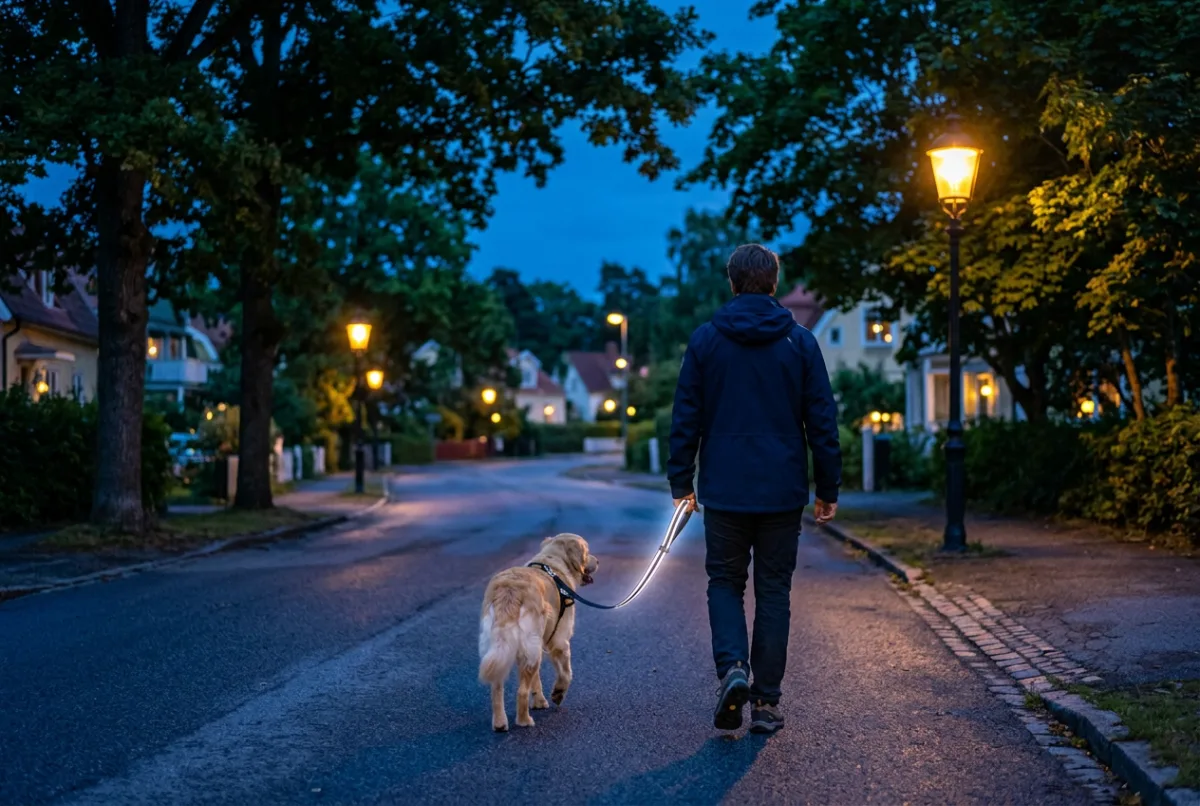
Dark walks are safe for most dogs and owners with a handful of cheap, boring habits: reflective gear on both ends of the lead, a route you've told someone, and redundancy on the lead itself so a spooked dog can't simply come loose. Dogs startle differently at night, more by sound than sight, so know your dog's specific triggers before the clocks change, and treat a tracker as quiet backup rather than the main plan.
There's a particular evening every autumn when the walk that's been happening at 5pm in daylight suddenly happens at 5pm in the dark, and nothing about the route has changed except the light. My dog noticed before I did, a small hesitation at the door, ears doing something they don't do in summer.
Dogs don't dislike darkness on principle. What changes is what they can rely on to make sense of the world, and for a dog that leans on sound and smell more than sight anyway, a dark walk isn't really a different walk, it's the same walk with the human suddenly much more visually dependent and much less useful at spotting the things that matter.
None of this requires giving up evening walks for four months of the year. It requires a short list of habits, most of which cost very little and take no extra time once they're routine.
What actually makes a dark walk safer?
Visibility is doing almost all of the work here, and it's worth thinking about it from both directions, being able to see, and being seen.
- A reflective or lit collar on the dog, ideally one with a small clip-on light rather than reflective strips alone, since reflective material only works when something else's headlights hit it at the right angle.
- High-visibility gear for the human, which sounds obvious and is routinely skipped, a driver sees a lit dog collar from further away if there's also a visible person attached to the other end of the lead.
- A lit or well-trodden route, chosen deliberately over the quieter, prettier one you'd take in daylight. The dark is not the time to discover that the shortcut through the park has no lighting at all.
- A torch or phone light, kept for spotting hazards underfoot and for scanning ahead at junctions and blind corners, not just for finding the lead in your pocket.
None of this is expensive. A clip-on collar light costs less than a coffee and does more for a dark walk's safety than almost anything else on this list.
Why does the double-clip habit matter so much?
A single clip point, lead attached only to a collar, or only to a harness, means one slipped collar or one snapped clip is the entire chain of security for that walk. Attaching the lead to both a harness and a collar, using a short double-ended lead or two clips, means a failure at one point doesn't immediately mean a loose dog.
This matters more at night specifically because a loose dog in the dark is far harder to see, harder to call back to (since your voice competes with less visual cue for the dog to orient on), and far more likely to be near a road where a driver has less time to react. The redundancy that feels like overkill on a bright Sunday afternoon earns its keep on the one dark, windy night something actually slips.
The double-clip setup, briefly
- Well-fitted harness plus well-fitted collar, both checked for fit regularly.
- A short double-ended lead, or two separate clips, connecting to both.
- ID tag on the collar always, regardless of harness use, it's still the fastest way for a stranger to identify a found dog.
- A quick fit check before dark walks specifically, since a slightly loose harness matters more when visibility for spotting the slip is lower.
Who should know your route before you leave?
This is the habit that costs nothing and gets skipped the most. A text, "taking Biscuit round the usual loop, back by half six", to a partner, housemate, or friend means that if something does go wrong, someone knows where to start looking well before genuine worry sets in.
It's the same logic behind family code words for safer pickups and the general habit of telling someone your plan before you need them to act on it. The message doesn't need to be dramatic or daily, a standing arrangement of "same route, back around the same time unless you hear otherwise" covers most evenings without any typing at all.
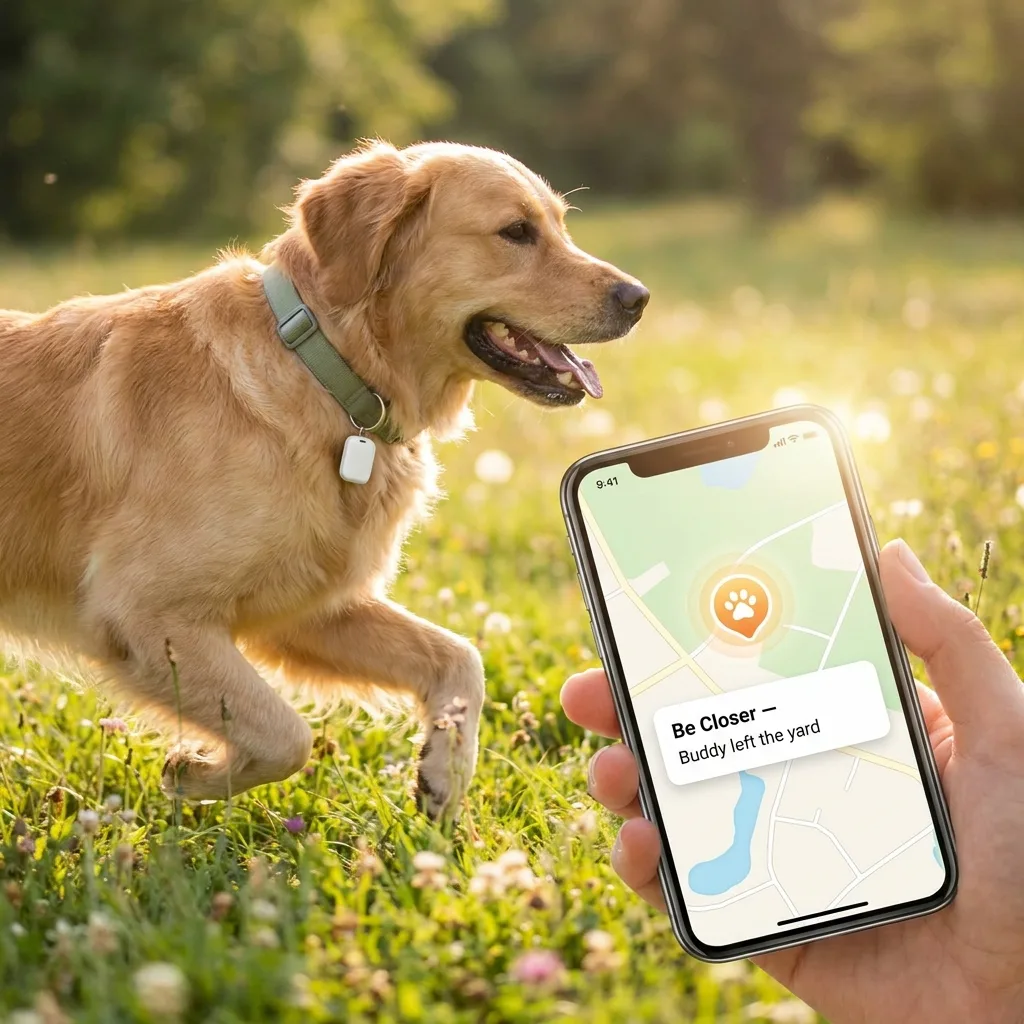
Be Closer shows your whole family on one private map, free to start.
Consent-first, never sold, and gentle on your battery. iOS and Android.
Why do dogs spook differently at night?
In daylight, a dog that startles usually has some visual context for the trigger, it saw the thing, even briefly, before reacting. At night, startling is far more sound-led: a rustle in a hedge, a distant firework, an unfamiliar footstep, a fox call. Without the visual confirmation that usually accompanies a daytime spook, the reaction can be sharper and the recovery slower, because the dog genuinely doesn't know what just happened, only that something did.
Wildlife is more active at dusk and into the evening, foxes especially, and unexpected fireworks, common well outside the traditional dates in many areas now, are a frequent cause of a dark-walk bolt that wouldn't have happened at the same volume in daylight, simply because the flash and bang are more startling against a dark sky.
If a dog does bolt, resist the instinct to chase at full speed, which a fearful dog usually reads as being chased and runs harder from. Crouching down, calling in a familiar, calm voice, and using a known recall cue or a favourite treat shake tends to work better than pursuit, though prevention through the double-clip habit above remains the far better outcome.
Where does a tracker actually help here?
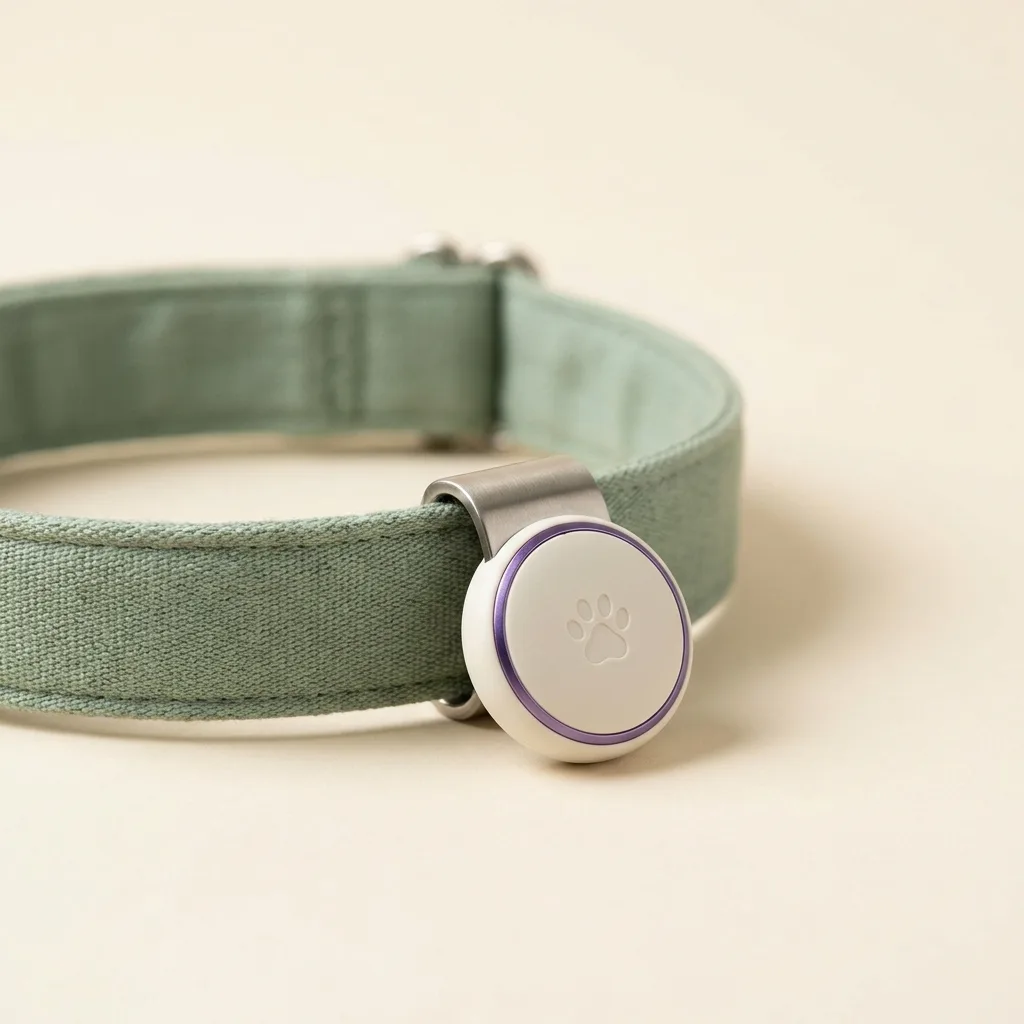
A collar tracker isn't the main defence for a dark walk, the habits above are, but it's a sensible piece of quiet backup for the rare night something does go wrong. If a dog does slip a collar or bolt from a genuine fright, a Pet tracker turns a search of an entire dark park into a search of a specific, much smaller area, the same honest, limited promise covered in How accurate is phone GPS, really?.
It's worth thinking of it the way this site talks about family location sharing generally: not surveillance, and not a replacement for good habits, just a backup that costs nothing to have and matters enormously on the one night you need it. The same reasoning that makes fence and gate audits the real first line of defence against escapes, as covered in Why dogs escape and what actually works, applies here too, the tracker is what helps after prevention has already done most of the job.
Frequently asked questions

Priya writes about the family members we care for at every age, parents living alone, dogs that bolt at squirrels, and the quiet worry in between. She writes the way she checks in: gently, and always dignity first.
Our guides are written by Be Closer's editorial voices and reviewed by the team behind the app. Questions? support@becloser.com
Published · Updated