 Driving
Your Teen's First Solo Drive: A Calm Protocol for a Big Day
One-sentence rule: expand privileges on a schedule, not on a whim. Write down which routes, hours, and passengers are allowed at first, loosen it every few weeks, use arrival alerts instead of phone calls, and treat the first fender-bender as a lesson to debrief rather than a reason to take the keys away.
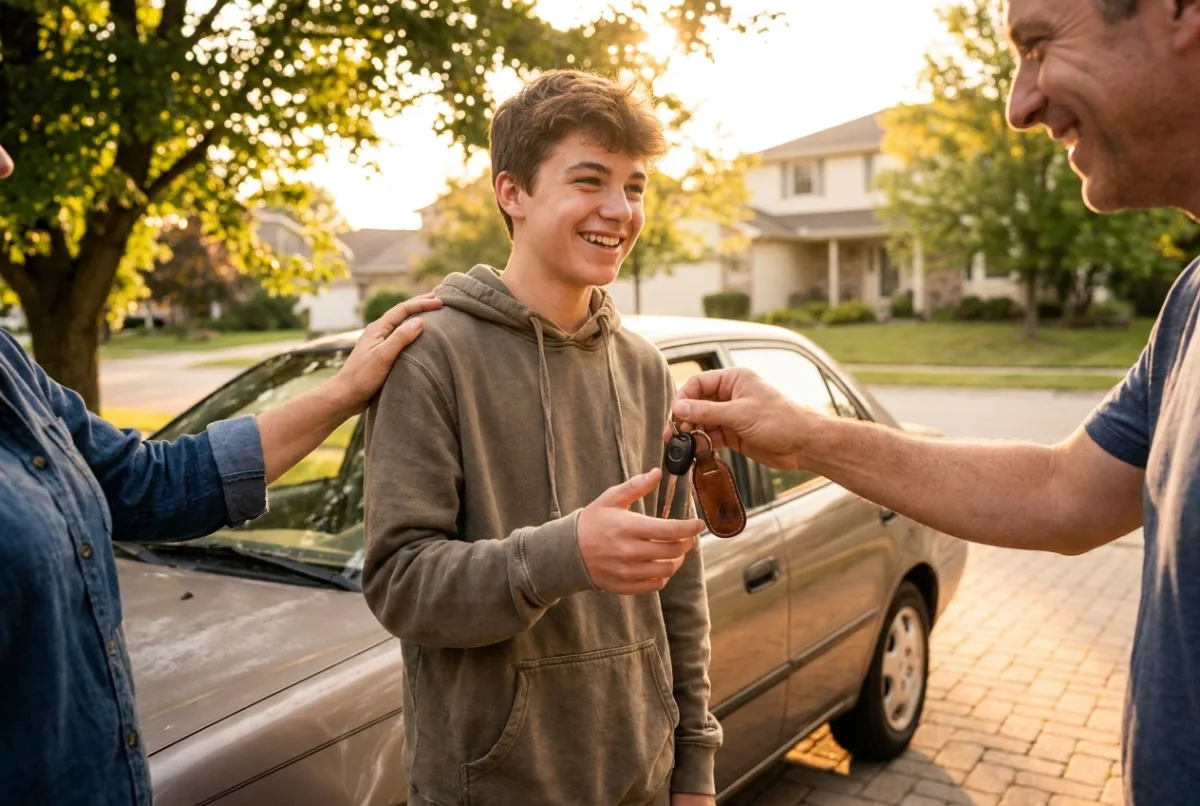
There's a particular kind of quiet that fills a house the first time a newly licensed teenager backs out of the driveway alone. No instructor in the passenger seat, no parent narrating hazards from the back. Just a kid, a car, and a set of keys that used to only ever go one direction, from your hand to theirs, and back again at the end of a lesson.
That quiet is doing something useful, actually. It's the same instinct that makes the first months of solo driving genuinely the highest-risk period of a driver's life, widely reported by road-safety agencies. Not because your teenager is reckless, but because judgment under real, unsupervised conditions is a skill that only gets built by driving under real, unsupervised conditions. The trick isn't to eliminate the risk, you can't, it's to make the exposure gradual and the rules explicit, so the learning happens in smaller, survivable doses.
This is a protocol for that first stretch: a graduated agreement, a check-in system that doesn't feel like a leash, and a plan for what happens when, not if, something goes wrong on a small scale.
Why does the first stretch of solo driving matter so much?
A learner's permit period is supervised almost by definition, an adult is in the car, watching, coaching, occasionally grabbing the wheel. A freshly issued license removes all of that at once, which means the newly independent driver is simultaneously handling the mechanics of driving and the judgment calls that used to belong to the adult beside them: when to leave extra room, whether an intersection is safe to enter, how to react to another driver's mistake.
Road-safety agencies have widely reported that new drivers face substantially higher risk in their first months alone behind the wheel than at almost any later point, and that risk climbs further with each additional teenage passenger in the car and each additional hour driven at night. None of this means your teen shouldn't drive alone, it means the first months are worth treating differently than the tenth year of driving, with privileges that expand as experience actually accumulates rather than all at once on license day.
It also means the goal of any agreement you write isn't to prevent every possible mistake. It's to reduce the number of high-risk situations, night driving, multiple passengers, unfamiliar highways, a brand-new driver is exposed to before they've had a chance to build the underlying judgment in lower-stakes conditions.
What does a graduated driving agreement actually look like?
The best version of this agreement is written down, agreed before the first solo drive rather than after a scare, and reviewed on a schedule rather than by argument. It should cover three things specifically: where, when, and with whom.
Routes
Start with roads your teen has actually practised, the route to school, to a part-time job, to a friend's house you've driven together more than once. Unfamiliar routes, especially highways or dense city centres, come later, once the basics of lane changes, merging, and reading traffic have become close to automatic rather than effortful.
Hours
Night driving is disproportionately risky for new drivers, reduced visibility, more fatigue, more impaired drivers on the road. Many families set an early curfew for solo driving (something like home by dusk, or by a fixed time) for the first several weeks, then extend it as confidence and experience build. This isn't about distrust; it's about sequencing the hardest conditions for later.
Passengers
A car full of friends is fun and, for a brand-new driver, genuinely more dangerous, more noise, more distraction, more social pressure to show off. A reasonable early rule is solo driving only, or one familiar passenger such as a sibling, with a full carload held off until the license has been active for a defined stretch, often a few months.
| Stage | Routes | Hours | Passengers |
|---|---|---|---|
| Weeks 1–4 | Practised routes only | Daylight only | None |
| Weeks 5–8 | Add familiar new routes | Home by early evening | One familiar passenger |
| Weeks 9–12 | Most local roads | Home by a set night curfew | Two passengers max |
| 3 months+ | Full local privileges, highway added gradually | Family's normal curfew | Reviewed together |
Write the stages down, put dates next to them, and treat the schedule itself as the plan rather than something to be negotiated weekly. A teenager who knows exactly when the next expansion happens has far less reason to push for it early.
What's a check-in that doesn't feel like surveillance?
The instinct many parents have, call or text the moment a drive should be finishing, creates exactly the wrong incentive. It teaches a new driver to check their phone while driving, which is far more dangerous than the thing you're trying to prevent. The better version of a check-in removes the phone from the equation entirely.
An arrival alert, sent automatically the moment a shared device or phone reaches a saved place, tells you your teen made it to school, to work, or home, without either of you touching a phone mid-drive. If your family already uses Be Closer's Drive tracker or a similar in-car device, the same alert can flag hard braking or an unusually long stop, which is useful information without requiring a call.
The goal of a check-in isn't to watch the drive. It's to know it happened, and to know if it didn't.
The other half of a non-surveillance check-in is symmetry. If your teenager can see your location too, arriving at work, running late from the shop, the arrangement reads as a shared family habit rather than a one-way monitoring system. We've written more generally about that framing in Should I track my child's location?, and the same logic applies just as strongly once a child is behind the wheel rather than on foot.
- Set the alert for arrival at a small number of fixed places, school, home, work, not a live tracking view checked constantly.
- Agree that a late arrival triggers a text, not a phone call, and never a call while the car might still be moving.
- Make it mutual: your teen sees your arrivals too.
- Never bring up a location detail in an unrelated argument. That's the fastest way to turn a useful tool into a resented one.
Be Closer shows your whole family on one private map, free to start.
Consent-first, never sold, and gentle on your battery. iOS and Android.
What actually helps in those first weeks?
- 1Debrief every drive, briefly, for the first couple of weeks. Not an interrogation, a thirty-second "how did that merge feel" conversation while it's still fresh.
- 2Keep the car itself boring. A clean windshield, working headlights, and a mounted phone holder do more for safety than a lecture. If a phone is going to be used for navigation, it should be mounted and voice-controlled, never handheld.
- 3Model the behaviour you want. A new driver who watches a parent check a phone at a red light has just learned that it's normal.
- 4Praise the boring drives. "Nothing happened, you did fine" is worth saying out loud. New drivers rarely get positive feedback for an uneventful trip, even though that's the actual goal.
What should happen after the first fender-bender?
It happens to most new drivers eventually, a scraped bumper backing out of a parking space, a minor bump in slow traffic. How you respond in that moment shapes whether your teenager tells you about the next one honestly and quickly, which matters far more than the dent itself.
The first-fender-bender protocol
- Ask if everyone is okay before asking anything else, including before you ask what happened.
- Keep your first reaction calm, out loud, even if you don't feel calm inside, the reaction they get this time determines whether they call you next time.
- Debrief the mechanics once things are calm: what led up to it, what they'd do differently. This is where the actual learning happens.
- Avoid taking away the keys as an automatic punishment for an honest, low-speed mistake, reserve that response for reckless behaviour, not for the ordinary bad luck of learning to judge distances.
- Use it as a natural point to revisit the graduated agreement together, not to freeze it.
A minor accident handled with proportion tends to make a teenager a more careful driver going forward. A minor accident met with fury tends to make them a driver who hides the next one, which is a far worse outcome for everyone.
How does this connect to the rest of family safety habits?
Solo driving is really just the newest form of independence your teenager has been building toward, following the same pattern as their first solo walk or bus ride. The habits that worked then, clear agreements, arrival alerts instead of constant checking, privileges that expand on a schedule, work here too, just with higher stakes and a faster clock. If your family has already been through the earlier stages, this one will feel familiar rather than new.
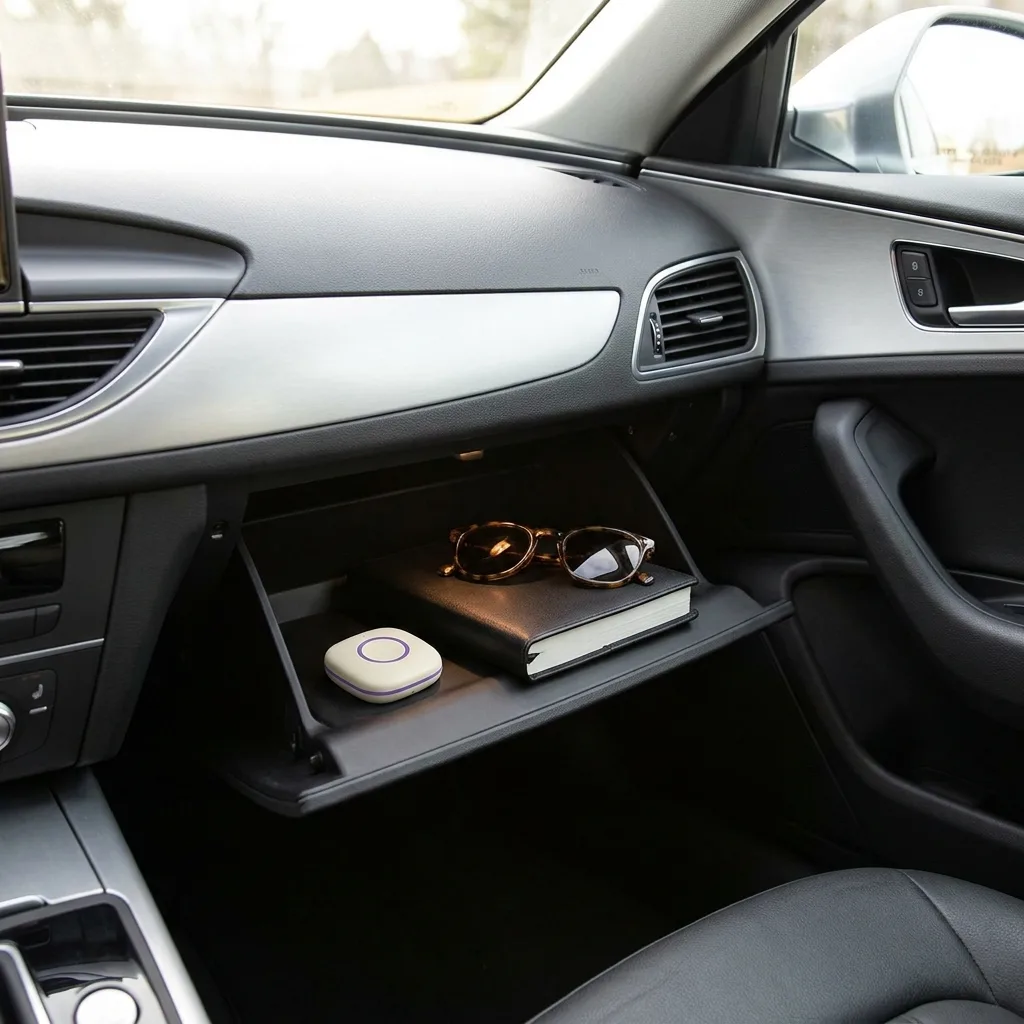
It's also worth treating the car itself as something worth protecting, not just the driver. A compact tracker kept in the glovebox can help you recover a vehicle if it's ever stolen and gives you a fallback way to locate the car if a phone runs out of battery on a long drive, genuinely useful on its own terms, independent of anything to do with monitoring your teen.
Frequently asked questions

Daniel covers privacy, consent and the technology under the hood. A dad who reads the settings screens so you don't have to, he believes the best family tech is the kind you can explain to your kid in one sentence, and that nothing should ever be tracked in secret.
Our guides are written by Be Closer's editorial voices and reviewed by the team behind the app. Questions? support@becloser.com
Published · Updated