 Driving
Dad Still Drives, and That's Okay. Here's How We Made Peace With It
Most older drivers don't need to stop driving, they need a family that pays attention without taking over. A good agreement shares location on longer drives, adds a simple check-in after night driving, and treats real warning signs like missed exits, new dents, or a doctor's comment as information to discuss together, not evidence for an ultimatum.
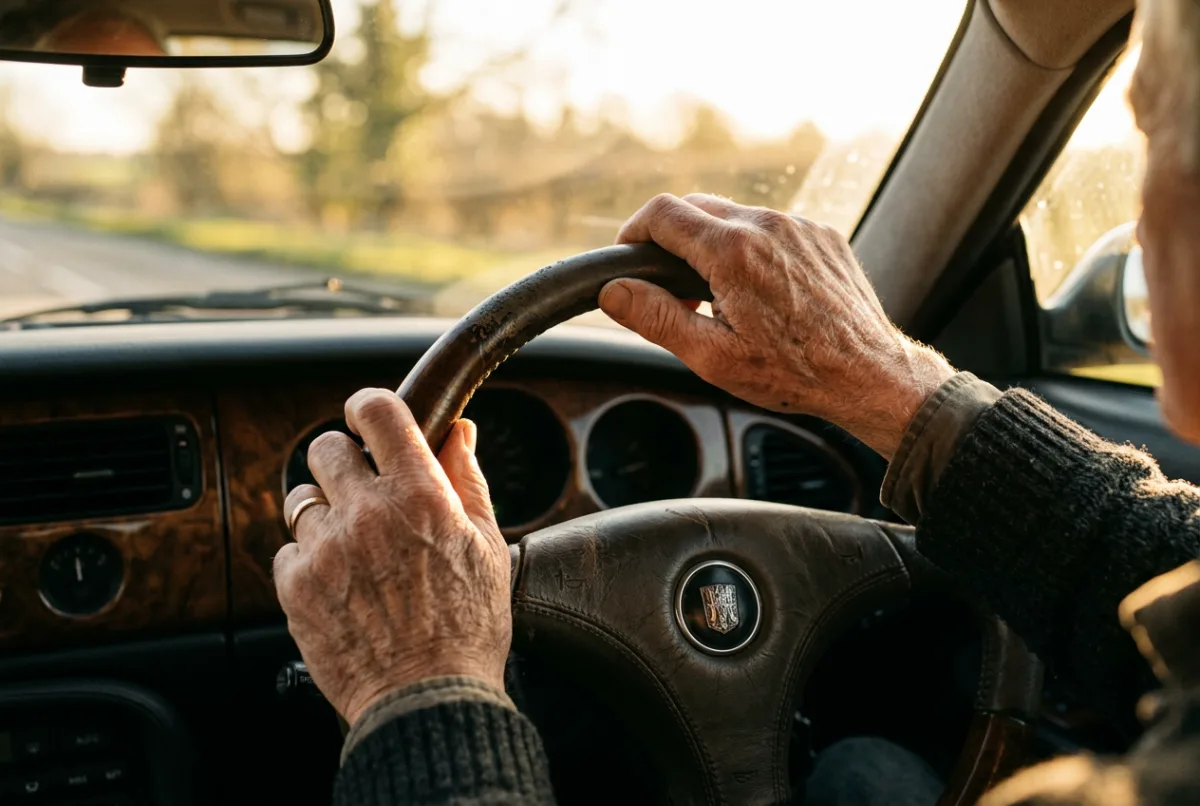
My father backed out of the driveway on a Tuesday afternoon, and I stood at the kitchen window watching the car ease past the mailbox with maybe six inches to spare, same as it always had. Same as it had for the fifty years he'd been driving that stretch of road. I wasn't watching because I doubted him. I was watching because two weeks earlier my mother had mentioned, almost as an aside, that he'd missed the turn for the pharmacy, a turn he's made a thousand times, and driven an extra mile before realizing.
It was such a small thing. It was also the kind of small thing that, once you've heard it, you can't un-hear. I spent the next month turning it over, trying to decide whether it meant anything, and eventually admitting to myself that I didn't actually know how to have this conversation with a man who had never in his life needed permission to drive anywhere.
This is the story of how we got there, not to a decision, exactly, but to a way of talking about it that didn't feel like an accusation. If you're standing at your own kitchen window right now, turning over your own small thing, I hope some of this is useful.
The conversation I kept avoiding
I rehearsed it for weeks. Every version I imagined started with something like "Dad, I think it's time we talked about your driving," and every version I imagined ended badly, because that sentence arrives already carrying a verdict. It says: I've decided something about you. Nobody wants to be on the receiving end of that, least of all a parent from their own child.
What actually worked was smaller and less dramatic than I expected. I didn't bring up the missed turn at all. Instead, one evening after dinner, I asked him what driving felt like these days, whether anything about it had gotten harder, or less enjoyable, or more tiring. Not as a test. Genuinely curious.
He thought about it longer than I expected, and then he told me himself: night driving had started to bother him, the glare from oncoming headlights lingering a beat too long before his eyes adjusted. He hadn't mentioned it because nobody had asked, and because mentioning it himself felt like the first step onto a slope he wasn't ready to slide down.
A gentler way to open it
- Ask about the experience of driving, not the safety of it, "How does driving feel these days?" rather than "Should you still be driving?"
- Bring it up when nothing has just gone wrong, so it doesn't land as a reaction to a specific incident.
- Expect to listen more than you talk. Most people know their own limits better than we give them credit for.
- Frame any changes as things you're doing together, not things being done to them.
What we agreed on, without anyone losing anything
We didn't land on a dramatic solution, because the situation didn't call for one. My father is, by every honest measure, still a competent driver. What we landed on instead was a set of small, mutual agreements, nothing that felt like a leash, everything that felt like the kind of thing families do for each other anyway.
- On longer drives, visiting my aunt two hours away, the annual trip to the coast, he shares his location with me and my mother for the duration of the trip. Not because we expect trouble, but because it means nobody's guessing if a call goes unanswered.
- After any evening he drives at night, he sends one text when he's home. Three words is enough. I don't need a report, just a period at the end of the sentence.
- We agreed to actually talk about it again in six months, rather than letting the subject quietly disappear until something forces it back up.
The location sharing turned out to matter less as a safety measure and more as a piece of mutual reassurance, something my mother could glance at during a long drive without having to phone and interrupt him. A family map like Be Closer works well for exactly this kind of arrangement, because it's visible to everyone involved rather than something one person checks on another. That distinction, shared visibility instead of one-way watching, is what kept the whole thing from feeling like surveillance.
He told me once, months later, that the location sharing didn't bother him at all, what would have bothered him was being asked to stop driving before he was ready to agree it was time.
Be Closer shows your whole family on one private map, free to start.
Consent-first, never sold, and gentle on your battery. iOS and Android.
The signals that actually matter
None of this means driving concerns should be waved away forever. There's a real difference between an occasional slip anyone might make and a pattern that's genuinely changing. The families who navigate this best aren't the ones who ignore warning signs, and they aren't the ones who panic at the first one, they're the ones who know which signs are worth a conversation.
Worth raising, gently
- New dents or scrapes on the car, especially more than one, especially unexplained.
- Missed exits or turns on routes they've driven for years.
- Getting lost on a familiar route, even briefly.
- A doctor or optician raising a concern about vision, reflexes, or a new medication's side effects.
- Family members in the car feeling consistently nervous, rather than nervous about one bad moment.
- Difficulty with specific situations, merging, roundabouts, left turns across traffic, rather than driving in general.
How to raise it without a confrontation
- 1Mention what you noticed factually, without the word "always" or "never" attached to it. "I noticed the passenger door has a new scrape" lands very differently from "You keep hitting things."
- 2Ask what they think happened, and actually listen to the answer before offering your own theory.
- 3Suggest a neutral third opinion where one exists, a doctor's assessment, an occupational therapy driving evaluation, rather than making the judgment call yourselves.
- 4Keep the agreements from the earlier, calmer conversation as your anchor. If you already have a check-in habit and a shared map, you're adjusting an existing arrangement, not starting a confrontation from zero.
What I'd tell my younger self
If I could go back to the version of me standing at that kitchen window, working herself into a state over a missed turn, I'd tell her two things. First, that the conversation is almost never as bad as the one you rehearse, the honest version, asked with curiosity instead of accusation, tends to go better than you expect. Second, that this isn't a single conversation with a single ending. It's an ongoing one, revisited every so often, adjusted as things change, and it works best when both people feel like they're steering it together.
My father still drives. He still backs out of that driveway with six inches to spare. And somewhere in my mother's phone, quietly, there's a dot that moves when he takes the long drive to the coast, not because we don't trust him, but because trust and care aren't actually opposites. They never were.
Frequently asked questions

Priya writes about the family members we care for at every age, parents living alone, dogs that bolt at squirrels, and the quiet worry in between. She writes the way she checks in: gently, and always dignity first.
Our guides are written by Be Closer's editorial voices and reviewed by the team behind the app. Questions? support@becloser.com
Published · Updated