 Driving
A calm roadside breakdown plan for teen drivers
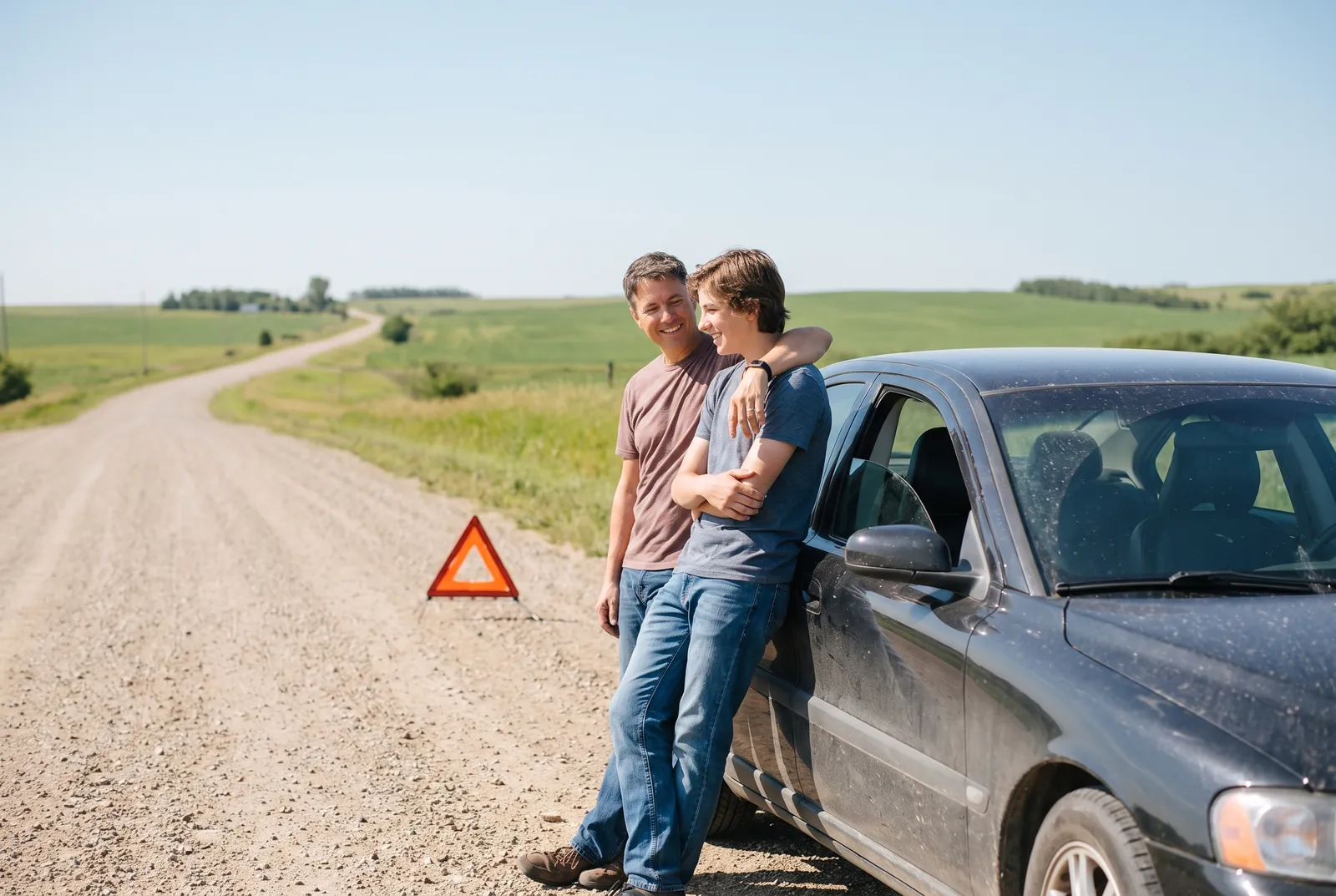
Get the car fully off the road, hazards on, then decide whether staying belted inside or standing well away from traffic is safer for where you are. Call roadside assistance or emergency services before calling home, and share a live location instead of trying to describe the road. Parents: help with logistics first and discuss the driving later.
Most new drivers have rehearsed what to do at a junction and almost none have rehearsed what to do when the car simply stops. A flat tyre, a warning light, a dead battery in a car park, an engine that quietly loses power on a dual carriageway. These are ordinary events, and they become frightening mainly because nobody wrote down the first three steps.
So write them down. A breakdown plan is not a lecture about maintenance and it is not a scare session. It is a short sequence that works when someone is rattled, at night, with traffic going past faster than feels reasonable.
This is the version I would give a teenager who has just started driving alone, plus the part parents get wrong, which is what to do in the first sixty seconds of the phone call.
The first thirty seconds
Everything here follows one principle: traffic is the danger, not the broken car. A car that will not start is an inconvenience. A person standing on the traffic side of a stopped vehicle is a risk. Every step below exists to increase the distance between people and moving vehicles.
- 1Hazard lights on immediately. Do it while still rolling if the car is losing power.
- 2Get fully off the road. Aim for a hard shoulder, a lay by, a side street, a car park entrance. Coast further rather than stopping in a live lane if there is any momentum left.
- 3Straighten the wheels and apply the handbrake. If it is dark, leave sidelights on as well as hazards.
- 4Decide inside or outside. On a fast road with a barrier and a verge, exit through the passenger side, away from traffic, and get behind the barrier. On a quiet residential street with the car safely off the road, staying belted inside is usually fine.
- 5Breathe once, then make the calls. Nothing here needs to happen in five seconds. It needs to happen in the right order.
One sentence rule: never stand between your car and moving traffic, ever, for any reason.
That includes checking the tyre on the traffic side. It includes fetching something from the boot. If the item is on the wrong side, it waits for the recovery vehicle.
Warning triangles and visibility
A warning triangle helps on ordinary roads and is required in the kit in many countries. Rules on where to place it vary by country and road type, so learn the local guidance rather than a number from the internet. The general principle is: place it far enough back that a driver has time to react, and only place it if you can walk there without entering a live lane.
- On motorways and fast dual carriageways, guidance in many places is not to use a triangle at all, because walking back is more dangerous than the warning is useful.
- Wear something bright. A cheap high visibility vest kept in the door pocket, not the boot, so you can put it on before getting out.
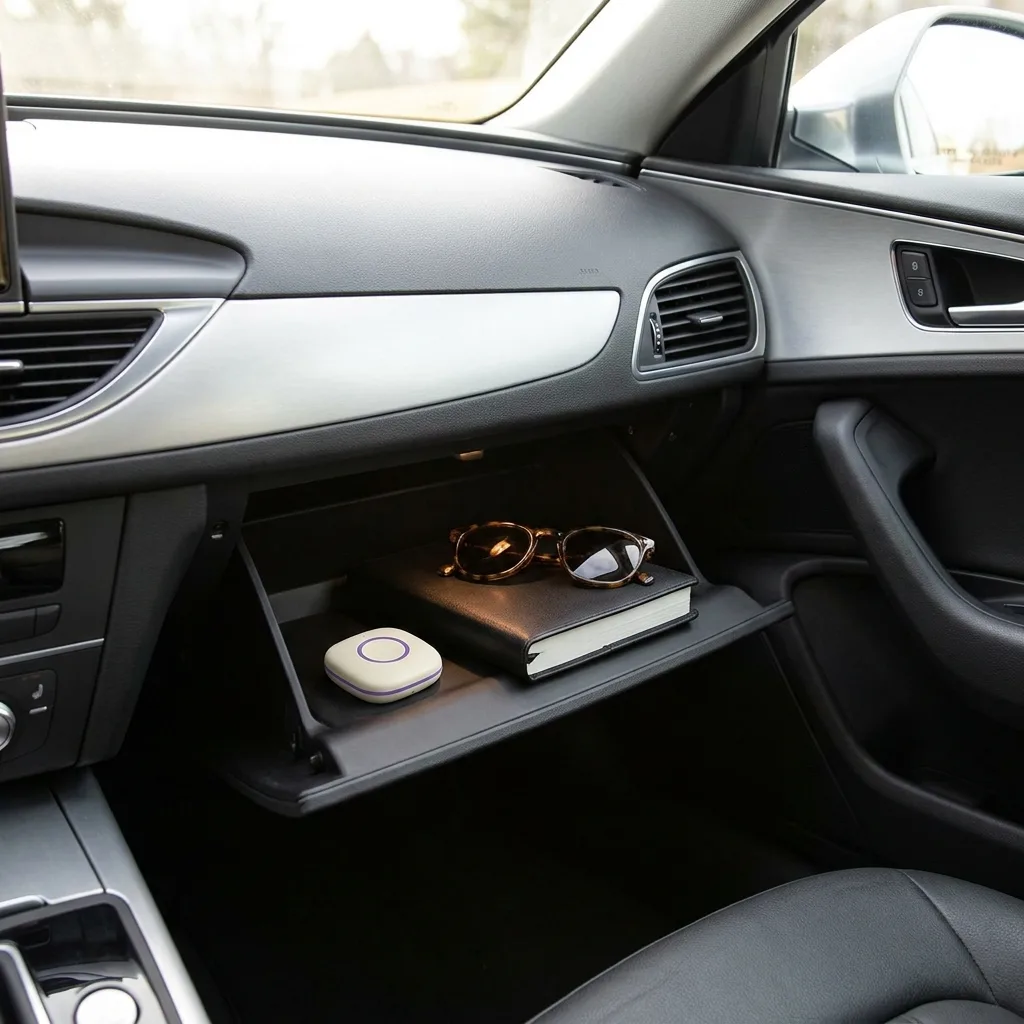
- Keep a torch in the glovebox. Phone torches work but eat the battery you may need for calls.
- Lock the doors if waiting inside on a quiet road at night, and keep a window cracked to hear approaching help.
The five item boot kit for a new driver
- High visibility vest stored inside the cabin, not the boot.
- Torch with working batteries, checked twice a year.
- Warning triangle, if your country expects one.
- Power bank and cable that fit the phone actually being used.
- A card with the roadside assistance number, plus the policy number, in case the phone is dead.
Who to call, in what order
New drivers usually call a parent first, because a parent is the person they most want. That instinct is understandable and it is the wrong order when safety or a live lane is involved.
- 1Emergency services, if anyone is hurt, if the car is in a live lane, or if there is smoke or fuel. This is not a judgement call to agonise over. If in doubt, call.
- 2Roadside assistance or the breakdown provider, for everything mechanical. They ask precise questions and they will dispatch help. Have the policy number ready.
- 3A parent or trusted adult, to handle logistics: a lift, a plan for getting home, keeping the phone company while waiting.
- 4Nobody else until the first three are done. Group chats can wait.
Practise this order once out loud in the kitchen. It sounds silly and it takes ninety seconds. The point of rehearsal is not the information, it is that a rehearsed sequence survives adrenaline and a memorised list does not.
Why sharing a location beats describing one
The hardest question anyone asks a stranded driver is "where exactly are you". At night, on an unfamiliar road, with no junction sign in view, this is genuinely difficult. People guess, and a guess sends the recovery truck to the wrong side of a carriageway.
Send coordinates, do not narrate landmarks. Most phones can share a precise current location in a message in a few taps, most breakdown providers accept a location link or coordinates, and any family location app already has the answer on screen. Be Closer reports positions with up to 95 percent accuracy, which is more than enough to bring a truck to the right lay by.
- Share the location with the parent as well, so somebody else can relay it if the phone battery dies.
- Read out the direction of travel too, since "northbound" halves the search area on a divided road.
- If there is a marker post or emergency phone nearby, mention it, because those are unambiguous references.
- Do not walk to find a better landmark. Stay where the shared location says you are.
If your family has not set this up yet, do it before it is needed rather than during. The wider driving framework in the teen first solo drive protocol covers where this fits alongside the other agreements new drivers need, and teen night driving rules covers the conditions where breakdowns are most stressful.
Be Closer shows your whole family on one private map, free to start.
Consent-first, never sold, and gentle on your battery. iOS and Android.
What parents should not do
A breakdown call is a logistics call. Treat it as one. The most common way parents make it worse is by turning the first minute into an inquest about tyre pressure, fuel gauges or why the car was on that road at that hour.
- Do not lecture mid crisis. Nothing said now will be retained anyway.
- Do not ask them to diagnose the car. They are not a mechanic and the answer changes nothing.
- Do not tell them to walk somewhere. Staying with a known location is safer.
- Do not overload them with calls. One person coordinating, one open channel.
- Do not treat it as evidence that they were not ready to drive. Cars break down for adults too.
Fix the situation tonight. Have the conversation tomorrow, when it can actually be heard.
The next day is the right time for the useful part: what the warning light meant, when the tyres were last checked, whether the breakdown cover is current. Handled that way, a breakdown makes a driver more confident rather than less.
The four breakdowns new drivers actually meet
Almost every roadside call falls into one of four categories, and knowing which one you are in changes how urgent it feels. None of them require mechanical knowledge, only an accurate description.
- Flat battery. The car turns over slowly or does nothing, lights are dim. Usually the easiest fix and rarely dangerous, since it tends to happen where the car was parked rather than on a live road. Say "it will not start, the lights are weak" and let the technician diagnose it.
- Puncture or blowout. A sudden pull to one side, a slapping noise, or a warning light. Slow gently, do not brake hard, and steer to the nearest safe stopping place even if the wheel is being damaged. A wheel is cheaper than a lane change at speed.
- Overheating or a warning light. Steam, a temperature warning, or an oil light. Stop as soon as it is safe, switch the engine off and do not open the bonnet on a hot engine. Continuing to drive is what turns an inconvenience into a repair bill.
- Fuel or charge. Running dry happens to careful people too, particularly on unfamiliar routes. It is not an emergency, it is a delivery or a tow, and it is worth saying plainly rather than dressing up.
The useful habit for a new driver is to name the category out loud during the call. "I think it is a puncture, front left, I am fully off the road" gives a dispatcher everything they need in one sentence and saves several minutes of questions.
One more thing worth saying because it prevents a specific kind of panic. A warning light is information, not a countdown. Some mean stop now, most mean get it looked at soon. If the car is driving normally and the light is amber, the right move is usually to continue to a safe place rather than stopping at the roadside, which is the more hazardous position to be in.
The printable checklist
Copy this into a note on the phone and stick a paper copy in the glovebox. Paper works when batteries do not.
Roadside breakdown: do this in order
- 1. Hazards on. Immediately, even while still moving.
- 2. Get fully off the road. Coast to a lay by, verge or side street if you can.
- 3. Handbrake, wheels straight, lights on if dark.
- 4. Inside or outside? Fast road: exit away from traffic and get behind the barrier. Quiet road, car safely off it: stay belted inside with doors locked.
- 5. Call in order: emergency services if anyone is hurt or you are in a live lane, then roadside assistance, then home.
- 6. Share your live location rather than describing the road, and say which direction you were travelling.
- 7. Wait where you said you are. Do not walk to find a better landmark.
- 8. Message home when help arrives and again when you are moving.
That is the whole plan. It fits on one card, it survives a fright, and it turns the worst evening of a new driver's month into a story they tell competently.
Frequently asked questions

Daniel covers privacy, consent and the technology under the hood. A dad who reads the settings screens so you don't have to, he believes the best family tech is the kind you can explain to your kid in one sentence, and that nothing should ever be tracked in secret.
Our guides are written by Be Closer's editorial voices and reviewed by the team behind the app. Questions? support@becloser.com
Published · Updated