 Kids & Teens
Field trip day: a calm prep checklist for parents and kids
Do the packing the night before, write your phone number and the meeting rule on something physical that stays in your child's pocket, and keep the safety briefing to three short rules rather than a list of hazards. Follow the school's device policy exactly, even when you would rather not, and save your questions for a short debrief that evening.
The letter comes home in a crumpled state at the bottom of a bag, and somewhere in the small print is a departure time that is forty minutes earlier than a normal morning. That is usually the moment the field trip becomes a parenting event rather than a school one.
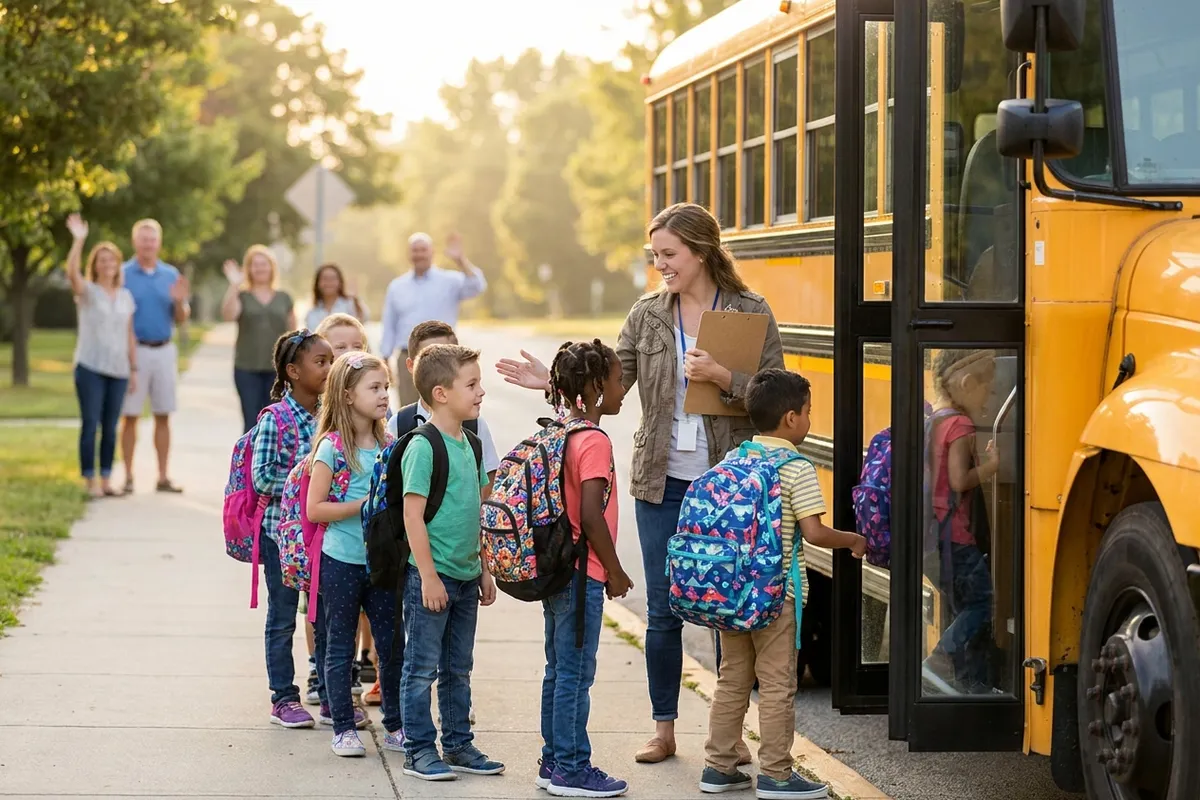
Here is the honest thing about field trips: they are, on the whole, extremely well run. Schools do this constantly. There are registers, ratios, headcounts and a teacher who has thought about the coach park more than you ever will. The anxiety in the house on trip morning is almost entirely ours.
Which does not mean there is nothing to do. There is a small amount of preparation that makes the day genuinely smoother, and a much larger amount of preparation that makes us feel better and makes our children feel worse. This guide is about doing the first and skipping the second.
Why the trip rattles you more than them
For your child, a field trip is a day out with their friends and a packed lunch. For you it is your child in an unfamiliar place, a long way off, with no way to picture where they are. Those are completely different experiences of the same Tuesday.
It is worth naming that to yourself before you start packing, because unexamined parental nerves have a way of arriving in a child's bag as extra instructions. The child who leaves the house having been warned about six specific dangers is not safer than the child who left with three clear rules. They are just more worried.
Your child will absorb your tone and forget your list. Get the tone right first.
The night before checklist
All of it the night before. Every part of trip morning that happens in a rush becomes the part that goes wrong, and the packing is the easiest thing to move.
Pack this the night before
- The bag itself, packed by your child with you nearby. They will remember what is in it if they put it there. You will remember for them if you do it, which is exactly the problem.
- Water, more than you think. The most common small misery of a trip day is a child who ran out of water at eleven.
- Lunch that survives a bag. Nothing that needs a fridge, nothing that needs cutlery, nothing that leaks on a coach.
- Layers rather than a forecast. Venues are either freezing or airless. A thin layer that can be tied round a waist beats a heavy coat that gets left behind.
- Charged devices, if and only if the school allows them. Charged the night before, not plugged in at 7am.
- Any medication, handed over the way the school asked. Follow their process exactly rather than tucking it in a pocket.
- Shoes by the door, already found. The single biggest cause of a stressful trip morning in my house, for six years running.
Then do the morning itself the way you would do any high stakes morning: earlier, quieter, with breakfast that actually gets eaten. If your mornings are chaotic in general, there is a whole system for that in our guide to school run morning systems, and trip day is the day it pays off most.
Write things down for your child
Devices go flat, get confiscated, or sit in a bag on a coach. Paper does not. Give your child something physical that lives in a pocket, not in the bag, and check they know it is there.
- Your phone number, and a second adult's. Written out, not just saved. A child who can hand a number to a member of staff is in a much better position than a child who says my mum's number is in my phone.
- Their own full name and your surname if it differs. Obvious to them, not obvious to a stranger helping.
- The code word. One short phrase that means come and get me, or that confirms an adult really was sent by you. If you have not set one up, our guide to family code words has a method that takes ten minutes.
- The meeting rule, in one sentence. Whatever the teacher gives them on the day, plus your family default: if you cannot see your group, stop walking and find a member of staff.
A folded card in a zipped pocket is enough. Some families write it on the inside of a lunchbox lid, which is a genuinely good trick as long as the lunchbox does not go on the coach.
Brief without scaring
Three rules. Said once, in a normal voice, ideally the night before rather than in the school gate crush. Anything beyond three does not get remembered, and the tone in which you deliver them matters more than the content.
- 1Stay with your buddy and your group. Field trips almost always run on a buddy system. Reinforce theirs rather than inventing your own, and make the rule about the pair rather than about your child alone.
- 2If you cannot see the group, stop and stand still. Moving is what turns a thirty second separation into a twenty minute one. Standing still is the whole skill. There is more on this in the if we get separated plan.
- 3Adults who help wear something. At a venue, that means staff with lanyards, uniforms, or a desk. Point out on arrival at any big place what the helpers look like, and your child will find one in seconds if they ever need to.
Notice what is not on the list: warnings about strangers, worst case scenarios, or anything that requires your child to assess whether an adult is trustworthy. Children are poor judges of that and the instruction is unnecessary anyway. Find someone who works here is a far more useful rule than avoid people who seem odd.
Finish with the reassurance, and say it plainly. "Your teachers do this all the time and they are good at it. You are going to have a brilliant day." That sentence does more work than everything above it.
Be Closer shows your whole family on one private map, free to start.
Consent-first, never sold, and gentle on your battery. iOS and Android.
If you are volunteering as a chaperone
Different job, and mostly a social one. The mistake almost every first time chaperone makes is treating it as parenting with extra children, when it is closer to being a helpful pair of hands who follows someone else's plan.
- You are staff for the day. Your child is one of the group, not your companion. Say this to them in advance, kindly, because it is genuinely a surprise to a seven year old.
- Learn your group's names in the first ten minutes. Then count them at every single transition. Count on, count off, count before you move. Out loud is fine.
- Follow the teacher's instructions even when yours would be better. They have run the risk assessment. Now is not the moment to improve it.
- Do not photograph other people's children. Or post anything from the day. Assume no, unless the school has said otherwise in writing.
- Keep the discipline light and pass the hard stuff up. Redirect, distract, and hand anything real to the teacher.
- Be the one who notices the quiet child. It is the most useful thing a spare adult can do all day, and teachers running a group of thirty rarely have the bandwidth for it.
Devices, and respecting what the school decides
This is where a lot of well meaning parents get it wrong, and I include myself in that. Many schools ask that phones and smartwatches stay at home on trip days, or stay switched off in a bag. Sometimes the reason is loss and theft, sometimes it is photography rules at the venue, sometimes it is simply that thirty children with phones is a different trip.
Follow the policy. Do not send a device in secretly, and do not brief your child to keep it hidden. Putting a child in the position of breaking a school rule on your instruction is a bad trade for the small comfort of a location dot, and it undermines the staff who are responsible for them all day.
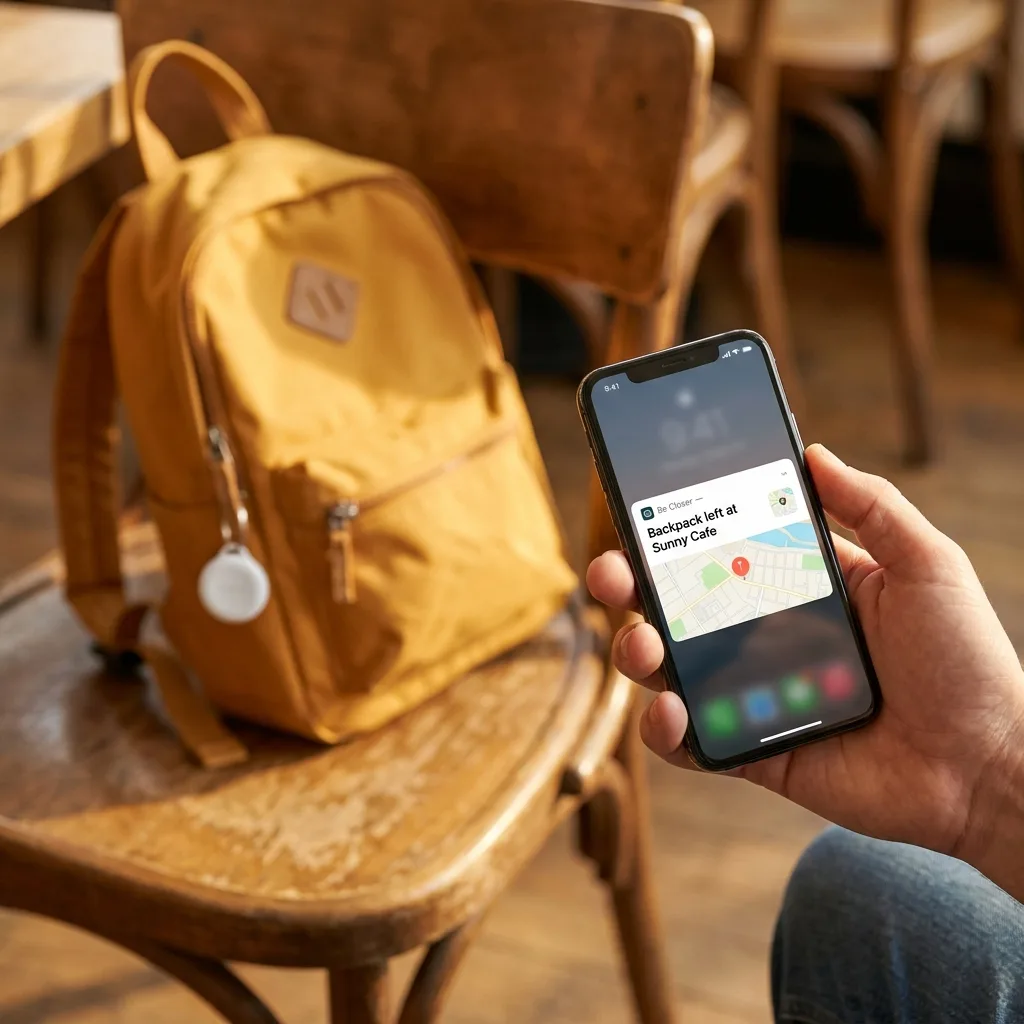
If the school does allow a device, keep your side of it low key. Charge it the night before, agree that it stays in the bag unless it is needed, and resist the urge to message during the day. Be Closer is free to download and shares location to up to 95% accuracy, but on a trip day the useful thing is not watching the map. It is knowing that if the school rings, you can see where the group is while you are getting your keys.
If you have a real reason for needing contact, medical or otherwise, ask the school directly and in advance. They deal with this often and will usually have a sensible arrangement that does not involve anyone hiding anything.
The debrief that builds independence
They will come home exhausted, faintly sunburnt, and monosyllabic. Do not interrogate. The instinct to extract a full account of the day is about your nerves, not their experience, and it makes the next trip feel like something they will be examined on.
Ask two or three questions, sideways, while doing something else. Then stop.
- What was the best bit and what was the most boring bit?
- Was there a moment you did not know what to do?
- Who did you end up sitting with on the coach?
- What would you pack differently next time?
That last one is the one that quietly does the work. It hands the logistics back to them, and by the third trip you will find the bag is packed before you have mentioned it. That, rather than a perfectly executed day, is what the whole checklist is for.
The goal is not a trip where nothing goes wrong. It is a child who knows what to do when something small does.
Frequently asked questions

Marta writes our Kids & Teens guides. Mother of two, professional over-preparer, firm believer that independence is a skill you practice, together first, then alone. She has road-tested every checklist in her own hallway at 7:40am.
Our guides are written by Be Closer's editorial voices and reviewed by the team behind the app. Questions? support@becloser.com
Published · Updated