 Kids & Teens
How to set a teen curfew that actually sticks
Set the curfew with your teenager rather than for them, using two clear times (school nights and weekends) that you both say out loud and write down. Agree in advance what happens if they are late, so a delay becomes a phone call instead of a row. Then loosen it in small, named steps as they show you they can keep it.
The curfew argument in our house used to start at about four on a Friday afternoon and run, on and off, until someone slammed a door. My son wanted midnight because his friend had midnight. I wanted eleven because eleven felt like a number a responsible parent would pick. Neither of us had a single reason that would survive being said out loud.
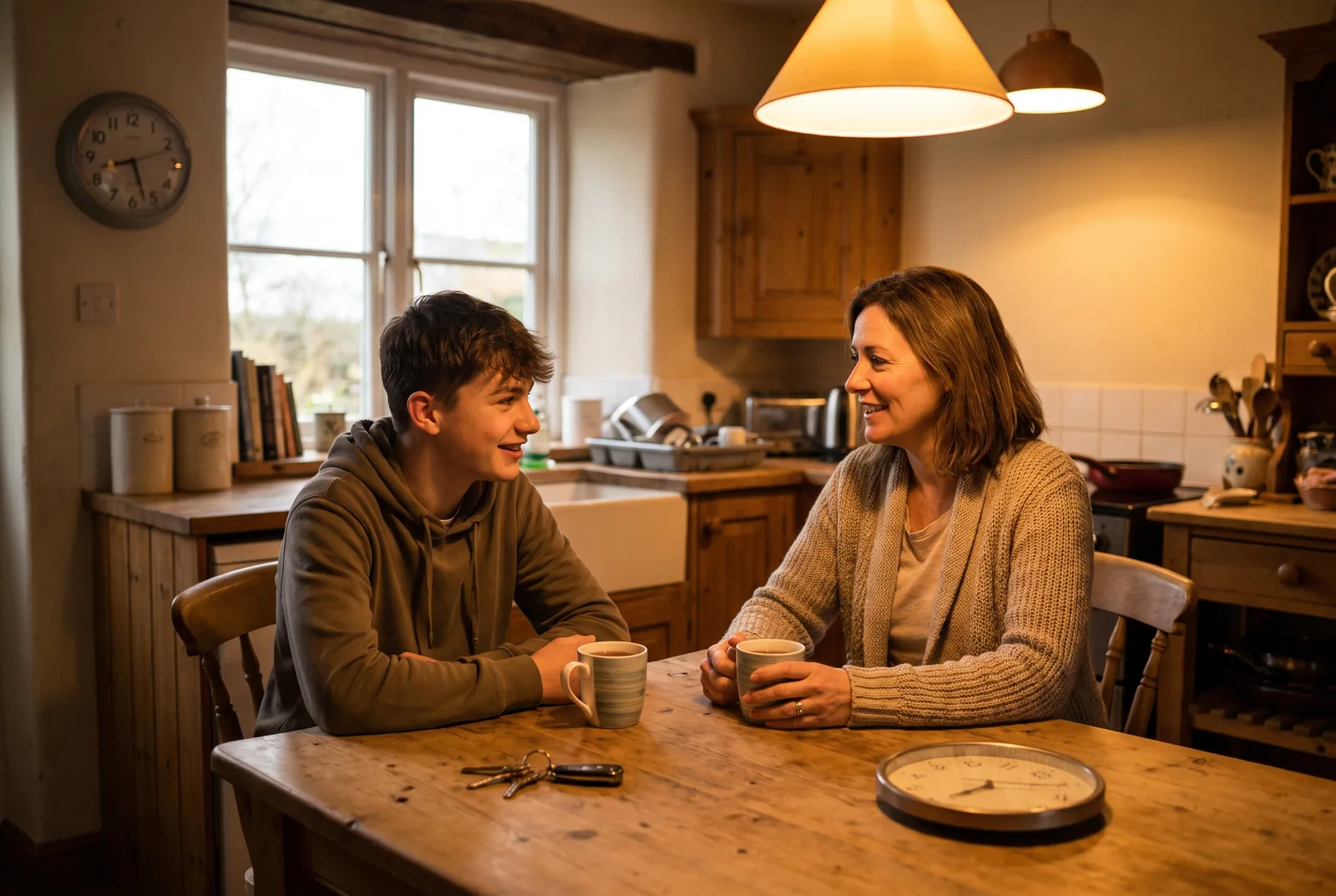
What finally fixed it was not a better number. It was writing the thing down together, in about fifteen minutes, at a table, when nobody was going anywhere. We came out with two times, one rule about being late, and a promise from me that I would stop sending the where are you texts. It has held for two years, which is longer than most things in our family.
So this is the practical version. What a curfew is actually for, how to agree one rather than announce one, what to do when they are late (which they will be), and how to widen it so your teenager can see their own progress.
Be honest about what the curfew is for
A curfew is not a moral position. It is a piece of household logistics that does three jobs: it protects sleep, it keeps the rest of the house from lying awake listening for the front door, and it gives your teenager a socially useful exit line. That third one matters more than parents realise. Fifteen year olds do not want to be the first to leave, but they are very happy to be the one whose mum is unreasonable.
If you can say those three reasons out loud, the conversation changes completely. You are no longer defending a number, you are solving a shared problem. And your teenager can argue with the reasons, which is fine, because reasons are arguable in a way that because I said so is not.
You are not trying to win Friday night. You are trying to build a rule that survives the next two years without a fight.
It also helps to separate the curfew from everything it usually gets tangled up with. Where they are going, who with, how they are getting home and whether they are sharing their location are four separate conversations. Bundling them all into one shouting match on the doorstep is why the doorstep is where they always happen. We wrote about the location half of this in talking to teens about location sharing, and it works far better as its own calm discussion.
Two times, not one
Most families that struggle have a single curfew doing two very different jobs. School nights and weekends are not the same night, and pretending they are guarantees weekly renegotiation.
- 1A school night time, set backwards from the alarm. Work out when they need to be asleep to function, add the twenty or thirty minutes it actually takes them to wind down, and that is your time. Now it is arithmetic rather than authority.
- 2A weekend time, set by how they are getting home. Walking, a bus, a lift from you, a lift from someone else's parent. The transport decides the hour far more sensibly than the calendar does.
- 3A named exception process. A birthday, a gig, a sleepover. Agreed in advance, not asked for at ten past eleven by text.
Write the two times somewhere boring and visible: the fridge, a shared note, the family calendar. Written down, a curfew stops being your opinion and becomes a household fact. I cannot overstate how much heat that takes out of it.
Things to settle at the same time
- What counts as home. Through the front door, or dropped at the corner. Say which.
- Who they tell if plans change. One named parent, one method, not a message in a group chat you might not see.
- Whether the phone stays on and charged. A dead battery is the single most common cause of a bad night. If that is a recurring problem, what to do when your child's phone dies has the backup plan.
- How they get home if the plan collapses. Money for a fare, a lift with no questions asked tonight, a code word. Ours is in family code words for safer pickups.
The negotiation, roughly word for word
Do this when nobody is about to go out, ideally on a weekday evening. Fifteen minutes. Sit at the table, because standing conversations turn into arguments and moving ones turn into shouting.
Open with the problem, not the number
Try something close to this. I want to stop arguing about times every weekend. Can we agree two times now and then leave it alone. What do you think they should be. Then, and this is the hard part, be quiet and let them answer first.
Teenagers usually name a time about an hour later than they expect to get. Do not react to the number. Ask what it is based on. When does the last bus go, when does the thing actually end, when do their friends leave. Half the time the honest answer shrinks the request without you saying anything.
Trade, do not decree
Offer a real exchange. I will go to half eleven on weekends if you answer your phone and it is charged when you leave. I will do midnight for the gig if I collect you. Something for something. A curfew your teenager helped build is one they will defend to their friends, and that is the whole game.
End with the late plan
Finish by agreeing what happens when they are late, while everyone is still calm and reasonable. This is the single most valuable ninety seconds of the conversation, and almost nobody does it.
Be Closer shows your whole family on one private map, free to start.
Consent-first, never sold, and gentle on your battery. iOS and Android.
When they are late, and they will be
Lateness is not one thing. A message at half ten saying the bus did not come is a completely different event from silence at one in the morning, and if you treat them the same you teach your teenager that telling you the truth costs them exactly as much as hiding it. That is the mistake I made for a year.
- Told me in advance and gave a reason: not late. No consequence. This is the behaviour you want, so make it free.
- Told me but only after the time: a small correction. Home half an hour earlier next time, and a chat about the message that should have come sooner.
- No contact, phone on: a real consequence. Next weekend is quieter. Say it once, apply it, move on.
- No contact, phone off or dead: sort the cause. Charging habit, a spare cable in the bag, a check in before the battery dies. Punishment does not charge a phone.
And keep the consequence small and short. A month long grounding is not a stronger message than one quiet weekend, it just teaches them that once they are in trouble there is nothing left to lose. Short, predictable, over. Then back to normal.
You want your teenager to ring you when things go wrong. Every rule you set should make that call easier, not more expensive.
How a shared map ends the where are you texts
Here is the thing that surprised me. The location sharing was not what my son minded. What he minded was the texting. Three messages between eleven and half past, each one a bit sharper than the last, all read by whoever was standing next to him. That is the bit that felt like surveillance.
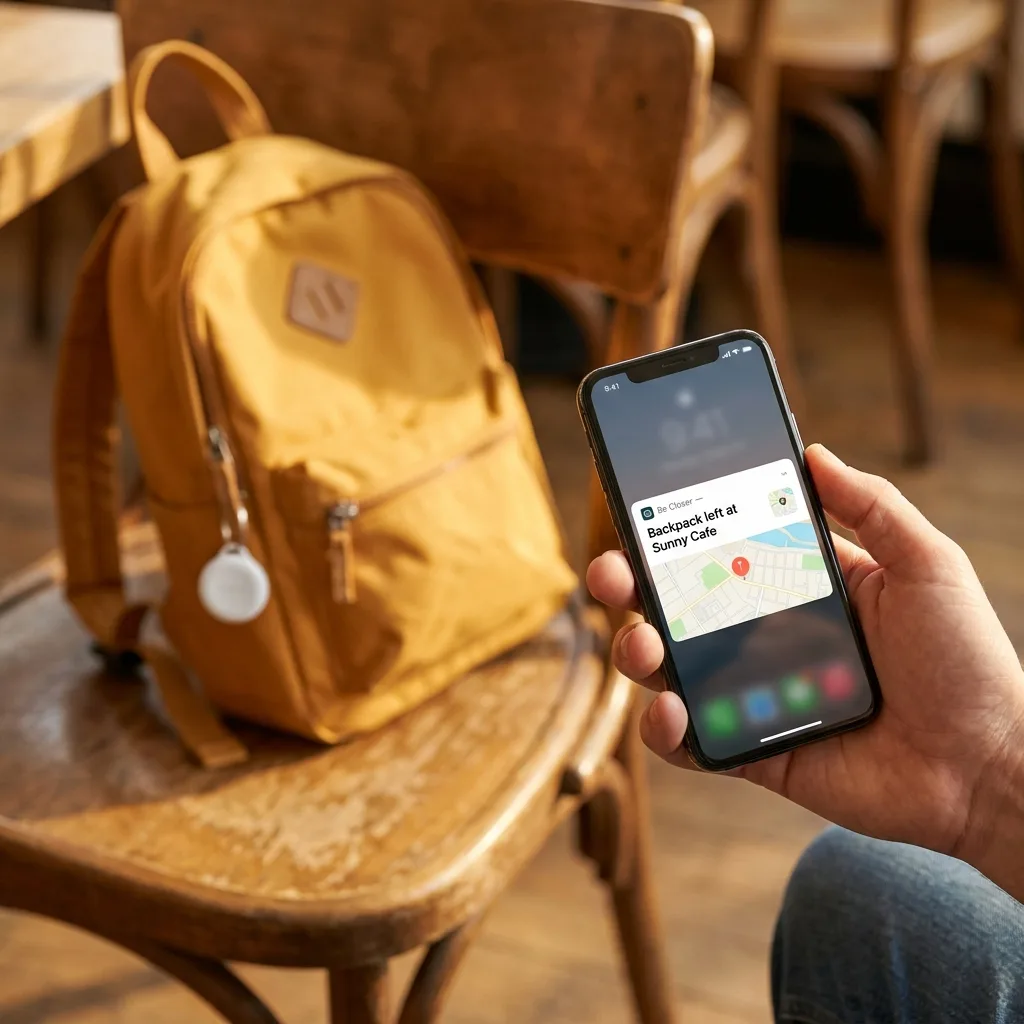
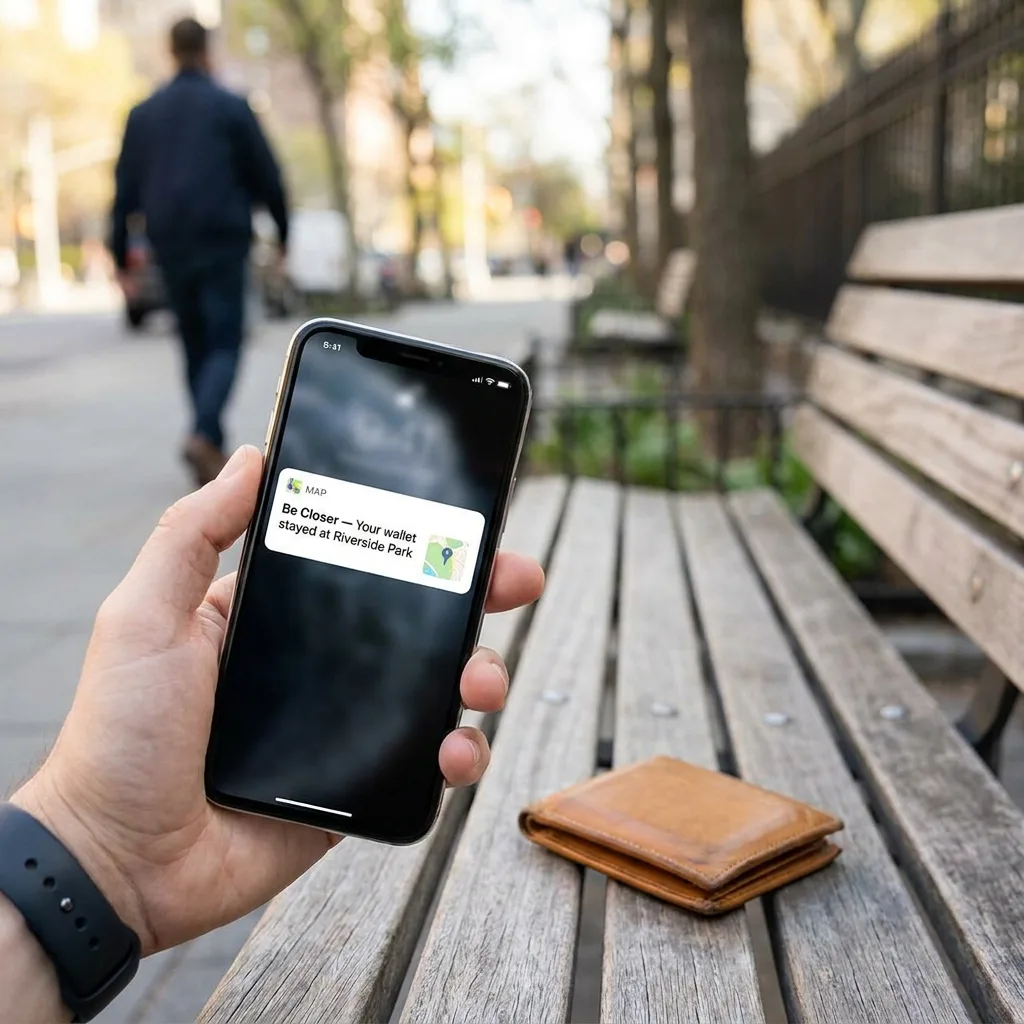
A shared family map, agreed openly and visible in both directions, quietly removes the need for most of that. If I can see the little dot is on the bus, I do not need to ask. If he can see that I can see it, he does not feel checked up on, because there is nothing hidden about it. Be Closer is free to download and gives you up to 95% accuracy on a shared map, which is more than enough to tell the difference between still at the party and on the way home.
Two rules make it work rather than backfire. Everyone shares, parents included, and nobody uses it to open a conversation they would not have opened anyway. If you find yourself saying I saw you were at the shop, you have broken the second rule, and a teenager will turn that off inside a week. Our one sentence privacy rules for families are a decent starting point if you want the shortest possible version.
Arrival alerts are the underrated part. A quiet notification when they get to the venue and another when they get home means you can go to bed. That is not a small thing after two years of lying awake listening for a key in the door.
Loosening it as trust builds
A curfew that never moves stops being a rule and starts being a ceiling, and teenagers respond to ceilings by climbing out of windows. Build the growth in from the start so they can see where the next step is.
- 1Name the review date. Every school term is about right. Put it in the calendar so they do not have to ask.
- 2Name what earns the extension. Home on time, phone answered, plans told in advance. Concrete things, not a vague sense of being good.
- 3Move in half hours. Small steps that are easy to give and, if needed, easy to take back without drama.
- 4Say it out loud when they earn it. You have kept every time this term, so weekends go to midnight. Recognition is most of the reward.
Expect the curfew to interact with everything else that is expanding at the same time. A first job changes the evening shape entirely, and teens and their first part time job is worth reading before you agree shift times. Driving changes it again, and later nights are exactly when new drivers are least safe, which is covered properly in teen night driving rules. Big one off events deserve their own plan rather than a curfew exception, and your teen's first concert with friends walks through that one.
One last thing. Somewhere around seventeen the curfew should start becoming a courtesy rather than a command: tell me roughly when you will be back and text me if it changes. That is not you giving up. That is the rule doing its job and turning into a habit they will keep when nobody is enforcing it, which was the point all along.
Frequently asked questions

Marta writes our Kids & Teens guides. Mother of two, professional over-preparer, firm believer that independence is a skill you practice, together first, then alone. She has road-tested every checklist in her own hallway at 7:40am.
Our guides are written by Be Closer's editorial voices and reviewed by the team behind the app. Questions? support@becloser.com
Published · Updated