 Kids & Teens
Early Dismissal Days: A Working Parent's Survival Plan
Half days go wrong because they are announced early, filed nowhere and arrive on a day you have meetings. Put every early dismissal in a shared family calendar the week the school year starts, build a three family rotation so each of you only covers a few, and keep a written backup adult list that the school has officially authorized. Then teach your child the plan themselves, because the child who knows who is coming is the child who does not panic when the bell goes early.
The message came at 8:04 on a Wednesday morning, in a newsletter I had already scrolled past twice: reminder, tomorrow is a half day, dismissal at 12:30. I read it in a corridor between two meetings and felt the specific cold drop that every working parent knows, the one where you are simultaneously calculating who, how, and whether anyone will notice you leaving.
We got through it, badly. My husband drove forty minutes each way, a neighbour held our daughter in her kitchen for an hour, and I sat in a call apologising with my camera off. It was fine. It was also completely avoidable, and it happened four more times that year because I never sat down and built a system.
So this is the system. It takes about forty minutes once, at the start of the school year, and then half days stop being ambushes. It is written for parents who cannot simply leave work at noon, which is most of us, and it assumes no extended family down the road, because plenty of families do not have that.
Why half days ambush you specifically
It is worth naming the mechanism, because once you see it the fix is obvious. Schools publish early dismissal dates months ahead, usually in a document nobody opens twice. The reminder then arrives the evening before or the morning of, by which point your calendar is already full.
- They are announced far too early to act on, in a term calendar in August.
- They are reminded far too late to act on, in a newsletter at breakfast.
- They cluster around parent evenings, teacher training and the end of terms, which are also the busiest weeks at work.
- They are shorter than a sick day, so nobody books childcare, which is exactly why nothing is arranged.
- They land on a normal working day, so your employer's mental model of your week is unchanged.
Half days are not a childcare problem, they are a calendar problem that becomes a childcare problem at 8:04am. Fix the calendar and most of the panic goes.
Do this in the first week of term
- 1Find the school's term calendar and open it properly, the whole document, not the front page.
- 2Enter every early dismissal into a shared family calendar, with the actual dismissal time in the title, not just the words half day.
- 3Set two alerts on each one, seven days before and the evening before. The seven day alert is the one that saves you.
- 4Mark them at work now, as a blocked hour or a no meetings after twelve, while your diary is still empty.
- 5Count them. Most families are surprised. Ours had eleven, which is more than a fortnight of afternoons.
That count is the number that gets a partner or an employer to take it seriously. Eleven scattered afternoons sounds like nothing. Eleven afternoons said out loud in September, with dates, is a plan people can respond to.
Build a rotation with two or three other families
This is the single highest value thing in the whole guide. Three families sharing eleven half days means each of you covers roughly four afternoons a year instead of eleven, and your child gets a friend in the house rather than a boring afternoon on your sofa while you type.
Setting up a half day rotation
- Ask two or three families whose children your child actually likes, in September, before anyone is desperate.
- Split the dates on the calendar in one message, by name, rather than sorting each one as it comes.
- Write down the swap rules now: how much notice to give, and that a swap is a swap rather than a favour owed.
- Agree the house basics once: screens, snacks, allergies, whether homework happens, and what time collection is.
- Exchange numbers for both parents in each family, not just the one who does the school run.
If that sounds like the carpool conversation, it is the same muscle, and the same trust. Families who already run a school run rota find this easy, and there is a full walkthrough of the logistics in how to set up a school carpool.
The families who cope with half days are not better organised. They just asked other parents in September instead of at 8:04 on the morning.
One tip from experience: be the family who takes the awkward date. The half day before a bank holiday, the one in the last week of term. Take it cheerfully once and you will be forgiven a great many later reschedules.
The backup adult list, written down
Rotations fail. Someone gets flu, someone's own work explodes, and there will be a half day when the arrangement collapses at ten in the morning. What saves you then is a list you made when you were calm.
- Three named adults, in order, with numbers, who could collect your child at short notice.
- What each one can realistically do, because a neighbour who works from home can hold an hour but cannot do a school pickup at 12:30.
- Whether each one drives, and whether they have a car seat if your child still needs one.
- Whether the school has authorized them, which is the step almost everyone forgets.
- One paid option, such as a childminder or a holiday club that takes half day bookings, so you are not choosing between a favour and a crisis.
The school authorization matters more than people expect. Most schools will not release a child to an adult who is not on the approved list, and quite right too, but that means the friend who kindly offers to collect at noon can be turned away at the office door. Add every backup adult to the school's authorized pickup list at the start of the year, not on the day you need them, because the form usually needs to be signed rather than emailed.
Ask your school how they verify a changed pickup, and whether they will accept a phone call from you on the day. Some will, some will not, and knowing which one you have is worth a two minute conversation with the office.
Be Closer shows your whole family on one private map, free to start.
Consent-first, never sold, and gentle on your battery. iOS and Android.
Teach your child the plan, in their words
The person most affected by a half day is the one least often briefed. A child who walks out at 12:30 into an unexpected adult, or no adult at all, will do something. What they do depends entirely on whether you gave them a script.
- 1Tell them the night before, by name. Today Priya's dad is collecting you and you are going to their house until I finish at five.
- 2Say where you will be, roughly, so the plan has a shape rather than being a mystery.
- 3Give them one fallback, which for most families is go back inside to the school office and wait there.
- 4Make the office the default, always, rather than walking home, waiting at a gate or accepting a lift from a parent they recognise.
- 5Ask them to repeat it back, in their own words, which is how you find out that they thought Priya was the one collecting them.
For older children who walk home, the plan is different but the principle is identical: they need to know what a changed day looks like before it happens. That is the same groundwork as what to do when your child misses the school bus, where the whole point is that the child already knows the fallback.
How arrival alerts save the actual meeting
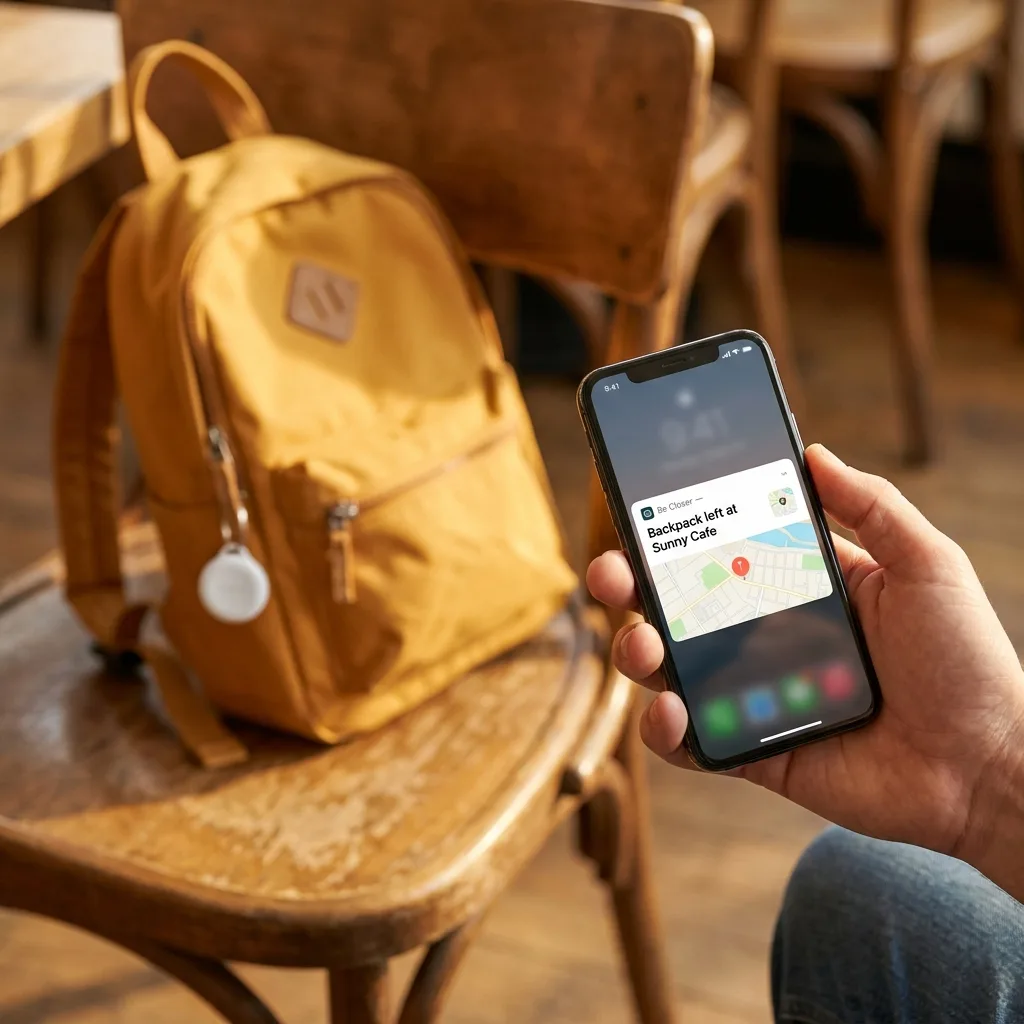
The specific pain of a half day is not the childcare. It is sitting in a meeting at 12:45 not knowing whether the handoff happened, and typing a message under the table that nobody answers because they are driving.
- An arrival alert when your child reaches the other family's house tells you the handoff worked, with no message sent and no reply needed.
- A shared map between the adults involved answers is he on his way without a phone call to a driver.
- Everyone seeing everyone keeps it feeling like family logistics rather than a check being run on a friend who is doing you a favour.
The honest limits: it tells you a phone reached a place, not that your child is happy, fed or actually inside the house. Location is up to 95% accurate in good conditions and less so in dense streets or basements. It is not a substitute for the other parent's phone number, and it will not help at all if your child does not carry a phone, which at primary age is common and completely reasonable. The Be Closer app is free to download and holds 4.4 stars across more than 150,000 ratings on the App Store and Google Play, and it is still only a dot on a map.
Set it up with consent, out loud, with your child in the room, and with the other parents told plainly what you can and cannot see. If you want the fuller version of that conversation, it is in talking to teens about location sharing, and the same honesty works just as well at nine as at fifteen.
The half day that goes wrong anyway
One will. The rotation parent will be stuck on a motorway, or the message will not arrive, or you will genuinely forget until 12:20. Have a plan for that morning too, because the plan is short.
When it collapses at 10am
- Call the school office first, not last. They deal with this weekly and often know who else is collecting a sibling.
- Work down the backup list rather than sending one hopeful group message and waiting.
- Tell your child as early as you can, through the school if necessary, so the change reaches them before the bell.
- Take the paid option without guilt if it exists. It is cheaper than the afternoon you are about to have.
- Log what failed that evening in one line, so next term's version of the plan is better.
And then let it go. Every working parent has had the corridor phone call. The system is not there to make you perfect, only to make sure that the bad half day is the exception rather than all eleven of them.
Frequently asked questions

Marta writes our Kids & Teens guides. Mother of two, professional over-preparer, firm believer that independence is a skill you practice, together first, then alone. She has road-tested every checklist in her own hallway at 7:40am.
Our guides are written by Be Closer's editorial voices and reviewed by the team behind the app. Questions? support@becloser.com
Published · Updated