 Kids & Teens
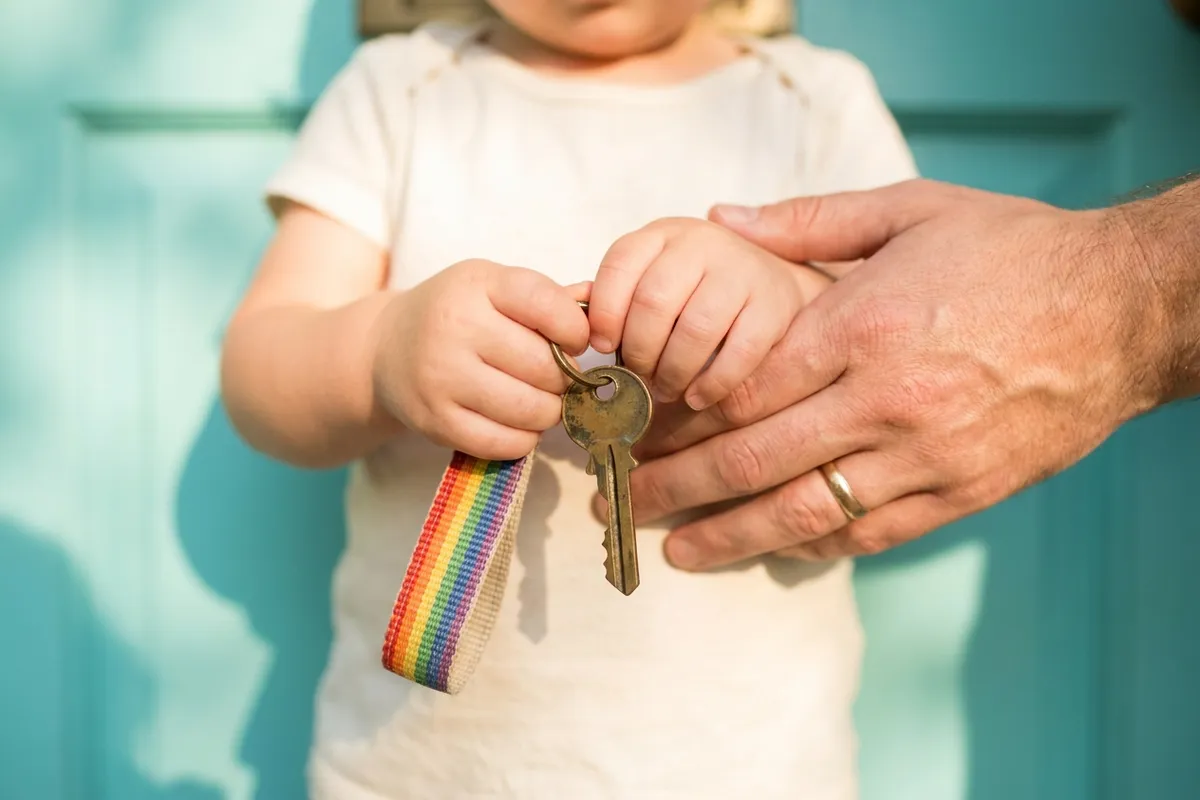
Your child's first house key: a small object, a big step
Give the key when your child can already manage the routine it belongs to: reliable timing, a lock they can physically work, and a clear plan for the days something is different. Keep the key in a zipped inner pocket or clipped inside the bag, never on a labelled ring, and rehearse the lost key drill before you need it.
My son carried his first key for three weeks before he used it. His after school routine had not changed at all. I was still home. He just wanted it in his pocket, and every afternoon he checked that it was there, roughly nine times.
That is the part nobody warns you about. The key is barely a practical item at first. It is a statement, and both of you know it. Which is why it is worth doing properly rather than handing one over on a Tuesday because you have a spare.
This guide covers the readiness question, where the key should physically live, the drill for the day it goes missing, and the one scenario that actually needs a rehearsed answer: arriving home and finding something not quite right.
What carrying a key really means
A key is not a safety device. It does not make your child safer and it does not solve a logistical problem on its own. What it does is change the shape of their day. It says: there is a version of the afternoon that runs without an adult in it, and you are the one running it.
That is worth naming out loud when you hand it over, because children read the object correctly even when we pretend it is nothing. Say what it means. "This means I trust you to get in, lock up behind you, and be where you said you would be." Thirty seconds of ceremony makes the rules that follow feel like part of the trust rather than a set of conditions attached to it.
The key is a promise in both directions. They look after the house. You do not phone eight times.
If the key is arriving because your child will be home alone for a stretch, that is a bigger conversation than the key itself, and it is worth reading our guide to after school alone hours alongside this one. The key is the door. The hours are the thing you are actually planning.
Signs your child is ready
Same principle as every other independence step: watch what they already do, rather than picking a birthday. None of these are dramatic, and all of them are things you can observe this week without setting up a test.
- They can physically work the lock. Sounds obvious and it is the single most common reason a first week goes badly. Some front doors need a lift, a shove, or a particular angle. Try it with them ten times before the key is theirs.
- They keep track of their things, mostly. Not perfectly. Nobody keeps track of things perfectly at eleven. But if the water bottle, the coat and the reading book all live permanently at school, add a step and fix the system first.
- They arrive when they said they would. A key is only useful if you know roughly when it gets used. Reliability about timing is the real prerequisite.
- They tell you when things go wrong. The child who hides a lost jumper will hide a lost key, and the lost key is the one that matters. Reward the telling now, loudly, so the habit exists later.
- They can handle an empty house calmly. Even for ten minutes. If the idea makes them anxious, that is not a reason to refuse, it is a reason to practice with you upstairs first.
If two or three of these are shaky, name the specific one and work on it. "Let us get the timing solid for a fortnight" is a much better answer than a vague not yet, for the same reason it works everywhere else: it gives them something to do.
Where the key actually lives
This is the section that saves you the most trouble, and it is almost entirely mechanical. A key that has one home never gets lost. A key that lives wherever it landed gets lost in the second week.
Good places for a key
- A zipped inner pocket of the school bag. The best default. Not the outside pocket, not the water bottle pouch, and only if the zip actually works.
- A retractable clip attached inside the bag. The key can reach the lock without leaving the bag, which removes the entire class of accidents where it gets put down.
- A lanyard worn inside clothing. Works well for younger children, as long as it is tucked in rather than swinging visibly.
- A carabiner on a belt loop, tucked into the pocket. Fine for older kids who do not carry a bag every day.
Things to avoid
- Any keyring with a name, address, or school on it. A found key is anonymous. A found key with an address attached is not. This is the one rule I would never bend.
- Loose in a coat pocket. Coats come off. Coats get left on the back of chairs.
- Under the mat, in the plant pot, on the ledge. Every adult who has ever looked for a hidden key knows all three of these places.
- Shared with a friend for the afternoon. It happens more than you would think, and it turns one key into two problems.
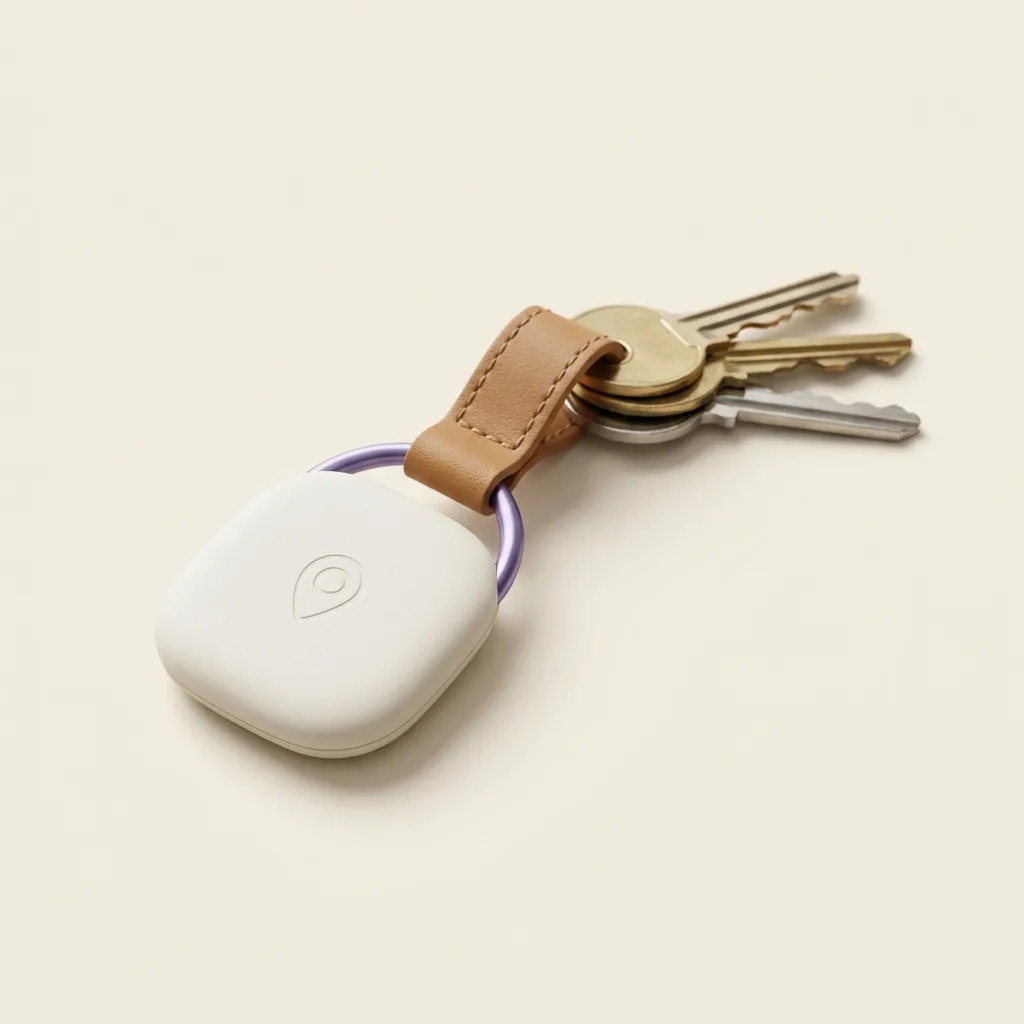
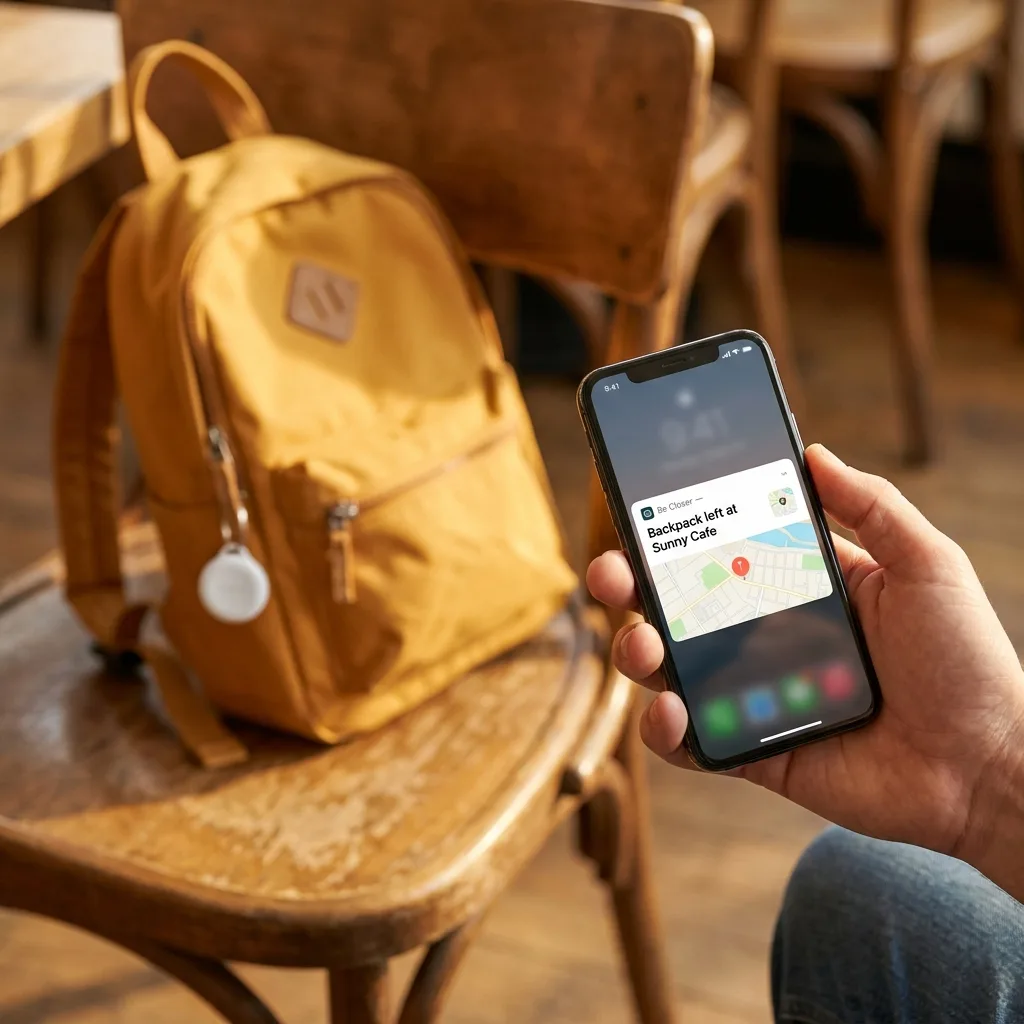
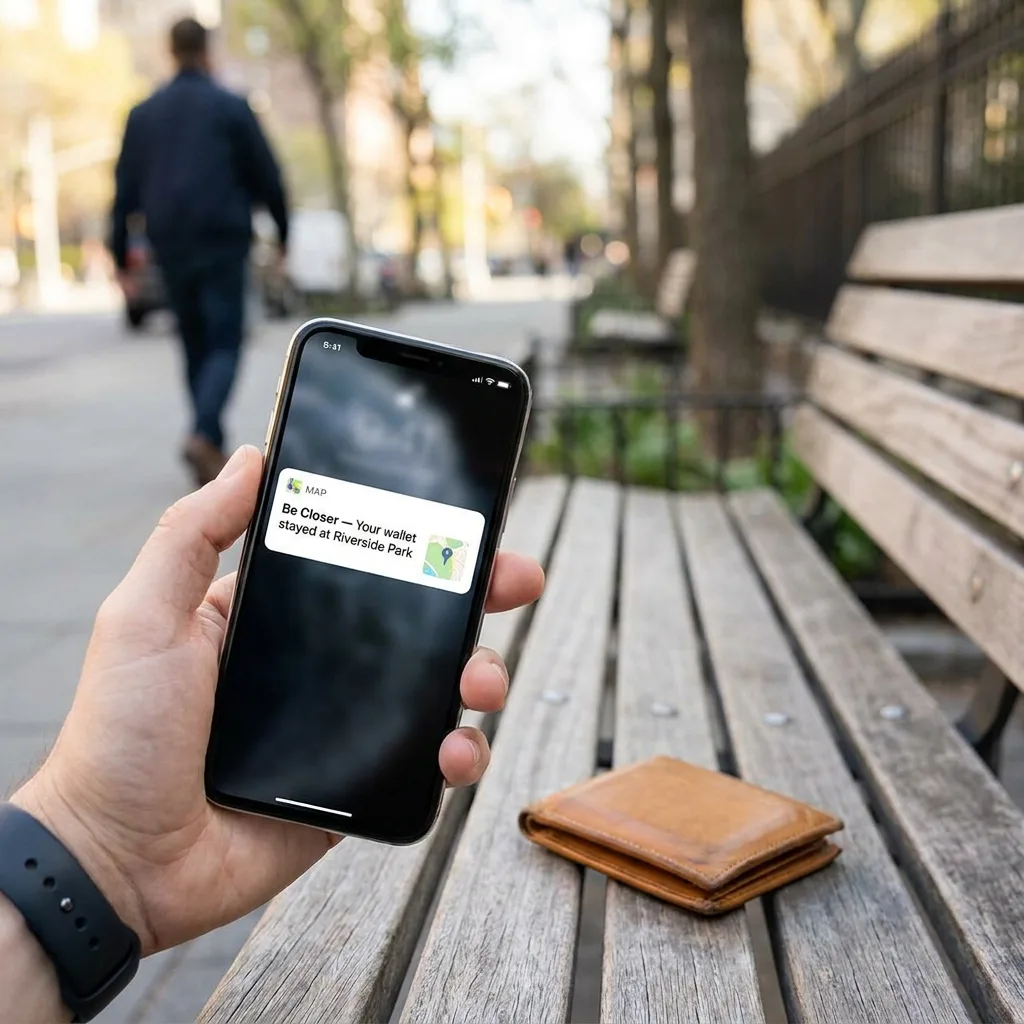
Do add a bright non identifying keychain. Something loud and personal with no information on it. It makes the key easy to find in a bag, easy to feel for, and slightly harder to leave behind on a table. If you use a Bluetooth tracker on the bag or keyring, that is a reasonable belt and braces move, and it is worth being straightforward with your child about what it does and does not tell you.
The lost key drill
Assume the key will be lost. Not as pessimism, as planning. If you have rehearsed the drill, a lost key is a mildly annoying afternoon. If you have not, it is a frightened child sitting on a doorstep deciding not to tell you.
- 1Tell me straight away. Message or call, from wherever they are. Make it explicit that nobody is in trouble for this, ever. Say the words: losing the key is not a punishable event, hiding it is.
- 2Go to the agreed place and wait there. Pick one named safe place in advance: a specific neighbour's door, a grandparent nearby, the café on the corner where staff know them. One place, agreed by name, not "somewhere sensible".
- 3If nobody answers, call the second number. Every child should have two adults they can reach, not one. Write both on a card in the bag rather than relying only on a phone that can be flat.
- 4Stay put until someone confirms the plan. The single most useful instruction in any lost scenario at any age. Do not walk to a third option. Do not try the back gate. Wait where you said you would be.
Rehearse it once, properly, as a conversation over dinner. Ask them to tell you the steps back rather than you reciting them. Children remember the version they said out loud themselves. It is worth checking they can also recite your phone number and their address without a screen, which we cover in teaching kids their address and numbers.
Be Closer shows your whole family on one private map, free to start.
Consent-first, never sold, and gentle on your battery. iOS and Android.
The spare key plan
You need a spare that is reachable without you, and it should not be hidden outdoors. The good options are all social rather than clever.
- A trusted neighbour. Best option by a distance. Someone home in the afternoons, whose door your child has knocked on before with you standing there. Introduce them properly. The drill only works if the child feels comfortable knocking.
- A family member close by. Grandparent, aunt, older cousin. Same principle: the relationship has to be real to your child, not just to you.
- A key safe with a code. Fine if it is fitted somewhere discreet and the code is not a birthday. Change the code if it ever gets shared with anyone temporary.
- A spare in your bag, always. Your own contingency, so that a lost key never becomes an emergency for anyone else.
Whichever you choose, tell your child which one is the plan and which one is the backup. Two named options, in order. A child holding a list of four possibilities under stress will freeze on the choice.
The first week routine
Run the first week deliberately, with you at home, so the mechanics get boring before they matter.
- 1Days one and two. They unlock the door and let themselves in while you are inside. Ten seconds of practice. Do not help unless they ask.
- 2Day three. They lock up behind themselves on the way out in the morning, with you standing there. Locking is the step everyone forgets to teach.
- 3Day four. They arrive to an empty room. You are upstairs. They come in, lock up, put the key back in its home, message you. The message is part of the routine, not an extra.
- 4Day five. Genuinely empty house for twenty minutes. You are five minutes away. Nothing else changes.
Notice the pattern: the key goes back to the same place, every single time, before anything else happens. Not after the snack. Not after the shoes. That ordering is the entire anti loss system, and it takes about a week to become automatic.
One home for the key, and the key goes home first. That is the whole system.
If something feels off when they arrive
This is rare and it is the one scenario worth rehearsing anyway, precisely because it is rare enough that nobody improvises well in the moment. The rule is short enough to memorise in one line.
Do not go in. Go to the agreed neighbour. Call me.
What counts as off, in plain terms your child can hold: the door is open or unlocked when it should not be, a window is broken, an unfamiliar car is in the drive, someone is waiting near the house, or something inside looks wrong through the glass. Add anything specific to your home.
Then add the part that actually makes it work. Tell them that if they are wrong about it, that is completely fine. Nine times out of ten it will turn out you came home early or a delivery driver left the gate open. A child who is worried about looking silly will talk themselves into going in, so remove the cost of a false alarm in advance and say so clearly.
If your family shares location, this is where it earns its place. Not for watching the walk home, but so that when a call comes in you already know where they are and can say "stay exactly there, I am eight minutes away". The same logic applies to the walk itself, which we go through in walking home from the bus stop.
What to expect in month two
The novelty wears off fast, and the wearing off is where the real habits get set. Around week four the key stops being checked nine times a day and starts being genuinely forgotten about, which is both the goal and the risk.
- Expect one near miss. A key left in the lock, a door not fully pulled to. Treat it as information rather than a failure and tighten the one step that slipped.
- Expect the routine to shorten. The message home is the first thing to get dropped. Keep it, because it is the cheapest signal you have.
- Expect them to want more. The key is usually the opening move in a longer negotiation. That is fine. It means it worked.
And expect to stop thinking about it. Somewhere in the second month you will realise you have not wondered about the front door all week. That is the quiet outcome the whole thing was for.
Frequently asked questions

Marta writes our Kids & Teens guides. Mother of two, professional over-preparer, firm believer that independence is a skill you practice, together first, then alone. She has road-tested every checklist in her own hallway at 7:40am.
Our guides are written by Be Closer's editorial voices and reviewed by the team behind the app. Questions? support@becloser.com
Published · Updated