 Pets
When Your Indoor Cat Dashes Out the Door: A Calm Plan
Secure other pets, keep your cat in sight if possible, and approach quietly rather than chasing. Offer a safe route back inside and familiar food or bedding, then widen your search methodically if your cat stays missing. A suitable tracker may add a location lead, but collar safety, signal and battery limits still matter.
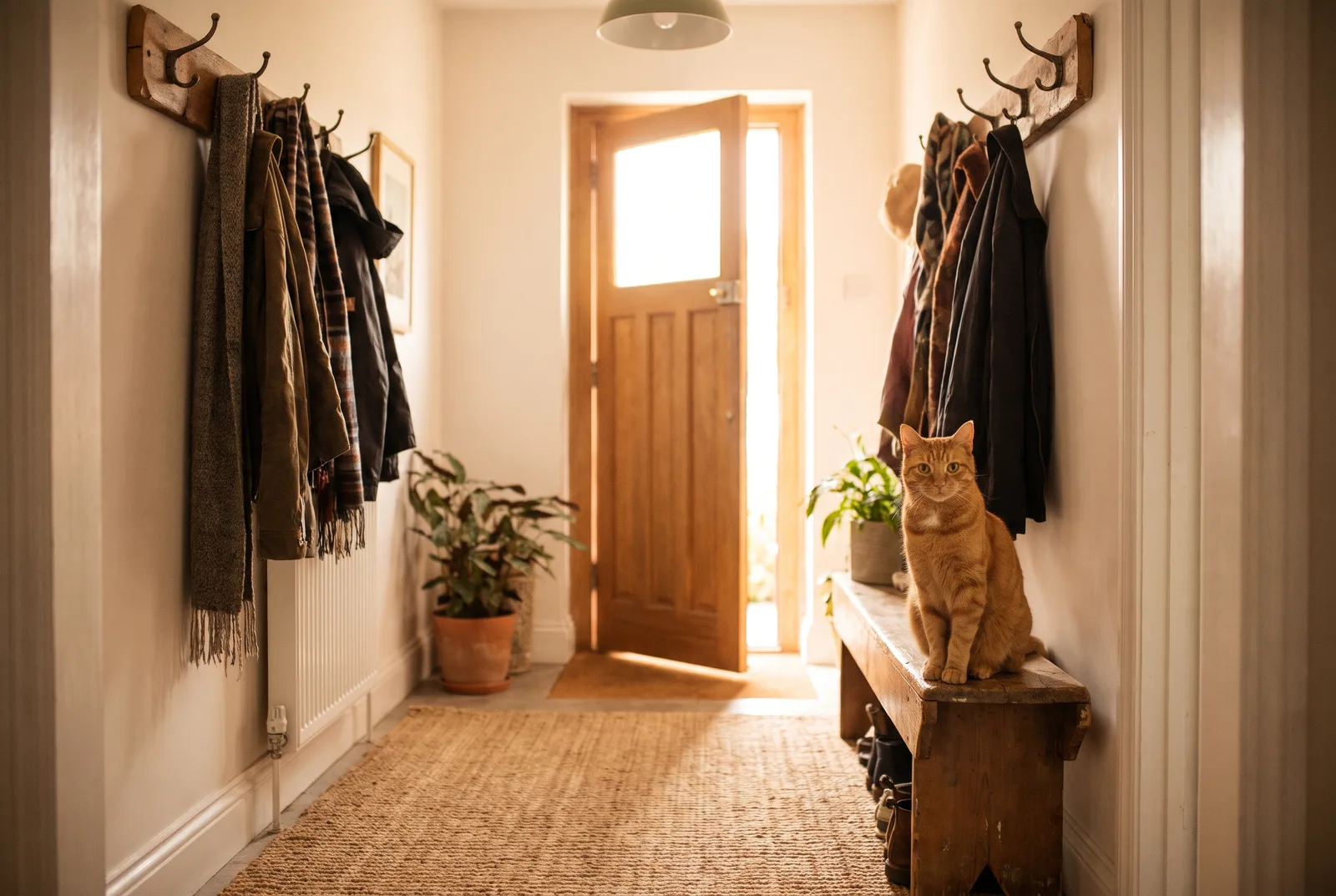
Picture the ordinary little rush of coming home: a bag against your knee, keys still in your hand, a cat appearing where you thought the hallway was empty. Before you can put anything down, the cat slips past your ankle. Outside suddenly seems enormous, and your first instinct is to run after that familiar small body.
That instinct comes from love. It does not make you careless, and the dash does not make your cat ungrateful. A doorway offers smells, movement and a changing patch of light. An indoor cat can be curious about those things without having any understanding of the route home or the traffic beyond the garden.
Your first task is to make the next moment quieter. A calm plan gives you something useful to do while your heart catches up. Start with the nearest safe space, then build the household habits that make the next opening of the door less hurried.
Why the doorway becomes so interesting
A cat may rush an entrance because it is interesting, because greeting you has become a lively game, or because something beyond it moves. Some cats wait near the door when their indoor routine offers too little play or exploration. Others dart after a fright inside. The behavior alone cannot tell you which explanation fits your cat.
Watch the pattern on uneventful days. Does your cat gather near the latch before meals, react to delivery sounds, or follow shoes toward the hallway? Notice without provoking an escape to test a theory. A change in behavior accompanied by distress or other changes is worth discussing with your veterinarian, rather than assuming that more discipline is the answer.
Offer indoor choices that match your cat: a comfortable lookout, hiding places, predictable play and somewhere to scratch. These do not guarantee that the door loses its appeal. They do give curiosity somewhere else to go. For the broader balance between exploration and care, read living with a cat who roams.
Give greetings a place away from the door
Choose a greeting spot that is comfortably inside, not directly beside the opening. A mat, a perch or the end of a hallway can work if your cat likes being there. Practice moving to that spot while the door stays closed. Reward the move with attention, play or a suitable treat, according to what your cat actually enjoys.
A treat station is a household cue, not an unattended pile of food. Keep treats in a closed container away from the entrance and account for them within your cat's usual feeding plan. If diet is medically restricted, ask your veterinarian what reward fits. The point is to build a welcome ritual, not to make the doorway a feeding contest.
When somebody arrives, one person can greet the cat at that spot while the other handles the door. If you live alone, put bags down outside the opening when safe, enter carefully, and close the door before the greeting begins. Avoid pushing the cat with a foot. A secure interior room is kinder when a busy entrance cannot be managed calmly.
Make opening the door a shared household habit
Where the home has an enclosed porch or two doors, agree that one closes before the other opens. Check the space between them rather than assuming it is empty. Keep any extra barrier stable and appropriate for the home. A screen or gate that a cat can climb, push aside or slip under is not a reliable second door.
For deliveries, visitors and children, make the instruction simple: wait while the cat is secured, then open. During a move, repairs or a gathering, use a comfortable closed room with water, litter and a resting place. Put a clear reminder on that room's door and tell everyone who is coming in. Do not rely on a visitor remembering an unfamiliar cat's habits.
- Check where the cat is before opening an exterior door.
- Close the entrance before sorting bags, shoes or parcels.
- Give guests a specific instruction instead of a rushed warning.
- Arrange a separate quiet space when the doorway will stay busy.
These habits work best without blame. If somebody leaves a door ajar, fix the immediate problem and review the routine later. Shame makes people hide near misses. A household that can mention a mistake can improve the entrance before another escape happens.
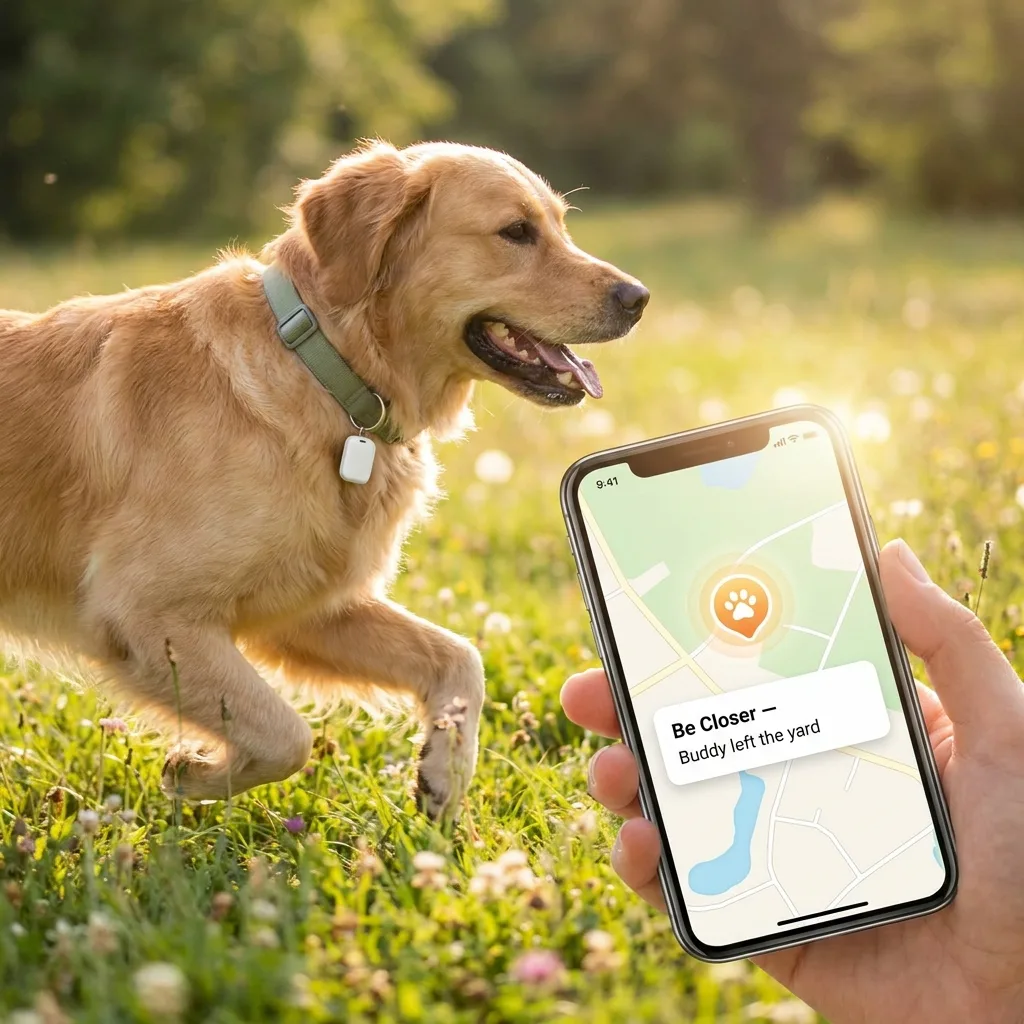
Be Closer shows your whole family on one private map, free to start.
Consent-first, never sold, and gentle on your battery. iOS and Android.
The first minutes outside: quiet, low and nearby
If the cat is visible, stop and assess traffic, dogs and other hazards before moving. Keep your voice soft and lower yourself by sitting or crouching where it is safe. Avoid reaching suddenly or surrounding the cat with several people. Chasing can turn a brief exploration into a flight from the person trying to help.
Offer familiar food or gently shake the usual treat container if that sound is reassuring to your cat. Do not keep making it louder if the cat looks frightened. Let the cat approach rather than forcing a grab. A familiar carrier placed nearby may provide a sheltered option, but do not expect a worried cat to follow its normal indoor routine immediately.
If safe, leave the door through which the cat escaped open under supervision, with other pets secured and someone watching from a little distance. This is an invitation back, not advice to leave your home unsecured. If the entrance opens onto traffic, exposes another animal, or cannot be watched, choose a safer supervised return arrangement instead.
Look close to home first, including under steps, behind bins, beside sheds and beneath parked vehicles without crawling into danger. Ask neighbors to check garages and outbuildings before shutting them. Keep track of where you have looked. If the cat disappears, use the lost-pet first-day plan to organize the wider search.
If evening comes before your cat returns
Nightfall can make everything feel urgent. Give the search a structure so exhaustion does not take over: repeat nearby checks quietly, ask a trusted person to help, and prepare a clear recent photo and contact information. Contact local shelters, veterinary practices and the relevant local lost-animal service. Keep any microchip contact details current and report the cat missing through the appropriate registry.
Familiar bedding outside in a sheltered, supervised place may provide a recognizable scent. A used litter box is sometimes suggested, but it can attract other cats or animals and is not a proven way to bring a missing cat home. Do not spread litter around the neighborhood. Consider local wildlife and ask a local rescue or veterinarian which approach makes sense where you live.
Food can attract visitors too. Avoid leaving large amounts out indefinitely, and do not place anything where it leads the cat toward a road. A camera may help establish who is visiting a feeding spot if you already have one suitable for that location. For humane trapping, get experienced local help rather than improvising a trap or leaving an animal unattended.
If someone claims to have found your cat, ask for identifying details or a current photo before sharing sensitive information or sending money. Arrange any collection safely. Rest in turns if help is available. Taking a break while another person watches is part of sustaining the search, not a failure of affection.
What a tracker can change, and what it cannot
A pet GPS tracker can add a search lead when it is suitable for your cat, charged, attached and able to obtain and send a location. Read the update time as well as the marker. A last known position is not a promise that the cat is still there. Buildings, coverage and device settings can affect the usefulness of the information.
The collar must be safe before the map is useful. Choose a cat-appropriate breakaway collar and confirm that the tracker's weight, size and attachment suit the cat and do not interfere with the release mechanism. Follow manufacturer instructions and ask your veterinarian if you are unsure. Never defeat the breakaway feature to keep a tracker from being lost.
A released collar can leave the tracker in one place while the cat moves elsewhere. That is an important safety tradeoff, not a reason to use an unsafe fastening. Check the actual device and surroundings when following a lead. GPS tracking and identification also have different jobs, as microchips and pet trackers explained makes clear.
When your cat returns, settle them somewhere quiet and check for injury or unusual behavior. Seek veterinary advice if anything worries you. Offer water and a familiar routine instead of punishment. Later, review the doorway together: where did the cat wait, which habit failed, and what small change would make tomorrow easier? A safe return deserves gentleness on both sides of the door.
Frequently asked questions

Priya writes about the family members we care for at every age, parents living alone, dogs that bolt at squirrels, and the quiet worry in between. She writes the way she checks in: gently, and always dignity first.
Our guides are written by Be Closer's editorial voices and reviewed by the team behind the app. Questions? support@becloser.com
Published · Updated