 Kids & Teens
Their First Solo Trick-or-Treat: A Parent's Letting-Go Guide
A first solo trick-or-treat goes smoothly when the route is agreed on paper (or on a map) before dusk, the group has a buddy rule nobody breaks, everyone knows what happens at 8pm sharp, and you've set a place alert for the loop you've agreed rather than watching a live dot for two hours. Reflective bits on the costume, a working light, and a five-minute porch debrief when they're back finish the job.
There's a specific moment every October where a child stops wanting you at the door and starts wanting you at the end of the driveway, arms crossed, watching them walk off with a pack of friends and a pillowcase. It's a small moment as far as milestones go, but it rattles a lot of parents more than the first solo walk to school does, probably because it's dark, there's sugar involved, and every horror movie ever made is set on this exact night.
None of that means you should say no. It means the evening benefits from about fifteen minutes of planning beforehand, the same way any other first-time independence does. This isn't about wrapping Halloween in bubble wrap, it's about giving your child a genuinely fun, genuinely unsupervised hour or two, and giving yourself a plan calm enough that you're not refreshing a map on the sofa the whole time.
Below is the version of that plan I've landed on after several years of doing this with my own two, plus a lot of comparing notes with other parents on the same street. Some of it will feel obvious. Some of it you'll want to steal outright.
Is my child actually ready for this one?
Trick-or-treating without an adult is a slightly different ask than a solo walk to school, because it involves a group, unfamiliar doors, low light, and a level of excitement that tends to override good judgment for at least the first twenty minutes. So the readiness question isn't just "can they cross a road safely", it's "can they cross a road safely while hyped up on the promise of full-size chocolate bars."
- They've done shorter unsupervised stretches before, a walk to a friend's house, an hour at a park, and stuck to what was agreed.
- They travel with at least one other child, ideally two or three, rather than solo. A group is safer and, frankly, more fun.
- They know the neighbourhood well enough that the route isn't new territory in the dark.
- They can tell the time, or at least read a phone or watch, well enough to be back by an agreed hour without a reminder.
- They're comfortable saying no to a house that feels off, no lights on, a stranger insisting they come inside, anything that doesn't sit right.
If most of that is a yes, they're probably ready for a supervised-from-a-distance version this year, even if a fully independent one is still a year or two off. If you're weighing this alongside other first-time freedoms, the readiness signs overlap a lot with walking home from the bus stop, the same mix of route familiarity, group sense, and knowing when to say no applies here, just after dark and with more sugar on the line.
How do we agree the route before anyone leaves the porch?
The single biggest thing that turns a nervy Halloween into a relaxed one is agreeing the actual streets before the group leaves, not a vague "stay on our road," but a specific loop, named out loud, ideally traced on a map together at the kitchen table.
- 1Draw or point out the loop: which streets, which direction, roughly how many houses.
- 2Set a hard boundary, a cross street, a bridge, a main road, that nobody crosses, full stop.
- 3Agree the turnaround time out loud: "You're back at this door by 8."
- 4Pick one "if we get split up" meeting point, ideally somewhere lit and obvious, like a specific porch or a car.
- 5Confirm who's carrying a phone, if anyone is, and that it's charged before they leave, not at 40% and dying by 7:30.
A route that works well for a first solo year
- Your own street, plus one or two adjoining ones you know are well-lit and busy with other trick-or-treaters.
- A loop that ends back near your house, so the last stretch home is the most familiar bit, not the least.
- Avoiding any street with a genuinely fast through-road, regardless of how good the candy reputation is.
What ground rules actually hold up once the group is out the door?
Rules agreed calmly at the kitchen table have a way of evaporating the second a group of ten-year-olds spots a house handing out full-size bars three streets over. A short, memorable set beats a long one nobody remembers past the second house.
- Stick together, always. Nobody splits off to a house alone, even for thirty seconds, even if a sibling's friend is "just right there."
- Porches and paths only. No going inside a house, no matter who invites, and no cutting across unlit gardens or backyards to save time.
- Sidewalks and crossings, not the middle of the road. Excitement plus a dark street plus a candy bowl on the far side is exactly how kids end up mid-road without looking.
- If a house feels wrong, skip it. No lights on, someone being weird, a dog barking aggressively behind a fence, there's always another house.
- Check in at the agreed time, even if nothing's wrong. A quick text or call at the halfway point keeps the whole evening lower-stakes for you.
The rule that actually gets followed is the one that's short enough to shout across the street without breaking stride.
Does the costume need to do more than look good?
Costumes are a genuine safety lever on Halloween night and it's a shame how often that gets overlooked in favour of pure aesthetics. A few small additions cost nothing in "cool factor" and a lot in visibility.
- A strip of reflective tape on the treat bag, sleeves, or hem, invisible in daylight photos, glaringly obvious under headlights.
- A working torch, wand light, or glow stick carried rather than stashed in the bag "for later."
- Face paint over a full mask where practical, peripheral vision matters more than most costumes account for.
- Shoes they can actually run in, not the ones that look perfect for five minutes and then get carried by 7pm.
None of this needs to be a lecture on the way out the door. "Grab the glow bracelet, it looks brilliant under the porch lights anyway" does the same job as a safety talk, with considerably less eye-rolling.
Be Closer shows your whole family on one private map, free to start.
Consent-first, never sold, and gentle on your battery. iOS and Android.
What's the candy-check ritual actually for?
The candy check when everyone's back home isn't really about tampering, which is vanishingly rare despite the annual headlines, it's a genuinely nice, low-stakes ritual that gives you a natural five minutes together at the end of the night, plus a real reason to look everything over calmly rather than let them dive in unsupervised at 9pm on an empty stomach.
- Tip everything out on the kitchen table under good light and go through it together, not as an inspection but as a highlights reel, "ooh, who gave out the good stuff this year."
- Toss anything unwrapped, opened, or homemade from a house you don't know, gently and without drama.
- Set aside anything that looks like a choking risk for younger siblings in the house.
- Let them pick a few pieces for tonight and put the rest away, this is a parenting-style choice, not a safety one, so do whatever your household normally does.
How do place alerts fit into a two-hour loop?
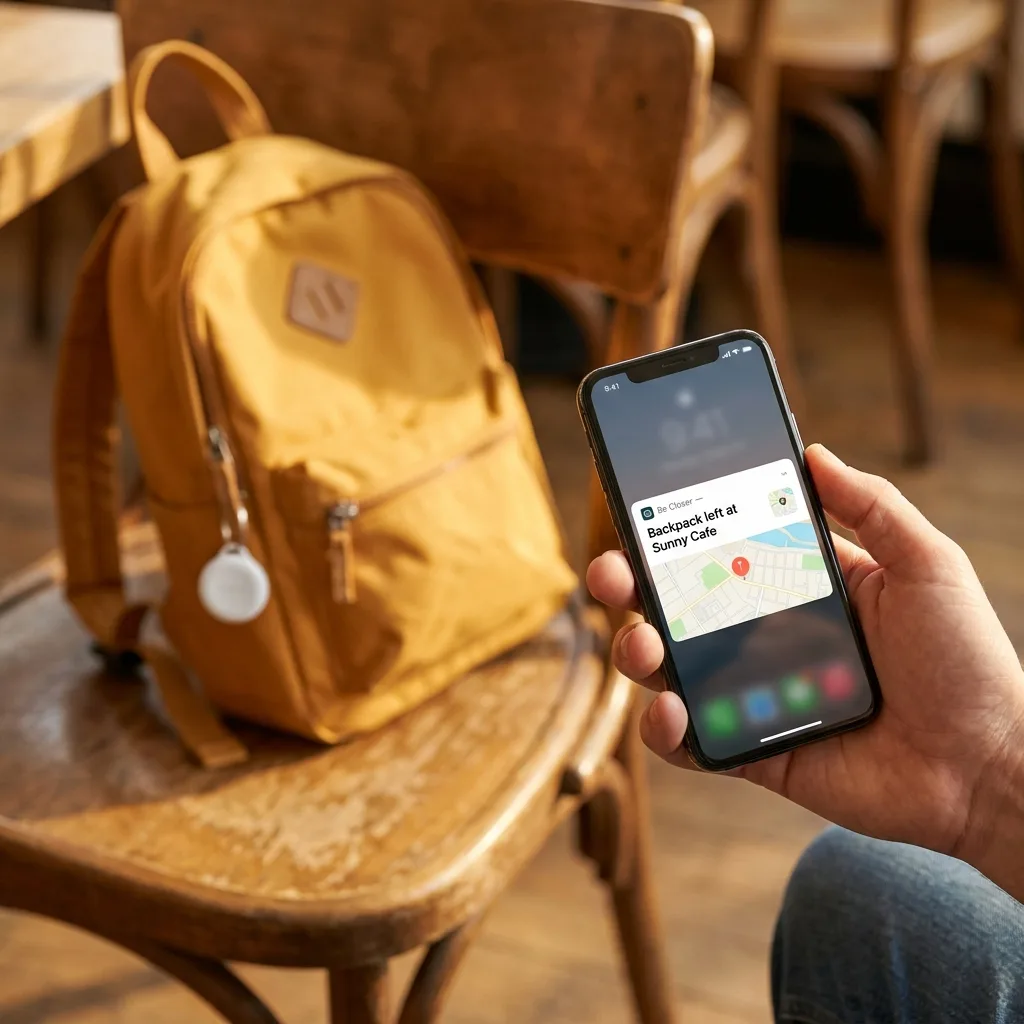
If your child is carrying a phone or wearing a tracker, Halloween night is one of the few times a year it's genuinely worth setting up a temporary place alert rather than checking a live map. Because you've already agreed the loop, you know roughly where they should be and when, so a notification when they arrive back at the agreed meeting point, or when they cross the boundary street you set, tells you everything you actually need without you staring at a dot moving between houses for two hours.
We've written a full walkthrough of setting these zones up properly in geofencing, explained for parents, it's worth doing once before the evening rather than fumbling with it on the porch at 6:45 while a witch and two dinosaurs wait impatiently by the gate.
Two alerts worth setting for the night
- An arrival alert at the agreed boundary street, so you know instantly if the group has drifted past it.
- An arrival alert back at your own front door, so you're not watching the clock for the last ten minutes.
What's the point of a debrief once everyone's back?
The porch-light debrief is the bit most families skip and it's honestly the most useful five minutes of the whole night. While the candy's being sorted, ask a couple of easy, non-interrogating questions: Which street had the best decorations? Did the group stick together the whole time? Was there anything that felt a bit off, even a small thing?
You're not looking for a confession, you're building the habit of a quick, casual check-in after independent time, the same habit that makes the conversation easier next time they're out on their own, whether that's next Halloween or a Tuesday after school. A good first solo trick-or-treat, debriefed well, tends to make the next independence milestone an easier conversation, not a harder one.
Frequently asked questions

Marta writes our Kids & Teens guides. Mother of two, professional over-preparer, firm believer that independence is a skill you practice, together first, then alone. She has road-tested every checklist in her own hallway at 7:40am.
Our guides are written by Be Closer's editorial voices and reviewed by the team behind the app. Questions? support@becloser.com
Published · Updated