 Pets
Teaching Your Dog a Recall You Can Actually Trust
A reliable recall comes from one clear word that always means something wonderful, practised through games, then on a long line, then gradually around bigger distractions. Never punish a dog for coming back, however long it took. Training is the foundation, and a GPS tracker on the collar is the honest backup for the day a squirrel wins.
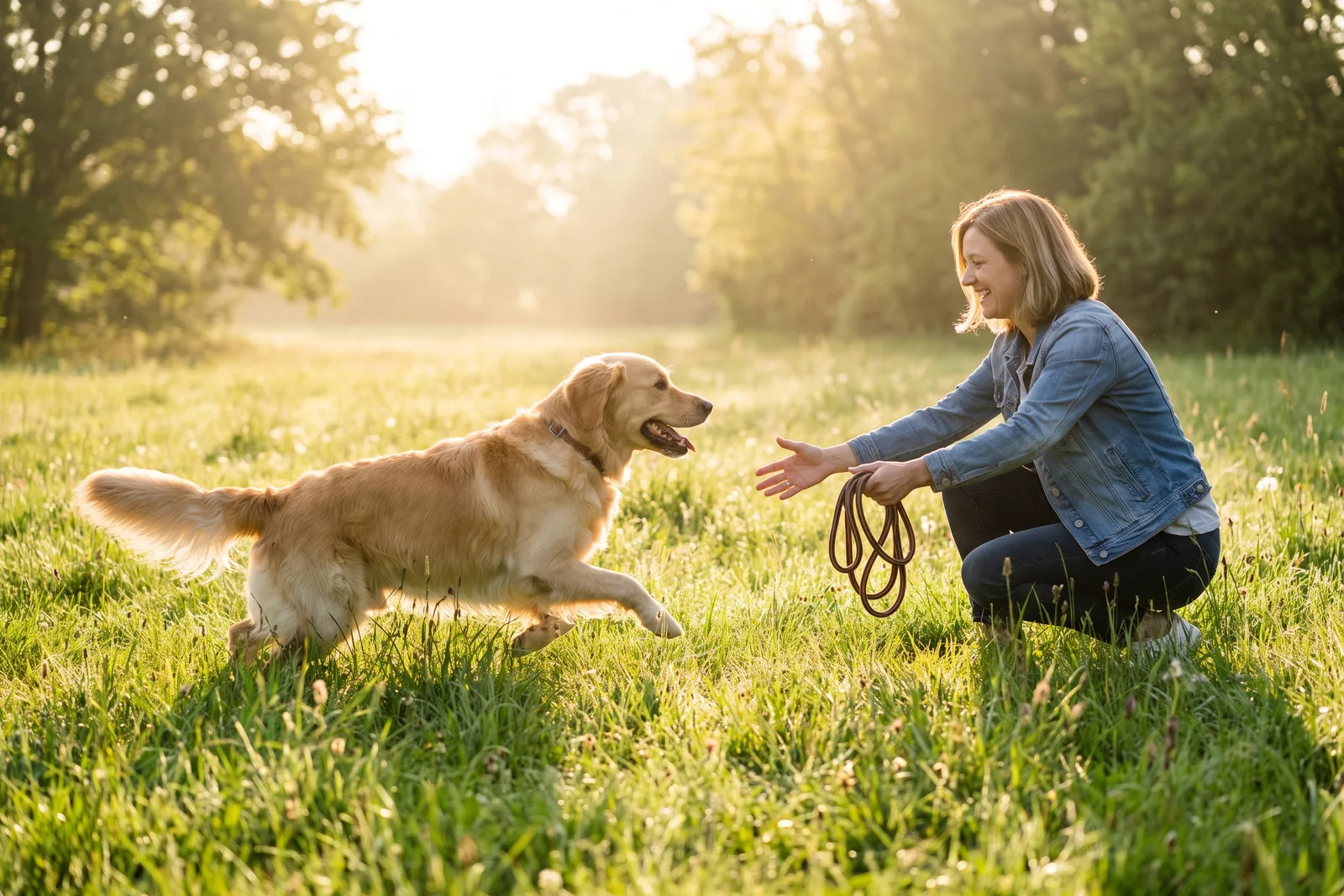
Biscuit was fourteen months old the day she saw a deer. One moment she was sniffing a hedge beside me, and the next she was a golden streak heading for the treeline while I shouted her name into the wind. She came back twenty long minutes later, muddy and delighted. I sat on a bench and shook.
That afternoon I understood that recall is not an obedience trick. It is the skill that turns walks from tense to joyful, and the one that brings a dog back before a scare becomes an emergency.
It took us most of a year to build a recall I trust. Not perfect, just trustworthy. Here is what worked, in the order we did it.
Why dogs ignore us
It helps to stop taking it personally. When a dog does not come, it is almost never defiance. It is one of two things.
- Competition. The world is full of smells, birds, other dogs, and rabbits. At that moment, you are simply less interesting than the hedge.
- A poisoned cue. If "come" has often meant the end of fun, a bath, a telling-off, or being clipped back on the lead and taken home, the word itself has started to mean something unpleasant.
I had done both. I called Biscuit mostly to end walks, and I had once scolded her when she finally returned from chasing a cat. No wonder she hesitated.
If you are dealing with a dog who has already run off, what to do when your dog bolts on a walk covers the moment itself. This guide is about building the habit so it happens less.
Choose one word and pay it generously
If your old recall word is tired, start fresh. We chose "here" because I had never used it in frustration. Some people use a whistle, which carries well and sounds the same whatever mood you are in.
Every single time your dog responds to that word, something wonderful happens. Not a dry biscuit. Something they would cross a field for: tiny pieces of chicken, cheese, a favourite squeaky toy, a game of tug.
Rules for the new word
- Only say it when you are fairly sure your dog will come, especially early on.
- Say it once, in a happy voice. Repeating it teaches them it is optional.
- Pay every response, even slow ones.
- Never use it for anything they dislike. For baths or nail trims, go and get them quietly instead.
- Sometimes call, reward, and release them straight back to play, so coming never means the fun ends.
Games that build recall
Recall grows best through play, at home and in the garden, long before you need it in a field.
The name game
Say your dog's name in a quiet room. The instant they look at you, reward. Do it a few times a day. It teaches that turning towards you is always worth it.
Chase me
Say your recall word and then run a few steps away, laughing. Most dogs cannot resist following. Reward with a party when they reach you. Running away from your dog works far better than running towards them.
Hide and seek
With someone holding your dog, hide behind a door or a tree and call once. When they find you, celebrate. Biscuit still thinks this is the best game ever invented.
Round robin
Two or three family members stand apart and take turns calling. Children love it, and it teaches the dog that everyone's call is worth answering.
The long-line stage
Between the garden and true off-lead freedom is a stage many of us rush: the long line. A light line of several metres, attached to a harness rather than a collar, gives your dog room to roam and you a way to stop a mistake before it becomes a habit.
- 1Let the line trail or hold it loosely. Do not use it to reel your dog in.
- 2Call when your dog is mildly distracted, not deep in something thrilling.
- 3Reward generously when they come.
- 4If they do not respond, walk towards them calmly, gather the line, and try an easier moment next time.
- 5Stay on the line for weeks, or months. There is no prize for hurrying.
We spent most of spring on a long line. It felt slow. It was the most important part.
Proofing around distractions, gradually
A recall that works in the kitchen is not the same as one that works near a picnic. Proofing means adding distractions one small step at a time.
- Start with distance: call from further away in a quiet place.
- Then mild distractions: a toy on the ground, a person walking past at a distance.
- Then bigger ones: other dogs playing far off, birds, food smells.
- Only then the hardest: squirrels, deer, running children, other dogs nearby.
If your dog fails, the step was too big. Go back one level, win a few times, and try again another day. Set your dog up to succeed far more often than they fail.
Be Closer shows your whole family on one private map, free to start.
Consent-first, never sold, and gentle on your battery. iOS and Android.
When a recall fails in the moment
It will happen. It happened to me in the middle of all this training, when a rabbit broke cover. What you do next matters enormously.
In the moment
- Do not chase. Most dogs think it is a game and run further.
- Do not keep shouting the word. Change tactic instead.
- Crouch down, clap, run the other way, or make an interesting sound.
- When they come back, however long it took, greet them warmly and reward.
- Never punish the return. A dog that is told off for coming back learns that coming back is the problem.
The dog in front of you chose to come back. Thank them for it, even when your heart is still racing.
Honest layering: training first, backup second
Even the best-trained dog is still an animal. One day, training will lose to a squirrel, a fox, a firework, or a gate left open. That is not failure. It is simply the truth of living with a dog.
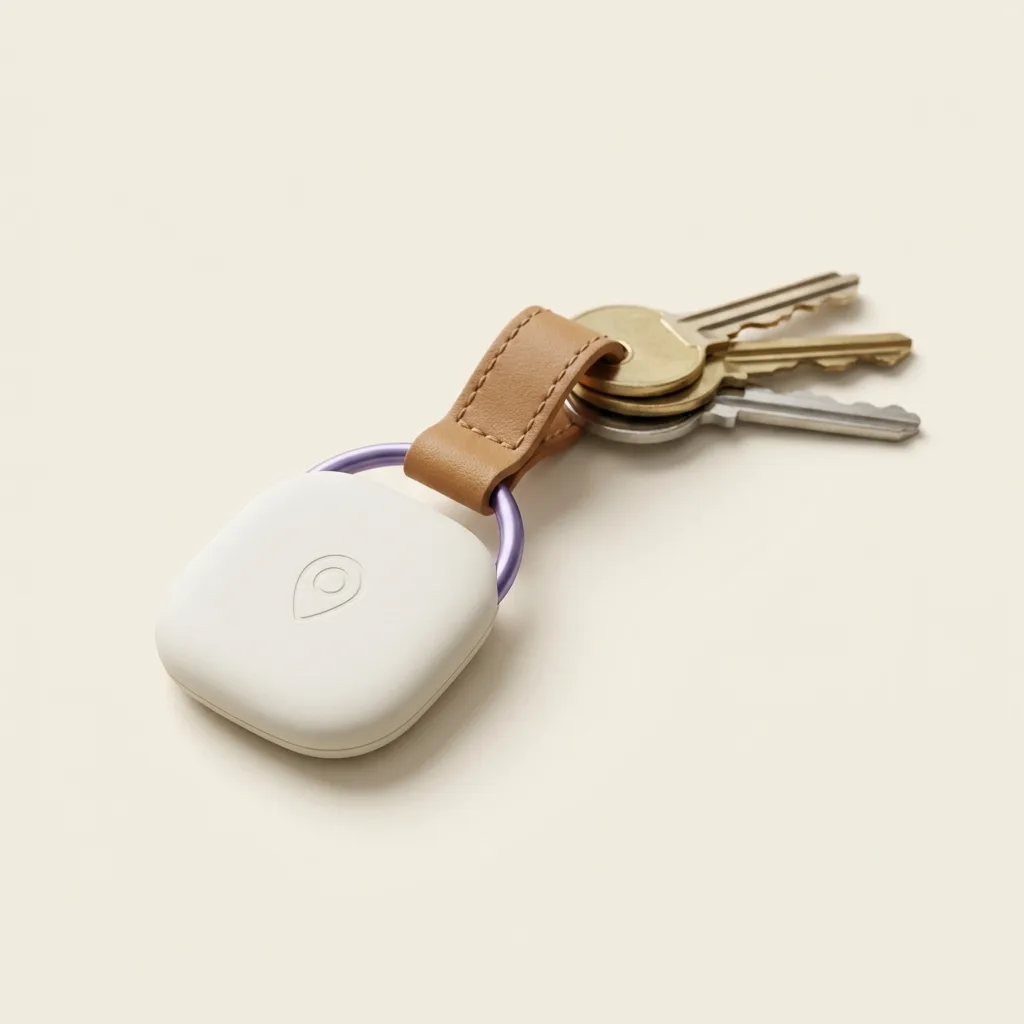
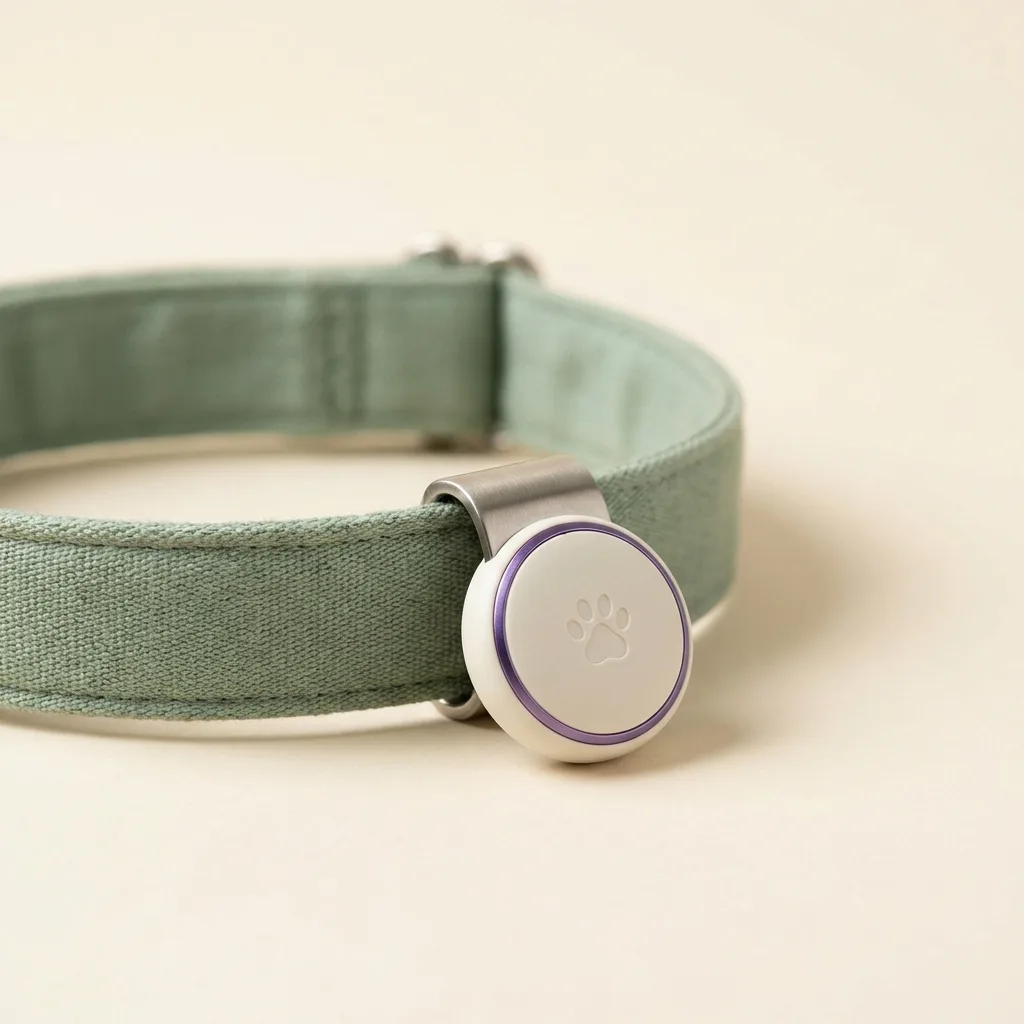
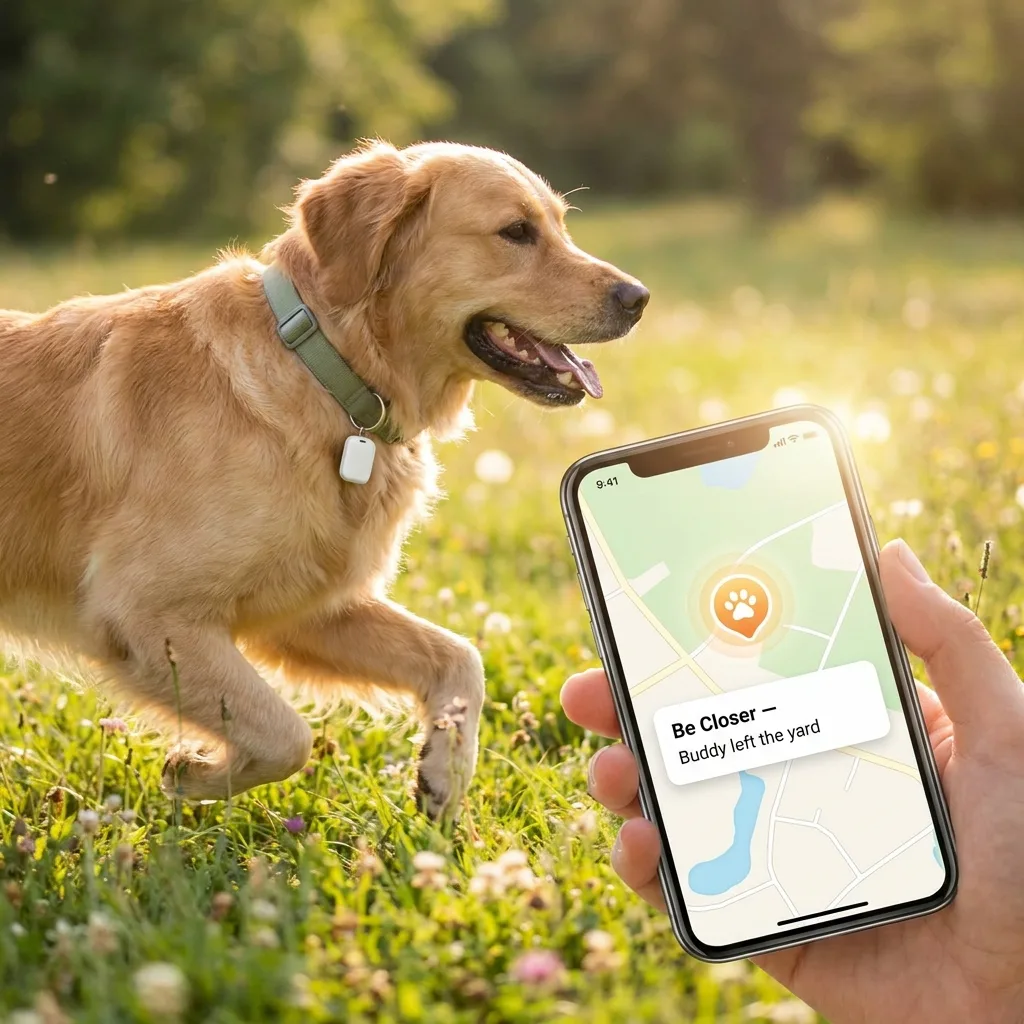
This is why I think of safety in layers. Training is the foundation. An ID tag with your number and a microchip with up-to-date details are the next layer. And a small GPS tracker on the collar is the backup for the day everything else has not worked, so you can see roughly where your dog is heading instead of guessing.
Be honest with yourself about what a tracker does and does not do. It needs to be charged, and its location updates in bursts rather than as a perfect live line. It helps you find your dog; it does not bring them back. Our Pet tracker pairs with the Be Closer app, which is free to download and rated 4.4 stars across more than 150,000 ratings. Treat it as the seatbelt, never the driving lesson.
If the worst does happen, the first 24 hours after losing a pet is worth reading now, while you are calm. And for evening walks, when recall is harder to see and hear, dog walks after dark has practical ideas.
Rescue dogs, older dogs, and the whole family
Not every dog starts from a blank page. A rescue dog may have learned that people calling them meant trouble, and an older dog may have years of ignoring a particular word. Both can still learn a lovely recall. They simply need more time and more patience in the early games.
- With a nervous rescue dog, keep your body soft when they arrive. Crouch sideways rather than looming over them, and let them come the last step themselves.
- With an older dog, keep sessions short and gentle on the joints, and be kind about hearing or eyesight that may be fading. A hand signal alongside the word helps.
- With children, agree that everyone uses the same word the same way. One family member who shouts it crossly can undo a week of good work.
Biscuit's recall got noticeably better once my nephews joined in. They were more excited to see her than I ever managed to be, and she noticed. A recall is a family habit, not one person's project. Keep a small pot of rewards by the back door so whoever takes her out can pay the word properly, and talk together every few weeks about what is working and what needs another easy step.
What trust feels like
Last week Biscuit spotted a deer at the edge of the same field where she once disappeared. She froze, ears up, and I said "here" once. She looked at the deer. She looked at me. Then she turned and ran, flat out, into my arms. I gave her every piece of chicken in my pocket.
That is what a trustworthy recall is. Not a perfect dog. A dog who has learned, thousands of times over, that coming back to you is the best thing in the world.
Frequently asked questions

Priya writes about the family members we care for at every age, parents living alone, dogs that bolt at squirrels, and the quiet worry in between. She writes the way she checks in: gently, and always dignity first.
Our guides are written by Be Closer's editorial voices and reviewed by the team behind the app. Questions? support@becloser.com
Published · Updated