 Pets
PetsIs your family ready for a dog? The honest conversation to have first
A dog is roughly two hours of a real adult's day, every day, for a decade or more, and the honest question is not whether your children want one but which grown up is doing the six in the morning walk in February. Work out the daily hours, agree who owns each job in writing, match the breed's energy and size to your actual home and routine, and check the renting position before anything else. If you can, borrow the experience first through fostering or dog sitting, because a month of the reality answers the question better than any amount of discussion.
The campaign in our house lasted fourteen months and involved a slideshow. My niece is nine and she had costed everything, including a coat, and her closing argument was that she would do all of the walks, all of the feeding, and all of the cleaning, forever, without being asked. She believed every word of it. Her mother, who has met a nine year old before, believed roughly none of it, and was right.
That gap is where most family dog decisions go wrong, in both directions. Some families say yes on the strength of a promise nobody can keep and end up resentful. Others say no for years, not because a dog would not fit, but because nobody ever sat down and worked out what fitting would actually require.
This is that sitting down. What the day really looks like, who does what when the novelty wears off, how to match a dog to your actual household rather than your imagined one, what costs to plan for, what renting complicates, and how to test the whole thing before committing to a decade. I love dogs and this guide is not trying to talk you out of one. It is trying to help you get to a yes that survives February.
The day, hour by hour
Most families underestimate this, not by a little but by half. So here is an ordinary weekday with a settled adult dog, before you add anything unusual.
- Early morning. Out for the toilet, then a proper walk. This one is not optional and it is not weather dependent, and somebody in your house is doing it before work in the dark for several months of the year.
- Breakfast and fresh water, plus any medication or supplements.
- Mid morning to afternoon. A dog left alone all day is a welfare problem and usually a chewed skirting board. Someone comes back, or a walker comes in, or the dog goes to daycare.
- Late afternoon. The main walk, ideally forty five minutes or more depending on the dog, plus training or play that actually tires the brain.
- Evening. Second meal, another short toilet trip, brushing for some coats, and the general low level tidying that a shedding animal creates.
- Last thing at night. Out again, briefly, in whatever the weather is doing.
Add it up honestly and you land somewhere around one and a half to two hours of active time a day, spread across the day rather than in one convenient block. Then add the weekly and occasional layers: vet visits, grooming, training classes for the first year, washing bedding, and the standing question of what happens when you all want to go away.
A puppy is considerably more than this for the first year, with broken nights, toilet training on a schedule measured in hours, and a stretch of adolescence that catches families completely by surprise. An older rescue dog can be far less, which is one of the underrated arguments for adopting an adult.
The question is not whether your family wants a dog. It is who is walking it at six in the morning in February.
Who actually does what
I want to be kind about this rather than cynical, because children are not lying when they promise. They genuinely intend to do it. They are simply making a commitment about a version of themselves they have not met yet, in a season they cannot imagine, and no nine year old has the executive function to own a living animal's daily care.
So plan for the truth: one adult will end up as the default owner. Decide now which adult that is, and let them have a real say in whether this happens at all. Families where that person was quietly volunteered are the unhappy ones.
Agree these before you visit a single breeder or shelter
- The morning walk. Name the person, not the household. This is the job that fails first.
- The evening walk, and what happens when that person is working late.
- Feeding, which children genuinely can own with a reminder system.
- Vet appointments and costs, including who books and who pays.
- Training, both the classes and the daily consistency that makes classes worthwhile.
- Holiday cover. Kennels, a sitter, or the friend who owes you, decided in principle now rather than in a panic in July.
- The mess. Sick at two in the morning, mud on the stairs, the hoovering that doubles.
Give children jobs that fit them, and let those jobs grow. Filling the water bowl, measuring food, brushing, coming along on walks, and later doing short familiar walks alone once they and the dog are both ready. That last step deserves its own thought, and is my child ready to walk the dog alone sets out what to look for.
One thing worth saying to the children out loud: the dog is joining the family, not joining them. Framing it that way now avoids the conversation in eight months where everybody is disappointed in a ten year old for being ten.
Matching the dog to the household you actually have
This is where honesty pays the biggest dividend, because most unhappy dog and family matches are not bad dogs or bad families. They are a mismatch that everybody could see coming.
Energy, not cuteness
Working breeds need a job. A dog bred to run all day and think hard about sheep is not going to be satisfied by two walks and a garden, and an unsatisfied dog of that type becomes an anxious, destructive, endlessly barking problem that is entirely of our making. Be realistic about how much exercise your family will genuinely deliver on a wet Tuesday, then choose below that line rather than above it.
Size and your actual space
Size matters less than people think for indoor calm, and more than people think for everything else: the car, the cost of food, the strength required to hold a lead when something interesting happens, and whether a child can safely be part of the walk. A large gentle dog is wonderful and it is also a large dog in a small hallway.
Coat and allergies
Grooming is a real weekly commitment for some coats and a professional expense for others. If anyone in the household has allergies, get that tested and spend time around the specific type of dog before committing, rather than relying on general claims about which breeds are safe.
Age at adoption
Puppies are enormous fun and enormous work, and their behaviour is unformed. An adult rescue dog often arrives with a known temperament, some training already done, and a shelter that can tell you honestly how they are with children. For a busy family, that predictability is frequently the better deal even though it feels less romantic.
Money, in categories
I am not going to invent figures, because prices vary enormously by country, city and dog. What I can do is make sure nothing on this list surprises you, since the surprises are what put dogs back into shelters.
- Up front. Adoption fee or purchase price, initial vaccinations, microchipping, neutering where appropriate, bed, crate, lead, harness, bowls, and the first round of toys.
- Every month. Food, treats, flea and worm prevention, and insurance if you take it, which many families find is the difference between a bad week and a crisis.
- Every year. Booster vaccinations, a health check, licensing where it applies, and grooming for coats that need it.
- Training. Puppy classes or a behaviourist. Treat this as essential rather than optional, especially with children in the house.
- Care when you are away. Kennels, a sitter or daycare, which is the cost families forget entirely until the summer.
- The unexpected. Emergency vet care, a swallowed sock, a chewed sofa, a broken door frame from a dog with separation anxiety.
Get real numbers for your own area before deciding: ring a local vet, a local kennel and a groomer, and ask what a year typically costs for the sort of dog you are considering. An afternoon of phone calls turns this from anxiety into arithmetic.
Be Closer shows your whole family on one private map, free to start.
Consent-first, never sold, and gentle on your battery. iOS and Android.
If you rent, start here
Do this before you fall in love with anything, because it is the single most common reason a family dog ends up needing a new home, and it is entirely predictable.
- 1Read the tenancy agreement properly, including any clause about pets, and note whether permission is required or pets are excluded outright.
- 2Ask the landlord in writing and keep the reply. A verbal yes from a letting agent is worth very little when the property changes hands.
- 3Check what permission actually covers. Some agreements allow a small dog and not a large one, or one pet and not two.
- 4Ask about deposits and end of tenancy conditions, such as professional cleaning, so the cost is known now.
- 5Check building or community rules if you are in a flat or a managed development, which sometimes override what your landlord says.
- 6Think about your next move. If there is any chance of relocating in the next few years, be honest about how much harder the search becomes with a dog.
None of this is a reason not to have a dog while renting. Plenty of families do it well. It is a reason to have the paperwork settled before a child has chosen a name.
Borrow the reality before you buy it
The best advice I ever give on this subject is also the least popular, because it delays the fun part. Live the routine for a month before you commit to a decade.
- Foster for a rescue. You get a real dog in your real house with support behind you, and the rescue gets help. If it does not work, that is information rather than failure.
- Dog sit for friends for a week, including a working week rather than only a holiday weekend.
- Volunteer at a shelter as a family, which is also the fastest way for children to learn that dogs are not toys.
- Run a dry month. Do the walks at the real times with no dog. Get up at six, go out in the rain, come home at lunchtime. It sounds silly and it is astonishingly clarifying.
Watch what the children do in week three, once the novelty has worn off and there is homework. Watch what you do. If the routine survives a month of pretending, it will probably survive the real thing.
Preparing the home, and the settling in weeks
If the answer is yes, spend the last fortnight before arrival getting the house ready rather than shopping for accessories.
Before the dog arrives
- A quiet space that is theirs, out of the main traffic of the house, where children are taught not to follow.
- Garden and boundary check. Gaps under fences, gates that do not self close, and the bin area. Escapes usually happen in the first weeks when a dog has no reason to stay yet.
- Front door discipline. Agree how the household handles the door, because the doorway is where most dogs get out.
- Move the hazards. Cleaning products, medicines, chocolate, cables at chewing height, and anything precious at tail height.
- Identification ready on day one. A collar tag with your phone number and a registered microchip with current details, before the first walk rather than after.
- Agree the rules in advance. Sofa or not, upstairs or not, who feeds from the table. Dogs cope fine with rules and badly with four people applying different ones.
Then give the first few weeks lower expectations than you want to. A new dog is often quiet for a few days before their real personality appears, and the behaviour you see in week one is not the dog you are getting. Keep the world small at first, keep the routine boringly consistent, and hold off on the big introductions to every relative and neighbour.
This is also the period when escapes are most likely, because the dog has not yet decided your house is home. Why dogs escape and what works is worth reading before arrival rather than after the first incident.
Where a GPS tracker fits, honestly
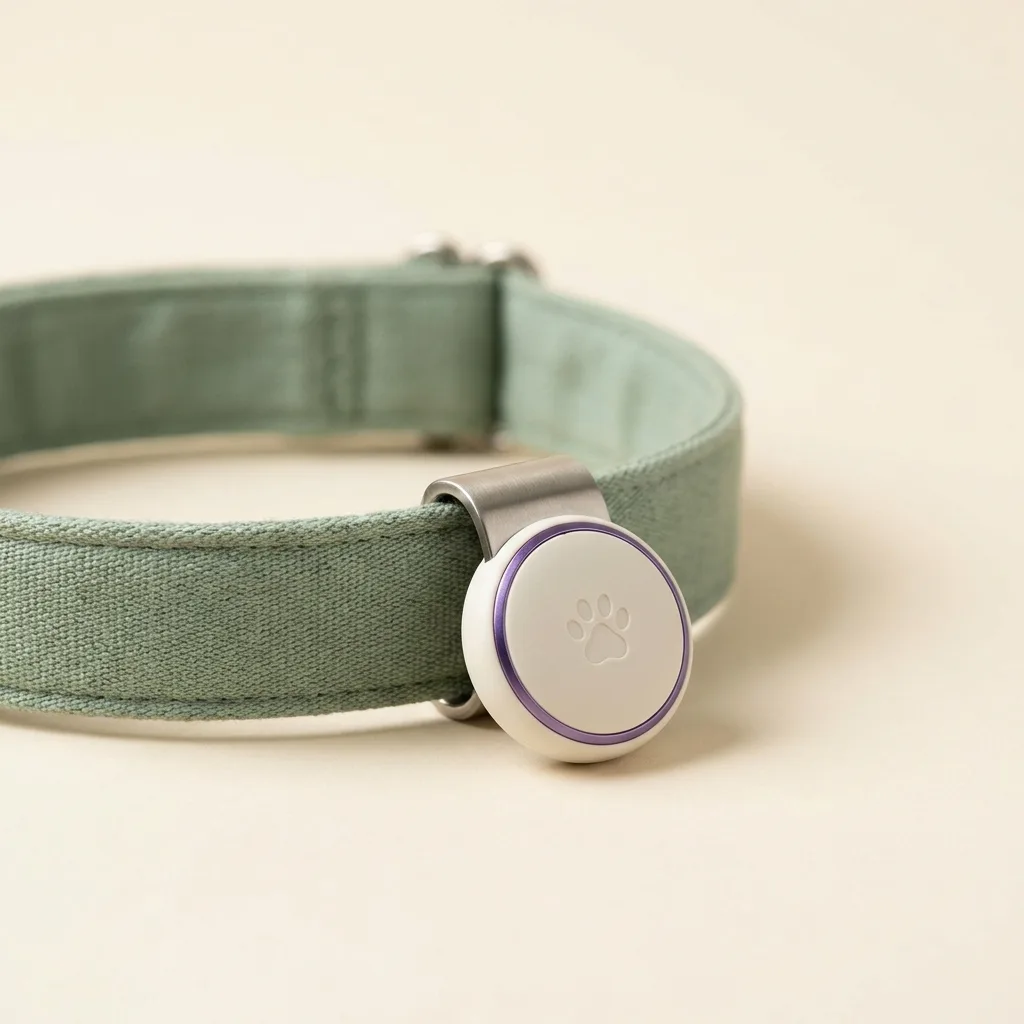
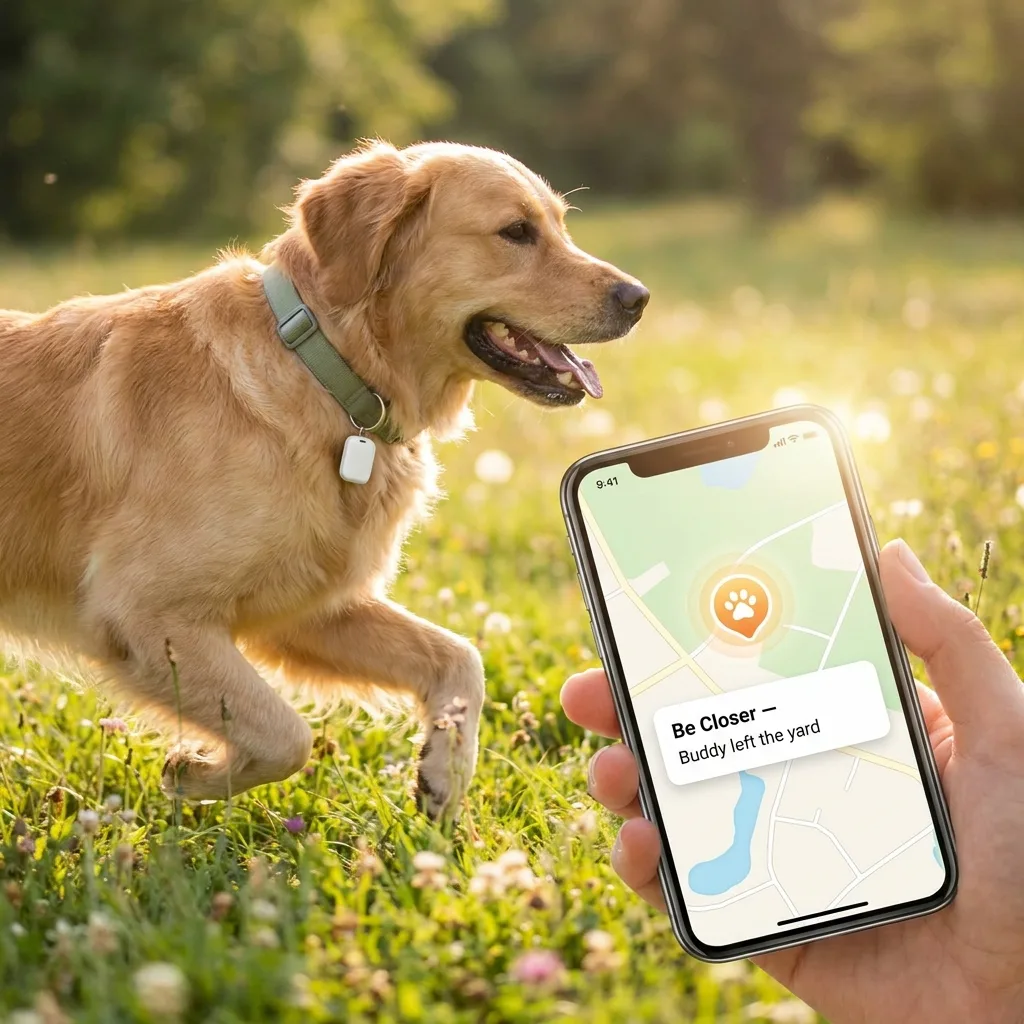
Once a dog is actually part of the family, a tracker on the collar earns its place in specific situations rather than as a general precaution, and it is worth being clear about which.
- The settling in period, when the dog has no attachment to your address yet.
- A new dog with unknown recall, especially one adopted as an adult whose history you do not have.
- Households with a lot of door traffic, children, deliveries, visitors, an unlatched gate.
- Off lead walks in open country, where a startled dog can cover a lot of ground in a few minutes.
And the limits, which matter just as much. A tracker does not train recall, does not fix a fence, and does not replace a collar tag and an up to date microchip, which are what get a found dog home when somebody else picks them up. Accuracy depends on conditions and reaches up to 95%, so treat it as a way to search the right field rather than a pin on a doormat. Battery is the real world failure point, so it only helps if charging it becomes part of the weekly routine.
If the worst ever happens, the first hours are the ones that count, and lost pet first 24 hours is the plan to have read in advance.
My niece got her dog, in the end, after a summer of dog sitting for a neighbour that quietly answered every question in this guide. She does the feeding and the brushing and about a third of the walks, which is more than her mother predicted and less than she promised, and everybody knew that going in. That is what a good yes looks like.
Frequently asked questions

Priya writes about the family members we care for at every age, parents living alone, dogs that bolt at squirrels, and the quiet worry in between. She writes the way she checks in: gently, and always dignity first.
Our guides are written by Be Closer's editorial voices and reviewed by the team behind the app. Questions? support@becloser.com
Published · Updated