 Kids & Teens
Is your child ready to walk the dog alone? A readiness checklist
Your child is ready when the three parts of the team are ready: a dog that walks politely on a short lead, a route with no busy road crossings or off lead hotspots, and a child who can stay calm when something surprising happens. Practise as a trio first, then shadow from a distance, then let them go. If any one of the three is wobbly, wait, because it is the pairing you are testing, not the age.
The first time my daughter asked to take our dog round the block on her own, I said yes with my mouth and no with my whole body. She was nine. The dog was six, cheerful, and roughly the weight of a suitcase full of bricks. I stood at the front window doing that thing we all do, counting the minutes and telling myself I was being ridiculous, and when they came back four minutes later she said it was boring, which is the review you want.
We get asked the age question a lot, and it is the wrong question. There is no number that makes a child ready, because the walk is not a solo activity. It is a team of two heading out into a world of squirrels, scooters and friendly strangers who want to pat the dog without asking. What matters is how those two behave together, and where you send them.
So here is the checklist we use, split into the three parts of the team. Work through it honestly, practise the awkward bits in your hallway before you practise them on the pavement, and treat not yet as a perfectly good answer rather than a failure. Nothing here is a rule about ages, because your dog has never read a parenting article and never will.
Start with the dog, not the child
Parents almost always assess the child first. Flip it. A calm dog makes an average handler look brilliant, and a bouncy one makes a careful child look out of their depth. Be honest about the animal you actually have, on a bad day, not the one you describe to visitors.
The dog is probably ready if
- It walks on a loose lead for a whole walk with you, without needing constant correction.
- It comes back to its name when it is mildly distracted, not just in the kitchen at dinner time.
- It can pass another dog on the pavement without lunging, spinning or screaming.
- It does not bolt at doorways, which is where most escapes actually begin.
- Its recall and its manners hold up when someone other than you is holding the lead.
If two or more of those are shaky, the honest answer is that the dog is not ready, and that is not your child's problem to solve on a pavement. Work on it together for a few weeks. Our guide to why dogs escape and what actually works covers the doorway and gate habits that cause most of the heart stopping moments.
Weight and strength, said plainly
A dog only needs to out pull a child once for the whole thing to go wrong. The test is not whether your child can hold the lead. It is whether they can hold the lead when the dog throws itself sideways after a cat with no warning at all. Try it in the garden: you play the cat, ask a friend to make the noise, and see what happens to your child's feet.
- Use a fixed length lead, short, held with the loop over the wrist and a hand further down. Retractable leads are the wrong tool for a new handler.
- A well fitted harness gives a child more control than a collar and takes the pressure off the dog's neck if there is a sudden pull.
- Two hands on the lead when passing anything interesting. This is the single habit worth drilling.
- Never tie the lead around a wrist, a waist or a bike. If the worst happens, you want the child to be able to let go.
Then choose the route, and be fussy about it
The route does more work than any amount of training. We are looking for boring. Boring is the whole point. A first solo walk should have as few decisions in it as possible, because decisions are where a nine year old with a lead in one hand gets stuck.
- 1No road crossings if you can manage it. If you cannot, one crossing, with a controlled crossing point, walked together at least ten times first.
- 2Avoid the off lead field at the hour when it is full of off lead dogs. Same route, different time, completely different walk.
- 3Pick a loop your child can describe out loud, in order, without prompting. If they cannot describe it, they cannot recover from it.
- 4Know where the safe stops are: a parent you know at number 14, the corner shop with the same person behind the counter every afternoon.
- 5Set a time budget. Ten minutes for a first loop is plenty and makes the check-in question easy to answer.
Evening walks change all of this, and they deserve their own thinking about visibility, lighting and who else is out. We wrote that up separately in dog walks after dark.
You are not testing whether your child can walk a dog. You are testing whether this dog, on this route, is a fair thing to hand over.
Practise as a trio, then shadow, then let go
The mistake is going from you holding the lead to them walking alone in one jump. Put two stages in between and the whole thing stops feeling like a leap.
Stage one: the trio walk
You walk together, your child holds the lead the entire time, and you keep your hands in your pockets. Say almost nothing. This is harder than it sounds, and the silence is the exercise. You are watching for what they do without prompts, not for whether they can follow your commentary.
Stage two: the shadow walk
They walk the loop, you walk thirty seconds behind, or you wait at the halfway point. They know you are around. Nobody is pretending. The point is that they make every decision themselves while help is genuinely close.
Stage three: the real thing
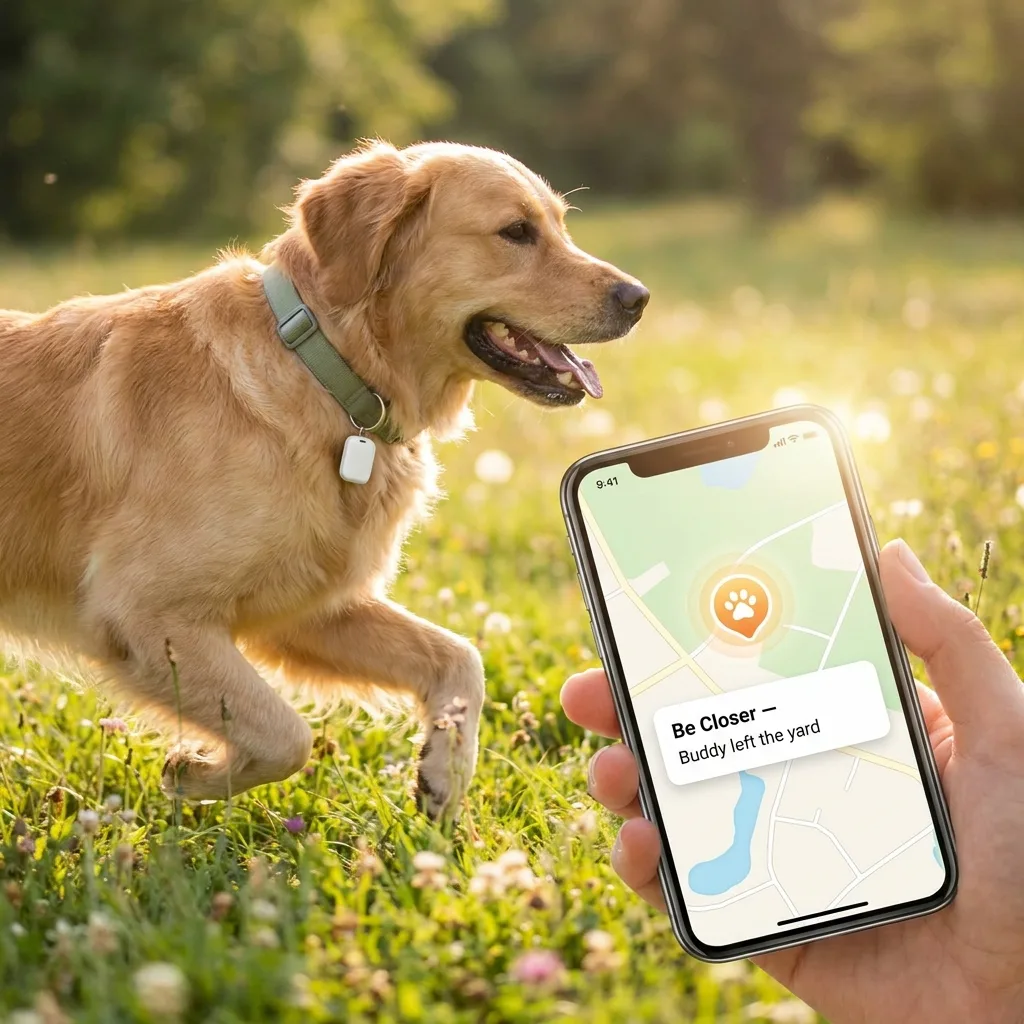
Short loop, agreed time, a plan for what happens if they are late. If your child carries a phone, this is where a shared location comes in as a quiet reassurance rather than a leash of a different kind. Be Closer shows the same map to everyone in the circle, which is the version children accept, and location accuracy runs up to 95% depending on the phone and the conditions. It is free to download and used by families in 13 languages, with a 4.4 star average across more than 150,000 ratings on the App Store and Google Play.
If this is your child's first time out and about without an adult in any form, the wider groundwork in your child's first solo errand is worth reading alongside this.
Be Closer shows your whole family on one private map, free to start.
Consent-first, never sold, and gentle on your battery. iOS and Android.
The two scenarios you must rehearse
Almost everything that goes wrong on a child's dog walk is one of two things. Rehearse both in the garden, out loud, until the answers are boring.
The dog lunges
- Stop walking. Feet planted, both hands on the lead, arms in close to the body rather than stretched out.
- Turn away from whatever it is and walk in the other direction. Winning the argument is not the goal, leaving is.
- Do not wrap the lead round a hand or wrist while the dog is pulling.
- Say a clear, loud "please call your dog" to the other owner. Children need permission to speak up to adults, so give it explicitly.
The dog slips the lead
- 1Do not chase. Chasing turns a loose dog into a game and sends it further away.
- 2Crouch, turn sideways, and call the dog in the happy voice, the one used at dinner time.
- 3If the dog runs, note the direction and the last place seen, then go straight to the nearest agreed adult or home.
- 4Ring you. This is why a memorised number matters more than a phone that might be in a pocket at home.
- 5Nobody gets told off for a slipped lead. Ever. You want the phone call to happen fast, and fear makes children wait.
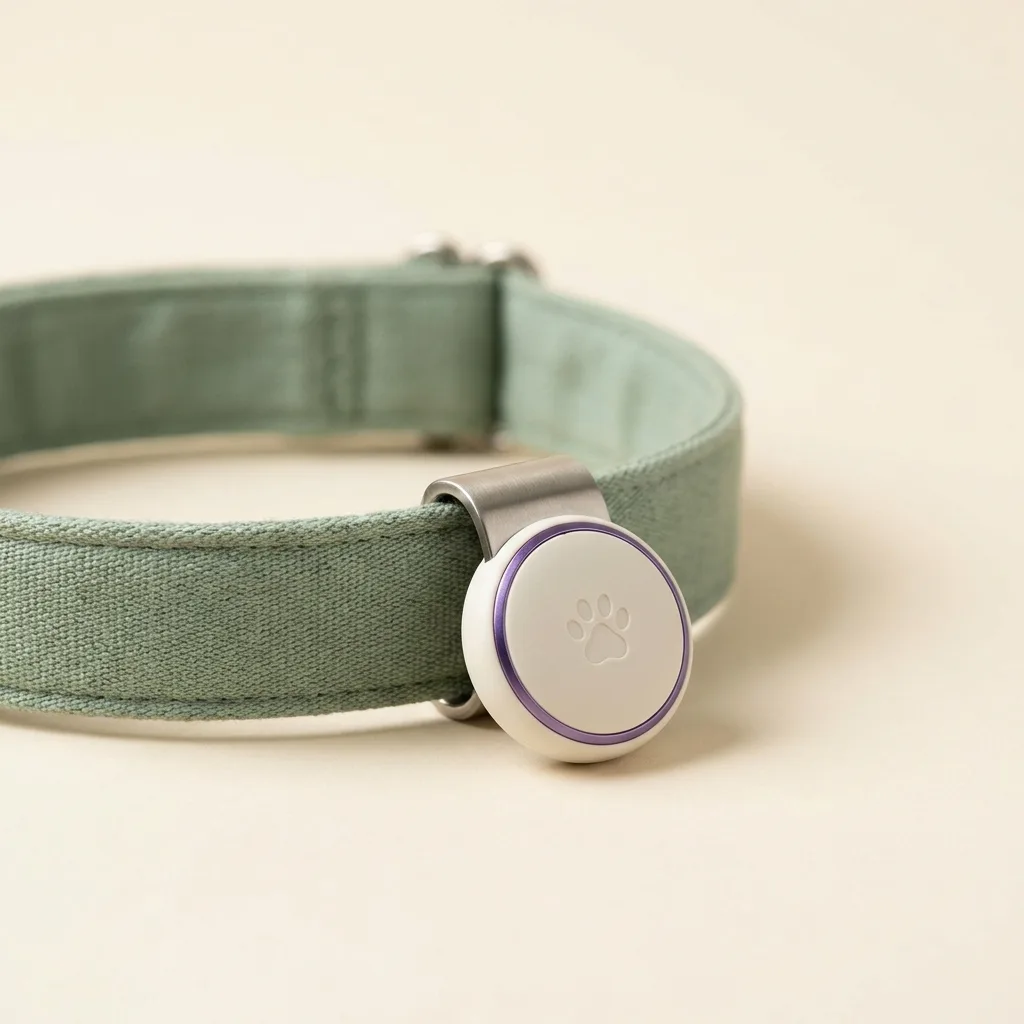
A Be Closer Pet tag on the harness does not track a dog by itself, and we will never pretend otherwise. What it does is make a found dog identifiable quickly, which is usually how loose dogs actually get home.
Rules for greeting other dogs and people
This is the part children most want to get right and are least often taught. Keep the script short enough to remember while holding a lead.
The four line script
- Ask before you touch: "Is your dog friendly?" Wait for the answer, then wait for the dog to come to them.
- It is fine to say no. "Sorry, we are training" is a complete sentence and works on adults too.
- No adult should need a child's help. Directions, a lost phone, a look at the puppy in the car: the answer is a polite no and keep walking.
- Lead stays short during any greeting, so nothing tangles and nothing escalates.
Practise the no. Children are trained all day to be helpful and polite, and a script gives them somewhere to put the discomfort of refusing. In our house we made it a game where I played the world's most persistent stranger, and everyone laughed, and then they had the words.
When to say not yet
Not yet is a kind answer when it comes with a plan and a date. Vague deferral is what actually stings.
- The dog has lunged or barked at another dog in the past month.
- Your child freezes rather than acts in the garden rehearsals. Freezing is a signal to practise more, not a verdict.
- The only available route has a road crossing you would not do at speed yourself with a heavy shopping bag.
- It is icy, dark earlier than usual, or there is heavy traffic from an event nearby. Conditions count and can flip a yes to a no for one afternoon.
- Your gut says no and you cannot articulate why. Give it a week. There is no prize for being early.
And when the answer becomes yes, say it properly. Hand over the lead, say you trust them, and then go and do something noisy in the kitchen so you cannot hear the front gate. It is four minutes. They will be back before the kettle boils, complaining that it was boring, which, as we established, is exactly the review you want.
Frequently asked questions

Marta writes our Kids & Teens guides. Mother of two, professional over-preparer, firm believer that independence is a skill you practice, together first, then alone. She has road-tested every checklist in her own hallway at 7:40am.
Our guides are written by Be Closer's editorial voices and reviewed by the team behind the app. Questions? support@becloser.com
Published · Updated