 Kids & Teens
How to start a walking school bus in your neighbourhood
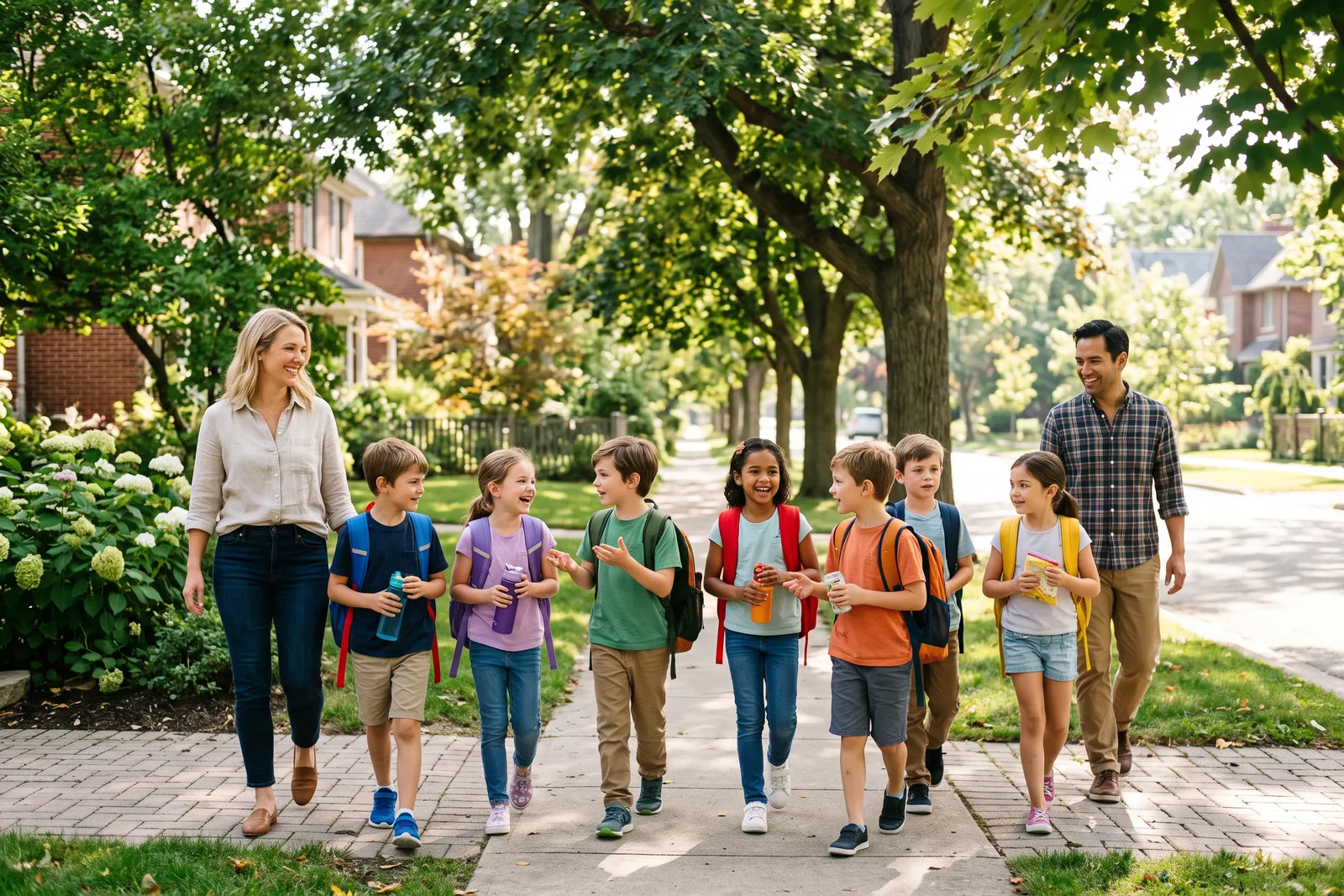
A walking school bus is a fixed route, fixed stops and a rota of adults who take turns walking a group of children to school. Start small with three or four families, agree the route, the pickup times and the weather rules in writing, and use shared arrival alerts so the rota runs on trust instead of a group chat that never stops. Most schemes that fail do so because the rota was vague, not because the walk was hard.
Our walking school bus started because two mothers on the same street were both driving four hundred metres, past each other, at the same time, every single morning. We laughed about it at a birthday party and then one of us said the obvious thing out loud: why are we both doing this.
Three years later there are eleven children on the route and four adults on the rota, and I walk to school one morning a week instead of five. My daughter arrives awake instead of groggy. I have got to know neighbours I would otherwise have waved at for a decade. And on the mornings I am not on duty, I am at my desk by half past eight.
It is not complicated to set up. It is just a handful of decisions that need making properly at the start, because the schemes that collapse almost always collapse on organisation rather than on walking. Here is the version I wish someone had handed me.
What a walking school bus actually is
The idea is simple. A group of children walk to school together along a fixed route, picking up more children at agreed points, accompanied by one or two adults who take turns. The route has stops and a timetable, which is where the bus name comes from, and that framing is genuinely useful because it makes lateness everybody's problem rather than a private one.
It suits primary age children best, roughly the years when walking alone is not yet right but walking as a group with an adult is completely fine. It also works beautifully as a bridge year, the stage before a child does the trip independently.
Why families stick with it
- One duty morning instead of five. The maths is the reason most people say yes.
- Children arrive more awake. Ten minutes of walking and talking beats ten minutes in a car seat.
- Road sense gets practised, repeatedly, with an adult present to comment on it.
- Fewer cars at the school gate, which every school will thank you for loudly.
- Neighbours become known. Underrated, and the thing parents mention most in year two.
Recruiting the first families
Start smaller than you want to. Three or four families is the right first size. It is enough for a rota that gives everyone a break, and small enough that a decision can be made in one conversation rather than a committee.
- 1Ask the people already walking. Anyone you regularly pass on the pavement is a yes waiting to happen.
- 2Ask the school office whether they can put a line in the newsletter. Do not ask them to run it, just to mention it.
- 3Pick a start date before you have all the families. Vague plans attract vague commitment.
- 4Do one trial week, clearly labelled as a trial, so nobody feels trapped if it does not suit them.
- 5Review after the trial with the whole group, honestly, and be prepared to change the time by ten minutes.
The fastest way to kill a good idea is to keep planning it. Pick a Monday and walk.
Be relaxed about people who want to join for two mornings rather than five. A partial member is still a member. Rigidity is the enemy of anything that depends on volunteers.
Planning the route and the stops
Walk your proposed route yourself, at the actual time, before you propose it. Morning traffic is a different animal from Sunday afternoon traffic, and a road that looks fine at 2pm can be a queue of impatient cars at 8:20.
- Minimise crossings, and where you must cross, use the same place every day. Predictability is safety.
- Choose stops that are obvious: a particular gate, a lamp post, the corner shop. Not roughly outside number 40.
- Set times per stop and keep them tight. Two minutes of waiting is fine, five minutes wrecks the timetable.
- Keep the total walk under about twenty minutes for younger children, or you will lose them by November.
- Have a wet weather variant if part of your route floods or gets slippery. Decide it now, not in the rain.
The waiting rule
Agree one line and repeat it until everyone is bored of it: the bus waits two minutes and then goes. It sounds harsh. It is the single most important rule you will make. Without it, one habitually late family gradually makes everyone late, resentment builds and the scheme quietly dies in the spring.
Be Closer shows your whole family on one private map, free to start.
Consent-first, never sold, and gentle on your battery. iOS and Android.
Running the rota so it survives
This is where good schemes fall over. The walking is easy. The who is walking on Thursday question, asked at 9pm on Wednesday, is what exhausts people.
- 1Write the rota for a whole half term at a time, not week by week.
- 2Put it somewhere shared that everyone can actually see, a printed sheet on the fridge counts.
- 3Name a swap rule: swaps are arranged directly between two adults, and the group is told once it is settled.
- 4Have a named backup for each week, so illness does not become a crisis at 7:45am.
- 5Two adults where possible for larger groups, one leading and one at the back. Not always practical, but aim for it.
Practical kit that makes duty mornings easier
- High visibility vests for the walking adults, and for the children in winter. Schools often have spares.
- A printed list of children expected that day, with a parent phone number beside each name.
- A charged phone on the walking adult, obviously, and a plan for what happens if it dies.
- A dry bag or spare umbrella in the leader's bag, because someone always forgets a coat.
Weather, absences and the messy real world
Decide the weather rule in advance and write it down. Ours is that the bus runs in rain, and does not run in ice, high winds or a proper storm. The important thing is not which rule you pick, it is that nobody has to make a judgement call at 7:30am on behalf of ten other families.
- Absences get reported the night before where possible, and by 7:30 otherwise.
- No answer at a stop means the bus moves on after the two minutes and the parent gets one message.
- Cancellation is announced once, in one place, by one person. Not a debate in a chat.
- Dark winter mornings: add reflective gear and consider consolidating stops so the group is together sooner.
Where shared location tools genuinely help
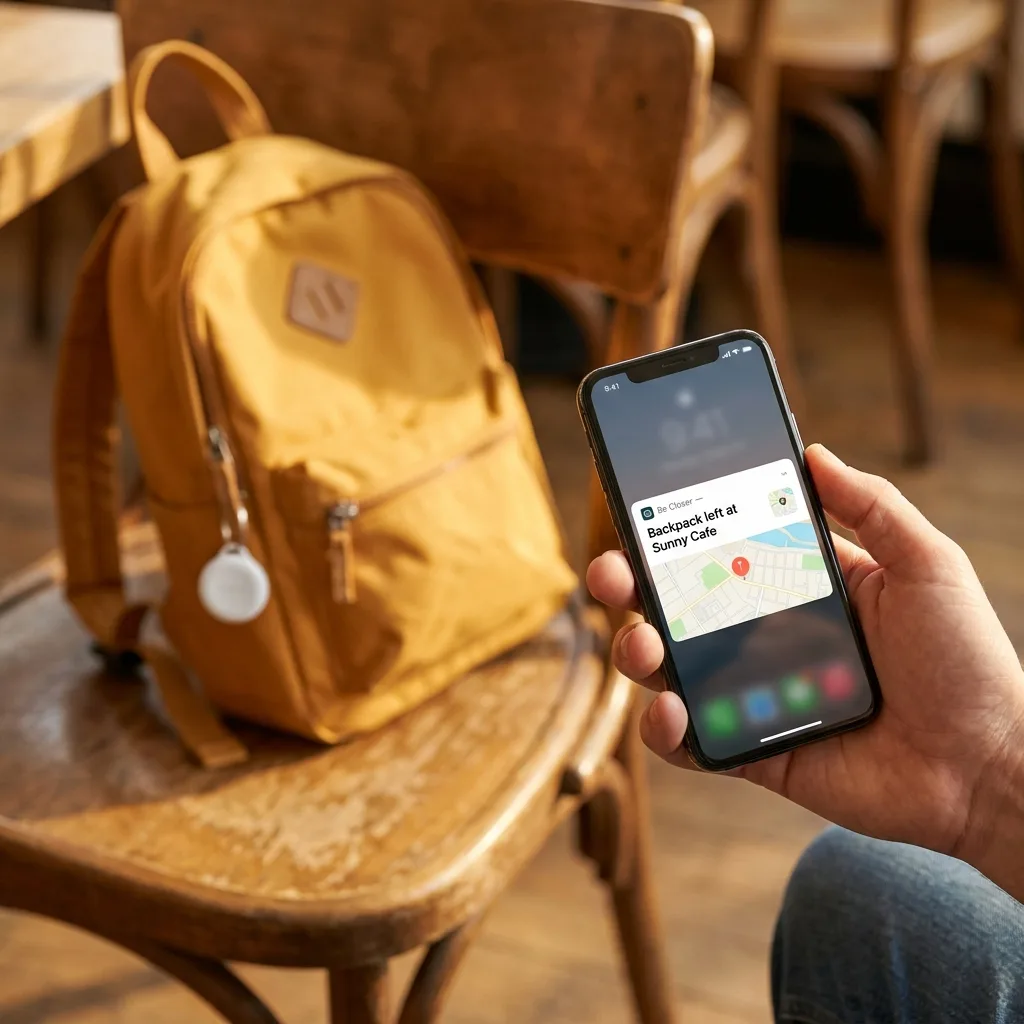
The thing that killed the group chat in our scheme was arrival alerts. When the school is a saved place, the parents at home get a quiet notification when the group arrives, and nobody needs to send the has everyone got there yet message. That one change cut our morning messages by about three quarters, and it moved the tone of the whole thing from checking up to simply knowing.
Keep the expectations honest. Location accuracy runs up to 95 percent in good conditions and drops in built-up areas, so an alert is a helpful signal rather than a guarantee. Be Closer is free to download, has 4.4 stars from more than 150,000 ratings across the App Store and Google Play, and supports 13 languages, which is worth knowing if your rota includes families who would rather not use English. If you are also thinking ahead to the day your child does the walk without an adult, the staged approach in walking home from the bus stop is the natural next step, and the crowd plan in the if we get separated plan is worth teaching to the whole group.
A rota runs on trust. Trust runs on people not having to ask the same question every morning.
One last thing. Tell the school what you are doing. Most are enthusiastic, some will help you promote it, and a few have done the paperwork before and can save you a fortnight. It is one email, and it changes how supported the whole thing feels. For the mornings on either side of the walk, the sequencing in the school run morning guide pairs with this neatly.
What the first half term usually teaches you
Expect to change something in the first six weeks. Almost every group does. Ours moved the start time back by seven minutes, dropped one stop that nobody was using and swapped a crossing after two mornings of watching cars turn badly. None of that was failure. It was the route telling us what it actually was, rather than what it looked like on a map.
Watch for three specific things. First, whether the walk is genuinely comfortable for the youngest child in the group, because they set the pace and the mood. Second, whether the adults on duty feel it is a fair share, since a rota that quietly leans on two people will not survive to spring. Third, whether the children are enjoying it, which sounds soft and is the most reliable predictor of all. Children who like the walk get themselves ready, and a child who gets themselves ready is worth more to a morning than any amount of parental organisation.
Then hold a ten minute review at half term, in person if you can, with everyone there. Ask what is annoying rather than what is working, because annoyance is where the useful information hides. Change one or two things, write down the new version, and carry on. A walking school bus that gets a small tune-up twice a year will run for years, and it will still be running long after the family who started it has moved on to secondary school.
Frequently asked questions

Marta writes our Kids & Teens guides. Mother of two, professional over-preparer, firm believer that independence is a skill you practice, together first, then alone. She has road-tested every checklist in her own hallway at 7:40am.
Our guides are written by Be Closer's editorial voices and reviewed by the team behind the app. Questions? support@becloser.com
Published · Updated