 Aging Parents
Three Generations, One Airport: Holiday Travel With the Whole Family
Traveling with young kids and aging grandparents at once means accepting that nobody moves at the same speed, and building the trip around that rather than against it. A fixed meeting point, shared live location through the busy stretches, and clearly assigned roles for meds and documents turn a chaotic itinerary into something everyone can actually enjoy.
We were forty minutes from boarding and I had lost, in order: my son, my mother-in-law, and any remaining faith that this trip had been a good idea. My son had wandered off to press his face against the window at the gate next door, thrilled by a plane that wasn't ours. My mother-in-law had stopped at a bench two corridors back because her hip needed a rest and she hadn't wanted to say so out loud until she had no choice.
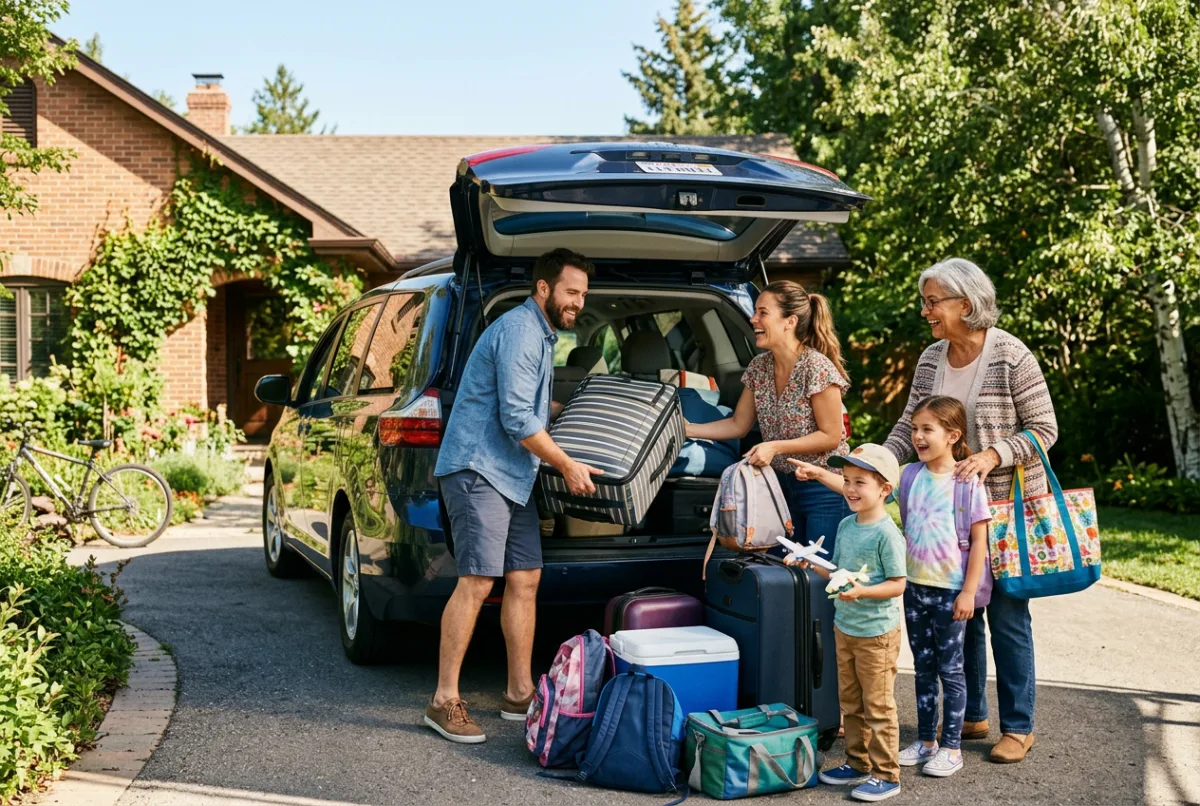
This is the shape of holiday travel once your family spans three generations. It isn't one trip. It's several trips happening at once, at several different speeds, and the year we stopped pretending otherwise was the year the whole thing finally got easier.
What follows isn't a packing list, though there's a bit of that. It's what we changed about how we move as a group, once we admitted that a seven-year-old and a seventy-eight-year-old were never going to walk down a terminal at the same pace, and that trying to force them to was the actual source of most of our stress.
Why does the airport feel harder than the destination?
For years I assumed the hard part of a multigenerational trip would be the trip itself, different tastes, different bedtimes, a week of compromise stretched across a shared rental house. It wasn't. The hard part was always the travel day, the compressed hours of security lines and gate changes and moving luggage through spaces built for nobody in particular.
Airports are engineered for a kind of average traveler who doesn't quite exist in our family. My son needs to run. My father-in-law needs to sit down more than the layout allows for. My husband and I are usually the ones sprinting between the two, trying to be in both places, achieving neither well. The stress isn't really about the destination, it's about the hour before we get anywhere close to it.
Once we named that clearly, the problem stopped feeling like a character flaw in our planning and started feeling like something we could actually design around.
What does pacing for different speeds actually look like?
We stopped trying to move as a single unit through the airport, and started moving as two loosely connected units with a shared destination and a shared check-in time.
- The slower group goes first, without apology. My in-laws head to security the moment we arrive, at their own pace, while whoever's wrangling the kids follows fifteen minutes behind. Nobody is waiting on anybody at the checkpoint that causes the most friction.
- The faster group absorbs the running-around. Kids get to burn energy at the gate area, not in the security line where a burst of enthusiasm helps no one.
- We build in a buffer we used to consider excessive. An extra thirty minutes that feels like overkill when you're planning the trip and feels like the reason nobody had a meltdown when you're living it.
- We ask, rather than assume, how someone's feeling that morning. Some days my father-in-law wants to walk further and rest less. Some days it's the reverse. Asking beats guessing, every time.
The meeting-point ritual that saved every trip since
After the corridor-bench incident, we adopted a rule that sounds almost too simple to matter: before we split into any groups, through security, at baggage claim, in a new city's train station, we name a specific meeting point out loud and confirm everyone heard it. Not "we'll find each other," which is how people get lost, but "the bench outside gate 14, no later than 3:40."
It sounds like overkill for a family trip. It is not overkill once you've spent twenty minutes circling a terminal for a grandmother who went looking for a bathroom and a son who followed a departures board he found fascinating for reasons only he understood.
A named bench and a stated time did more for our peace of mind than any app ever could, but the app is what let us stop checking on each other every four minutes in between.
Where does shared location actually help, and where doesn't it?
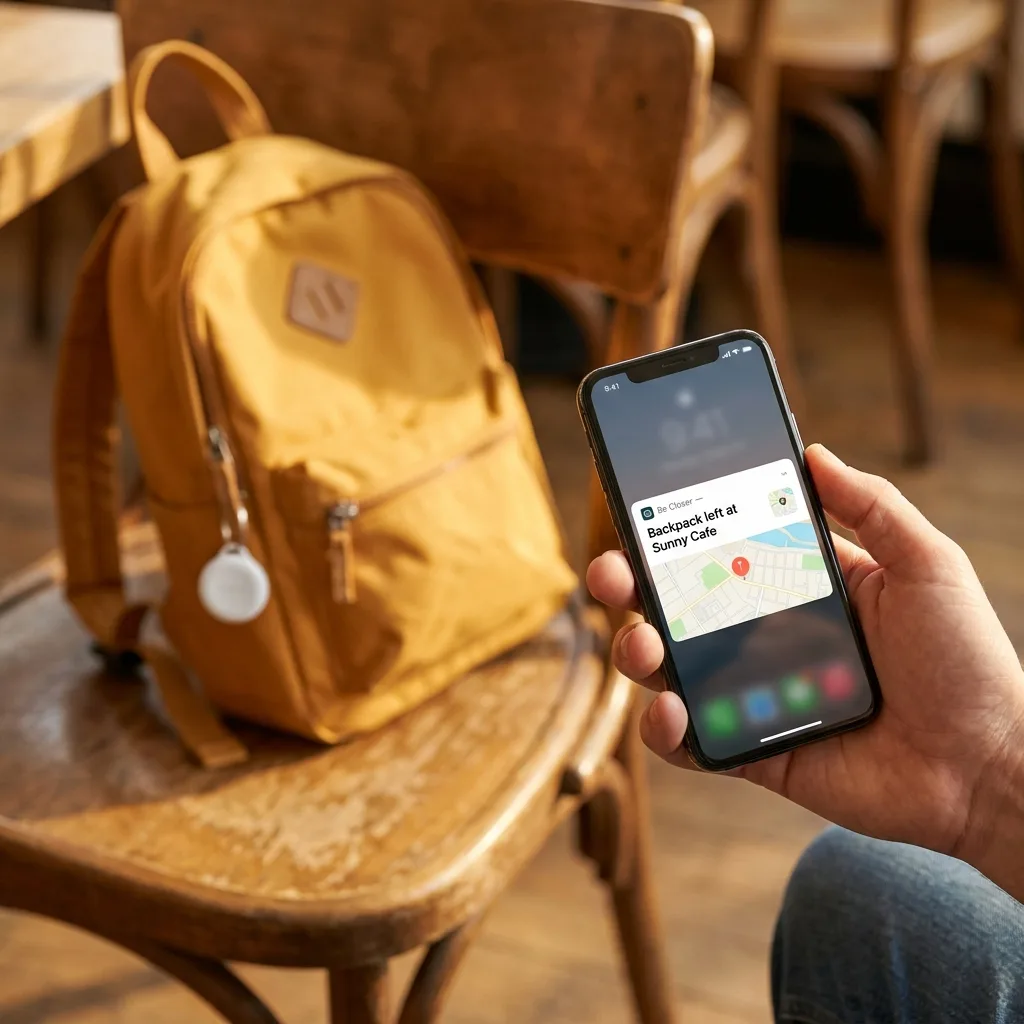
We turn on live location sharing through Be Closer for the busiest stretches of any trip, the airport itself, a crowded rest stop on a long drive, the first day in an unfamiliar city before anyone's got their bearings. It isn't a substitute for the meeting-point ritual; it's what makes the gaps between meeting points less anxious.
If my son drifts three gates down, I can glance at my phone instead of scanning a crowd. If my mother-in-law needs longer at that bench than expected, I know exactly where 'the bench' currently is rather than guessing which one she meant. It's a small, quiet layer of reassurance underneath a day that's already asking a lot of everyone's attention.
Where it doesn't help is in the ordinary, unhurried parts of the trip, the beach afternoon, the slow dinner, the days when nobody's rushing through a crowd. We turn it off for those stretches, deliberately, because the trip is meant to be a holiday, not a monitoring exercise. We talked about how kids experience that kind of on-and-off sharing in Family group chat across generations, and the same logic applies to grandparents: it should feel like a tool they reach for, not a leash they're stuck with.
Be Closer shows your whole family on one private map, free to start.
Consent-first, never sold, and gentle on your battery. iOS and Android.
Who packs the meds, and who carries the documents?
This is the least romantic part of multigenerational travel and the one that actually prevents disasters. Medications and documents need a named owner, not a vague sense that 'someone' has them.
- 1One person owns the medication bag, full stop, not split across three suitcases where a lost bag means a lost prescription. We keep a printed list of what's in it and the dosages, in case anyone else has to step in.
- 2Passports, insurance cards, and emergency contact numbers travel in a single folder, carried by whoever is least likely to set a bag down and walk away from it, usually not the seven-year-old, and honestly not always the adults either.
- 3We photograph every important document before we leave, stored somewhere accessible offline, because a lost folder is a manageable problem when you have a photo of what was in it.
- 4We confirm pharmacy access at the destination before we go, not after someone runs out of a medication three days in.
The pre-trip five-minute check
- Who is carrying the meds, and does everyone know who?
- Where are the passports right now, and where will they be at security?
- What's the meeting point if we get separated at the airport?
- Is location sharing turned on for anyone who wants it?
- Does anyone need a slower pace built into today's schedule?
What happens when you let the grandparents lead?
One of the better decisions we made, almost by accident, was handing my in-laws an afternoon with no itinerary attached and no agenda but their own. My father-in-law picked a market neither of us would have chosen. My mother-in-law wanted to sit in a café for two hours doing nothing more ambitious than watching the street. The kids grumbled for the first twenty minutes and then didn't.
Multigenerational travel so easily becomes an itinerary optimized for the youngest members and endured by the oldest ones. Flipping that, even for a single afternoon, changes the emotional tone of a whole trip. It also does something quieter and more important: it reminds everyone that the grandparents aren't just along for the ride, being managed and paced around. They're allowed to lead, too.
Is the chaos actually worth it?
There is a version of this piece that ends with a tidy system and a promise that travel with three generations becomes easy once you've got the logistics sorted. It doesn't, entirely. There will still be a bench, a bathroom, a departures board that fascinates a child at the worst possible moment.
What changes is what that chaos buys you. My son has a photo of himself asleep on his grandfather's shoulder on a delayed flight that neither of them will remember choosing to take, but that I will keep for the rest of my life. My mother-in-law tells the corridor-bench story now as a joke, not a complaint. The maths of it, an extra hour of planning against a memory none of us would trade, has stopped feeling like a maths problem at all.
Frequently asked questions

Priya writes about the family members we care for at every age, parents living alone, dogs that bolt at squirrels, and the quiet worry in between. She writes the way she checks in: gently, and always dignity first.
Our guides are written by Be Closer's editorial voices and reviewed by the team behind the app. Questions? support@becloser.com
Published · Updated