 Privacy & Trust
What does a family location app actually know about you?
One rule: if you can't tell how a location app makes money, assume the answer is your data. A family locator necessarily knows where every member is, where they've been, and the rhythm of their week, which is more revealing than most people expect. The questions that matter are whether that data is sold or shared, how long it's kept, who inside the family can see it, and how easily you can delete all of it.
Location history is not like other data. An email address identifies you; a location history describes you. Where you sleep, where you work, which building you visit every Thursday evening, how long you stayed, who else was there at the same time, none of that is inferred, it's simply recorded.
That isn't an argument against family location apps. It's an argument for knowing exactly what you're handing over and to whom, and for choosing a product whose business model doesn't depend on keeping it.
So here is the plain version: what the data actually is, the questions worth asking before you install anything, how to read a privacy label quickly, and where we stand ourselves.
What data does a family location app collect?
Broadly four categories. The first is unavoidable, the second is a design choice, and the last two are where products genuinely differ.
- 1Current position. Coordinates plus an accuracy radius, updated periodically. This is the product; you can't have a family map without it.
- 2Location history. A trail of past positions kept for some period. Useful for 'when did they get home', and the single most sensitive thing on the list.
- 3Device and account data. Phone model, operating system, app version, an advertising or analytics identifier, crash reports, and the email addresses used to create the circle.
- 4Derived signals. Places you visit often, arrival and departure times, sometimes driving events such as hard braking or phone use at the wheel.
It's the derived layer people underestimate. A month of location history reveals a home address, a workplace, a school, a routine, and any place visited regularly, a place of worship, a clinic, a support group. Nobody has to be spying for that to be inferable; it falls out of the raw trail automatically.
Which is why the retention question matters more than the collection question. An app that keeps thirty days of history is a fundamentally different proposition from one that keeps two years, even if they collect identically.
What should I ask before installing one?
Five questions. All five have answers that should be findable in a privacy policy without a law degree; if any of them isn't, treat the absence as the answer.
The five questions
- Is location data sold, shared, or licensed to third parties? Look for the words 'sell', 'share', 'partners', 'aggregated' and 'anonymised'. Aggregated location data has repeatedly been shown to be re-identifiable.
- How long is history kept, and can I delete it? A specific number is a good sign. 'As long as necessary' is not a number.
- Who inside the family can see what? Can a teenager see who is looking at them? Can anyone be added to a circle without being told?
- Can location sharing be enabled without the person knowing? If yes, the product is designed for monitoring, not for families.
- How does the company make money? Subscriptions, hardware, or data. There is no fourth option, and the answer determines everything else.
That last question is the one that predicts the others. A free product with no subscription and no hardware has to fund servers, engineers and support from somewhere. Sometimes the answer is venture funding and a plan to charge later, which is fine. Sometimes it's data. Asking directly is reasonable.
There's also a consent question that sits underneath all of these, and it's the one we'd put first in a family context: does everyone on the map know they're on it? A product that makes hidden tracking easy has made a choice about what it is for. Our reasoning on that is set out in Should I track my child's location?.
Be Closer shows your whole family on one private map, free to start.
Consent-first, never sold, and gentle on your battery. iOS and Android.
How do I read a privacy label in 60 seconds?
Both app stores publish a summary of what an app collects. They're imperfect, self-declared, and occasionally out of date, but they're fast, and three things tell you most of what you need.
- 1Look for 'Data Used to Track You' on iOS, or the 'Data shared with third parties' section on Android. For a family safety app, location appearing here is a red flag worth taking seriously.
- 2Check what's collected beyond location. Contacts, browsing history, purchases and identifiers in a locator app suggest the product's interests extend past finding your family.
- 3Check whether data is linked to your identity. 'Not linked to you' is meaningfully better than 'linked to you', though location history is difficult to genuinely de-link.
| What you see | What it usually means |
|---|---|
| Location listed under tracking or advertising | Your movements are part of the revenue model |
| Contacts collected | Growth features, expect invitations and address-book uploads |
| Long list of third-party partners | Data leaves the company; each partner is a new risk |
| Subscription price, short data list | You are the customer rather than the inventory |
| No retention period stated anywhere | Assume indefinite until told otherwise |
One caveat: the labels describe collection, not safeguards. They tell you nothing about encryption, breach history or internal access controls. For those, the privacy policy and the company's security page are the only sources, and a company that publishes neither has told you something.
Where does Be Closer stand?
We'll state this plainly rather than in marketing language, because a page about data honesty that dodges its own question isn't worth much.
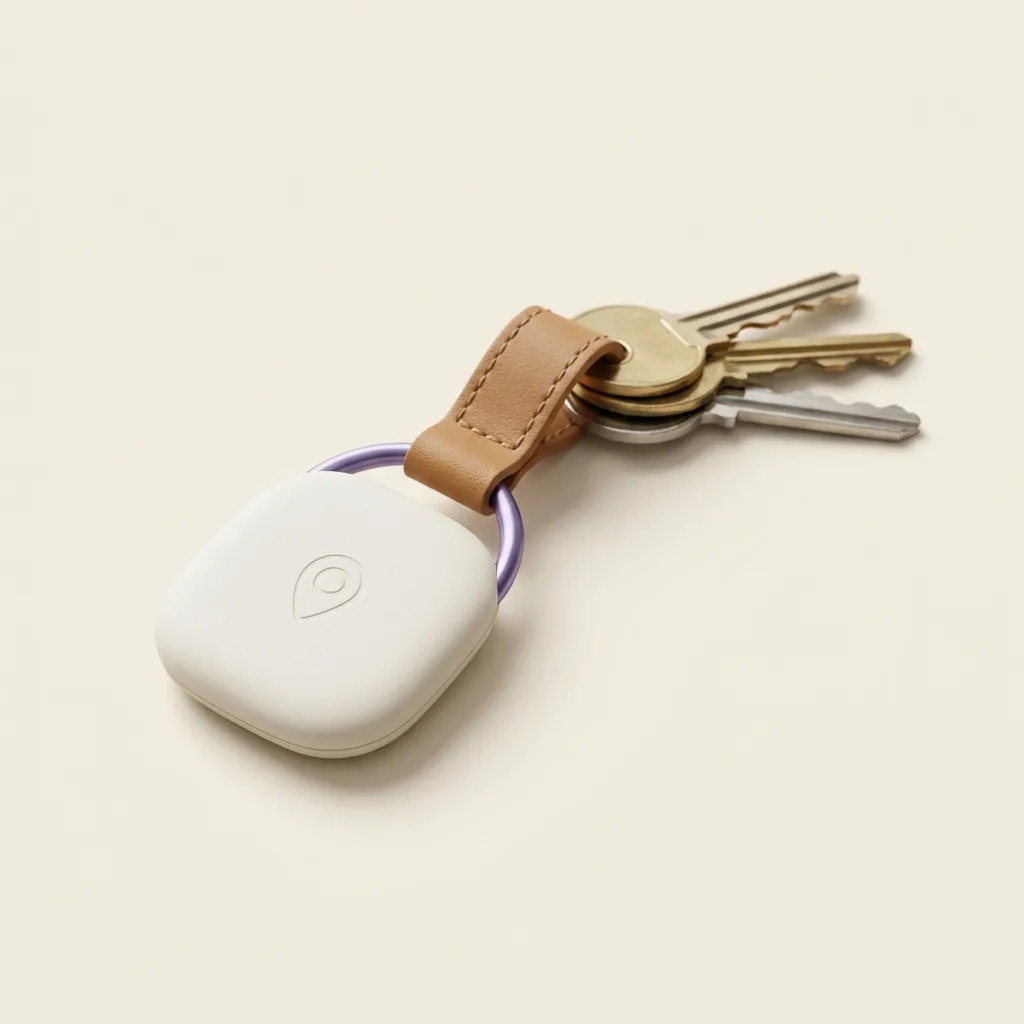
- We don't sell location data. Not to advertisers, not to brokers, not aggregated, not anonymised. Our revenue comes from memberships and from hardware such as the Tag.
- Sharing is consent-first. Everyone in a circle knows they're in it. There is no hidden mode, and we won't build one, a product that can be installed secretly is a stalking tool regardless of how it's marketed.
- Visibility is mutual by default. If you can see a family member, they can see you. It's a small design decision that changes the whole tone of location sharing in a household.
- History is bounded. We keep enough for the features to work and not more, and you can delete your data and close your account without emailing anyone to ask permission.
What we won't claim: that any app is risk-free. Data that exists can be breached, subpoenaed, or mishandled. The only genuinely private location is one nobody records. The honest position is that a family map is a trade, real coordination value in exchange for real data, and that the trade is worth making only when the terms are clear and the collection is minimal.
The question isn't whether a location app knows where you are. It's what happens to that knowledge after it's used.
If you're weighing this up for a teenager rather than a young child, the consent conversation is the harder half of the problem, How to talk to your teen about location sharing deals with that directly. And if you're wondering why the map sometimes shows something that looks wrong, that's usually physics rather than privacy: How accurate is phone GPS, really? explains it.
Frequently asked questions

Daniel covers privacy, consent and the technology under the hood. A dad who reads the settings screens so you don't have to, he believes the best family tech is the kind you can explain to your kid in one sentence, and that nothing should ever be tracked in secret.
Our guides are written by Be Closer's editorial voices and reviewed by the team behind the app. Questions? support@becloser.com
Published · Updated