 Pets
PetsBringing home a rescue dog: the first weeks, honestly
The first weeks with a rescue dog are about decompression rather than bonding, and the safest thing you can do is be boring, predictable and patient. Escape risk is at its highest in the early days because the dog has no attachment to your home yet, so use a double clip lead, update the microchip to your details immediately, and consider a GPS collar tracker as a temporary safety net while trust builds.
Bruno spent his first evening with us behind the sofa. Not hiding exactly, more stationed, watching the room with the flat attention of an animal who has learned that new places have rules he does not know yet. We had bought a bed, two bowls, a rope toy and a great deal of optimism. He looked at all of it, and then he looked at the gap behind the sofa, and he chose the gap.
I had imagined the arrival differently. I think most people do. There is a version in your head where the dog understands he has been rescued, and there is a moment, and everybody cries. What actually happens is that a confused animal is driven to an unfamiliar building by strangers, and has to work out whether this is another temporary thing or something else.
This is a guide to those first weeks, written by someone who got several things wrong in them. It covers the settling arc, why newly adopted dogs bolt far more than settled ones, and how to build safety around a dog who has not yet decided that your house is his.
The arc: first days, first weeks, first months
Rescue people often describe the settling period in three stages, and though the timings vary enormously by dog, the shape holds up well enough to be genuinely useful. Knowing which stage you are in stops you panicking in week one and stops you relaxing too early in week three.
The first few days: decompression
The dog is not himself. He may sleep an extraordinary amount, or barely at all. He may refuse food, ignore toys, follow you everywhere or want nothing to do with you. He may be perfectly, suspiciously well behaved, which people mistake for a wonderful temperament and is often just a frightened animal keeping very still.
What he needs now is almost nothing. No visitors, no long adventures, no cafe trips to show him off. A quiet space, a predictable house, and meals at the same times. This is the stage where doing less is doing more, and it is remarkably hard for an excited household to accept.
The first weeks: routine
The real dog starts appearing. He tests things. He might counter surf, or bark at the postman, or discover that he has opinions about the vacuum cleaner. Some new owners find this stage discouraging because the quiet, easy dog has vanished. He has not vanished. He has relaxed enough to have a personality, which is progress even when it looks like the opposite.
The first months: trust
Somewhere in here the dog starts choosing you. He sleeps with his back to the door because you are between him and it. He comes when called even when something more interesting is happening. Bruno's moment came about ten weeks in, when he brought me the rope toy unprompted, which he had ignored since the day it was bought.
A rescue dog does not arrive grateful. He arrives cautious, and gratitude, if it ever looks like that, is something he decides on later.
Why new dogs bolt, and what actually helps
This is the part I would put in bold on the adoption paperwork if anyone asked me. A newly adopted dog is at his highest risk of running in the first few weeks, and the reasons are all fairly obvious once you say them out loud.
- He has no bond with you yet. A settled dog who gets startled looks for their person. A new dog has no person to look for, so the instinct is simply to move away from the frightening thing.
- He does not know where home is. A dog who bolts three streets from a house he has lived in for years often finds his way back. A dog who has been with you nine days has no map at all.
- Everything is unfamiliar, which means his startle threshold is much lower than it will be in six months. Bin lorries, fireworks, a dropped pan.
- Collars and harnesses may not fit properly yet, especially on an underweight dog who is putting weight back on. Dogs back out of loose collars with unnerving skill.
The single habit that prevents most of it is the double clip. A well fitted harness and a collar, with the lead clipped to both, or two leads. It looks excessive and it means a slipped collar is an inconvenience rather than a catastrophe. We double clipped Bruno for four months, including in the garden for the first fortnight, and I have never regretted it once.
The first fortnight escape checklist
- Double clip every walk, harness plus collar, without exception.
- No off lead time. Not in a quiet field, not at six in the morning. Recall does not exist yet, whatever he did at the shelter.
- Check the garden fence line properly, at dog height, including the gap behind the shed and under the gate.
- Warn the household about the front door. A dog going out with a delivery is one of the commonest early losses.
- Have a current photo on your phone, clearly showing his face and any markings.
The broader psychology of why dogs run, and which fixes actually work, is covered in more depth in why dogs escape and what works. Almost everything in it applies double to a dog in his first month.
A quiet room beats overwhelming affection
The kindest instinct in the world is to make a frightened animal feel loved, and with a new rescue it is frequently the wrong move. Constant stroking, faces close to his, being followed from room to room by delighted humans. To a dog with no relationship with you, that is not affection, it is pressure from strangers.
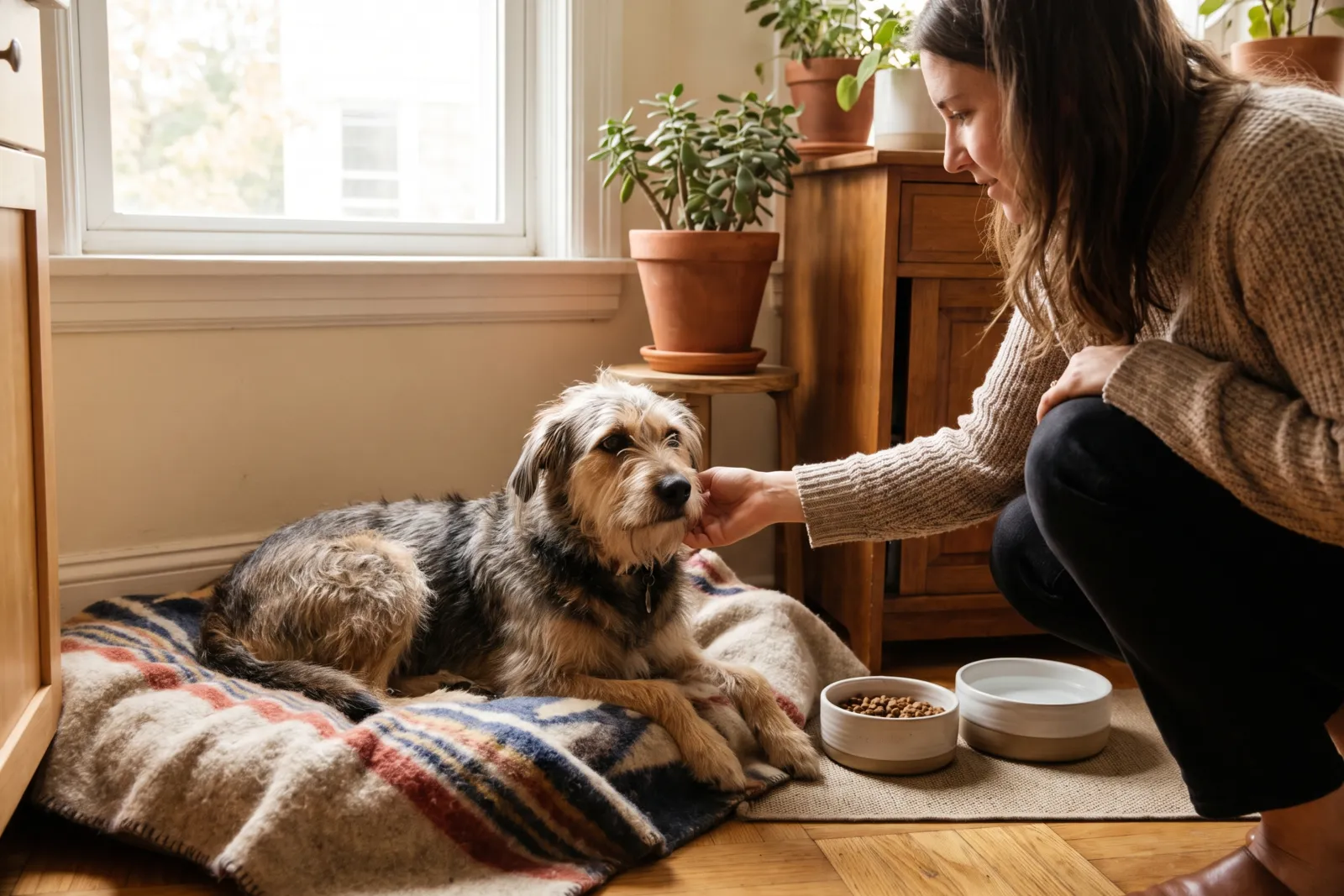
Give him somewhere that is unambiguously his. A bed in a low traffic corner, a crate with the door left open, a quiet room. The rule in our house was that when Bruno was on his blanket, he did not exist. Nobody spoke to him, touched him or looked at him for long. It took about a week for him to work out that the blanket was a place where nothing was ever asked of him, and after that he used it constantly and started coming out more.
- 1Let him approach you, rather than the other way round. Sit down, look elsewhere, carry on your day.
- 2Keep the routine boringly consistent. Same meal times, same walk times, same doors open and shut.
- 3Ignore the blanket. Whatever the safe space is, nobody disturbs him there, ever, including children.
- 4Feed by hand occasionally, a few pieces of his normal food, if he is comfortable taking them. It builds association without pressure.
Be Closer shows your whole family on one private map, free to start.
Consent-first, never sold, and gentle on your battery. iOS and Android.
Introducing the family, the children and the other animals
Everyone wants to meet him. Cousins, neighbours, the friend who has been sending dog photos for a month. The honest answer for the first fortnight is no, and it is worth deciding that as a household before the dog arrives so nobody has to be turned away at the door.
| Who | When | How |
|---|---|---|
| People in the house | Day one | Calm, low voices, let him approach, no crowding at the door |
| Children in the house | Day one, with rules | Sitting on the floor, no hugging, nobody approaches the blanket |
| Resident cat or dog | After a few days | Neutral ground or parallel walks first, gated separation at home |
| Extended family and friends | After two weeks or more | One or two at a time, outdoors if possible |
With children the rules matter more than the timing. No hugging round the neck, no approaching him while he eats or sleeps, no following him if he walks away. Teach the children that a dog leaving a room is allowed to leave, because a dog who learns he can escape a situation rarely needs to escalate.
If you are still weighing up whether the household is ready at all, is your family ready for a dog is worth reading before rather than after, and it applies with extra force to rescues.
The admin that actually matters: chip, tag and tracker
The paperwork is dull and it is the part most likely to bring a lost dog home. Do it in the first week, ideally the first day, while the risk is at its highest.
Re-register the microchip to you
A microchip is only useful if the details attached to it are current. A rescue dog's chip frequently still points at the shelter, a previous owner, or a database nobody has updated in years. Ask the rescue which database he is on, then transfer the registration into your name with your phone number. A scanned chip that rings a disconnected number is the saddest kind of near miss.
A visible tag as well
Chips need a scanner and a vet. A tag needs a passerby with a phone. Put your mobile number on it rather than the dog's name, since a stranger calling him by name may encourage him to run further before help arrives.
A GPS tracker for the settling window
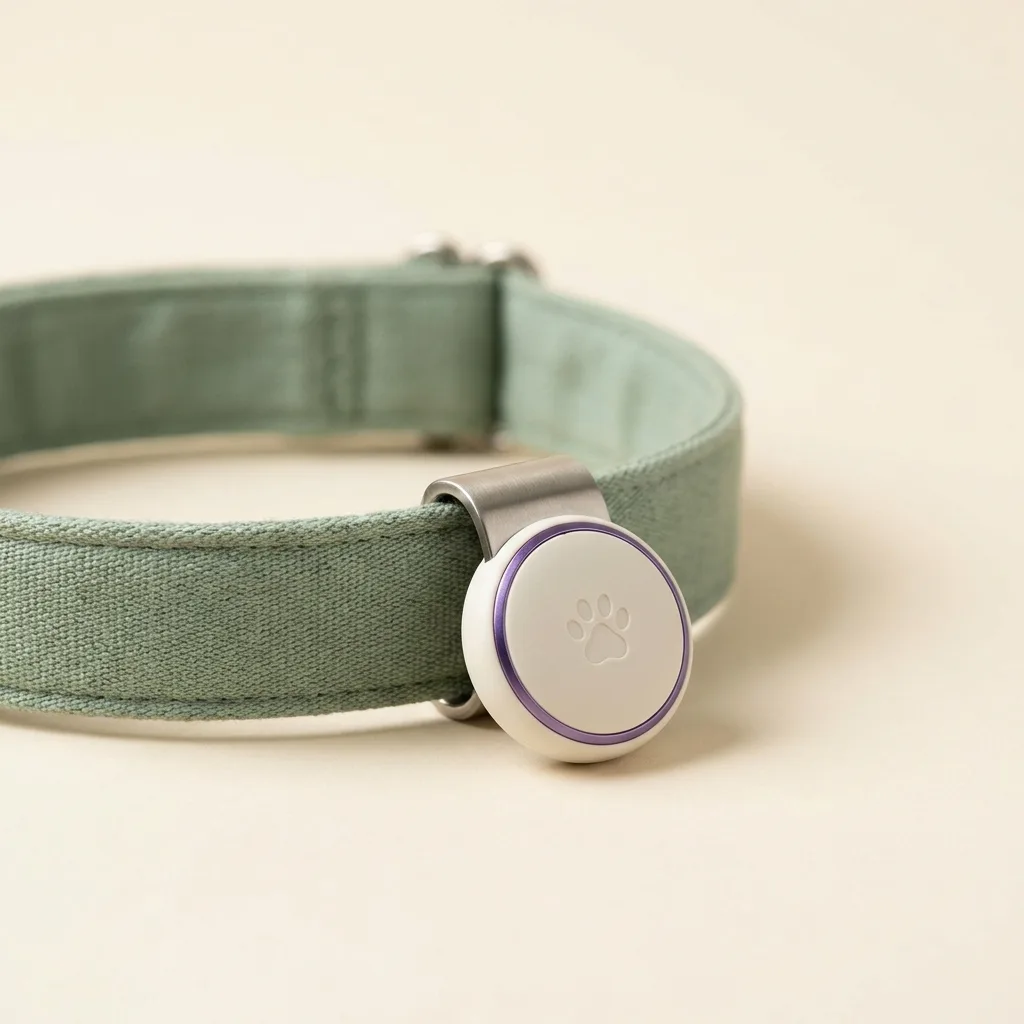
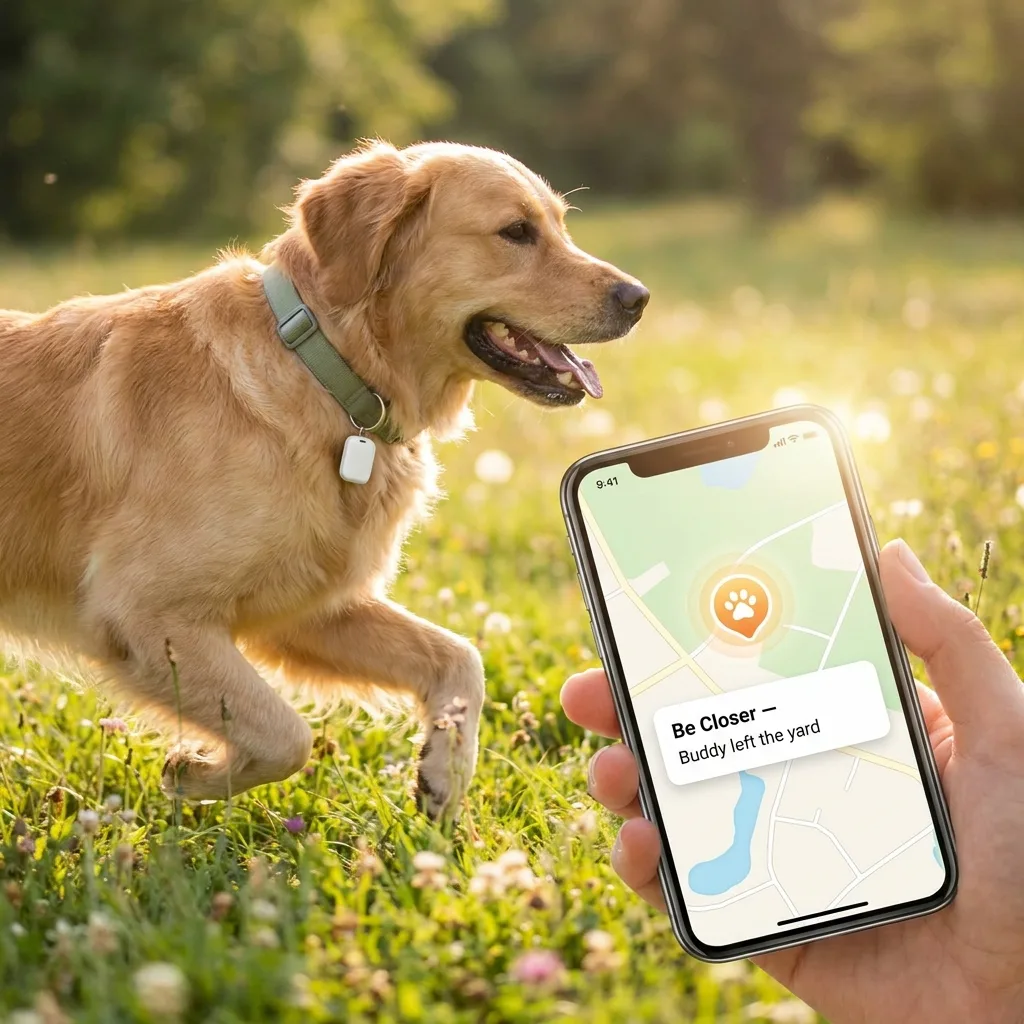
This is where a collar tracker earns its place. Chips and tags are recovery tools that only work after someone has found your dog. A GPS tracker tells you which direction he went while it still matters, which in the first frantic ten minutes is the difference between a story you tell later and a much worse one.
Ours came off at the six month mark, once recall was solid and Bruno had clearly decided the house was his. That felt like a graduation. Some families keep them permanently, particularly with sighthounds or dogs with a strong prey drive, and that is a perfectly reasonable call too. Moving house later reopens all of this, which is why pets and moving house reads a lot like this article in places.
A microchip tells someone where your dog came from. A tracker tells you where he is going. You want both, and you want them before you need them.
Being patient in a way that shows
The advice people give new rescue owners is always the same word: patience. It is good advice and it is uselessly vague, because patience in practice means specific, slightly boring behaviours repeated for weeks. Not expecting affection. Not testing recall early. Not inviting anyone over. Ending walks before he is overwhelmed rather than when you have finished your podcast.
Bruno is six years old now and asleep on the good chair, which he is not allowed on and has been on every day for four years. He still does not like men in high visibility jackets and he probably never will. That is fine. Nobody promised a dog with no history, and the history is where most of him came from.
The first weeks feel long and slightly disappointing, and that is normal. You are not failing. You are being assessed by an animal with good reason to be careful, and the assessment takes as long as it takes.
Frequently asked questions

Priya writes about the family members we care for at every age, parents living alone, dogs that bolt at squirrels, and the quiet worry in between. She writes the way she checks in: gently, and always dignity first.
Our guides are written by Be Closer's editorial voices and reviewed by the team behind the app. Questions? support@becloser.com
Published · Updated