 Aging Parents
Keeping an Aging Parent Safe and Warm Through Winter
Winter adds quiet risks for a parent living alone: ice, dark evenings, cold rooms, fewer visitors, and harder driving. The kindest approach is a short seasonal checklist done with your parent, covering the home, the path outside, a steady check-in rhythm, the car, and small acts of warmth, so they stay independent and you both worry less.
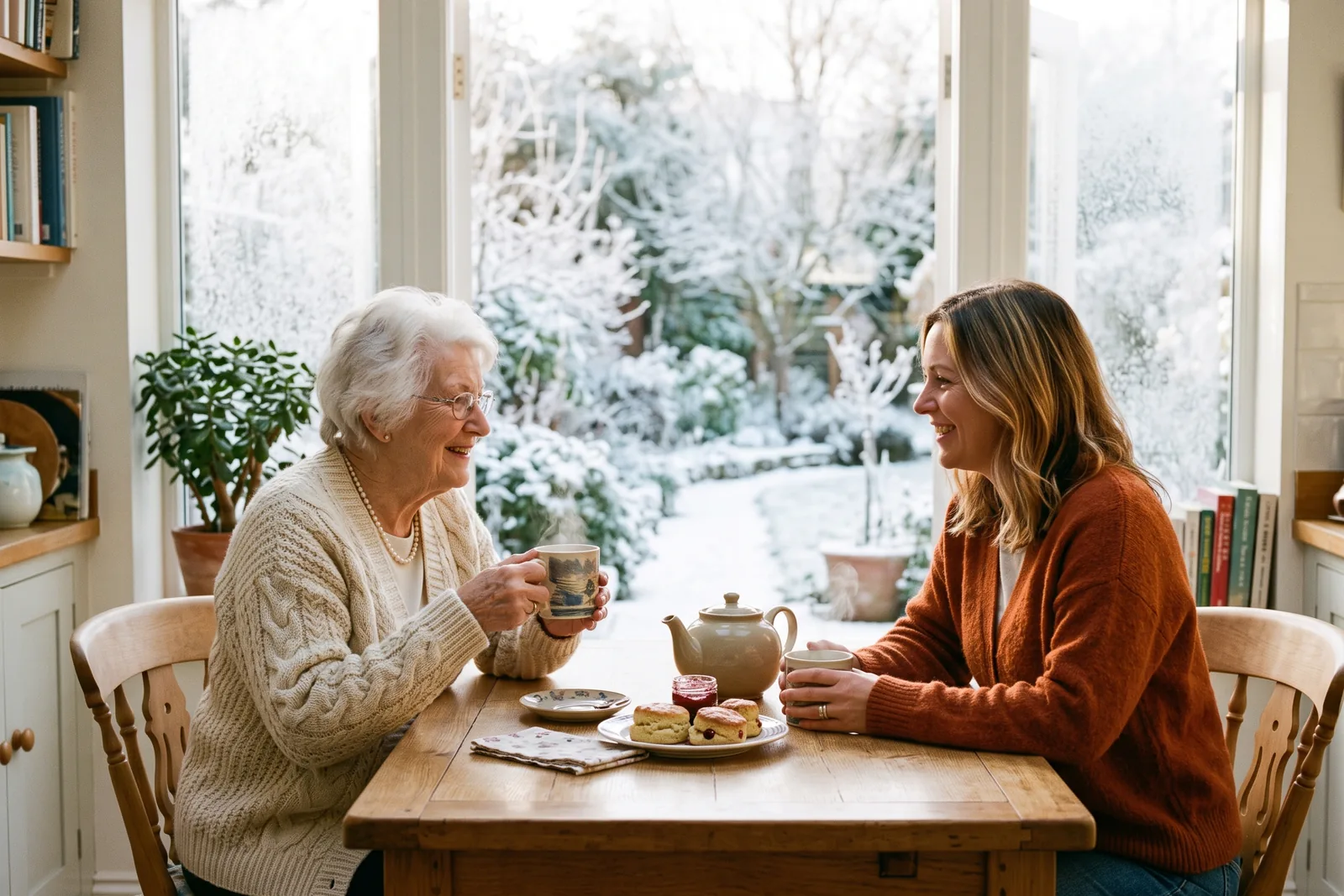
The first frost at my mother's house always arrives the same way. The garden turns silver overnight, the kettle goes on earlier, and she stops walking to the corner shop without saying so. I only noticed the pattern after three winters, when I realised her fridge was emptiest in January.
Nothing dramatic ever happened. That is the thing about winter for older parents. The risks are quiet: a slippery step, a hallway that gets dark at half past four, a thermostat turned down to save money, a week where nobody knocks on the door.
So now we do a winter check together, every November, at her kitchen table. Not an inspection. A conversation with a list. Here is what is on it, and how we talk about each part without making her feel like a patient in her own home.
Start with the right question
The way you open this conversation decides how the rest of it goes. "I'm worried about you this winter" puts your parent on the defensive. "What made last winter hard?" invites them to be the expert, which they are.
My mother's answer surprised me. It was not the cold. It was the bins. Dragging them down the drive on icy mornings frightened her, and she had not wanted to mention it because it felt too small. The smallest worry is often the one that shapes a whole season.
Do the checklist with your parent, not to them. The list is shared; the decisions stay theirs.
If you are building a broader setup for a parent who lives alone, this gentle safety setup covers the year-round basics. The winter check sits on top of it.
The home: warm, bright, and steady underfoot
Walk through the house together in the late afternoon, when the light starts to go. You will see it the way your parent lives it in December.
Home checklist
- Heating serviced before the cold arrives, and your parent comfortable using the controls.
- At least one room kept properly warm, usually the one they sit in most.
- Lamps on simple plug timers in the hallway and living room, so they never walk into a dark house.
- Night lights on the route from bedroom to bathroom.
- Grab rails by the front step, the bath, and the toilet, fitted where they would naturally reach.
- Non-slip mats inside the front door, where wet shoes meet a hard floor.
- Rugs taped down or removed, and cables off the walkways.
- A torch by the bed and one by the door, with fresh batteries.
Be careful with money here. Many older people turn the heating down because they are frightened of the bill, not because they feel warm. If that is part of the picture, talk about it plainly and kindly, and look together at what support exists where they live.
Timers were the change my mother liked most. She said coming home to a lit window made the house feel like someone was expecting her. Light is safety, but it is also company.
The path and the street
Most winter falls happen in the few metres between the front door and the pavement. If your parent has fallen before, the fear of it happening again can keep them indoors far more than the ice itself. Helping a parent after a fall goes deeper on rebuilding that confidence.
- Decide who clears the path. A neighbour's teenager, a family rota, or a local service. Write the name down so nobody assumes someone else has done it.
- Keep a tub of grit or salt by the door, light enough to lift.
- Check footwear together. Boots with a proper grip, easy to put on, beat elegant shoes every time. Slip-on ice grips can help for short walks.
- Move the bins, or arrange for someone else to on icy days.
- Add an outdoor light on a sensor over the step.
- Agree that on the worst mornings, errands can wait or be done by someone else, with no guilt either way.
My mother's neighbour now takes her bins down on Tuesday nights. She pays him in shortbread. It has become one of the small friendships of her week.
Staying connected when visits drop
Winter shrinks a parent's world. Friends stop dropping in, clubs pause, buses feel harder. Loneliness and cold travel together, and both can creep up without anyone noticing.
A steady rhythm helps more than frequent worried calls. We settled on a short morning message and a longer Sunday call. If you want ideas for rituals that feel warm rather than supervisory, daily check-in rituals has plenty.
This is also where a shared family map can quietly help. My mother agreed to share her location with me and my brother, and we share ours back. When she has a hospital appointment or goes to her Thursday lunch club, an arrival alert tells us she got there. I do not have to ring and interrupt her day to know she is safe. She told me she likes it too, because it means fewer anxious phone calls from me.
Honest limits of a family map
- It only works while the phone is charged, switched on, and carried. Phones die faster in the cold.
- Locations arrive in bursts, not a live stream. A timestamp of a few minutes is normal.
- It cannot tell you how someone is feeling. It is a starting point for a conversation, not a replacement for one.
Be Closer is free to download, works in 13 languages, and is rated 4.4 stars across more than 150,000 ratings on the App Store and Google Play. Location is accurate up to 95% of the time in good conditions, which in winter mostly means a charged phone and a clear sky. Only set it up if your parent genuinely wants it.
Flu season and the medicine cupboard
You do not need to become a nurse. You only need to make sure the ordinary things are ready before anyone feels unwell.
- Ask whether they have talked to their doctor about seasonal vaccinations, and offer a lift if they want one.
- Check that regular prescriptions will not run out over the holidays, when surgeries close.
- Stock a small shelf with soup, tea, crackers, and simple remedies they already use.
- Keep important numbers on paper by the phone, in large print.
Be Closer shows your whole family on one private map, free to start.
Consent-first, never sold, and gentle on your battery. iOS and Android.
The winter car, or the decision not to drive
If your parent still drives, winter is the season to talk about it, gently. Not whether they should drive at all, but whether they want to drive in the dark and on ice.
Winter car kit
- Ice scraper and de-icer.
- A blanket, gloves, and a hat.
- A torch and a phone charger that fits the car.
- Water and a snack.
- A charged phone and one person who knows the route.
Many older drivers already avoid night driving and icy roads on their own. Say out loud that this is wise, not a loss. Offer the alternatives before they are needed: a standing lift to the shops, a taxi account, a neighbour who drives past the surgery anyway. When the alternative is easy, choosing it feels like good sense, not defeat.
Warmth as care
The last part of the list is the part I love most, because it is not about risk at all. It is about making winter feel held.
- 1A soup drop-off rota among siblings, grandchildren, or friends, one pot a week.
- 2A neighbour roster: two or three people nearby who will knock if the curtains stay closed.
- 3A regular outing on the calendar, even a short one, so the week has a shape.
- 4Grandchildren sending drawings or voice notes, which my mother plays twice.
- 5A spare key with someone trusted, and everyone knowing who has it.
None of this is surveillance. It is the old village habit of noticing each other, rebuilt for families who live apart.
If you live far away
Much of this list assumes someone can pop round. If you live hours away, the job changes shape. You become the organiser rather than the one carrying the soup, and that is still real care.
- Do the walk-through on a video call in daylight and again at dusk, with your parent carrying the phone.
- Build the neighbour roster before the first frost, not after the first worry.
- Keep a shared note with names, numbers, and who has the spare key, so any family member can step in.
- Plan one winter visit that is simply for company, with no jobs attached.
Keep the list, and revisit it
We keep our list on the fridge. In February we look at it again and cross out what did not matter. Last year she added her own line at the bottom: "Call Priya when the snowdrops come up." She did, and we both knew winter was over.
A good winter plan is the one your parent would have written themselves, with a little help.
Frequently asked questions

Priya writes about the family members we care for at every age, parents living alone, dogs that bolt at squirrels, and the quiet worry in between. She writes the way she checks in: gently, and always dignity first.
Our guides are written by Be Closer's editorial voices and reviewed by the team behind the app. Questions? support@becloser.com
Published · Updated