 Kids & Teens
When Your Teen Starts Babysitting: A First-Job Checklist
Readiness is about judgment rather than age: can your teen stay calm, ring an adult early, and say no to something they are not comfortable with. Before the first booking they should have an information sheet from the family, know the emergency basics, and have an agreed way home that does not depend on a tired parent remembering. On your side, promise they can always call you with no lecture attached, and treat any location sharing as a mutual arrangement for the journey rather than supervision of the job.
My eldest came home from a neighbour's house at half past ten on a Saturday with twenty pounds in her coat pocket and an expression I had not seen before. Not tired exactly. Slightly taller. She had spent three hours in charge of a four year old and a baby monitor, and she had handled a nosebleed on her own, and she was insufferable about it for a week.
Babysitting is often the first job where a teenager holds real responsibility with nobody standing over them. No shift manager, no colleague, just a house that is not theirs and somebody else's children asleep upstairs. It is genuinely brilliant for them, and it deserves more preparation than most of us give it, which in our case was me saying you'll be fine and handing over a torch.
So here is the version we use now. A readiness check, the information your teen should ask for before they say yes, the basics for the evening itself, the getting home plan, and the agreement on our side that makes the whole thing work. There is no correct legal age here and it varies by where you live, so check your local rules rather than taking a number from a guide on the internet.
Readiness is judgment, not birthdays
I know fourteen year olds I would trust with my nephew and eighteen year olds I would not, and the difference is not maturity in the abstract. It is a handful of very specific behaviours you have already seen at home.
- They call an adult early rather than late. The teenager who rings you when something is odd, before it is a problem, is the one who is ready.
- They can say no. To a child asking for something forbidden, and to an adult asking for something that was not agreed.
- They stay calm around mess and noise, including sick, crying and a toddler who has locked themselves in a bathroom.
- They put the phone down. Not permanently, but they can be genuinely attentive for three hours rather than half present.
- They notice things, like a plug socket, an open stair gate or a smaller sibling gone quiet.
- They can hold a boring evening. Babysitting is mostly waiting, and impatience is a real risk factor.
Start smaller if any of those are shaky. An hour babysitting a sibling while you are in the garden, then an hour while you are at the shops, then a daytime booking with a family you know while their parent is nearby. If you want the graded version of that, when can siblings babysit is the same ladder built for inside your own home.
The best babysitter is not the one who never has a problem. It is the one who tells you about it immediately.
The information sheet to ask the family for
Teenagers will not ask for this unprompted, because asking feels rude and they want the job. So teach the sentence: I've got a short list of things I need before I start, is it okay if I go through it when I arrive? Every decent family says yes and thinks better of them for it.
Before the parents leave, your teen should have
- Both parents' mobile numbers in their phone, and where the parents are going.
- The house address written down, including the number, because in an emergency nobody remembers it.
- Allergies, medicines and doses, in writing rather than said on the way out of the door.
- Bedtime routines and what the children are and are not allowed, especially food and screens.
- A second adult to call, a neighbour or relative, if the parents cannot be reached.
- Where the first aid kit, torch and fuse box are, and how the front door locks from the inside.
- When they will be home, and what happens if that changes.
In writing beats spoken every time, because the answers get said in a hallway while somebody is putting a coat on. A photo of a sheet stuck to the fridge is perfect.
The address one sounds trivial until you imagine a fifteen year old on a phone to an emergency operator in a house they have been in twice. Have them save it as a note the moment they arrive.
House rules and the emergency basics
Most babysitting evenings involve nothing worse than a spilled drink. The preparation is not because something dramatic will happen, it is so that the one time something does, your teen has a first move rather than a blank.
- 1Nobody comes in. No friends, no partner, nobody who says they know the family. This rule is non negotiable and it protects your teen as much as the children.
- 2Doors locked, phone charged, one lamp on. A charged phone is the whole safety plan and it is the thing most often forgotten.
- 3Know the emergency number where you live, and that calling it is never an overreaction.
- 4Check on sleeping children at agreed intervals rather than only when they cry.
- 5Never leave the house, not for a doorstep chat, not to move a car, not for two minutes.
- 6Write down anything that happened and tell the parents, even the small things, especially the small things.
A basic first aid course is a genuinely good investment at this age and often free through local schemes. It is also the thing that families notice on a young babysitter, and it makes your teen far more confident about the ordinary bumps.
One more: agree that if an adult in the house makes your teen uncomfortable in any way, they leave, and they are never expected to explain it first or be polite about it. That rule exists in our house with no conditions attached.
The getting home plan, sorted before the first booking
This is the part families improvise and it is the part I would fix first. A tired teenager at 11pm, in the dark, arranging a lift on a dying phone, is a worse risk than anything that happened during the evening.
- Decide the ride home when the booking is made, not at the end of the night. Who is driving, or which walk, or which bus.
- Agree who pays if it is a taxi. Many families include it, and your teen can ask about it when they discuss rates.
- Set a hard finish time and have your teen tell the family it before they accept, so a late return is a conversation rather than a surprise.
- Have a no questions asked collection promise. If the family come home late, or drunk, or the evening turns odd, your teen rings and you go, at any hour, without a lecture in the car.
- Keep the phone charged for the journey, which sometimes means a small power bank in the bag.
If the journey home is a walk, it is worth walking it together once in daylight and once after dark, the same way you would with any new route. The thinking in walking home from the bus stop applies almost unchanged.
Be Closer shows your whole family on one private map, free to start.
Consent-first, never sold, and gentle on your battery. iOS and Android.
Money and boundaries, said out loud
Teenagers are extremely bad at asking to be paid properly, and families are not always deliberate about it. Sort it before, in a message, so nobody is doing arithmetic in a hallway.
- 1Agree the hourly rate before the booking, in writing, along with how the extra half hour at the end is handled.
- 2Agree how they are paid, cash or transfer, and to whom.
- 3Decide about extras such as cooking, walking the dog, or an older child added on the night. Those are a new conversation, not a free upgrade.
- 4Practise the polite no. Sorry, I can't do Saturday. It is a complete sentence and it is the most useful thing in this entire guide.
- 5Let them keep the money, and let them make slightly silly decisions with some of it. It is a first wage.
The wider version of this, about a first job, hours and how much independence to hand over at once, is in teens first part-time job independence.
The parent side of the agreement
Your teen is taking on responsibility. The deal is that you take some on too, and you say it out loud rather than assuming they know.
What we promise on our side
- You can always call, at any hour, for any reason, and nobody will be annoyed.
- No lecture on the drive home. Debriefs happen the next day, over breakfast, if at all.
- We will come and get you, no questions asked, if anything feels wrong.
- We will not check up on you during the job. You are working, and being trusted is the point.
- You can turn work down, including from people we know well, and we will back you.
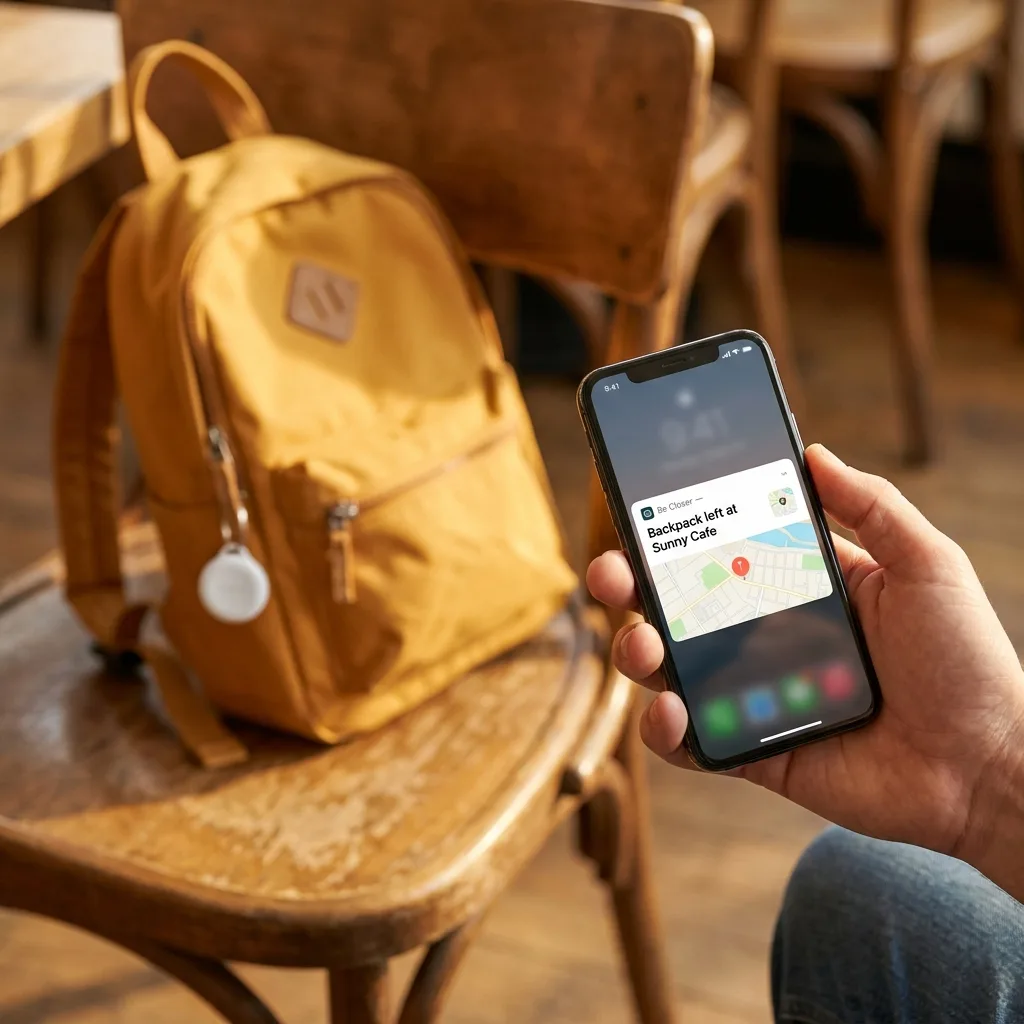
On location sharing, be clear about what it is for. In our house it covers the journey, the walk or the ride home late at night, and it is mutual: my daughter can see me exactly as I can see her, and she can pause it. It is not switched on to watch her do the job. Location is up to 95% accurate in good conditions and it will not tell you whether an evening is going well, only roughly where a phone is. The Be Closer app is free to download and holds 4.4 stars across more than 150,000 ratings on the App Store and Google Play, and it still comes second to the promise that she can ring us.
Sharing agreed together is a safety net. Sharing imposed is a reason to leave the phone in a bag. If your teenager pushes back, that is information rather than defiance, and the honest way through it is in talking to teens about location sharing.
After the first job
Ask three questions the next day, not that night. What was harder than you expected, what would you do differently, and would you go back. The answers tell you whether the next booking should be shorter, longer or with a different family.
And say the thing out loud. Not well done for surviving, but you were in charge of two children for three hours and everyone is fine. Teenagers do not always notice their own competence until somebody names it.
Frequently asked questions

Marta writes our Kids & Teens guides. Mother of two, professional over-preparer, firm believer that independence is a skill you practice, together first, then alone. She has road-tested every checklist in her own hallway at 7:40am.
Our guides are written by Be Closer's editorial voices and reviewed by the team behind the app. Questions? support@becloser.com
Published · Updated