 Driving
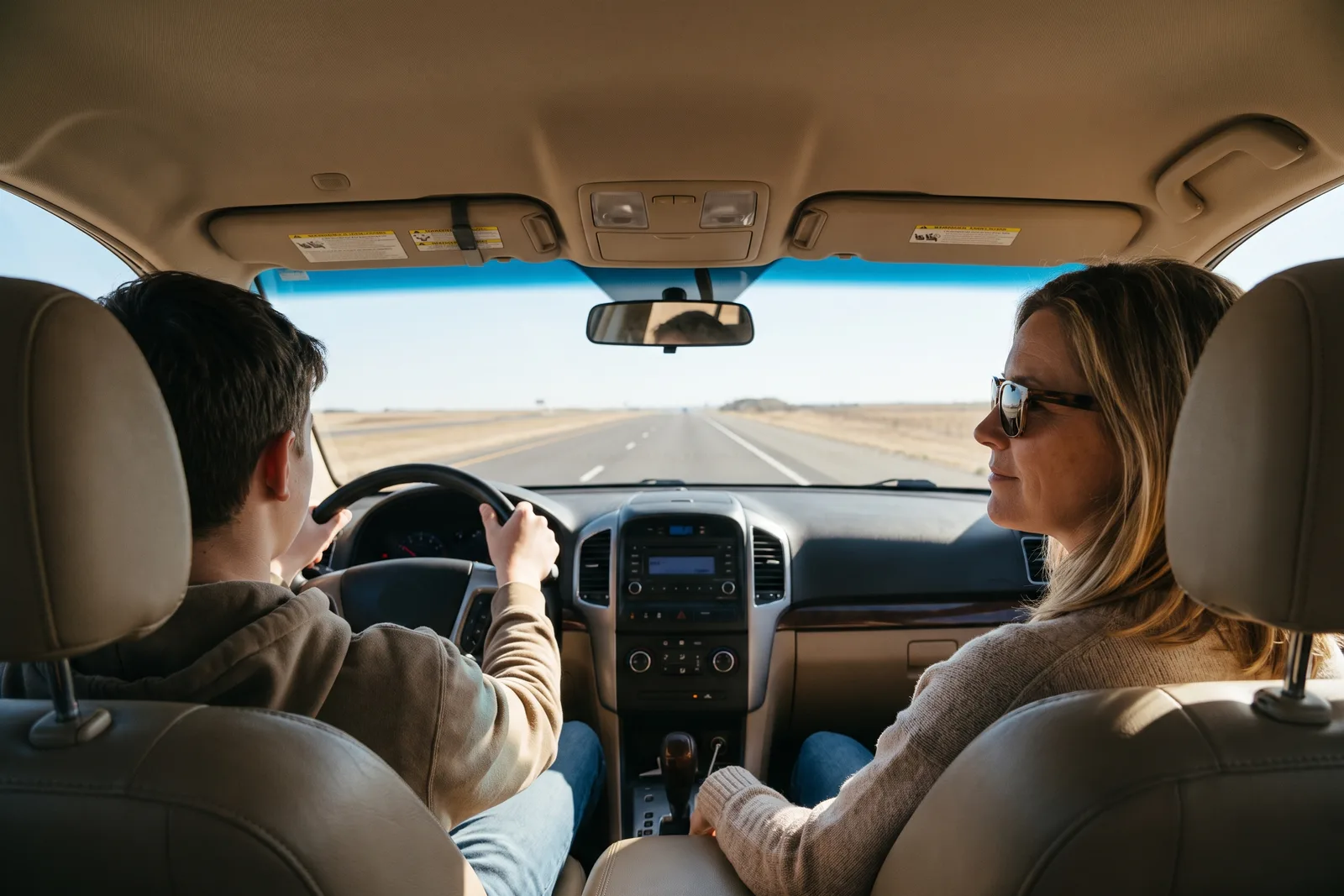
Your Teen's First Highway Drive: A Calm Coaching Plan
Pick a quiet stretch at a low-traffic time, agree the route and exits before starting, and focus on three skills: merging at speed, keeping a generous following distance, and staying in lane. Say little while they drive, use short agreed phrases, exit early if either of you is overwhelmed, and debrief afterwards with one strength and one thing to practise.
Most learner drivers can handle a quiet residential street within a few weeks. The highway is different. Speeds are higher, decisions come faster, and the moment of joining traffic asks for a kind of commitment that town driving rarely does.
For the parent in the passenger seat, it is also the drive where the urge to talk is strongest. Every truck feels too close and every gap feels too small. The skill on your side is staying calm, clear, and mostly silent.
This is a plan for that first drive and the few after it. It assumes your teen already controls the car confidently at lower speeds. Rules on when and where learners may drive on highways vary by region, so check your local requirements before you set out.
Before the drive: readiness, not a date
The right time for a first highway drive is when town driving has become boring. If your teen still has to think hard about mirrors, signalling, and smooth braking, add more hours on ordinary roads first. Our guide on practice drives with your learner teen covers building that base.
- They check mirrors without prompting.
- They hold a steady speed on faster non-highway roads.
- They signal and change lanes smoothly on multi-lane town roads.
- They stay calm when another driver does something unexpected.
Check the local rules too. Some regions restrict learner drivers on certain roads, require specific supervisors, or set conditions on practice. We will not state them here because they genuinely differ; your licensing authority's guidance is the right source.
Choose the road and the time
The first highway drive should be short and predictable. Pick a stretch you know well, ideally with long on-ramps, clear signs, and exits every few kilometres.
- 1Time: a weekend morning or mid-afternoon on a weekday, away from rush hour.
- 2Weather: dry and clear, in daylight. Save rain and night for later; see teen driving in bad weather.
- 3Distance: two or three exits, then off, a break, and back.
- 4Route: plan it together on a map beforehand, including where you will exit.
Agree before you start
- Which on-ramp, which exit, and where you will stop afterwards.
- That the right-hand or slow lane is home for this drive.
- The short phrases you will use, and that you will say little else.
- That either of you can call for the next exit, no discussion needed.
Merging: the moment that matters most
Merging is where most first highway nerves live. The one rule: use the whole on-ramp to match the speed of traffic, then fit into a gap. Merging too slowly is more dangerous than merging briskly.
- 1Signal early as the ramp begins.
- 2Accelerate firmly along the ramp. It is there to be used.
- 3Check the mirror and glance over the shoulder to find a gap.
- 4Adjust speed slightly to line up with the gap, not the car beside you.
- 5Move across smoothly, cancel the signal, and settle.
Practise the idea in a quiet car park or on a slower dual carriageway first, if possible, so the acceleration does not feel alarming. The first time a teen presses the pedal harder than they ever have, the car's response can surprise them.
Following distance and lane discipline
Space ahead is the most important safety margin on a highway. At higher speeds, stopping distances grow quickly. Teach a time gap rather than a distance: pick a fixed marker, and when the car in front passes it, count. A gap of at least a few seconds in good conditions is a common guideline, and more in wet weather or behind large vehicles.
- Stay in one lane for the first drive, usually the slow lane.
- Keep the car centred; drifting is common when eyes fix on the car ahead.
- Look further up the road, several vehicles ahead, not just at the bumper in front.
- Let faster traffic pass. There is no need to keep up with anyone.
- Give large vehicles extra room and avoid lingering in their blind spots.
Lane changes can wait for the second or third drive. When you add them, use the same routine every time: mirror, signal, shoulder check, move, cancel.
What the supervising parent says, and does not say
Your job is to be calm cargo with a clear voice. A running commentary makes a new driver more anxious and less able to process the road. Agree a few short phrases in advance and use them only when needed.
Useful phrases
- "Check your mirror."
- "More space ahead."
- "Hold your lane."
- "Next exit, please."
- "Nice merge." (praise, briefly, when it happens)
Things to avoid
- Sharp intakes of breath or gripping the door handle.
- Long explanations while they are driving.
- Pointing at every hazard; name only what matters.
- Revisiting a mistake while the next one is being avoided.
Say the least you can, as early as you can, as calmly as you can.
Be Closer shows your whole family on one private map, free to start.
Consent-first, never sold, and gentle on your battery. iOS and Android.
When to bail out
Leaving the highway early is not a failure. It is good judgement, and modelling it is one of the most useful things you can teach. If either of you is overwhelmed, take the next exit.
- Your teen says they want to stop, or goes very quiet and tense.
- Traffic becomes much heavier than expected.
- Weather changes, such as sudden rain or low sun.
- You notice repeated drifting or a following distance that keeps shrinking.
Pull into a safe place, switch off, and take a few minutes. Sometimes you will carry on. Sometimes you will swap seats and drive home. Either is fine.
The debrief
Talk about the drive after it ends, once you are parked and both a little calmer. Keep it short and specific.
- 1Ask them first: what felt good, and what felt hard?
- 2Name one clear strength you saw.
- 3Pick one thing to practise next time, not five.
- 4Agree when the next highway drive will be.
Short, regular highway drives build confidence faster than one long one. Two or three brief sessions a week or two apart tend to work better than an ambitious day trip.
The second and third drives
Once the first drive has gone reasonably well, add one new element at a time. Resist the temptation to jump to a busy stretch because the quiet one felt easy. Confidence on the highway grows from repetition, not from a single big step.
- Drive two: the same route, but this time your teen plans the exits and reads the signs aloud.
- Drive three: a longer stretch, with one planned lane change in light traffic.
- Drive four: a slightly busier time of day, still in daylight and good weather.
- Later: a different highway, so they learn to read an unfamiliar road.
Between highway sessions, keep up ordinary practice too. Busy roundabouts, faster rural roads, and town traffic all build the same core skills: scanning ahead, judging gaps, and staying calm when someone else makes a poor decision. A teen who drives often on varied roads usually finds the highway settles into routine sooner than one who practises only on the highway itself.
Keep the same pre-drive agreement each time: route, exits, phrases, and the right to call for the next exit. Consistency is what lets a new driver relax enough to learn. If a drive goes badly, return to the previous step rather than pushing on.
Pay attention to fatigue as well. Highway concentration is tiring for new drivers, often more than they realise. A focused twenty minutes is worth more than an hour of slipping attention, and ending on a good merge is a better memory to carry into the next session than ending on a tense one.
Finally, notice how your own driving looks from the passenger seat of your teen's mind. They have watched you merge, tailgate, or check your phone for years. The calm habits you want them to learn are easiest to teach when you are visibly practising them yourself on every drive you take together.
Later: solo highway driving and honest tools
Eventually, your teen will drive highways alone. That is when many families agree a simple protocol: a text before leaving, arrival alerts, and a plan for breakdowns. Our first solo drive protocol covers it in detail.
Be Closer can help with that stage through arrival alerts and driving insights that the family agrees to share. It is free to download and rated 4.4 stars across more than 150,000 ratings. It cannot coach a merge, see a blind spot, or replace the hours in the passenger seat. The tool supports the plan. The practice builds the driver.
Frequently asked questions

Daniel covers privacy, consent and the technology under the hood. A dad who reads the settings screens so you don't have to, he believes the best family tech is the kind you can explain to your kid in one sentence, and that nothing should ever be tracked in secret.
Our guides are written by Be Closer's editorial voices and reviewed by the team behind the app. Questions? support@becloser.com
Published · Updated