 Aging Parents
Bringing a parent home from hospital: a gentle plan for the first two weeks
Write down the discharge instructions in your own words before you leave the ward, then prepare the house for the person who is coming home rather than the one who left it. Plan the first 48 hours hour by hour, agree a check-in rhythm that your parent chooses, and share the load among siblings from day one so recovery does not rest on a single pair of hands.
My aunt came home on a Thursday afternoon in a taxi that smelled of pine air freshener, holding a paper bag of medicines on her lap like a bag of shopping she did not remember buying. She had been in hospital eleven days. She walked through her own front door, stopped in the hallway, and said, quietly, that it looked smaller. Nobody knew what to say to that, so we all said nothing and put the kettle on, which is the British answer to most things and, occasionally, the right one.
Coming home is treated as the happy ending of a hospital story. In practice it is the start of a different story, and the first two weeks of it are the ones that decide how the rest goes. The ward had handrails, a call button, and someone checking every few hours. Home has a rug that has been in the same spot since 1998 and a step down into the kitchen that nobody has thought about in twenty years.
This guide is a plan, not a protocol. It is not medical advice and it does not replace anything the hospital team tells you. It is the practical, human scaffolding around their instructions: what to write down, what to move, how to check in without making a proud person feel watched, and how to spread the work so one sibling is not quietly carrying all of it.
The discharge conversation, and what to actually write down
Discharge happens fast and at an inconvenient hour. Someone talks you through medicines, follow up appointments and warning signs while a porter waits with a wheelchair. Nobody remembers it properly, so write it down while the person who said it is still in front of you.
Ask if you can record the conversation on your phone, or write in a notebook and read your notes back out loud. Reading it back is the part people skip and the part that catches errors.
Write these down before you leave the ward
- Every medicine, with the dose, the time of day, and whether it is new, changed, or stopped. Stopped is the one families miss.
- What to expect in a normal recovery, in plain words, so ordinary tiredness does not trigger a panic call at midnight.
- Warning signs that mean call the ward, call a doctor, or call emergency services, and the exact phone number for each.
- Movement guidance: what your parent may lift, climb, or do alone, and for how many weeks.
- Who is following up, when, and whether someone is coming to the house or your parent is expected to travel.
- A name and number for the question you will inevitably have on Saturday morning.
Then ask your parent what they understood, because the version they heard is the version they will follow when you are not in the room. If the two versions differ, sort it out in the corridor rather than in a fortnight.
The folder they hand you is a record. The notes you write in your own words are the plan.
Setting up the home before they arrive
If you can, go to the house before the discharge and prepare it for the person who is coming home, not the person who left. Someone weaker and unsteady moves through those rooms differently.
Walk the route they will actually take: front door to chair, chair to bathroom, bed to bathroom in the dark. Everything that snags on that walk is your list.
The chair
The first two weeks tend to have a headquarters, and it is usually one chair. Pick one that is firm and high enough to stand up from, then build around it: a small table, phone charger, water, glasses, remote, tissues. A soft deep sofa looks kind and is not.
Sleep and night lighting
Night trips to the bathroom are the risky ones. Plug in low warm night lights along that route so the path is visible without hunting for a switch, and if stairs are involved, ask whether a temporary bed downstairs would be kinder for a fortnight.
Trip hazards, honestly assessed
- Rugs. Roll them up and put them in the spare room. You can bring them back. This is the single highest value thing on the list.
- Trailing cables across any walking line, including the new charger you are about to add.
- Clutter at ankle height: laundry baskets, the dog bed, the box of things waiting to go to the charity shop.
- Slippery footwear. A pair of proper slippers with a back and a grip sole beats anything that flaps.
- Kitchen heights. Move the everyday plates, mugs and tea to counter level so nothing needed daily lives above shoulder height or below the knees.
Do the moving before they arrive, and tell them what you changed and why. Rearranging someone's home while they watch from a chair stings more than the rug ever did. For a fuller sweep, the safety setup for a parent living alone goes room by room.
The first 48 hours
Treat the first two days as their own project with a low ambition: rest, medicines on time, food, fluid, and no surprises. Everything else can wait.
- 1Arrive with the house warm and something simple already cooked. The first meal home matters more emotionally than nutritionally.
- 2Set up the medicines before anything else, in a weekly pill organiser if there are more than a couple, with alarms on a phone or a cheap kitchen timer.
- 3Do the walk together once, slowly: door, chair, bathroom, bed, kettle. Let them lead and notice where they hesitate.
- 4Agree the night plan. Where is the phone, where is the light, what happens if they need help at three in the morning.
- 5Have someone stay the first night if that is possible and welcome. Ask, do not assume.
- 6Keep visitors away for two days. Love arrives in numbers and exhausts people. Give everyone a date when visiting starts.
Expect the second evening to be harder than the first. The adrenaline of coming home has worn off by then and the tiredness is real. That dip is normal and it is not a sign that home was a mistake.
A check-in rhythm that respects dignity
There is a version of caring that feels like surveillance, and older people can smell it from three rooms away. The difference is rarely the frequency. It is who chose it.
So let your parent set the shape. Would you rather I call every morning, or text and you reply when you are up. One long call or three short ones. Tuesday and Friday rather than every afternoon. Then stick to whatever they answer, because a rhythm you keep beats a promise you make.
| Feels like care | Feels like supervision |
|---|---|
| A rhythm your parent chose | A rhythm imposed on them |
| "Morning, how did you sleep" | "Did you take your tablets yet" |
| Sharing the plan out loud | Checking quietly and saying nothing |
| One person coordinating, everyone helping | Four siblings calling at random |
| Asking what would help | Deciding what they need |
A small trick that works: give the call a purpose that is not the recovery. The crossword clue, the football, what the neighbour's builders are up to. People answer a call about the crossword more happily than a call about their bowels, and you learn just as much from how they sound. Daily check-in rituals has more ideas along those lines.
Be Closer shows your whole family on one private map, free to start.
Consent-first, never sold, and gentle on your battery. iOS and Android.
When a wearable or in wallet tracker earns its place
Not every recovery needs technology, and adding it on day one sends an unhelpful message. The moment it stops being about monitoring is usually week two, when your parent wants to walk to the corner shop and you would rather they did not go alone.
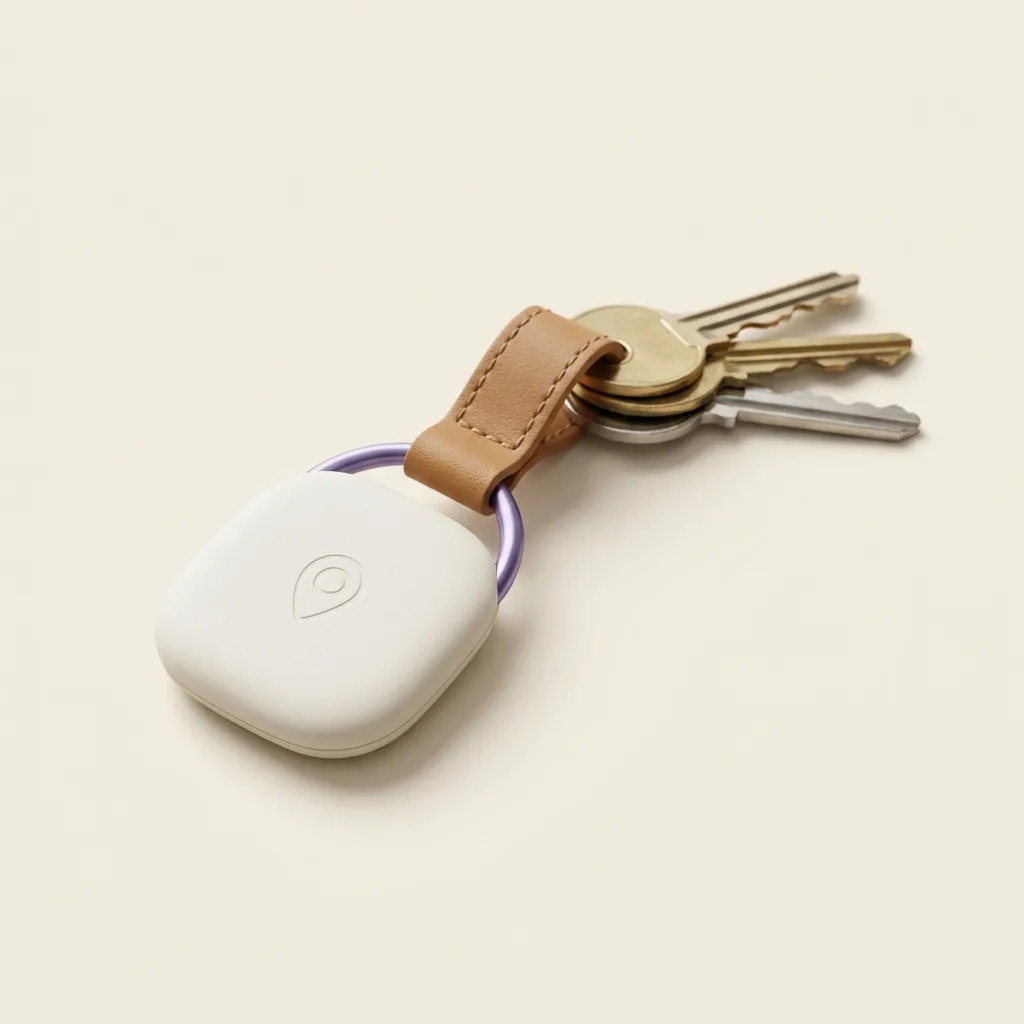
That is the moment to offer a small backup: a phone that is actually carried, or a tag in the wallet or coat pocket, or a card sized tracker that lives where the bus pass lives. Framed correctly, it is not a leash. It is the thing that lets you say yes to the walk.
How to introduce it without insulting anyone
- Ask, do not install. A device fitted in secret poisons the whole arrangement if it is ever discovered.
- Say what it is for in one sentence: so you can go out and I do not have to phone you twice.
- Show them their own view. Let them see the app, and see you on the map too, so the visibility is mutual.
- Agree an off switch. Knowing they can turn it off is usually why they leave it on.
- Pick the thing they already carry. A wallet card or a keyring tag beats anything they must remember to put on.
Be honest about limits. Location is an estimate, up to 95 percent accurate in good conditions and worse behind thick walls. Be Closer is free to download and works on iPhone and Android in 13 languages, but no app replaces a neighbour with a spare key.
Watching for signs of struggle without hovering
You are not looking for symptoms, which is the doctor's job. You are looking for changes in the ordinary texture of a life, because those show up before anyone says the words out loud.
- Food. Meals skipped, the same bread going stale, milk untouched, a fridge that is fuller than it should be.
- Post and admin. Envelopes stacking unopened is one of the most reliable quiet signals there is.
- Grooming and clothes. Same jumper for four days when that has never been their style.
- Withdrawal. Cancelling the things they normally love, particularly the ones that involve leaving the house.
- Sleep and mood. Awake at odd hours, flat on the phone, humour gone missing.
- Confidence. Refusing stairs or short walks they managed last week.
Write these down rather than carrying them in your head, because the value is in the pattern over a fortnight, not any single day. If the pattern keeps pointing the same way, signs your aging parent needs more help is a good next read before you raise it with them or their doctor.
And when you do raise something, raise it as an observation rather than a verdict. I noticed the post is piling up, is it the reading or is it just dull, is a question. You cannot manage anymore is a sentence that ends conversations.
Sharing the load among siblings
In most families one person becomes the default carer within about ten days, usually whoever lives nearest, and usually without anyone deciding it. Resentment builds quietly from there.
Prevent it with a boring administrative act in the first week: a shared list of jobs with names against them, and dates. Not a rota of feelings, a rota of tasks.
| Job | Who | When |
|---|---|---|
| Morning call | Rotates weekly | Every day |
| Medicines and pharmacy runs | One named person | Weekly |
| Food shop and cooking | Two people alternating | Twice weekly |
| Appointments and transport | Whoever can drive that day | As booked |
| Bills, forms and phone calls | The one who likes paperwork | Weekly |
| Visiting for no reason at all | Everyone | Whenever |
For siblings far away, give them the jobs that distance does not spoil: the phone calls, the admin, the ordering, the researching, the money. Nothing corrodes a family faster than the sibling on another continent who sends opinions and nothing else, and often they simply have not been told what would help. Long distance caregiving is worth forwarding to them.
Keep one shared thread for practical updates and keep it factual, because a group chat that becomes an emotional arena gets muted. Family group chat across generations has some ground rules.
The end of the fortnight
Around day fourteen, sit down and ask three questions. What is genuinely better than the day they came home. What is still hard. What did we put in place that we can now take away.
That last question matters. Taking things away is how a recovery becomes a life again: the rug goes back, the downstairs bed folds up, the morning call becomes every other day because they asked for it to. Independence is handed back one piece at a time, as soon as it can be carried.
My aunt made her own tea on day nine and rang to tell me about it, mildly outraged that this counted as news. It did count. It was the whole point.
Frequently asked questions

Priya writes about the family members we care for at every age, parents living alone, dogs that bolt at squirrels, and the quiet worry in between. She writes the way she checks in: gently, and always dignity first.
Our guides are written by Be Closer's editorial voices and reviewed by the team behind the app. Questions? support@becloser.com
Published · Updated