
 Aging Parents
When an Aging Parent Doesn't Answer the Phone: A Calm Plan
Give the first unanswered call a wait window of fifteen to thirty minutes and try a second channel before you assume anything, because the ordinary explanation is almost always the right one. If the second and third attempts fail, move to a keyholder or a neighbour who can look in person, and call emergency services if there is any specific reason to think someone is hurt. Agree the whole ladder with your parent in advance so nobody is improvising at seven in the morning.
My aunt keeps her phone in a small bowl by the front door, which is a sensible place for it and roughly forty feet from the back garden where she spends most of a spring morning. I have called that phone and listened to it ring out more times than I can count. I know, in the reasonable part of my brain, exactly where she is and exactly what she is doing.
The reasonable part of the brain is not who answers when the ringing stops. What answers is the stomach, and the stomach has one idea, and it is not the garden. Anyone caring for a parent at a distance knows those ten minutes: the second call, the pacing, the mental arithmetic about how long the drive would take, the shame of feeling this dramatic about a missed call.
The fix is not to feel it less. The fix is to have decided, in advance and while nobody is frightened, what happens at fifteen minutes, at an hour, and at three hours. This is that ladder, and the conversation to have with your parent before you need it.
The first ten minutes are almost always nothing
Start from the base rate, because it is genuinely reassuring and it is also true. The overwhelming majority of unanswered calls to an older person have a dull explanation. The phone was on silent from a hospital appointment last Tuesday and never switched back. It is charging in the hall. It is in a coat pocket in the hall cupboard. The battery died overnight. They are in the shower, at the shops, at the neighbour's, or asleep in the chair with the television on.
The purpose of a wait window is to stop you burning your own credibility. If you escalate at ninety seconds every time, you will call the neighbour twice a month for nothing, and the one time it matters the neighbour will assume it is nothing again. Slowness at the start buys you speed later.
- Fifteen to thirty minutes is a sensible first wait for an ordinary daytime call with no reason for concern.
- Shorter if you are calling at a fixed agreed time they never miss, or if the last conversation left you uneasy.
- Shorter again if they were unwell yesterday, recently home from hospital, or newly on a medication that made them dizzy.
- Longer at a time of day they are usually out, at the club, at church, at the allotment, or in the garden with the radio on.
The unanswered call is not information. It is the absence of information, and those feel identical at seven in the morning.
While you wait, do the cheap checks. Did the call ring properly or go straight to voicemail, which usually means the phone is off or flat rather than ignored. Did a message you sent yesterday get read. If you share location in a family app, is the phone at home and has it moved at all this morning. None of that is proof, but a phone that moved from the bedroom to the kitchen at half past seven is a very different morning from a phone that has not moved since last night.
The escalation ladder, one rung at a time
Write this down and put it somewhere you will find it while your hands are shaking. Panic makes people skip rungs, and skipping rungs is how you end up calling an ambulance for a woman who is at the hairdresser.
- 1Call again after the wait window. Ring twice in a row if their phone allows it, since many older phones let a repeat call through silent mode.
- 2Try a second channel. The landline if there is one, a text, a message in the family group chat, a video call. Different devices fail in different ways, and the landline is often sitting right where they are.
- 3Ask someone else in the family to try. A grandchild calling from a different number sometimes gets answered when yours does not, and it costs nothing.
- 4Check the quiet signals. Read receipts, a phone that has clearly been picked up, an app that shows movement at home. Presence signals are not the same as a voice, but they change how worried you should be.
- 5Call the neighbour or the keyholder. Someone who can walk to the door in five minutes and knock. This is the single most useful rung on the whole ladder.
- 6Ask them to go in. If knocking gets nothing and they hold a key, agreed in advance, this is the moment.
- 7Call for help. If nobody can get in, if there is a specific reason to think someone is hurt, or if a keyholder finds something wrong, call emergency services and tell them plainly what you know.
How long between rungs depends on the person and the day. On an ordinary morning I would give thirty minutes between the first and second rung, and then move faster. If your parent has fallen before, if they were unwell yesterday, or if you have a concrete reason to worry, you are allowed to start at rung five straight away. That is what having a ladder is for: it tells you where you are, not how slowly you must walk.
Go faster than the ladder when
- They answered and something was wrong. A fall, confusion, chest pain, slurred speech, or a call that cut off mid sentence.
- A neighbour has already noticed something. Curtains closed at midday, milk on the step, a car that has not moved.
- They have recently come home from hospital or started a new medication that affects balance or blood pressure.
- The pattern is genuinely broken. A person who has answered every Sunday for nine years and does not answer this Sunday is telling you something.
- Your gut is loud. Family members are usually right about their own parents, and no ladder should talk you out of it.
Neighbours and keyholders: the rung that actually works
Everything above rung five is guessing. Rung five is somebody physically at the door, and it is worth investing in that long before you need it. The whole difference between a frightening morning and a manageable one is usually whether you have a phone number for the person two doors down.
Ask your parent who they would be comfortable with. This matters, because sending a person your mother does not like into her hallway at eight in the morning is a real cost to her dignity, and she will remember it. Most people have someone: a neighbour, a friend from the same street, a cousin ten minutes away, the warden if they are in sheltered housing.
- Get the number, and give yours. Both directions. Save it under a name you can find while panicking, not under a surname you will not remember.
- Agree what a call means. Say plainly: I will only ring you if I cannot reach her and I am worried. That framing keeps the favour small and repeatable.
- Sort out the key question early. A spare key with a trusted neighbour, a key safe with a code the family knows, or a relative who lives nearby. Decide this while your parent is well enough to have opinions about it.
- Keep a second keyholder. One person is a plan. Two people is a plan that survives a holiday.
- Say thank you properly. A card at Christmas, a plant, a mention to their own family. This is not a small favour and it should not be treated like one.
If there is genuinely nobody, that is worth knowing in advance too. It changes the shape of your plan: a daily check in becomes more important, a personal alarm may be worth the conversation, and you may want to look at the wider setup in a gentle tech safety setup for a parent living alone.
Be Closer shows your whole family on one private map, free to start.
Consent-first, never sold, and gentle on your battery. iOS and Android.
When to call emergency services, and what to say
People hesitate here for two reasons. They are frightened of wasting the time of people who have real emergencies, and they are frightened of the door being forced for nothing. Both are understandable and neither should stop you when you have a specific reason to believe someone is hurt.
Call if there is a concrete signal, not just silence. A call that cut off. A neighbour who heard something. A parent who told you they felt unwell an hour ago and now does not answer. Someone at the door who can see a light on and hear no movement, or who can see them and cannot rouse them. Silence alone, on a Tuesday morning, with a phone that is often in a bowl by the door, is usually the ladder's lower rungs, not this one.
When you do call, have the plain facts ready and say them in order: the full address including the flat number and any door code, your parent's name and age, what you know and how you know it, when they were last heard from, whether they live alone, and any conditions or medications that matter. Say clearly if a neighbour is on the way or already at the door, and give the dispatcher that person's number.
One more thing that nobody warns you about. If it turns out to be nothing, your parent may be embarrassed or annoyed, and it can sting after the fear you have just been through. Try to give them the version that protects their dignity: I could not reach you and I got frightened, that is about me not about you, can we make the check in easier so it does not happen again. That sentence keeps the door open for the next time.
Build the plan together, before you need it
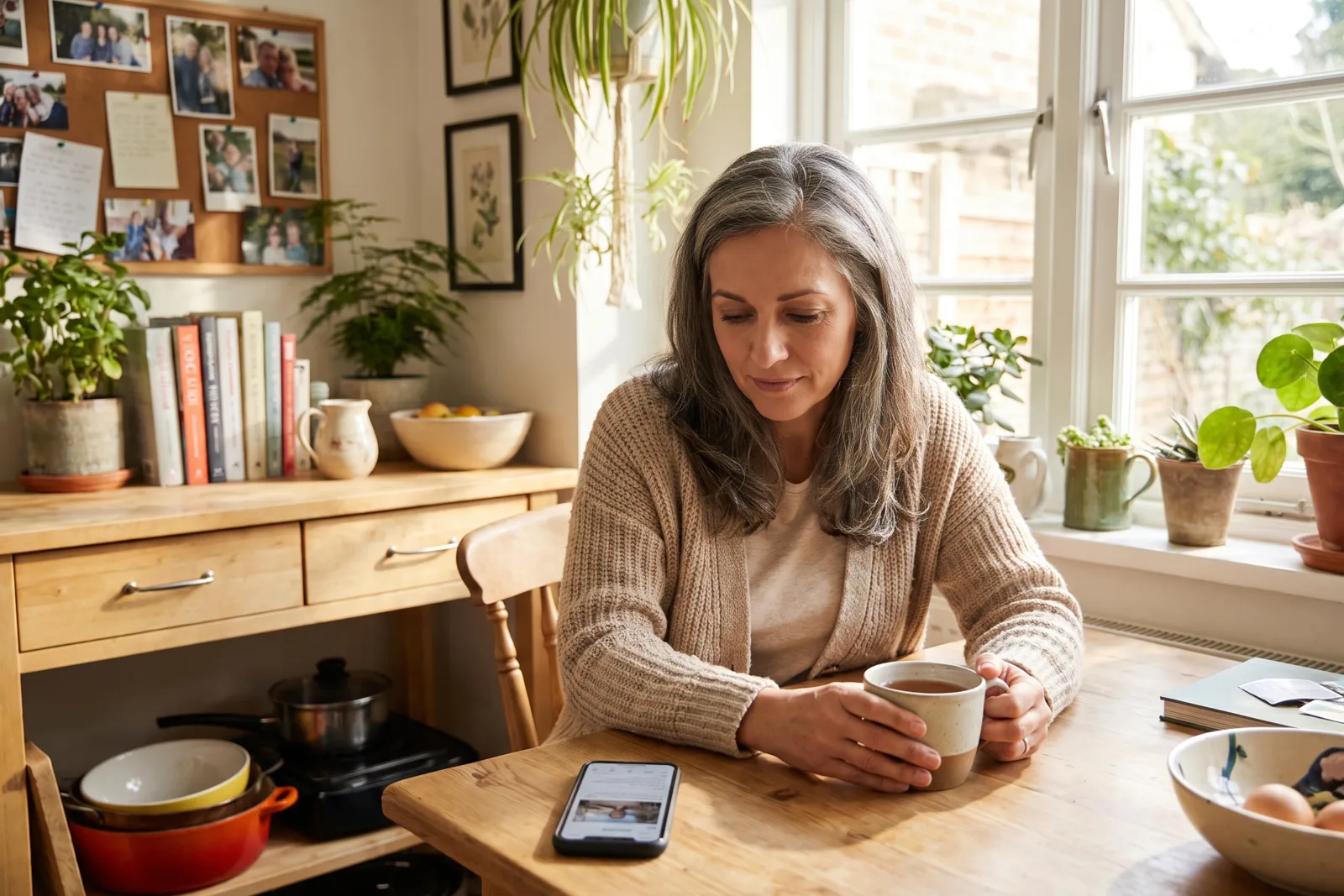
The reason these mornings hurt so much is that they are improvised. Everything above works better if it was agreed at a kitchen table, on a good day, with your parent in the room as a participant rather than a subject.
Have the conversation as a two way deal
Frame it around your worry, not their frailty, because that is both kinder and more accurate. Something like: when I cannot reach you I panic, and I would rather we agree what I do so I do not do something dramatic. Most parents will engage with that, because it asks them to help you rather than to admit decline.
Agree the small mechanics
- A regular time. A short call at a predictable hour beats three random ones. Daily check-in rituals that don't feel like checking up has ideas that do not feel like surveillance.
- A heads up habit. If they are going out for the day, a one line text. In return, you do the same, so it is a family habit rather than a rule for the old person.
- Charging in the bedroom. Phone on the nightstand overnight rather than in the hall. This one change solves a surprising number of missed morning calls.
- Ringer settings checked monthly. Silent mode is the most common culprit by a distance, especially after an appointment or a service.
- A shared list. Neighbour, keyholder, GP surgery, and the sibling who lives nearest, written on paper on the fridge as well as in your phone.
Let quiet signals do the boring work
Consent based location sharing in a family app is useful here for one specific reason: it tells you a phone is home and has moved this morning, which lowers the temperature of the whole situation without anyone having to answer a call. It is not a medical alarm, it does not know whether a person is well, and it should never be the only thing you rely on. Used honestly, with your parent's knowledge and agreement, it just means fewer frightened phone calls in both directions. Be Closer is free to download, and if it helps, it helps by reducing the number of times you need the rest of this ladder at all.
If you are also trying to work out how much contact is the right amount, how often should you call your aging parents is a gentler question than it sounds and worth thinking through alongside this one.
The morning my aunt did not answer for two hours, she had gone to a friend's funeral I had forgotten about, and she came home to four missed calls and a message from the neighbour. She rang me back mildly amused. We now have a fridge list, a key safe, and an agreement that she texts me the word out when she leaves for the day. It has never once felt like surveillance. It mostly feels like the two of us deciding, together, that neither of us has to spend a morning like that again.
Frequently asked questions

Priya writes about the family members we care for at every age, parents living alone, dogs that bolt at squirrels, and the quiet worry in between. She writes the way she checks in: gently, and always dignity first.
Our guides are written by Be Closer's editorial voices and reviewed by the team behind the app. Questions? support@becloser.com
Published · Updated